 Reading Ants
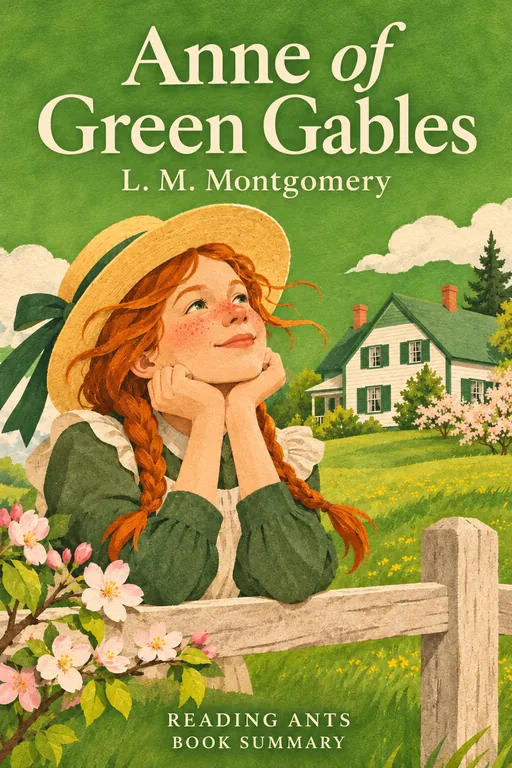
Anne of Green Gables: the longer summary
Before You Start (No Spoilers)
Anne of Green Gables is the story of an eleven-year-old orphan with red hair, a big imagination and an endless supply of words, who is sent by mistake to a quiet farm on Prince Edward Island, Canada, and changes everything and everyone there. It was published in 1908, and it has stayed in print ever since. It is very funny, very warm and, in the second half, quite moving.
The book is made up of episodes: the arrival, the fights with a neighbor, a first real friend, a school rivalry, a series of disasters caused by Anne’s imagination and eagerness, and finally a much more serious time of growing up. Anne is talkative, impulsive and emotional, and she is always getting herself into trouble, but she is also honest, loyal and willing to work hard. Many readers love her, and some find her exhausting, which is part of the joke.
It is gentler and shorter than most of the other books on this list, and it is a good read for eight-year-olds and up. It also works well for older readers, who will see more of the humor and pay attention to the sad parts.
What follows gives away the whole story, including a death near the end.
Arrival
A mistake. Matthew Cuthbert and his sister Marilla are an older brother and sister who live at Green Gables, a farm in the village of Avonlea. They have decided to adopt an orphan boy to help with the farm work, and they have asked a neighbor, Mrs. Spencer, to bring one from the orphan asylum. Matthew, who is shy and gentle, goes to the train station expecting a boy. On the platform he finds a skinny little girl in a worn dress with two long red braids. She is not at all embarrassed to see him, and she tells him how much she has been looking forward to a home.
The drive home. Matthew, who dreads speaking to women, does not have the heart to tell her there has been a mistake. On the drive, Anne tells him about herself without pausing for breath. She is named Anne, spelled with an e, and she loves the word “scope,” the blossoms along the road and anything that can be given a romantic name. She decides to call the cherry trees the White Way of Delight and a pond the Lake of Shining Waters. Matthew, to his own surprise, finds that he likes her.
Marilla’s decision. Marilla is a plain-spoken, practical woman who is shocked at the mistake. She plans to send Anne back the next day. But as she listens to the child, her opinion begins to change. Anne is willing to do anything to stay, and she is clearly miserable at the thought of leaving. The neighbor Mrs. Spencer arrives and says that another family might take Anne, but Marilla, who has noticed that Matthew has grown fond of the girl, finally decides to keep her.
Growing Up in Avonlea
Mrs. Lynde. The neighborhood gossip, Mrs. Rachel Lynde, comes to look at the new arrival. She is blunt and insults Anne’s red hair and freckles. Anne, who is sensitive about her looks, loses her temper and tells Mrs. Lynde exactly what she thinks of her. Marilla is horrified and orders Anne to apologize. She does, in the most dramatic way possible, acting out a long speech of repentance, and Mrs. Lynde, who has a good heart, is amused and forgives her.
Diana. Anne meets Diana Barry, the girl who lives nearby, and the two swear eternal friendship. They call each other bosom friends and plan to be friends forever. Anne’s friendship with Diana is the first real tie she has with someone her own age.
The wine mistake. Anne invites Diana to tea while Marilla is away. She intends to serve raspberry cordial, but by mistake pours currant wine from a different bottle. Diana drinks several glasses and goes home drunk. Her mother, Mrs. Barry, is furious and forbids the girls to see each other. Anne is devastated, and a few days later, when Diana’s little sister Minnie May has a dangerous case of croup in the night, Anne, who has helped raise babies in her earlier home, treats her and saves her life. Mrs. Barry is grateful and the friendship is restored.
School and Gilbert. At school Anne meets the other children, including Gilbert Blythe, a good-looking, clever boy who is the best student. He teases her by calling her Carrots on her first day. Anne, furious, breaks her slate over his head. She vows never to speak to him again, and she holds that vow for years, even though Gilbert apologizes more than once. This starts a long rivalry for the top place in the class.
Imagination and disasters. Anne’s imagination gets her into many scrapes. She flavors a cake with the wrong ingredient, loses her temper, gets a dye that turns her hair green instead of black, and stays awake all night worrying about things that never happen. Each of these is told with great humor. Marilla, who is strict but fair, slowly softens, though she does not show it easily. She also, in her own way, begins to love Anne.
The new teacher. Anne is lucky in her teacher, Miss Stacy, a modern, encouraging teacher who believes in learning outdoors and in nurturing each pupil’s talents. Anne flourishes under her guidance, and begins preparing for the entrance exam to Queen’s Academy, a teacher-training college.
Puffed sleeves. One of the book’s best small moments comes at Christmas. Anne has long wanted a dress with puffed sleeves, the fashion in the village, which Marilla thinks is silly. Matthew, in his quiet way, goes to a shop, and after great embarrassment gives Anne a dress with the sleeves she wanted. It is a quiet sign of how much he loves her.
The Lady of Shalott. The girls act out a scene from Tennyson’s poem about the Lady of Shalott, in which Anne lies in a boat as if floating down a river. The boat leaks, and Anne is stuck on a piling in the middle of the pond. She is rescued by Gilbert Blythe, who is passing in his boat. He offers to bury the quarrel, but Anne, still proud, refuses to forgive him.
The Last Part: Queen’s and Home
Queen’s Academy. Anne works so hard for the entrance exam that she passes with high marks. She is admitted, and she goes to Queen’s with a group of friends. There, she studies hard and wins a scholarship that would pay for her to attend university, while Gilbert earns the top medal, though they still have not made up.
Matthew’s death. At home, Matthew, who has a weak heart, is told that the bank where he and Marilla have their money has failed. Shocked, he suffers a heart attack and dies. Anne and Marilla are heartbroken, and Anne is deeply affected. In the quiet that follows, Marilla tells Anne that she has been difficult to love, but that she loves her more than she has ever said.
A change of plan. Marilla’s eyesight is failing, and she may have to sell Green Gables. Anne, who has been offered a university scholarship, decides to give it up. She will stay home to teach at the Avonlea school and help Marilla keep the farm. She tells Marilla that she has her own plans and that the farm and her family are more important. In a final act of generosity, Gilbert gives up the Avonlea teaching job, which he has been offered, to make it possible for her to stay. Anne thanks him, and the two at last become friends. The book ends with Anne looking forward to a modest, hopeful future in Avonlea.
More Moments Worth Knowing
Naming everything. Anne gives names to places that were plain before: the White Way of Delight for the road lined with cherry blossoms, the Lake of Shining Waters for a pond, the Haunted Wood for a dark patch of fir trees, and many more. The names make the countryside feel enchanted and show how she sees the world. By the end of the book, the people of Avonlea are using her names for those places.
The lost brooch. Marilla’s amethyst brooch goes missing, and she believes Anne must have taken it. When Anne, who has been told she cannot go to a picnic unless she tells the truth, makes up a story that she borrowed it and lost it, Marilla is angry and sends her to her room. Later Marilla finds the brooch caught in her own shawl and realizes she has treated Anne unfairly. She apologizes, and the scene shows how much both have learned about trust.
The flavoring mistake. When the minister’s wife is invited to tea, Anne bakes a cake. She accidentally uses the wrong bottle for the flavoring, a bottle of liniment meant for pain, and the cake tastes dreadful. The scene is full of embarrassment, but the minister’s wife kindly eats the cake anyway, until she can’t. The minister’s wife is kind about it and comforts Anne, who is crushed but also very funny about her own disasters, and she tells the story with wit.
The hair dye. When a peddler sells Anne a bottle of dye that is supposed to turn her red hair black, she takes it eagerly, and the result is green. Marilla has to cut the hair off. Anne is miserable, but she begins to regard it as a lesson in vanity. She accepts the consequence with the same drama she brings to everything else.
Anne’s stories. Anne and her school friends start a story club and write romantic, dramatic tales, full of death and ladies in distress. Later, Anne discovers that she has learned to write better by looking at her real surroundings. It is a small hint that she will grow into a writer.
Marilla and Anne. Marilla is not a woman who says what she feels, but the reader can see her love in small acts, such as sewing Anne a new dress, scolding her for being out in the rain, and, finally, in the conversation in which she says that she loves her more than anyone. The book makes its warmest moments out of the plainest words.
Who’s Who
- Anne Shirley: the heroine, an orphan with red hair and a boundless imagination, quick to anger and quick to forgive.
- Matthew Cuthbert: a shy, gentle farmer who loves Anne from the first day.
- Marilla Cuthbert: his sister, strict, practical and secretly warm-hearted.
- Diana Barry: Anne’s “bosom friend,” sweet and loyal.
- Gilbert Blythe: Anne’s classmate and rival, clever, kind and persistent.
- Mrs. Rachel Lynde: a nosy but good-natured neighbor.
- Miss Stacy: Anne’s inspiring teacher.
- Mrs. Barry: Diana’s mother, who is strict and slow to forgive.
- Josie Pye: a classmate who is often unkind to Anne.
- Ruby Gillis: another classmate and friend.
- Mrs. Spencer: the woman who brings Anne from the orphanage.
Key Scenes Explained
The train station. Matthew’s meeting with Anne is the story’s first and most important scene. It shows both of them at their best: Matthew’s kindness and Anne’s unstoppable optimism.
Anne and Mrs. Lynde. Anne’s outburst and apology are comic, but they also show her honesty and the way she turns everything into drama. They show that she is not trying to be good for show; she means what she feels.
The currant wine. The mistake is funny, but it also shows how strict the adults are and how easily an innocent mistake can be misunderstood. Anne’s rescue of Minnie May is her way of proving herself.
The slate and “Carrots.” This is the start of the Anne and Gilbert story. It shows how much Anne cares about her looks and how deeply a joke can hurt.
The Lady of Shalott. It is a funny scene with a real danger. It shows how Anne’s imagination can lead her into trouble, and it is the first time Gilbert shows how much he cares for her.
Matthew’s death. The story changes from comedy to sadness, and the loss shows how important the Cuthberts have become to each other and to Anne. It is a quiet, moving scene.
The Setting
The author, Lucy Maud Montgomery, grew up on Prince Edward Island and drew on her memories of the farms, shores and orchards of the island when she wrote the book. Avonlea is invented, but its red roads, apple trees and ponds are based on real places. This is part of why the descriptions feel so loving: the book was written by someone who knew the landscape deeply. A reader does not need to know anything about Canada to enjoy it, but it adds something to read it with a picture of the island in mind.
Why It Still Matters
Anne of Green Gables is one of the best-loved children’s books in the world. Anne herself has become a model of a girl who is imaginative, strong-willed and unashamed of her feelings. The book has been translated into dozens of languages and adapted for stage, television and film. It is especially loved in Canada, where Prince Edward Island still welcomes visitors who want to see the setting. It is also a book about found family: Anne, who had no home, makes one, and so do Matthew and Marilla.
What to Notice While Reading
- Naming. Anne renames places, trees and even herself, to make them beautiful. Notice what she changes, and why.
- The adults. Marilla, Matthew and Mrs. Lynde are all different kinds of adults, and each helps Anne grow. Look at how each one influences her.
- Temper and apologies. Anne often gets into trouble because of her temper, and each time she has to find a way to put it right.
- Humor and sadness. The book is funny until it is not, and Montgomery moves from one to the other with care.
- What Anne gives up. The end of the book shows her making a choice that costs her something. Think about whether it feels like a defeat or a victory.
Questions to Think About
- Why does Marilla change her mind about keeping Anne?
- Why does Anne hold her grudge against Gilbert for so long, and what finally changes her mind?
- Is Anne’s choice at the end the right one? What would you have done in her place?
- What does the book suggest about the importance of imagination?
- How do Matthew and Marilla show their love in different ways?
If You Liked Anne of Green Gables
Try Anne of Avonlea, the sequel, Little Women for another spirited girl and her family, The Secret Garden for another story about a child who learns to love a home, or Heidi, about a child who changes a stern household.
Want the whole book?
A summary is a taste, not the meal. Here is where to find the full book.