 Reading Ants
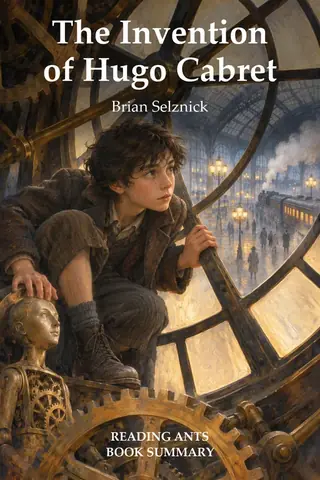
The Invention of Hugo Cabret
An orphan boy who secretly keeps the clocks of a Paris train station tries to repair a broken mechanical man, and uncovers the secret past of a bitter old toy seller.
Overview
The Invention of Hugo Cabret is a 2007 novel by Brian Selznick, told partly in words and partly in hundreds of pencil drawings (about 284 pictures). It won the Caldecott Medal in 2008, which is usually given to picture books, and it was a National Book Award finalist. The story is set in Paris in the 1930s. Hugo is an orphan who lives inside the walls of a busy train station and winds its clocks, and who is trying to fix a broken mechanical figure, an automaton, that he and his father had worked on. His search leads to a girl, a toy shop and an old man with a past he has hidden. It is a mystery, an adventure and a love letter to early movies.
Main Characters
- Hugo Cabret: a twelve-year-old orphan who keeps the station’s clocks and steals to survive.
- Isabelle: a girl who loves books and films. Her parents have died, and she lives with her godparents, the toy shop owner and his wife.
- Papa Georges (Georges Méliès): the toy booth owner, a former pioneer of film.
- Mama Jeanne: Georges’s wife and Isabelle’s godmother, who helps to raise her.
- Hugo’s father: a clockmaker who worked at a museum and died in a fire.
- Uncle Claude: Hugo’s drunken uncle who is the station’s clock keeper.
- Etienne: Isabelle’s older friend, who loves movies and later studies at a film academy.
- René Tabard: an author and film lover who writes about Méliès.
- The station inspector: who chases children and orphans.
Full Summary
The Boy in the Walls
Hugo’s father works at a museum, where he finds a broken automaton, a mechanical man who can write and draw. Hugo and his father try to repair it together, and his father keeps notes and drawings of it in a notebook. When his father dies in a fire at the museum, Hugo’s uncle takes him to the train station in Paris to work as a clock keeper. Then the uncle disappears. Hugo keeps the clocks running alone, lives in the hidden passages of the station and steals food from the shops. He rescues the automaton from the burned museum and hopes that it will write a message from his father. It has a heart-shaped keyhole, so he needs to find the matching key.
The Toy Seller
Hugo is caught stealing from the toy booth of an old man, Papa Georges, who takes his tools and his notebook, which contains his father’s drawings of the automaton. Hugo cannot get it back. A girl named Isabelle, who is Georges’s goddaughter, promises to protect the notebook. Hugo works at the booth to earn it back. Isabelle becomes his friend, and with the help of her friend Etienne the two sneak into a movie theater.
The Key
At the movie theater Hugo nearly gets caught by the station inspector, and he runs. Isabelle chases him and trips, and a heart-shaped key on a necklace is revealed. Hugo realizes that it fits the automaton. He takes the key and returns to his hidden room, where Isabelle confronts him. Together they start the machine, and it draws a picture of a rocket landing in the eye of the man in the Moon. It signs the drawing with the name Georges Méliès. Isabelle realizes that this is Papa Georges’s name.
The Secret
The children want to know why the automaton signed that name. Hugo’s hand is hurt in a door, and Isabelle sprains her foot after she takes a heavy box from a locked drawer in the house and it breaks. Georges is furious and destroys the drawings inside it. Hugo and Isabelle then look for answers about early film. In a film academy library, they find a book about the movies of Georges Méliès and A Trip to the Moon, a famous early film. Its author, René Tabard, comes to the house with Etienne, and they show the film.
Georges’s Story
Georges tells how he was once a famous magician and a pioneer of film, who made a great many movies. After the First World War, his film career collapsed. Isabelle’s parents died in a car crash, leaving her in the care of Georges and Jeanne. Georges sold his films to a company that melted them down to make shoe heels. He used the money to buy the toy booth and tried to forget his past. He asks Hugo to bring him the automaton. At the station Hugo hears that his uncle has been found dead, and he is discovered by the inspector. He runs, is nearly hit by a train and faints.
A New Family
The inspector locks Hugo up, and Hugo tells him everything. Georges comes to help, and Hugo is released to live with Georges, Mama Jeanne and Isabelle. He and Georges repair the automaton together. Six months later there is a concert of Méliès’s surviving films, where Tabard gives credit to Hugo, Isabelle and Etienne. In the last pages the reader learns that Hugo has built his own automaton, which has drawn and written the entire book.
Why It Matters
The Invention of Hugo Cabret was a bestseller and the basis for Martin Scorsese’s 2011 film Hugo. It is an unusual book because it mixes the techniques of a novel, a picture book and a silent film. Long wordless sequences of drawings carry the story, and Kirkus Reviews called the pictures cinematic and said the design recalls silent film.
It also brought the true story of Georges Méliès, a real French magician and filmmaker, to a new audience. His film A Trip to the Moon is a famous early movie, and the book encourages children to explore film history.
Key Takeaways
- Everyone has a past. The cranky toy seller was once a celebrated artist.
- Broken things can be fixed. Hugo repairs the automaton, and, in a way, Georges’s life.
- A purpose gives life meaning. Hugo believes that fixing the machine will give him a message from his father.
- Art deserves to be remembered. The film pioneer was forgotten, and Hugo and his friends help bring him back.
- Family can be found. Hugo, who has no one, gains a family.
What We Can Learn
Hugo shows that persistence matters. He keeps working on the automaton, even when he has no tools and little hope. Many achievements begin with a project that others think is impossible.
The book also reminds us to look beneath the surface of grumpy people. Georges seems bitter, but the cause is a long loss. A bit of curiosity and kindness from the children opens the door.
Finally, it encourages learning about history through stories. Finding out about the real Méliès after reading the book can be a good adventure.
Criticism and Counterpoints
The book runs to more than five hundred pages, but a large share of them are drawings, so it reads faster than it looks, and some readers may wonder whether it counts as a real novel. The plot also relies on coincidences, such as a key that turns out to hang around a girl’s neck. Hugo himself is an invented character, and the story is fiction built around the real Méliès, so readers should not treat its details as biography. Common Sense Media notes that some young readers find it slow or complex. Still, reviewers praise its originality and beauty.
Who Should Read It
This book suits readers from about eight to twelve, and anyone who loves old movies, clocks, machines or mysteries. It is a good book for reluctant readers, since the drawings carry much of the story. Readers who prefer a lot of dialogue or fast action may find it more atmospheric than eventful.
Want the whole book?
A summary is a taste, not the meal. Here is where to find the full book.
You reached the end 🎉
Nicely done. Mark this one as read, and we will suggest what to read next.
Read this next
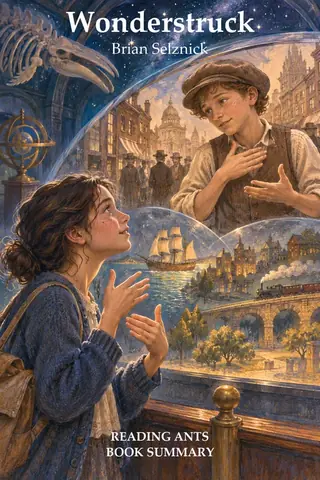
Wonderstruck
Brian Selznick
Two deaf children, fifty years apart, run away to New York City, one in words and one in pictures, and their stories join in a surprising way.
🧸 Children's Books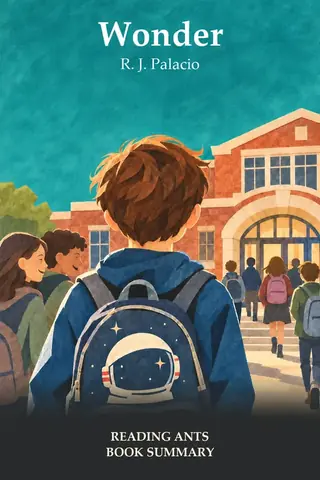
Wonder
R. J. Palacio
A ten-year-old boy born with a rare facial difference goes to school for the first time, and through bullying, friendship and courage he helps everyone around him learn to choose kindness.
🧸 Children's Books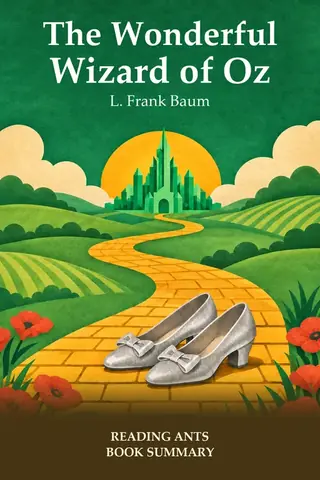
The Wonderful Wizard of Oz
L. Frank Baum
Swept by a cyclone to the magical Land of Oz, a Kansas girl follows the yellow brick road with three unusual friends to ask a great wizard for help, and learns they already had what they were seeking.
🧸 Children's Books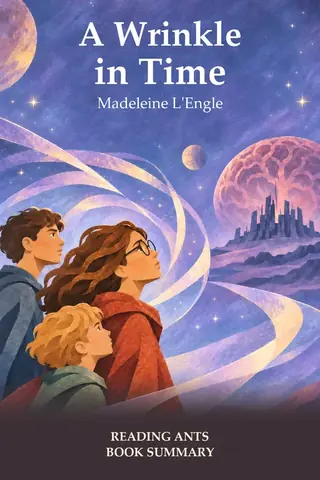
A Wrinkle in Time
Madeleine L'Engle
An awkward girl travels across the universe with her genius little brother and a new friend to rescue her scientist father from a dark planet ruled by a giant evil brain, and discovers that love is her greatest power.
🧸 Children's Books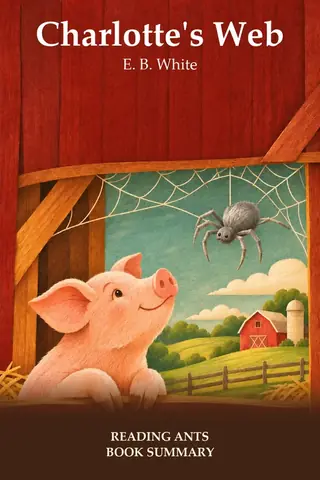
Charlotte's Web
E. B. White
A lonely pig named Wilbur learns he is going to be killed, and his clever friend Charlotte, a spider, comes up with an amazing plan to save his life.
🧸 Children's Books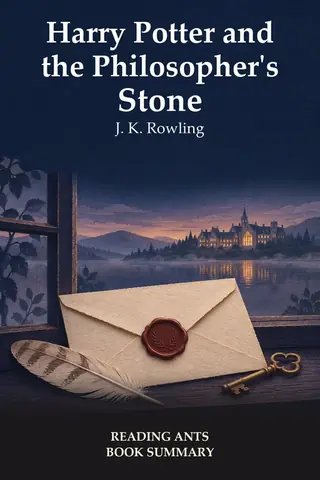
Harry Potter and the Philosopher's Stone
J. K. Rowling
An unloved orphan boy discovers on his eleventh birthday that he is a famous wizard, and during his first year at a magical school he makes true friends and faces the dark wizard who killed his parents.
🧸 Children's BooksWant something different?
Pick another topic and we will show you three books to start with.