 Reading Ants
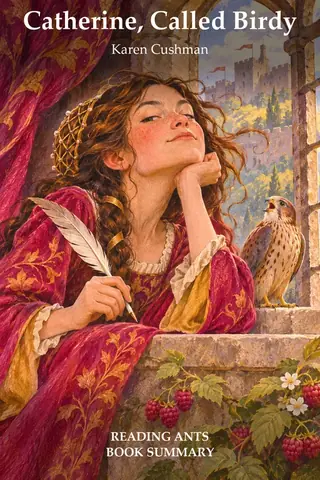
Catherine, Called Birdy
A spirited teenage girl in medieval England uses her diary and her wits to fight her father's plans to marry her off to a rich, ugly suitor.
Overview
Catherine, Called Birdy is a 1994 novel by Karen Cushman, written as the diary of a girl in 1290, and it was a Newbery Honor book in 1995. Catherine, nicknamed Birdy because she keeps pet birds, lives at Stonebridge Manor, a small English country house, with her loud, careless father, her gentle mother and three older brothers. Her father wants to gain money and useful connections through her marriage. Catherine is determined to avoid it. Her diary is funny, rude and honest, full of complaints about chores, saints’ days and dreadful suitors, and it gives an engaging picture of everyday life in the Middle Ages.
Main Characters
- Catherine (Birdy): the diarist, who is clever, stubborn and fond of her birds.
- Her father: a loud, bawdy lord who wants an advantageous match.
- Her mother: a kind woman who wants Catherine to become a proper lady.
- Robert and Edward: two of her older brothers: Robert is a knight and Edward is a monk. A third brother serves the king.
- Uncle George: a favorite uncle who has returned from the Crusades.
- Aelis: Catherine’s best friend, who is married off young.
- Ethelfritha: an eccentric older woman who marries George.
- Shaggy Beard: the old suitor whom Catherine hates.
- Stephen: Shaggy Beard’s son.
Full Summary
A Girl and Her Birds
The diary begins in September 1290. Catherine, called Birdy, lives at Stonebridge Manor, where she keeps birds and writes about her daily life. Her father is loud and bawdy. Her mother is kind, and wants Catherine to be a quiet, proper girl. Catherine has three older brothers: Robert, a knight whose twelve-year-old bride dies in childbirth; another brother who serves the king; and Edward, a monk who lives at a nearby abbey and with whom she is closest. Her days are full of chores that she hates.
The Suitors
Her father decides that it is time for Catherine to marry. Several suitors come to the house, and none is to her liking. She schemes to drive them away, and her diary entries are full of jokes at their expense. But her father cares only about money and rank, and he is not discouraged.
Shaggy Beard
At last her father insists that she marry an older, repulsive man whom she calls Shaggy Beard. Catherine spends much of the year trying to find an escape. She considers becoming a monk, running away or going on a Crusade. She writes about her fear and anger, as well as about the games and festivals of the year, and about her fascination with the saints.
Uncle George and Aelis
Her favorite uncle, George, comes home from the Crusades, and falls in love with Catherine’s best friend, Aelis. They cannot marry, because George is of low rank and Aelis is a wealthy young woman. Aelis is first married off to a duke who is only seven years old. George marries an eccentric Saxon businesswoman, Ethelfritha, who was once struck by lightning. Catherine sees that marriage often has little to do with love.
The Wedding Day Approaches
As the day of her wedding nears, Catherine flees to her uncle and his wife. There she realizes that she would be the same person whomever she married, and that she cannot hide forever. She lets her uncle take her home. She is prepared to do her duty, though she dreads it.
A Surprise
At home Catherine learns that Shaggy Beard has died in a brawl in a tavern. She is now engaged to his son, Stephen, who is young, clean and well educated. She is delighted, and she begins counting the days until she can meet him. The diary ends in a hopeful mood.
How the Year Ends
The end of the diary is lighter than the year that came before it. Catherine has spent twelve months fighting a marriage that she did not choose, and in the end she is saved by chance, not by her own plans. The book does not pretend that this is fair. Aelis is married to a boy of seven, and Uncle George cannot marry for love, so Catherine’s good luck stands out against the lives of the people she loves. Still, she has grown. She began the year as a child who only wanted to escape her duties, and she ends it as a young woman who has learned that she can bear what she must, and who looks toward her future with curiosity.
Why It Matters
Catherine, Called Birdy was a Newbery Honor book and received the Golden Kite Award, and it is still a favorite of teachers who want to bring the Middle Ages to life. Its diary form lets Catherine speak directly, with a modern humor that makes the distant past feel close.
It also gives a picture of what it was like to be a girl in the Middle Ages, when marriage was a matter of money and property. By showing Catherine’s anger as well as her wit, the book raises questions about choice and power that readers still care about.
Key Takeaways
- A girl’s voice matters. Catherine’s diary gives her power in a world that ignores her.
- Marriage was business. The book shows how families used daughters for gain.
- Humor is a weapon. Catherine fights back with jokes.
- People cannot always choose. Aelis and George cannot marry for love.
- Luck plays a part. Catherine’s escape is partly chance.
What We Can Learn
Catherine shows that it helps to keep a record of your feelings. Her diary lets her laugh at her troubles, and she finds courage in writing down her thoughts.
The book also reminds us how many of the freedoms we have today, such as choosing a partner or a career, are recent. Learning how people lived long ago helps us value them.
Finally, Catherine’s mixture of rebellion and duty shows that growing up involves balancing what we want with what others need.
Criticism and Counterpoints
Some readers find the diary form repetitive, with many entries about chores, saints and illnesses. Others say that Catherine’s modern attitudes make her less like a girl of the thirteenth century, and that the ending, in which she is lucky enough to be promised to a pleasant young man, is too convenient. The book also has some crude humor, adults who drink too much, and frank descriptions of medieval life, such as a very young bride who dies in childbirth. A few critics note that the happy ending removes the sharp edge of the story. But many readers love its voice.
Who Should Read It
This book suits readers from about ten to fourteen, especially those who like history, humor and strong heroines. It is a good companion to lessons on the Middle Ages. Readers who dislike diary form may find it slow, and some parents may want to check the language.
Want the whole book?
A summary is a taste, not the meal. Here is where to find the full book.
You reached the end 🎉
Nicely done. Mark this one as read, and we will suggest what to read next.
Read this next
Anne of Green Gables
L. M. Montgomery
A talkative, imaginative red-haired orphan is sent by mistake to an elderly brother and sister who wanted a boy, and she wins their hearts and fills their quiet farm with life.
🧸 Children's Books
Little Women
Louisa May Alcott
Four very different sisters grow up together in a loving but poor family in New England during and after the American Civil War, learning about love, ambition, loss and finding their own paths in life.
📜 Classics
The Witch of Blackbird Pond
Elizabeth George Speare
A spirited sixteen-year-old girl from Barbados arrives in strict Puritan Connecticut in 1687, befriends an old Quaker woman, and is accused of witchcraft.
🧸 Children's Books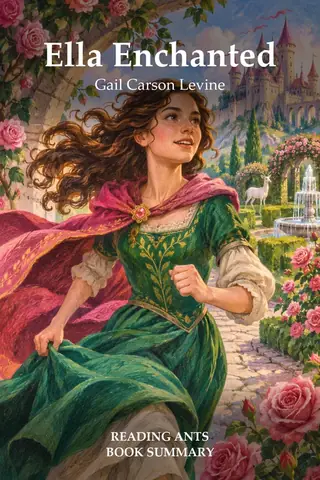
Ella Enchanted
Gail Carson Levine
A girl who has been cursed at birth to obey any order uses her wit and her heart to break the spell, in a funny retelling of the Cinderella story.
🧸 Children's Books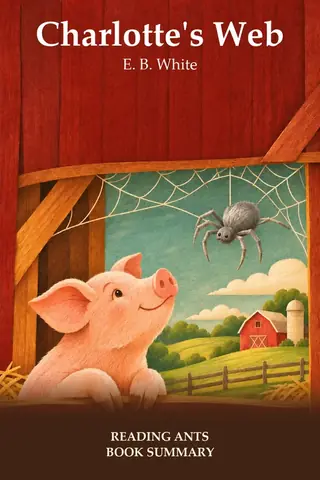
Charlotte's Web
E. B. White
A lonely pig named Wilbur learns he is going to be killed, and his clever friend Charlotte, a spider, comes up with an amazing plan to save his life.
🧸 Children's Books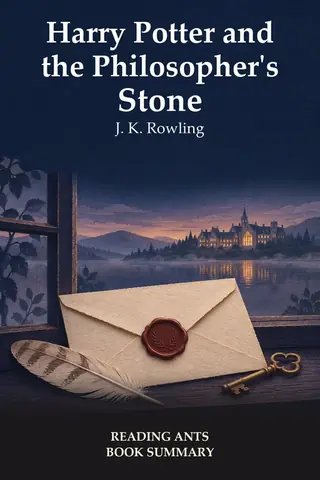
Harry Potter and the Philosopher's Stone
J. K. Rowling
An unloved orphan boy discovers on his eleventh birthday that he is a famous wizard, and during his first year at a magical school he makes true friends and faces the dark wizard who killed his parents.
🧸 Children's BooksWant something different?
Pick another topic and we will show you three books to start with.