 Reading Ants
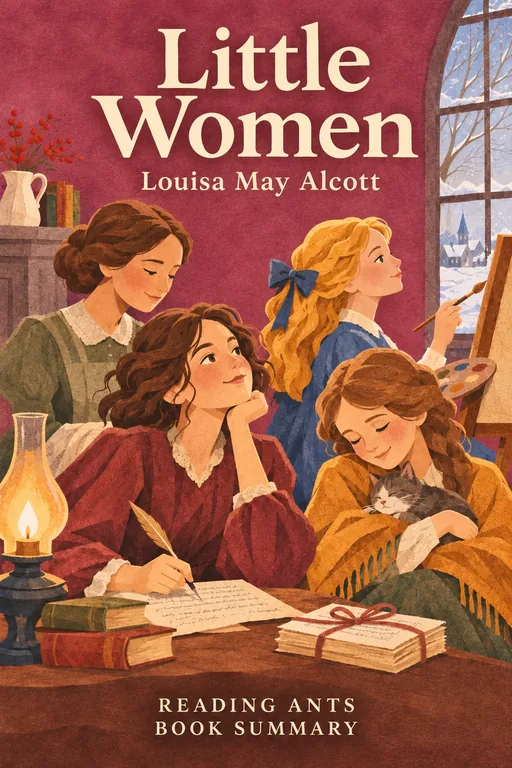
Little Women
Four very different sisters grow up together in a loving but poor family in New England during and after the American Civil War, learning about love, ambition, loss and finding their own paths in life.
Overview
Little Women follows the four March sisters: responsible Meg, fiery and bookish Jo, shy and gentle Beth, and artistic, vain Amy. Their father is away serving as a chaplain in the Union Army, and their mother, whom they call Marmee, guides them through hard times with warmth and wisdom. The family has little money but plenty of love, imagination and laughter. Next door lives a lonely rich boy, Laurie, who becomes their close friend. Louisa May Alcott based the story partly on her own life with her three sisters. Published in two parts in 1868 and 1869, the novel became one of the most beloved American books and is especially famous for Jo, a heroine who dreams of being a writer.
Main Characters
- Meg March: the eldest sister, kind, responsible and a little vain.
- Jo March: the second sister, an energetic tomboy who loves writing.
- Beth March: the third sister, shy, gentle and musical.
- Amy March: the youngest, artistic and eager to be a lady.
- Marmee (Mrs. March): the girls’ wise, loving mother.
- Theodore “Laurie” Laurence: the charming boy next door.
- Mr. Laurence: Laurie’s gruff but kind grandfather.
- John Brooke: Laurie’s tutor, who loves Meg.
- Professor Friedrich Bhaer: a kind, older German teacher Jo meets in New York.
- Aunt March: the girls’ wealthy, stern great-aunt.
Full Summary
A Christmas Without Presents
The novel opens at Christmas. The March family has lost its money, and with their father away at war, the girls grumble that Christmas won’t be Christmas without presents. Each has a small dollar to spend, and they decide to buy gifts for Marmee instead. On Christmas morning, Marmee asks them to give their breakfast to a poor family, the Hummels, and the girls agree. In return, their wealthy neighbor, old Mr. Laurence, sends them a wonderful feast.
Friendship with Laurie
The girls become friends with Laurie, Mr. Laurence’s lonely grandson. Jo and Laurie become especially close, playing games, writing a family newspaper and sharing adventures. Shy Beth wins over gruff Mr. Laurence, who gives her a piano that belonged to his late granddaughter.
Each sister struggles with a “burden,” a fault she must overcome. Meg longs for pretty things, Jo battles her temper, Beth fights her shyness and Amy her vanity. When Amy burns Jo’s precious manuscript in anger, Jo refuses to forgive her, and the next day Amy falls through thin ice while following Jo and Laurie skating. Jo, terrified, realizes how her temper could cause harm, and the sisters reconcile.
Hard Times
The family receives news that Mr. March is seriously ill in a hospital in Washington. Marmee rushes to him, and Jo sells her beautiful long hair to pay for the trip. While Marmee is away, Beth catches scarlet fever from the Hummels’ baby and becomes dangerously ill. She recovers, but her health is permanently weakened. Mr. March returns home at Christmas, and the family is together again. Meg, meanwhile, falls in love with John Brooke, Laurie’s tutor, and accepts his proposal, though he is poor.
Growing Up
The second part begins three years later. Meg marries John and learns the challenges of running a household on little money, eventually having twins. Jo writes stories and sells them to newspapers. Amy goes to Europe with their Aunt Carrol, a trip Jo had hoped to take.
Jo moves to New York to work as a governess and to write. There she meets Professor Bhaer, a kind, poor German teacher who encourages her to write more honestly instead of sensational stories. When she returns home, Laurie confesses that he loves Jo and asks her to marry him. Jo cares for him deeply but only as a friend, and she refuses. Heartbroken, Laurie goes to Europe.
Beth
Jo returns home when Beth’s health fails. Beth knows she is dying and faces death calmly, comforted by her family. Jo nurses her through her last months. Beth’s quiet death changes Jo, who becomes gentler and more patient, and she begins to write from the heart about her own family.
New Beginnings
In Europe, Amy and Laurie meet again. Amy encourages Laurie to stop moping and make something of his life, and they fall in love. They marry and return home. Jo, at first surprised, is happy for them.
Professor Bhaer comes to visit, and Jo realizes she loves him. Under an umbrella in the rain, he proposes, and she accepts. They marry and, when Aunt March leaves Jo her large house, Plumfield, they turn it into a school for boys. The novel ends with the whole family gathered for Marmee’s birthday, surrounded by children and grandchildren, grateful for their happiness.
Why It Matters
Little Women has never gone out of print since its publication in 1868 and 1869, and it is one of the most loved novels in American literature. It was groundbreaking for focusing on the inner lives, dreams and struggles of girls and young women, and Jo March, who rejects conventional expectations and pursues a writing career, has inspired generations of women writers, including Simone de Beauvoir and J. K. Rowling.
The book has been adapted many times, including well-known films in 1933, 1949, 1994 and 2019, as well as television series, plays and an opera. Alcott wrote two sequels, Little Men and Jo’s Boys. The novel’s debates about marriage, career and independence for women remain as relevant as ever.
Key Takeaways
- Family love sustains us. The Marches survive poverty and loss by supporting each other.
- Everyone has faults to overcome. Each sister works on her own “burden.”
- Women can choose their own paths. Each sister finds a different kind of happiness.
- Kindness and generosity matter. Helping others brings joy, even when we have little.
- Grief can make us stronger. Beth’s death teaches Jo patience and love.
What We Can Learn
Little Women encourages us to value the people closest to us. Siblings may argue, but they can also be our best friends and greatest supporters. Taking time to forgive and enjoy family can bring deep happiness.
It also teaches that working on our faults is a lifelong journey. Jo’s temper, Meg’s envy and Amy’s vanity are ordinary flaws, and their efforts to improve show that growth is possible for everyone.
Finally, Jo’s story reminds us to follow our passions. She keeps writing despite setbacks and finds her true voice. Whatever our dreams, staying true to them and learning from honest feedback can lead to success.
Criticism and Counterpoints
Many readers have been frustrated that Jo does not marry Laurie, and some critics feel her marriage to the older Professor Bhaer is less exciting. Alcott herself did not want Jo to marry at all, but her publisher and readers pressured her to provide a husband. Others criticize the novel’s strong moral lessons, which can feel preachy.
Some modern readers find its views on women, home and marriage old-fashioned, with Marmee teaching the girls to control their anger and serve their families. Others argue that the book was quietly progressive for its time, celebrating women’s work, creativity and independence.
Who Should Read It
This book suits readers from about 10 upward, especially those who enjoy family stories and strong heroines. It is a wonderful book for sisters, mothers and daughters to share. Some readers may find its pace slow and its morals old-fashioned.
Want the whole book?
A summary is a taste, not the meal. Here is where to find the full book.
You reached the end 🎉
Nicely done. Mark this one as read, and we will suggest what to read next.
Read this next
Pride and Prejudice
Jane Austen
Quick-witted Elizabeth Bennet and the proud, wealthy Mr. Darcy badly misjudge each other, and only by facing their own faults do they find their way to love.
📜 Classics
Anne of Green Gables
L. M. Montgomery
A talkative, imaginative red-haired orphan is sent by mistake to an elderly brother and sister who wanted a boy, and she wins their hearts and fills their quiet farm with life.
🧸 Children's Books
Jane Eyre
Charlotte Bronte
A poor, plain but fiercely independent orphan becomes a governess, falls in love with her brooding employer, discovers his terrible secret, and refuses to give up her self-respect even for love.
📜 Classics
A Tree Grows in Brooklyn
Betty Smith
A poor, bookish girl named Francie Nolan grows up in the tenements of Williamsburg, Brooklyn, in the early twentieth century, and learns to find hope and strength in a family that has little but love and determination.
📜 Classics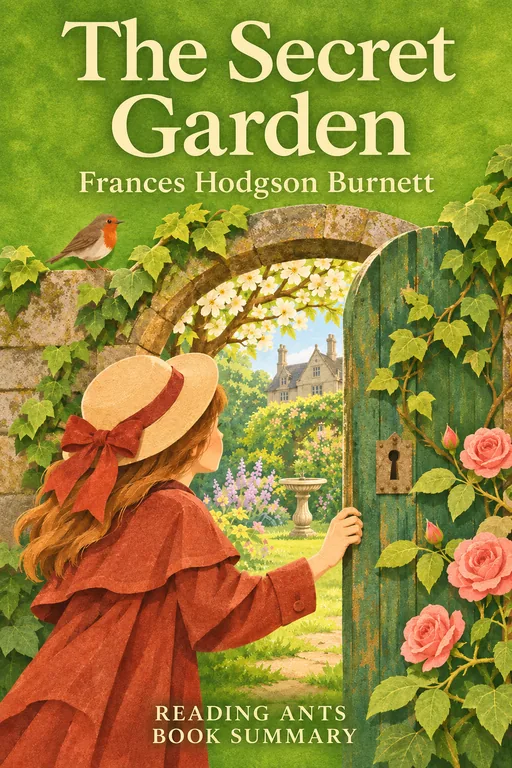
The Secret Garden
Frances Hodgson Burnett
A lonely, spoiled orphan sent to live in a gloomy English mansion discovers a locked, forgotten garden, and as she brings it back to life with two new friends, she and her sickly cousin are healed too.
🧸 Children's Books
Nineteen Eighty-Four
George Orwell
In a future Britain ruled by an all-seeing Party, one man secretly rebels by keeping a diary and falling in love, and discovers just how completely a totalitarian state can crush the human mind.
📜 ClassicsWant something different?
Pick another topic and we will show you three books to start with.