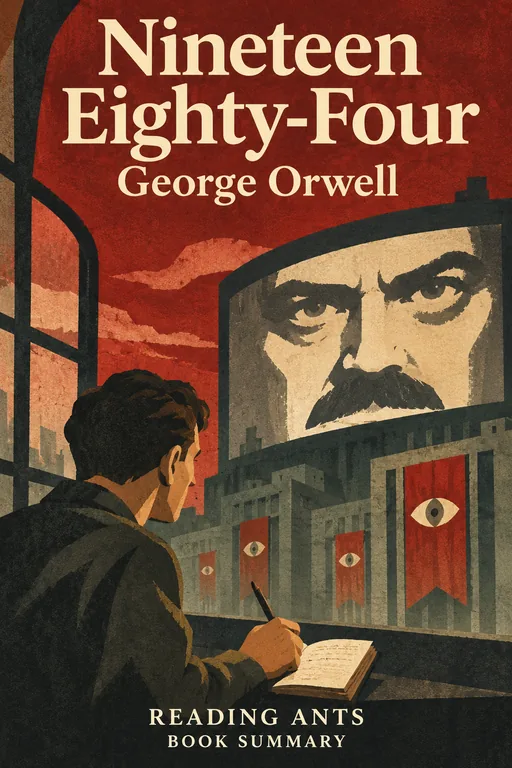
Nineteen Eighty-Four
In a future Britain ruled by an all-seeing Party, one man secretly rebels by keeping a diary and falling in love, and discovers just how completely a totalitarian state can crush the human mind.
Overview
Nineteen Eighty-Four is set in Airstrip One, the former Britain, now a province of a vast superstate called Oceania. The ruling Party controls everything: news, history, language, even private thoughts. Its leader, Big Brother, stares from posters everywhere, and telescreens in every room watch and listen. Winston Smith, a low-level Party worker whose job is to rewrite old newspapers so they match the Party’s latest version of the truth, secretly hates the system. Written just after the Second World War, Orwell’s novel imagines a world where freedom has been abolished not only in law but in people’s minds. It is one of the most influential political novels ever written, and many of its words have entered everyday language.
Main Characters
- Winston Smith: a 39-year-old clerk at the Ministry of Truth who quietly doubts the Party.
- Julia: a young, bold Party worker who rebels in private by breaking the Party’s rules about pleasure and love.
- O’Brien: a powerful member of the Inner Party whom Winston believes is secretly a rebel.
- Big Brother: the face of the Party, who may or may not exist as a real person.
- Emmanuel Goldstein: the Party’s official enemy, blamed for every crime and hated in daily rituals.
- Mr. Charrington: the kindly owner of a junk shop in a poor district.
- Parsons and Syme: Winston’s colleagues, one a loyal fool, the other a clever expert on the Party’s new language.
Full Summary
A World Without Truth
Winston Smith lives in London, the chief city of Airstrip One. The world is divided into three superstates (Oceania, Eurasia and Eastasia) that are always at war. The Party rules Oceania through fear. Telescreens watch every Party member, the Thought Police arrest anyone suspected of disloyal thinking, and people simply vanish. Their names are erased from all records, as if they had never existed.
Winston works at the Ministry of Truth, where he alters old newspaper articles so that the Party’s past statements always match its current claims. If the Party says chocolate rations have gone up when they have actually gone down, the records are changed. The Party’s slogans sum up its logic: war is peace, freedom is slavery, ignorance is strength. Every day, workers gather for the Two Minutes Hate, screaming at the face of Goldstein on a screen.
The Diary
Winston buys a beautiful old notebook in a junk shop owned by Mr. Charrington, in a poor district where the “proles” live. The proles, the vast majority of the population, are left mostly alone because the Party considers them too ignorant to matter. In his room, hidden from the telescreen, Winston begins a diary, an act punishable by death. He writes that he hates Big Brother. He also notices O’Brien, a member of the Inner Party, and senses that O’Brien shares his doubts.
Winston’s colleague Syme explains Newspeak, the Party’s new language, which is designed to shrink vocabulary until rebellious thoughts become impossible to express. Winston realizes that Syme is too intelligent to survive, and soon Syme disappears.
Julia
A dark-haired young woman from the Fiction Department, Julia, secretly slips Winston a note saying she loves him. They meet in the countryside, far from telescreens, and begin an affair. For both of them, love and pleasure are acts of rebellion, because the Party wants all passion directed toward Big Brother.
They rent the room above Mr. Charrington’s shop, where there seems to be no telescreen. There they enjoy real coffee and chocolate from the black market and talk freely. Winston is happier than he has been for years, though both know they will probably be caught.
The Brotherhood
O’Brien invites Winston to his apartment. Winston and Julia go together, and O’Brien tells them he belongs to the Brotherhood, a secret resistance movement led by Goldstein. They swear to do anything for the cause, even terrible crimes. O’Brien arranges for Winston to receive Goldstein’s forbidden book, which explains how the Party keeps power: through endless war that uses up wealth, through constant surveillance, and through doublethink, the ability to believe two contradictory things at once.
During Hate Week, a speaker suddenly announces that Oceania is now at war with Eastasia instead of Eurasia, and the crowd instantly accepts it. Winston’s department works day and night rewriting history to match.
Arrest
In the room above the shop, a hidden telescreen suddenly speaks. It has been there all along. Soldiers burst in and arrest Winston and Julia. Mr. Charrington turns out to be a member of the Thought Police.
Winston is taken to the Ministry of Love, where prisoners are tortured. He meets Parsons, who was turned in by his own young daughter. Then O’Brien appears. He was never a rebel; he is a loyal Party official who has watched Winston for years.
The Ministry of Love
Over many sessions, O’Brien tortures Winston to make him not just obey but sincerely believe whatever the Party says. He insists that reality exists only in the Party’s mind: if the Party says two plus two makes five, then it does. He explains that the Party seeks power purely for its own sake, and that its future is one of endless cruelty with no end in sight.
Winston gives in on almost everything, but he still refuses to betray his love for Julia. Finally he is taken to Room 101, where every prisoner faces their worst fear. Winston’s is rats. When a cage of rats is placed against his face, he screams for them to do it to Julia instead. His last loyalty is broken.
After
Released, Winston spends his days drinking gin at the Chestnut Tree Café. He meets Julia once by chance. Both admit they betrayed each other, and they feel nothing anymore. Watching news of a great military victory on the telescreen, Winston feels a rush of gratitude and devotion. In the chilling final moment, Winston’s rebellion is completely gone: he loves Big Brother.
Why It Matters
Nineteen Eighty-Four is one of the most important novels of the twentieth century. Orwell wrote it after watching the rise of Nazi Germany and Stalin’s Soviet Union, and after seeing propaganda up close during the Spanish Civil War and his wartime work at the BBC. The book is a warning about what happens when a government controls information completely.
Its ideas have shaped how the world talks about power. Terms such as Big Brother, thoughtcrime, doublethink, Newspeak, Room 101 and the Thought Police are used every day in debates about surveillance, propaganda, censorship and “fake news.” The adjective Orwellian describes any attempt to control people by twisting language and truth.
The novel has been banned and challenged in various countries, and it is taught in schools around the world. Whenever governments spy on citizens, rewrite history or deny obvious facts, readers return to it.
Key Takeaways
- Whoever controls the past controls the future. By rewriting history, the Party makes people unable to compare the present with anything better.
- Language shapes thought. Newspeak shows how limiting words can limit what people are able to think.
- Surveillance breeds obedience. When people believe they are always watched, they police themselves.
- Truth can be destroyed. The Party’s real goal is to make people accept whatever it says, even against their own eyes.
- Totalitarian power aims at the mind. The Party isn’t satisfied with obedience; it wants love and belief.
What We Can Learn
The novel encourages us to protect the habits that keep minds free. Check where information comes from, compare sources, and notice when words are used to hide meaning, for example when a war is called a “peace operation.” Value accurate history, even when it is uncomfortable, because a society that forgets its past is easy to mislead.
It also reminds us that privacy is not only about having something to hide. Private thoughts, diaries and relationships are where independent thinking grows. Today, with phones, cameras and data collection everywhere, it is worth asking who is watching, what they collect, and why.
Finally, Winston’s story shows that freedom depends on ordinary people being willing to say plainly what is true, as Winston writes in his diary: freedom means being able to say that two plus two makes four.
Criticism and Counterpoints
Some critics find the novel bleak to the point of hopelessness: resistance is not just defeated but shown to be impossible, which can leave readers feeling powerless. Others note that Julia is a thinly developed character, seen almost entirely through Winston’s eyes, and that the book’s portrayal of the proles can seem dismissive.
The long extracts from Goldstein’s book slow the story down, and some readers skip them. Political readers have also argued about its target. Orwell was a democratic socialist, and he said the book was not an attack on socialism but a warning against totalitarianism on any side. Yet it has often been used as simple anti-left propaganda. Others argue that modern surveillance works more through consumer comfort, as in Brave New World, than through fear.
Who Should Read It
Every teenager and adult interested in politics, freedom or technology should read this book. It is gripping, disturbing and surprisingly relevant. The torture scenes and hopeless ending may be too intense for sensitive younger readers. Those who want a shorter, gentler introduction to Orwell can start with Animal Farm.
Want the whole book?
A summary is a taste, not the meal. Here is where to find the full book.
You reached the end 🎉
Nicely done. Mark this one as read, and we will suggest what to read next.
Read this next
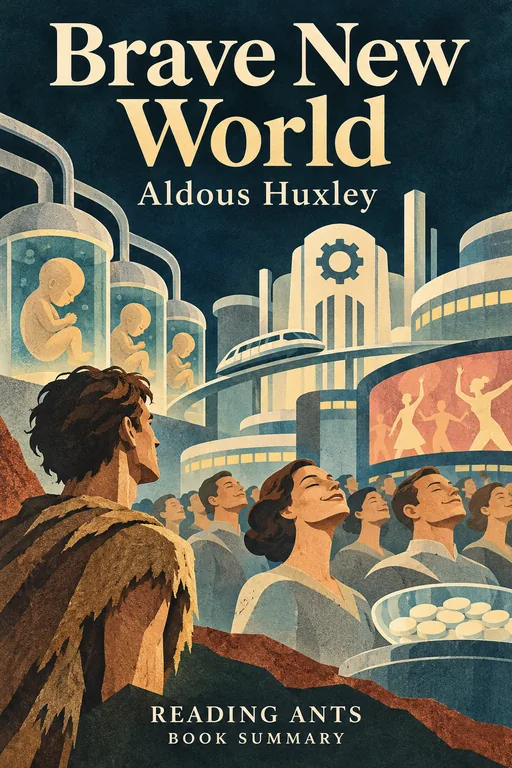
Brave New World
Aldous Huxley
In a future world where people are made in factories, programmed for their roles and kept happy with drugs and entertainment, a man raised outside the system discovers that this perfect comfort comes at the cost of everything that makes us human.
📜 Classics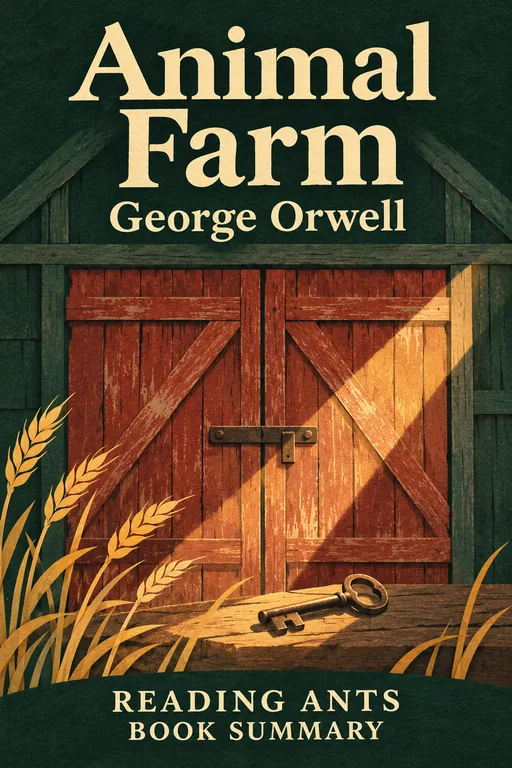
Animal Farm
George Orwell
The animals of an English farm overthrow their cruel human owner to create a fair society, but the clever pigs who lead them slowly become just as tyrannical as the humans they replaced.
📜 Classics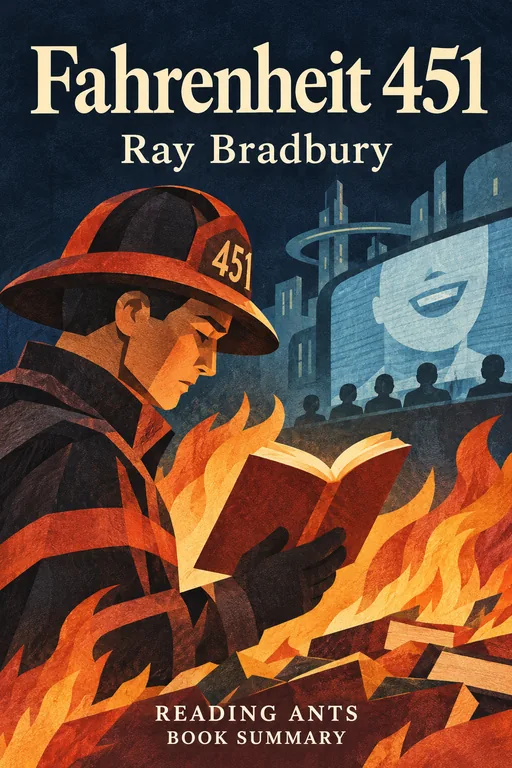
Fahrenheit 451
Ray Bradbury
In a future America where books are illegal and firemen start fires instead of putting them out, one fireman begins to read the books he is supposed to burn, and discovers what his society has lost.
🚀 Sci-Fi & Fantasy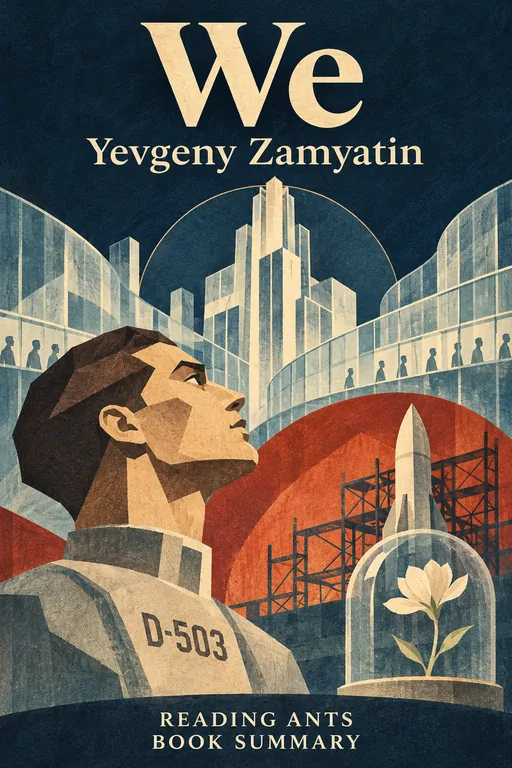
We
Yevgeny Zamyatin
In a glass city where everyone lives by a strict timetable and has a number instead of a name, a loyal engineer begins to feel love and doubt, and discovers what it costs to be free.
🌍 World Literature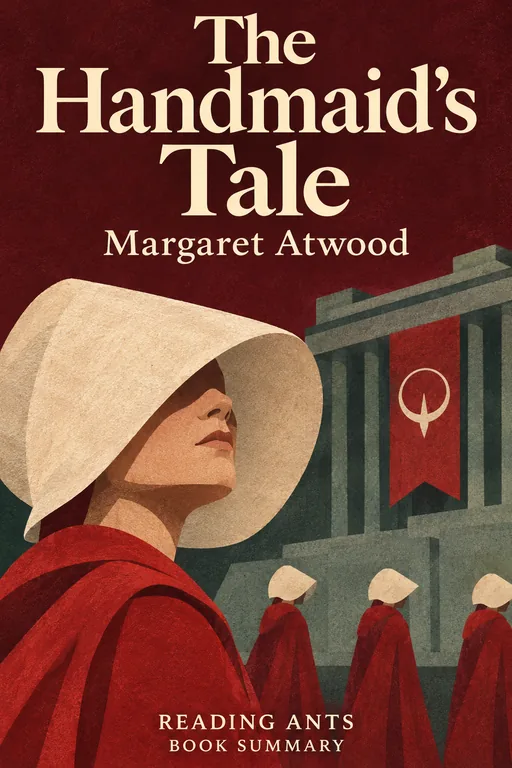
The Handmaid's Tale
Margaret Atwood
In a near-future United States taken over by a religious dictatorship that strips women of their rights, a woman forced to bear children for a powerful couple secretly remembers her old life and searches for a way to survive.
✨ Modern Fiction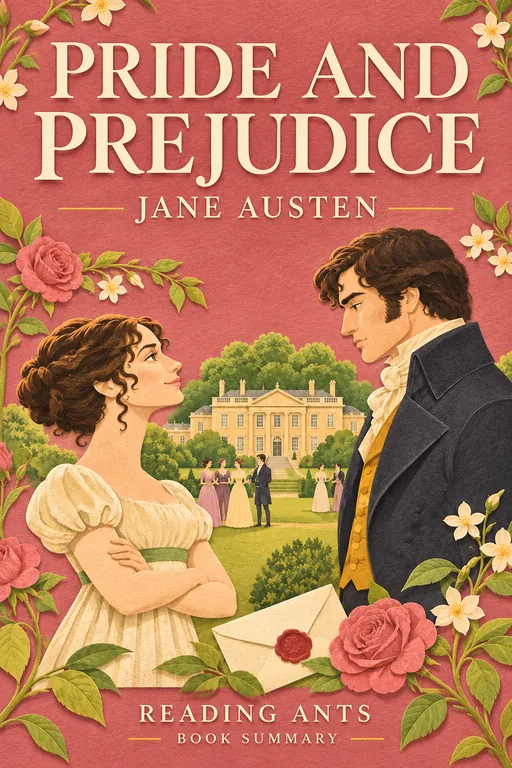
Pride and Prejudice
Jane Austen
Quick-witted Elizabeth Bennet and the proud, wealthy Mr. Darcy badly misjudge each other, and only by facing their own faults do they find their way to love.
📜 ClassicsWant something different?
Pick another topic and we will show you three books to start with.