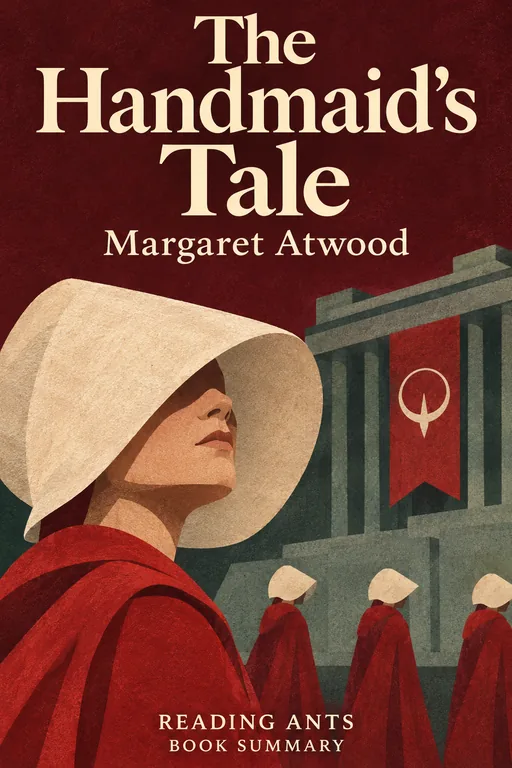
The Handmaid's Tale
In a near-future United States taken over by a religious dictatorship that strips women of their rights, a woman forced to bear children for a powerful couple secretly remembers her old life and searches for a way to survive.
Overview
The Handmaid’s Tale, published in 1985 by the Canadian writer Margaret Atwood, is set in the Republic of Gilead, a fundamentalist regime that has replaced the United States after a violent coup. Birth rates have collapsed because of pollution and disease, and Gilead’s leaders respond by enslaving fertile women as “Handmaids,” who are assigned to the homes of high-ranking Commanders to bear their children. The story is narrated by Offred, one of these women. Her name means “Of Fred,” after her Commander. Atwood has said she included nothing in the book that had not already happened somewhere in history. The novel became a modern classic and a symbol of resistance to the loss of women’s rights.
Main Characters
- Offred: the narrator, a Handmaid who remembers her former life; her original name is never confirmed in the novel.
- The Commander (Fred): the powerful man whose household Offred serves.
- Serena Joy: the Commander’s Wife, a former television preacher.
- Nick: the Commander’s driver, with whom Offred begins a secret affair.
- Moira: Offred’s rebellious best friend from before Gilead.
- Ofglen: another Handmaid, Offred’s walking partner.
- Aunt Lydia: the harsh woman who trains the Handmaids.
- Luke: Offred’s husband in her former life.
- Janine (Ofwarren): a Handmaid with whom Offred trained.
Full Summary
The Red Center
Offred describes her daily life as a Handmaid in the home of the Commander and his wife, Serena Joy. Handmaids wear long red dresses and white winged hats, and they may not read, write, or speak freely. Their only purpose is to bear children. Each day, Offred shops with another Handmaid, Ofglen, and the two exchange the approved greeting: “Blessed be the fruit.” Everywhere, she sees the bodies of executed people hanging on a wall.
In flashbacks, she recalls how Gilead began: first, the government was overthrown and the constitution suspended. Soon after, women’s bank accounts were frozen, and women were forced out of their jobs, as the new regime took over. She remembers her husband, Luke, and their young daughter, and a failed attempt to escape across the Canadian border, when the family was caught and separated.
Handmaids were trained at the Red Center by “Aunts,” like Aunt Lydia, who use religious teachings, fear and punishment to control them. Offred remembers her friend Moira, who defied the rules and tried to escape, and whose fate is unknown.
The Ceremony
Each month, a ritual known as the Ceremony takes place, in which the Commander reads from the Bible while Offred lies between the legs of his Wife, and he tries to impregnate her. Serena Joy, bitter and powerless, hates the arrangement and Offred.
A Secret Meeting
One night, the Commander secretly invites Offred to his study, which is strictly forbidden. He wants her to play Scrabble, a game now forbidden to women, and to read magazines. Gradually these meetings become regular. He gives her small gifts, such as hand lotion, and takes her to a secret club where powerful men meet women who have been forced into sexual service. At the club, Offred finds Moira, who was recaptured and now works there, worn down but alive. Moira tells her she had escaped once, but was caught, and that she would rather be here than in the colonies, where women are sent to clean toxic waste.
Serena’s Plan
Serena Joy, desperate for a child, offers Offred a deal: she can arrange for a night with Nick, the Commander’s driver, since the Commander may be infertile. Offred has already been noticing Nick, and she agrees. They begin a secret affair, not just for the baby but for real comfort and connection. Offred starts to feel something like love, and with it, hope.
The Underground
Offred learns that Ofglen belongs to a secret network, Mayday, a resistance group, and that she has been helping to smuggle people out of Gilead. Not long after, Ofglen, seeing a van approaching to arrest her, kills herself. Her replacement, a new Ofglen, tells Offred about her predecessor’s suicide, and Offred cannot be sure whom to trust, or whether she herself is exposed.
The Black Van
Serena Joy discovers Offred’s visits to the Commander’s study and the forbidden jewelry and clothes. At the Commander’s house, Offred expects to be punished. Instead, a black van arrives, with the Eyes, Gilead’s secret police. Nick tells her that the men are from Mayday and urges her to go with them. Offred cannot tell if he is telling the truth. She steps into the van, not knowing whether it leads to rescue or to prison.
Historical Notes
The novel ends with an epilogue, “Historical Notes,” set in the year 2195, at a conference of historians studying Gilead. Offred’s story, it turns out, has been preserved on cassette tapes recorded at some point after she left the Commander’s house, and discovered centuries later. The academics debate the tapes with detachment and humor, reducing Offred’s suffering to material for research, and noting that her real name and fate remain unknown. The final line asks if there are any questions.
Why It Matters
The Handmaid’s Tale is among the most widely read and discussed dystopian novels of the last half-century, often placed alongside Nineteen Eighty-Four and Brave New World. It has sold millions of copies around the world and has been adapted into a 1990 film, an opera and an acclaimed television series (2017 onward), which brought its imagery to a new generation.
The novel’s red robes and white bonnets have become symbols of protest, worn by demonstrators in many countries who campaign for women’s rights. Margaret Atwood published a sequel, The Testaments, in 2019, which won the Booker Prize. The book is also one of the most frequently challenged in American schools, which has made it part of ongoing debates about censorship.
Key Takeaways
- Rights can be lost quickly. Gilead takes over by removing women’s freedoms step by step.
- Control often begins with language and law. The regime renames, restricts and re-educates.
- Women can be pitted against each other. Serena Joy and the Aunts uphold the system.
- Small acts of resistance matter. Offred remembers, tells her story, and keeps a spark of hope.
- Stories keep truth alive. Offred’s recorded narrative survives even as Gilead falls.
What We Can Learn
The novel encourages us to pay attention to our rights and freedoms, and to defend them before they are lost. It shows how gradually and quietly freedoms can disappear when people are told it is for their safety.
It also warns about the way oppressive systems divide people. The Wives, the Handmaids and the Marthas are kept apart and suspicious of each other. Solidarity, as shown by Moira, Ofglen and the Mayday network, is a powerful form of resistance.
Finally, the book shows the importance of memory and storytelling. By remembering her name and her past, Offred keeps her identity. Telling our stories, and listening to the stories of others, helps preserve truth and dignity.
Criticism and Counterpoints
Some critics have said the world of Gilead is not fully believable, for example how a modern American society could be taken over so quickly. Others have pointed out that Atwood’s novel focuses mostly on white women’s experiences, while discussing race only briefly, since Gilead’s Black citizens are said to have been sent away. Later adaptations have tried to include a wider range of experiences.
The book’s open ending frustrates some readers, though others admire the uncertainty. Its depiction of sexual violence is disturbing and has caused it to be challenged in schools. Atwood has stated that she wrote it as speculative fiction, not as a prediction.
Who Should Read It
This novel suits mature teens and adults. It addresses sexual violence and oppression. Readers who enjoyed Nineteen Eighty-Four or are interested in politics, gender and freedom will find it gripping and unsettling.
Want the whole book?
A summary is a taste, not the meal. Here is where to find the full book.
You reached the end 🎉
Nicely done. Mark this one as read, and we will suggest what to read next.
Read this next
Nineteen Eighty-Four
George Orwell
In a future Britain ruled by an all-seeing Party, one man secretly rebels by keeping a diary and falling in love, and discovers just how completely a totalitarian state can crush the human mind.
📜 Classics
Brave New World
Aldous Huxley
In a future world where people are made in factories, programmed for their roles and kept happy with drugs and entertainment, a man raised outside the system discovers that this perfect comfort comes at the cost of everything that makes us human.
📜 Classics
Fahrenheit 451
Ray Bradbury
In a future America where books are illegal and firemen start fires instead of putting them out, one fireman begins to read the books he is supposed to burn, and discovers what his society has lost.
🚀 Sci-Fi & Fantasy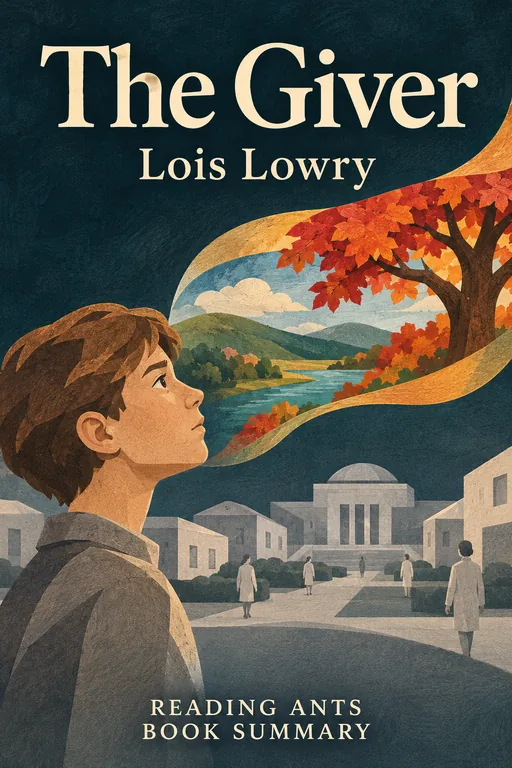
The Giver
Lois Lowry
In a perfectly controlled community with no pain, choice or color, a boy about to turn twelve is chosen to hold the memories of the past, and discovers the terrible price his people pay for their safety.
🎒 Young Adult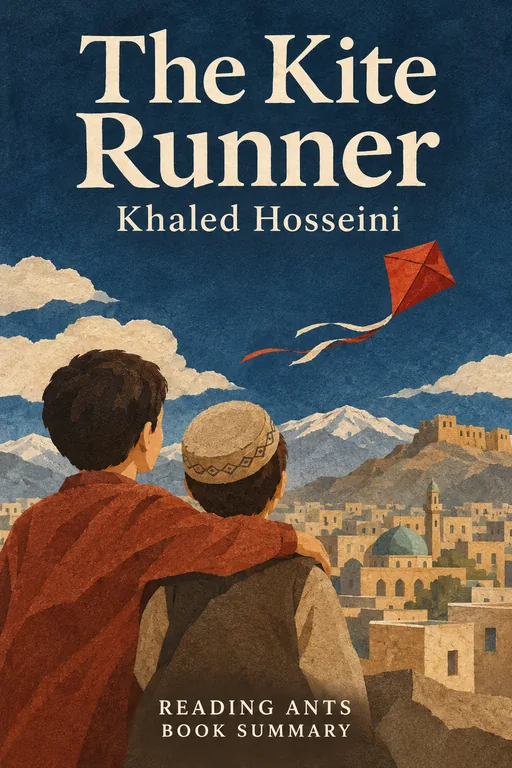
The Kite Runner
Khaled Hosseini
A wealthy boy in Kabul betrays his loyal best friend on the day of a kite tournament, and decades later, after fleeing to America, he returns to a Taliban-ruled Afghanistan to try to make things right.
✨ Modern Fiction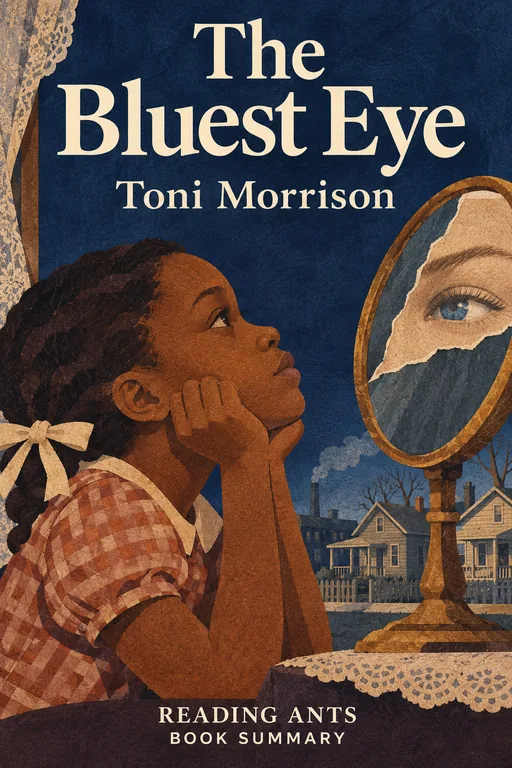
The Bluest Eye
Toni Morrison
In 1940s Ohio, a poor Black girl named Pecola Breedlove, who believes that she is ugly, prays for blue eyes, and the community's failure to protect her leads to tragedy.
✨ Modern FictionWant something different?
Pick another topic and we will show you three books to start with.