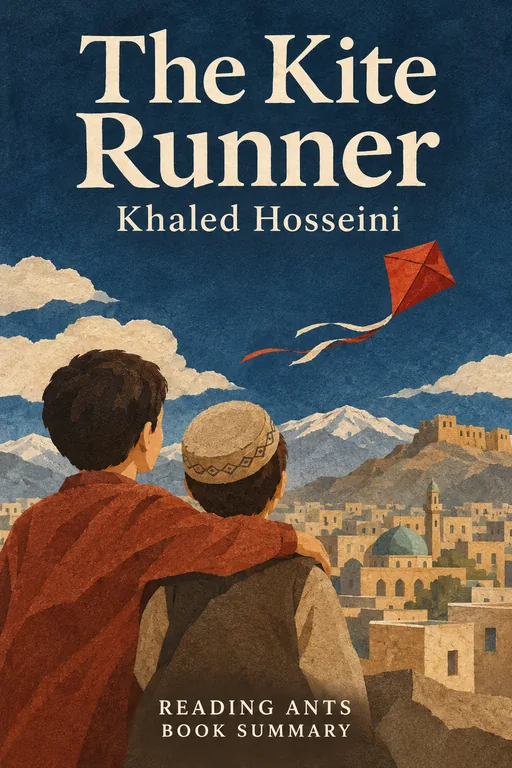
The Kite Runner
A wealthy boy in Kabul betrays his loyal best friend on the day of a kite tournament, and decades later, after fleeing to America, he returns to a Taliban-ruled Afghanistan to try to make things right.
Overview
The Kite Runner begins in Kabul, Afghanistan, in the 1970s, before war destroyed the country. Amir, the son of a wealthy, respected businessman, grows up alongside Hassan, the son of his father’s servant. Hassan belongs to the Hazara minority, who face discrimination, but the boys are inseparable, and Hassan is fiercely loyal. One winter day, after the city’s great kite-fighting tournament, Amir witnesses a terrible act of violence against Hassan and fails to help him, a betrayal that shapes the rest of his life. Khaled Hosseini’s first novel, a story of friendship, guilt and redemption set against the history of modern Afghanistan, became a worldwide bestseller.
Main Characters
- Amir: the narrator, a sensitive boy who longs for his father’s approval.
- Hassan: Amir’s loyal, kind-hearted friend and servant, a Hazara boy.
- Baba: Amir’s powerful, admired father.
- Ali: Baba’s servant and Hassan’s presumed father.
- Rahim Khan: Baba’s wise friend, who encourages Amir’s writing.
- Assef: a cruel, violent bully.
- Soraya: an Afghan woman Amir marries in America.
- Sohrab: Hassan’s son.
Full Summary
Two Boys in Kabul
Amir and Hassan grow up together in Baba’s grand house in Kabul. Amir’s mother died giving birth to him, and Hassan’s mother ran away. The boys fly kites, climb trees and read stories, though Hassan cannot read, so Amir reads to him. Hassan is always loyal, defending Amir from bullies, especially Assef, a cruel older boy who despises Hazaras.
Amir longs for his father’s approval. Baba is brave and generous but seems disappointed that his son prefers books to sports. Only Rahim Khan encourages Amir’s love of writing. Amir sometimes feels jealous of Baba’s affection for Hassan, and he is sometimes unkind to his friend, who never stops forgiving him.
The Tournament and the Alley
In the winter of 1975, Amir enters the city’s kite-fighting tournament, in which fliers try to cut each other’s strings. Hassan, the best “kite runner” in Kabul, can always tell where a falling kite will land. Amir wins the tournament, and Baba is proud at last. Hassan runs to catch the last cut kite for him, promising that he would do it for Amir a thousand times over.
When Amir goes looking for Hassan, he finds him trapped in an alley by Assef and two friends. Hassan refuses to hand over the kite, and Assef sexually assaults him. Amir watches from hiding and does nothing, then runs away. Afterward he pretends not to know what happened.
Betrayal
Overwhelmed by guilt, Amir can no longer bear to be near Hassan. He wants him gone. Soon after his birthday, he hides money and a new watch under Hassan’s mattress and accuses him of stealing. Hassan, knowing the truth, falsely confesses to protect Amir. Baba forgives him, but Ali insists that they leave, and they go away forever.
Exile in America
After the Soviet invasion of Afghanistan in 1979, Baba and Amir flee, in 1981, to Pakistan in a dangerous journey hidden in a fuel truck, and eventually settle in Fremont, California. Baba, once a wealthy man, works at a gas station and sells goods at a flea market. Amir goes to college and becomes a writer. At the flea market, he meets Soraya, the daughter of an Afghan general, and they marry. Soon after, Baba dies of cancer. Amir and Soraya are unable to have children.
A Way to Be Good Again
In 2001, Rahim Khan, now very ill in Pakistan, calls Amir and tells him there is a way to be good again. In Peshawar, he reveals devastating news: Hassan and his wife were killed by the Taliban, who now rule Afghanistan, and their young son, Sohrab, is in an orphanage in Kabul. Rahim Khan also reveals a secret: Hassan was Baba’s son, making him Amir’s half-brother.
Amir realizes that his father lived with his own guilt and tried to make up for it through good deeds. Amir agrees to go to Kabul to rescue Sohrab.
Return to Kabul
Kabul is in ruins. With the help of a driver named Farid, Amir finds the orphanage and learns that Sohrab has been taken by a Taliban official, who has been sexually abusing boys from the orphanage. At a football stadium, Amir watches the official oversee the public execution of a couple by stoning. Arranging a meeting, Amir discovers that the official is Assef. Assef agrees to let Sohrab go only if Amir fights him. Assef beats Amir brutally, but Sohrab shoots Assef in the eye with a brass ball from his slingshot, just as Hassan once threatened to do years ago. Amir and Sohrab escape.
Sohrab
In Pakistan, Amir recovers from his injuries and tries to adopt Sohrab, but the legal process is difficult. When Amir mentions that Sohrab may have to return to an orphanage for a while, the boy, terrified, attempts suicide. He survives but stops speaking. Eventually Amir and Soraya bring him to America, where he remains silent and withdrawn.
One day, at a gathering of Afghans in a park, Amir buys a kite and flies it with Sohrab. When he cuts another kite’s string, he sees the first hint of a smile on the boy’s face. Amir runs to catch the falling kite for him, telling Sohrab he would do it a thousand times over. It is only a small smile, but it is a beginning.
Why It Matters
The Kite Runner, published in 2003, was one of the first major English-language novels by an Afghan-born author. It became an international bestseller, sold many millions of copies, was translated into dozens of languages and was adapted into a 2007 film and a stage play.
At a time when much of the world knew Afghanistan only through news of war and terrorism after 2001, the novel gave readers a rich, human picture of Afghan culture, family life and history, from the peaceful years of the monarchy through the Soviet war and the Taliban. It also drew attention to the persecution of the Hazara people. Its themes of guilt, friendship and redemption have made it a common choice in high school and university classes.
Key Takeaways
- Guilt can shape a lifetime. Amir’s failure to act haunts him for decades.
- Loyalty is precious. Hassan’s selfless devotion stands in sharp contrast to Amir’s betrayal.
- Redemption is possible, but costly. Amir must face danger to make amends.
- Prejudice causes deep harm. Discrimination against Hazaras shapes the characters’ lives.
- Fathers and sons carry hidden burdens. Baba’s secret mirrors Amir’s own guilt.
What We Can Learn
The novel teaches the importance of standing up for others. Amir’s silence in the alley shows how fear can stop us from doing what is right, and how much regret that can cause. Even small acts of courage, like speaking up when someone is being bullied, matter.
It also shows that it’s never too late to try to make amends. While Amir cannot undo his betrayal, his choice to rescue Sohrab gives his life new meaning. When we’ve hurt someone, taking responsibility and acting to repair the damage can begin healing, for them and for us.
Finally, the book encourages us to look beyond news headlines and understand the people behind them, with their histories, cultures and dreams.
Criticism and Counterpoints
Some critics found the plot too dependent on coincidences, such as Assef reappearing as Sohrab’s captor and Sohrab using a slingshot exactly as Hassan had once threatened to. Others felt the story became melodramatic in its second half.
Some readers, including Afghan readers, have noted that the novel presents the Hazara characters, especially Hassan, as almost saintly victims seen through the eyes of a wealthy Pashtun narrator, rather than giving them their own voice. The book’s portrayal of sexual violence has also led to challenges in some schools. Defenders argue that the novel exposes these injustices honestly and has built empathy for Afghans around the world.
Who Should Read It
This book suits older teenagers and adults who can handle mature themes, including sexual violence and war. It is gripping and emotional, and it is often read in book clubs and classrooms. Readers who want to understand modern Afghanistan will find it a powerful starting point.
Want the whole book?
A summary is a taste, not the meal. Here is where to find the full book.
You reached the end 🎉
Nicely done. Mark this one as read, and we will suggest what to read next.
Read this next
A Thousand Splendid Suns
Khaled Hosseini
Two Afghan women from different backgrounds, forced into the same abusive marriage, become unlikely allies, and find the strength to resist through friendship and love as their country is torn apart by war.
✨ Modern Fiction
The Reluctant Fundamentalist
Mohsin Hamid
In a Lahore cafe, a Pakistani man tells an American stranger how he rose in New York, how September 11 changed his feelings, and why he came home.
🌍 World Literature
Persepolis
Marjane Satrapi
In black-and-white comics, Marjane Satrapi tells of growing up in Iran during the Islamic Revolution and the Iran-Iraq war, then living alone in Europe and returning home, searching for where she belongs.
👤 Real Lives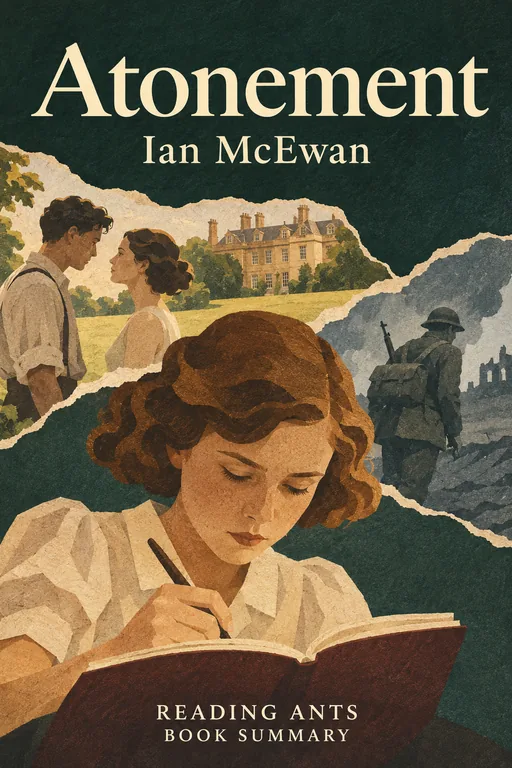
Atonement
Ian McEwan
A thirteen-year-old girl with a vivid imagination makes a false accusation that destroys a young couple's lives, and spends the rest of her own life trying to make up for it.
✨ Modern Fiction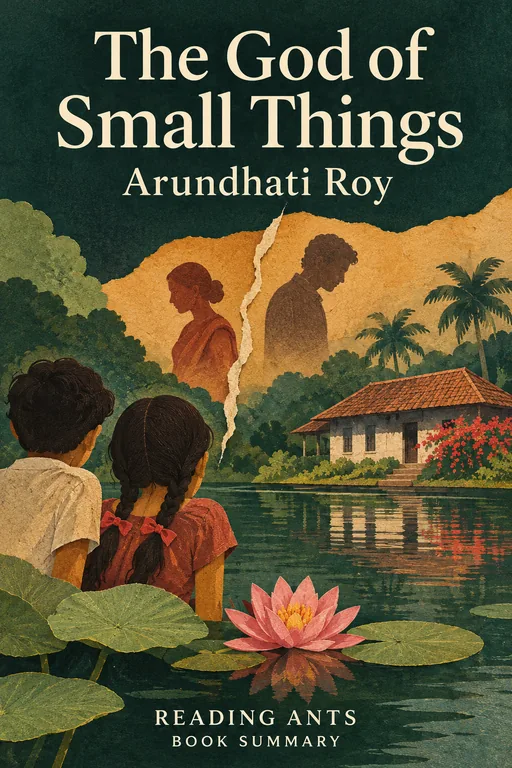
The God of Small Things
Arundhati Roy
In Kerala, India, a pair of twins grows up in a divided family where a forbidden love across caste lines leads to a tragedy that haunts them for the rest of their lives.
✨ Modern Fiction
The Bluest Eye
Toni Morrison
In 1940s Ohio, a poor Black girl named Pecola Breedlove, who believes that she is ugly, prays for blue eyes, and the community's failure to protect her leads to tragedy.
✨ Modern FictionWant something different?
Pick another topic and we will show you three books to start with.