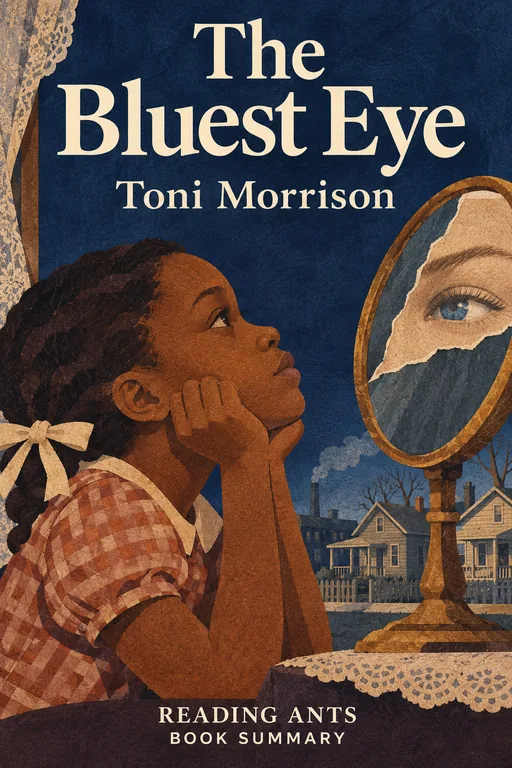
The Bluest Eye
In 1940s Ohio, a poor Black girl named Pecola Breedlove, who believes that she is ugly, prays for blue eyes, and the community's failure to protect her leads to tragedy.
Overview
The Bluest Eye is Toni Morrison’s first novel, published in 1970. It is set in Lorain, Ohio, in 1940 and 1941, and tells the story of eleven-year-old Pecola Breedlove, who longs for blue eyes because she believes they would make her loved. Her story is told mainly through the eyes of Claudia MacTeer, a girl a little younger than Pecola, who looks back on that year as an adult, and through an omniscient narrator. The title refers to the white beauty ideal that the community, and the larger society, have taught Black children to value above themselves. Morrison, who later won the Nobel Prize in Literature in 1993, wrote the novel to examine how racism can be internalized. It is a painful and beautiful book that has often been challenged in schools.
Main Characters
- Pecola Breedlove: an eleven-year-old Black girl who is poor, neglected and convinced that she is ugly.
- Claudia and Frieda MacTeer: two sisters who take Pecola in for a time, and who are spirited and observant.
- Cholly Breedlove: Pecola’s father, a damaged man who is violent and drinks.
- Pauline Breedlove: Pecola’s mother, who works as a maid and prefers her white employers’ home to her own.
- Geraldine and Junior: a middle-class Black woman and her cruel son.
- Soaphead Church: a self-styled spiritual advisor who grants Pecola’s wish in a twisted way.
- Maureen Peal: a light-skinned girl who is admired at school.
Full Summary
The Seasons
The novel is divided into the four seasons, and begins with an alternate version of a children’s reading primer, about a happy white family in a pretty house, with a dog and a cat. The text is repeated with the punctuation and spaces removed, as it falls apart. This sets up the contrast between the ideal and the real life of the Breedloves, who live in a rented storefront, and who feel that their ugliness has been assigned to them.
Autumn: The MacTeers
Claudia narrates the autumn, when Pecola is placed with the MacTeers after her father burns down their house, and becomes, for a time, a member of the family. The MacTeers are poor but loving, and Claudia and Frieda treat Pecola with kindness. Claudia recalls how she hated the white dolls that she was given for Christmas, and how she took them apart, to find out what made them lovable. Pecola, by contrast, drinks milk from a cup with Shirley Temple’s face, and says she loves to look at her. While she is with them, Pecola also has her first period, and the sisters help her through it.
Winter: Rejection
At school, Pecola is mocked by classmates. A light-skinned girl, Maureen Peal, befriends the three girls and then turns on them, calling them ugly. Pecola wishes for blue eyes more than ever, thinking that if she were beautiful, her parents would stop fighting, and the world would be kind. A boy, Junior, lures her to his house and sets his cat on her, and his mother, Geraldine, who prides herself on being respectable, throws Pecola out, calling her filth.
Spring: The Parents
The narrator gives the stories of Pauline and Cholly, who met in the South and moved north. Pauline, who has a damaged foot, found refuge in movies and in the idea of white beauty, and in her job as a servant for a well-off white family, whom she cares for more than her own. Cholly, as a young man, was abandoned by his mother and humiliated by white men who forced him to perform sexually. These histories show how the Breedloves were shaped by cruelty, and how pain is passed down. In the end, Cholly, drunk, sees Pecola washing dishes, feels a confused mixture of tenderness and rage, and rapes her.
Summer: The Violation
By summer, Pecola is pregnant by her father. When she tells her mother, Pauline beats her and does not believe her. The community whispers about the pregnancy, and some wish that the baby will die. The MacTeer girls, who plant marigold seeds and hope that the baby will live, are the only ones who care. The seeds do not grow, and Pecola’s baby is born prematurely and dies.
Soaphead and the End
Pecola goes to Soaphead Church, a self-styled spiritual advisor who is in fact a child sexual predator, and asks him for blue eyes. He pretends to give her the wish by asking her to feed poisoned meat to a dog, and she believes that the dog’s death is a sign. He then tells her that her wish has been granted, and Pecola believes that she has blue eyes. She loses her mind, and talks to an imaginary friend about how beautiful her eyes are. Claudia, as an adult, reflects that the community used Pecola as a scapegoat, and that its refusal to care for her was the real failure.
Why It Matters
The Bluest Eye introduced Morrison’s voice, and began a career that included Beloved and Song of Solomon. It was one of the first novels to explore, with such depth, the effects of racism on the self-image of Black girls, and has become a central text in American literature courses. It has also been widely challenged and banned, for its depiction of sexual abuse, which has made it one of the most frequently contested books.
The novel’s insight that beauty standards can be a form of violence has influenced discussions in many fields.
Key Takeaways
- Racism can be internalized. Pecola hates her own appearance.
- Communities can fail the vulnerable. Many people ignore or blame Pecola.
- Beauty ideals can harm. The white standard wounds Black girls.
- Pain is passed down. Cholly and Pauline’s histories explain but do not excuse.
- Care matters. Claudia and Frieda’s kindness stands out.
What We Can Learn
The novel invites us to look at the images we show children, and the messages about worth and beauty they carry. It shows how deeply those messages can injure.
It also shows that those who have been harmed may harm others, and that understanding how cruelty is passed on is a step toward ending it.
Finally, it encourages us to notice and protect the children around us who are neglected or scorned.
It also reminds us that silence about harm is itself a kind of harm, and that listening to children when they tell us something painful is a basic duty.
Criticism and Counterpoints
Many readers find the novel very hard to read because of its depiction of incest and the rape of a child, and some have argued that it should not be taught to young teenagers. Others say that Pecola is so passive, and so completely victimized, that she has no voice, which may be both the novel’s point and its limit.
Some critics also note that the structure, shifting between narrators, can be confusing, and that Cholly’s backstory risks making him sympathetic. Others argue that the novel’s honesty is exactly what makes it necessary.
Who Should Read It
This book is for mature readers. It contains graphic discussion of child sexual abuse and may be very upsetting. It is best read with support and discussion, and by readers who are ready for its subject.
Want the whole book?
A summary is a taste, not the meal. Here is where to find the full book.
You reached the end 🎉
Nicely done. Mark this one as read, and we will suggest what to read next.
Read this next
Beloved
Toni Morrison
A formerly enslaved woman living in Ohio after the Civil War is haunted by the ghost of the daughter she killed to save her from slavery, and by the painful memories she has tried to bury.
✨ Modern Fiction
Song of Solomon
Toni Morrison
Macon "Milkman" Dead, a self-absorbed young man from Michigan, goes south in search of a family treasure and finds instead his family's history, and learns to take responsibility and to fly.
✨ Modern Fiction
Their Eyes Were Watching God
Zora Neale Hurston
Janie Crawford tells her best friend the story of her three marriages, as she moves from a girl taught to find security to a woman who finds love and her own voice in the Florida of the early twentieth century.
📜 Classics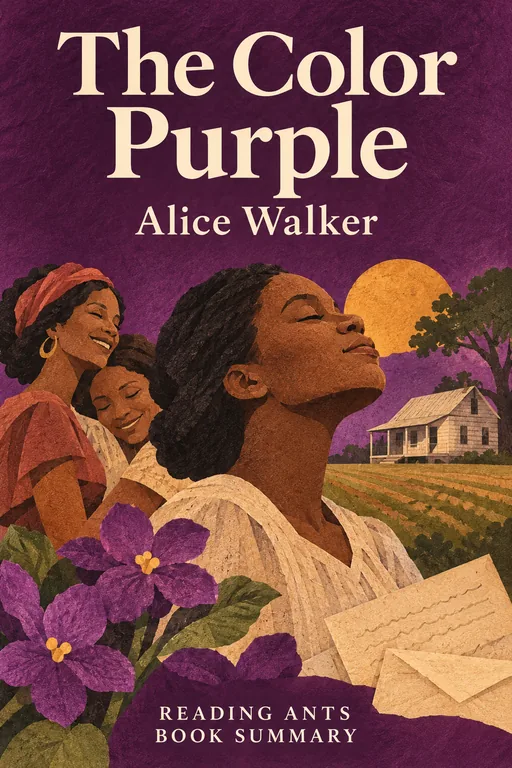
The Color Purple
Alice Walker
Told in letters, the story follows Celie, a poor Black woman in rural Georgia who survives abuse and loss, and through the love of other women finds her voice, her independence and joy.
✨ Modern Fiction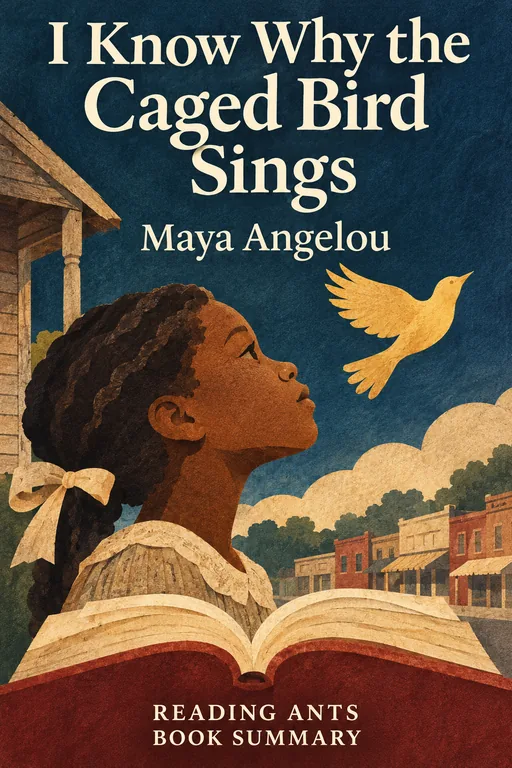
I Know Why the Caged Bird Sings
Maya Angelou
Maya Angelou tells of her childhood and youth in the segregated South and in California, a story of pain, silence and discovery in which words and books help her find her voice.
👤 Real Lives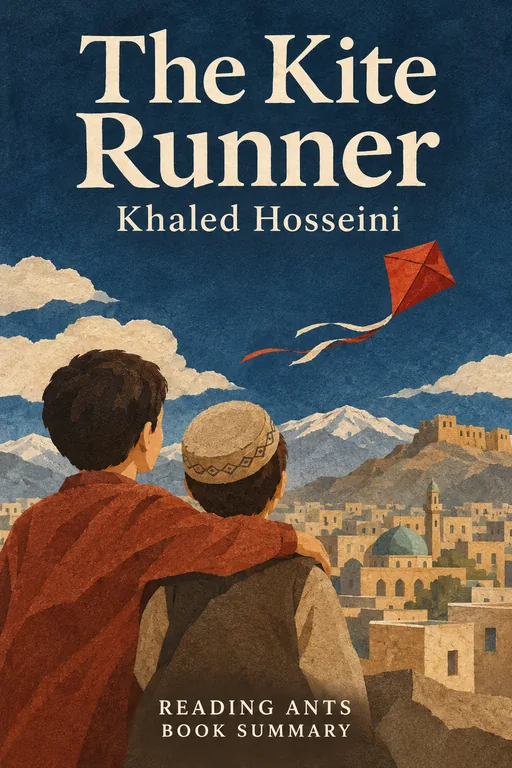
The Kite Runner
Khaled Hosseini
A wealthy boy in Kabul betrays his loyal best friend on the day of a kite tournament, and decades later, after fleeing to America, he returns to a Taliban-ruled Afghanistan to try to make things right.
✨ Modern FictionWant something different?
Pick another topic and we will show you three books to start with.