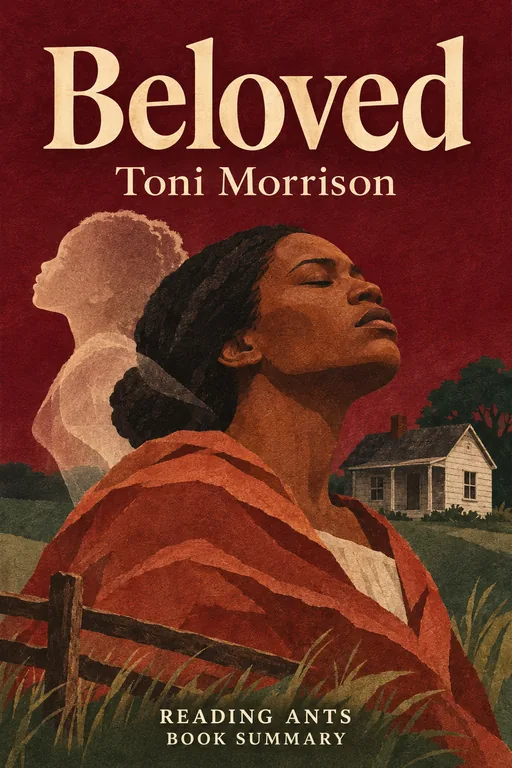
Beloved
A formerly enslaved woman living in Ohio after the Civil War is haunted by the ghost of the daughter she killed to save her from slavery, and by the painful memories she has tried to bury.
Overview
Beloved, published in 1987, is a novel by the American author Toni Morrison, inspired by the true story of Margaret Garner, an enslaved woman who escaped to Ohio in 1856 and killed her young daughter rather than see her returned to slavery. The novel is set in the years after the American Civil War. Sethe, who escaped slavery eighteen years earlier, lives with her teenage daughter, Denver, in a house at 124 Bluestone Road that is haunted by a baby ghost. When a mysterious young woman called Beloved appears at their door, the past that Sethe has tried to leave behind comes flooding back. Morrison’s powerful, poetic novel won the Pulitzer Prize and helped her win the Nobel Prize in Literature in 1993.
Main Characters
- Sethe: a strong, proud woman who escaped slavery and bears terrible scars.
- Denver: Sethe’s shy, lonely younger daughter.
- Beloved: a mysterious young woman who appears at 124.
- Paul D: a former fellow slave at Sweet Home who arrives at Sethe’s house.
- Baby Suggs: Sethe’s mother-in-law, a spiritual leader who has died.
- Halle: Sethe’s husband, who disappeared during their escape.
- Schoolteacher: Mrs. Garner’s cruel relative, who takes over the running of Sweet Home.
- Stamp Paid: an old man who helps others escape.
Full Summary
124
In 1873, in Cincinnati, Ohio, the house at 124 Bluestone Road is angry. Sethe and her daughter Denver share it with the ghost of Sethe’s baby, whose angry presence breaks mirrors and leaves small handprints in cake. Sethe’s two sons ran away years earlier, and her mother-in-law, Baby Suggs, once a respected preacher, died some years after the events of 1855.
One day, Paul D, a man who worked with Sethe years ago at a Kentucky plantation called Sweet Home, arrives. He drives the ghost out of the house. For the first time in years, Sethe feels a chance of happiness.
Sweet Home
Gradually, Sethe’s memories emerge. At Sweet Home, owned by the relatively kind Mr. Garner, the enslaved men and women were treated better than most. When Garner died, Mrs. Garner’s relative, a cruel man known as Schoolteacher, took over the running of the farm. He treated the enslaved people as animals, measuring their bodies and listing their “animal” qualities. Sethe, pregnant, was whipped so badly that her back is scarred with a pattern like a tree. Her husband, Halle, who was supposed to meet her during their escape, never came, and Paul D later hears he went mad after witnessing something terrible.
Sethe sent her children ahead to freedom and followed alone, in the last stages of pregnancy. On the way, a white girl named Amy Denver helped her give birth to Denver in a boat on the river. Sethe reached 124 and spent twenty-eight days free, the happiest of her life.
The Newcomer
Then Beloved walks out of the water and into their yard, a young woman of about twenty, with new skin and a strange way of speaking. Sethe, Denver and Beloved become closely involved. Denver, lonely and isolated, is overjoyed. Paul D distrusts Beloved, who seems to have an eerie power over him and forces him to touch her, leading to a disturbing encounter.
When Paul D learns the truth about Sethe’s past, from a newspaper clipping that Stamp Paid shows him, he is shaken and leaves.
The Terrible Day
The novel finally reveals what happened in 1855. Schoolteacher came to Ohio with a slave catcher to take Sethe and her children back to slavery. Sethe, seeing him in the yard, ran with her children into a shed. Believing that death was better than a life in slavery, she tried to kill all her children. She succeeded only in killing her baby daughter, whose gravestone she could only afford to have carved with one word: “Beloved.” The slave catchers left, horrified, and Sethe was sent to jail and later allowed to go home.
Beloved’s Hunger
Sethe realizes that Beloved is the reincarnation of the daughter she killed. Consumed by guilt and love, she tries to explain and make up for the past. Beloved becomes demanding, taking more and more of Sethe’s attention and food, while Sethe wastes away. Beloved grows large, pregnant-looking and angry, as the two women lock themselves in a world of grief.
Denver realizes that her mother is being destroyed. For the first time, she leaves 124 and asks the community for help, a step she had always been too afraid to take. The neighbors, who had shunned the family for years out of judgment and fear, begin to bring food.
The Exorcism
One day, Mr. Bodwin, the white man who once helped Baby Suggs, arrives in his cart to give Denver a job. Sethe, seeing him approach, believes he is Schoolteacher coming back and attacks him with an ice pick. The women of the community, who have gathered outside 124 to pray and sing, restrain her. In the confusion, Beloved vanishes.
Aftermath
Paul D returns and finds Sethe weak and broken, lying in Baby Suggs’s bed. He tells her that she is her own best thing. Gently, he promises to care for her, and for the first time, she begins to see herself as worth saving. The novel ends as the community slowly forgets Beloved, with a closing refrain that her story is not one to pass on, a phrase that can mean both to hand down and to leave behind.
Why It Matters
Beloved is widely considered one of the greatest American novels of the twentieth century. It won the Pulitzer Prize for Fiction in 1988 and was a central work for Morrison’s Nobel Prize in 1993. In a 2006 survey of writers and critics by The New York Times, it was named the best American novel of the previous twenty-five years.
The novel brought the inner, emotional reality of slavery, the damage to families, bodies and minds, into American literature with unprecedented force, rejecting simple, comfortable stories about the past. It has been taught in schools and universities worldwide, adapted into a 1998 film, and frequently debated, including in recent controversies over book bans in American schools.
Key Takeaways
- The past haunts the present. Sethe cannot escape her memories or her guilt.
- Slavery destroyed families and minds. Its harm lasted long after freedom.
- Love can be both devotion and danger. Sethe’s love for her children leads to terrible acts.
- Community can heal. The neighbors’ support helps break Beloved’s hold.
- Telling painful truths matters. The novel insists on remembering what has been silenced.
What We Can Learn
Beloved teaches that unprocessed trauma doesn’t disappear; it can shape lives for decades. Facing painful memories, ideally with support from others, is part of healing.
It also shows the importance of community. When Sethe and Denver isolate themselves, they suffer. When the neighbors come together, they offer help that breaks the cycle. Reaching out, and responding to those in need, can save lives.
Finally, the novel asks us to bear witness to history, including the parts that are painful to look at. Understanding the human cost of slavery helps us understand the world today.
Criticism and Counterpoints
Many readers find Beloved challenging because of its nonlinear structure, shifting viewpoints and poetic, dreamlike style. Its violence and sexual content are disturbing, and it has been challenged and banned in some school districts for these reasons. Some critics have also argued that supernatural elements, such as the ghost, can confuse its historical message.
Others have debated whether the novel focuses too much on suffering and trauma, or whether it risks making suffering too central to Black identity. Supporters, including Morrison herself, argue that its portrayal of pain is essential for honest memory, and that the novel also celebrates resilience, love and community.
Who Should Read It
This novel suits mature teens and adults ready for a demanding, emotional read. It contains very painful material. It rewards patient, attentive reading, and many readers find it unforgettable, though others need to take breaks.
Want the whole book?
A summary is a taste, not the meal. Here is where to find the full book.
You reached the end 🎉
Nicely done. Mark this one as read, and we will suggest what to read next.
Read this next
The Bluest Eye
Toni Morrison
In 1940s Ohio, a poor Black girl named Pecola Breedlove, who believes that she is ugly, prays for blue eyes, and the community's failure to protect her leads to tragedy.
✨ Modern Fiction
Song of Solomon
Toni Morrison
Macon "Milkman" Dead, a self-absorbed young man from Michigan, goes south in search of a family treasure and finds instead his family's history, and learns to take responsibility and to fly.
✨ Modern Fiction
The Color Purple
Alice Walker
Told in letters, the story follows Celie, a poor Black woman in rural Georgia who survives abuse and loss, and through the love of other women finds her voice, her independence and joy.
✨ Modern Fiction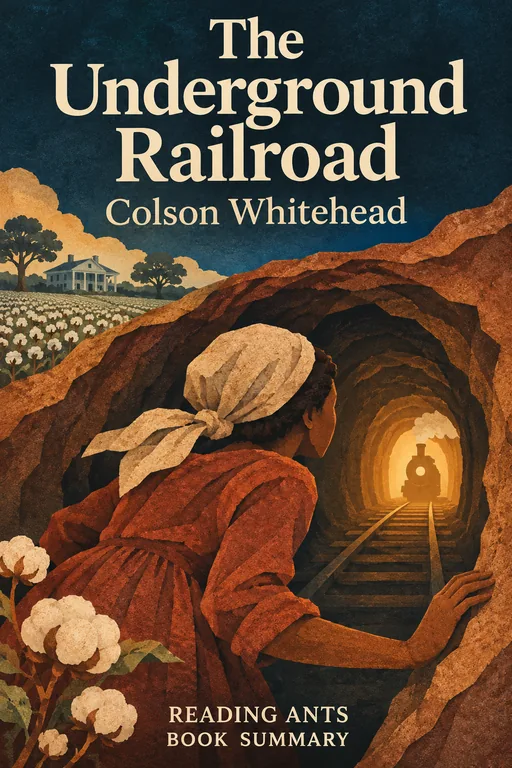
The Underground Railroad
Colson Whitehead
Cora, an enslaved young woman on a Georgia cotton plantation, escapes on a literal underground railroad of tunnels and trains, and flees through a series of American states, each a different version of the nation's racism, pursued by a relentless slave catcher.
✨ Modern Fiction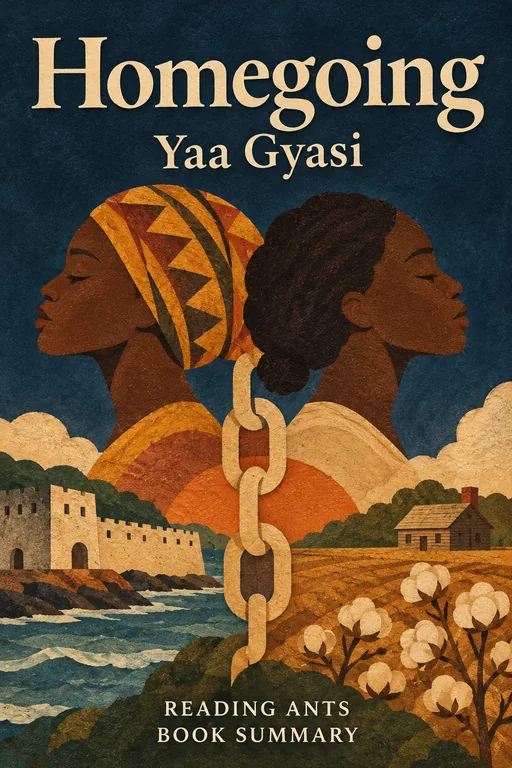
Homegoing
Yaa Gyasi
Starting with two half-sisters in eighteenth-century Ghana who never meet, one married to a British slaver and one sold into slavery, this novel follows seven generations of each branch of their family, in Africa and America.
✨ Modern Fiction
The Kite Runner
Khaled Hosseini
A wealthy boy in Kabul betrays his loyal best friend on the day of a kite tournament, and decades later, after fleeing to America, he returns to a Taliban-ruled Afghanistan to try to make things right.
✨ Modern FictionWant something different?
Pick another topic and we will show you three books to start with.