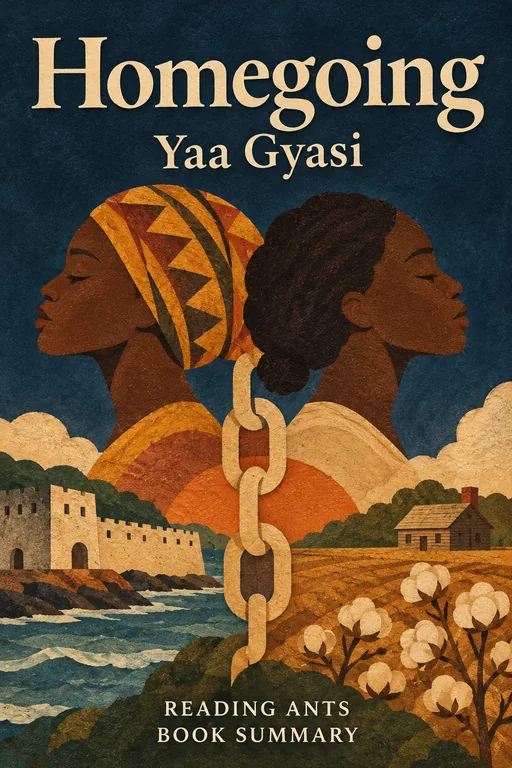
Homegoing
Starting with two half-sisters in eighteenth-century Ghana who never meet, one married to a British slaver and one sold into slavery, this novel follows seven generations of each branch of their family, in Africa and America.
Overview
Homegoing is a debut novel by Yaa Gyasi, published in 2016, when she was twenty-six. Gyasi, who was born in Ghana and raised in Alabama, wrote it after a trip to Ghana, where she toured the slave forts. The book is structured as a series of linked short stories, each focusing on a different descendant, alternating between the two branches. One branch stays in Ghana, and the other is taken to America. It covers about three hundred years, from the slave trade to the present. The novel won the PEN/Hemingway Award and has been widely praised for its scope.
Main Characters
- Effia: a beautiful Fante woman married to a British slaver, living in Cape Coast Castle.
- Esi: her half-sister, an Asante woman captured and held in the dungeons below.
- Quey, James, Abena, Akua, Yaw and Marjorie: Effia’s descendants, in Ghana and later America.
- Ness, Kojo, H, Willie, Sonny and Marcus: Esi’s descendants, in America.
- James Collins: the British governor who marries Effia.
- Ma: the woman who helps Ness’s young son Kojo escape slavery.
Full Summary
Effia and Esi
In the 1700s, in what is now Ghana, Effia is born in a Fante village on the night of a fire, and Esi, a few years later, in an Asante one. Effia is cruelly treated by her stepmother and married off to James Collins, the British governor of Cape Coast Castle, and lives in comfort above, though for a time she is childless. Esi, her half-sister, is captured in a war, and held in the dungeon of the same castle, to be sold. Neither knows of the other.
The castle is a real place, Cape Coast Castle in Ghana, where thousands of captives were held in dungeons before being shipped to the Americas. Gyasi puts the two half-sisters in the same building but on opposite sides of its floor, a powerful image of how one family can be split by history.
Effia’s Line
Effia’s son, Quey, grows up as a mixed-race man, and is sent to be educated in England, but returns to work in the slave trade. His son James leaves the family’s world for a quieter life, and James’s daughter Abena has a child with a man named Ohene Nyarko and, pregnant, leaves her village. Her daughter Akua, raised among missionaries, is haunted by nightmares of a woman on fire, and in a trance she sets a fire that kills her daughters. Akua’s son Yaw, who is saved from the fire, becomes a schoolteacher, and carries burn scars on his face. Through these lives, the novel shows the effects of colonialism, war and the church on the people who stay.
Esi’s Line
Esi is shipped to America, and her daughter, Ness, is born into slavery on a plantation in the American South. Ness and her husband Sam allow themselves to be caught so that their young son Kojo can escape north with the help of a woman called Ma. Ness is whipped, and Sam is hanged. Kojo lives as a free man in Baltimore, until his pregnant wife, Anna, is kidnapped. His son H, who never knew his parents, is later arrested on a false charge and made to work in a coal mine in Alabama, under convict leasing, a system of legalized slavery after the Civil War. In subsequent chapters, the family moves north in the Great Migration.
Harlem
Esi’s great-great-granddaughter, Willie, a dark-skinned woman whose husband, Robert, can pass as white, moves to Harlem. Her son Sonny falls into heroin addiction in the 1960s, and he struggles to find his place, with the jazz clubs of the period around him. The chapters set in Harlem show the culture, music and struggles of the era, as well as the toll of racism and addiction.
Ghana and Return
On the other side, Effia’s descendants live through independence and a coup, in the twentieth century. Yaw, a schoolteacher, tells his students the story of their ancestors, including the story of the slave trade, and the book raises the question of whose version of history survives. Marjorie, a Ghanaian girl who moves to America, and who is a descendant of Effia, becomes a student and finds her way between two cultures.
Yaw teaches his students about the slave trade, to the displeasure of the headmaster, who prefers not to discuss it, and the scene shows how painful and neglected that history can be in the place where it happened. Marjorie, whose family has moved to Alabama, writes poetry about feeling like an outsider.
The Meeting
In the final chapters, Marcus, a graduate student and the descendant of Esi, travels to Ghana, with Marjorie, a descendant of Effia, whom he meets in America. Together they visit Cape Coast Castle and walk into the dungeon, where Marcus, overcome at the Door of No Return, flees to the beach. They stand in the sea, where Marjorie gives Marcus the stone she has inherited, in a moving scene, and the novel suggests that, after three hundred years, the two branches of a family have found one another. The title refers to the idea of returning home.
Why It Matters
Homegoing was widely praised for its original structure and its sweeping view of African and African American history, from the slave trade to modern times. It was a bestseller and has been compared to Roots, though it is more varied in structure. It has been taught in many schools and universities, and Gyasi was named one of the Granta best young American novelists.
Its central idea, that the effects of slavery and colonialism reach into the present, has made it a major book for discussions about legacy.
The structure, in which each chapter can be read almost as its own short story, has also been praised as a way to show how a long history is made of many individual lives, and the book is often used in classrooms for that reason.
Key Takeaways
- History’s effects pass down through generations. Each descendant bears the legacy.
- Slavery and colonialism had many forms. The book shows both Africa and America.
- A family can be divided by history. The sisters never meet.
- Names and stories connect us. Marcus and Marjorie find their roots.
- Healing requires facing the past. The final scene is a kind of return.
What We Can Learn
The novel invites us to see how a single event, like the capture of a woman, can ripple across centuries, and to think about the inherited effects of history in our own families and societies.
It also shows that stories from both sides of the Atlantic belong together, and that African history is part of the story of America.
Finally, it reminds us how important it is to preserve and share family stories.
It also reminds us that stories of families are always bigger than any one generation, and that listening to older relatives can reveal a long past.
Criticism and Counterpoints
Some critics have found that the book’s short-story structure makes it hard to connect with any single character, and that some chapters are stronger than others. Others say that the sweep of history can be superficial, and that the final meeting is too tidy. A few historians note that some details of the African chapters are simplified.
Others point out that the novel is bleak in its depiction of violence, and that its use of recurrent fire and water symbols can be heavy. Still, readers admire its ambition.
Who Should Read It
This book is for mature readers. It contains scenes of slavery, rape and violence. It is a powerful read for those interested in history and family, and works well for book clubs.
Want the whole book?
A summary is a taste, not the meal. Here is where to find the full book.
You reached the end 🎉
Nicely done. Mark this one as read, and we will suggest what to read next.
Read this next
Roots: The Saga of an American Family
Alex Haley
Beginning with Kunta Kinte, a young man seized from his village in the Gambia in 1767, this family saga follows seven generations of his descendants through slavery, the Civil War and freedom in America.
✨ Modern Fiction
Beloved
Toni Morrison
A formerly enslaved woman living in Ohio after the Civil War is haunted by the ghost of the daughter she killed to save her from slavery, and by the painful memories she has tried to bury.
✨ Modern Fiction
The Underground Railroad
Colson Whitehead
Cora, an enslaved young woman on a Georgia cotton plantation, escapes on a literal underground railroad of tunnels and trains, and flees through a series of American states, each a different version of the nation's racism, pursued by a relentless slave catcher.
✨ Modern Fiction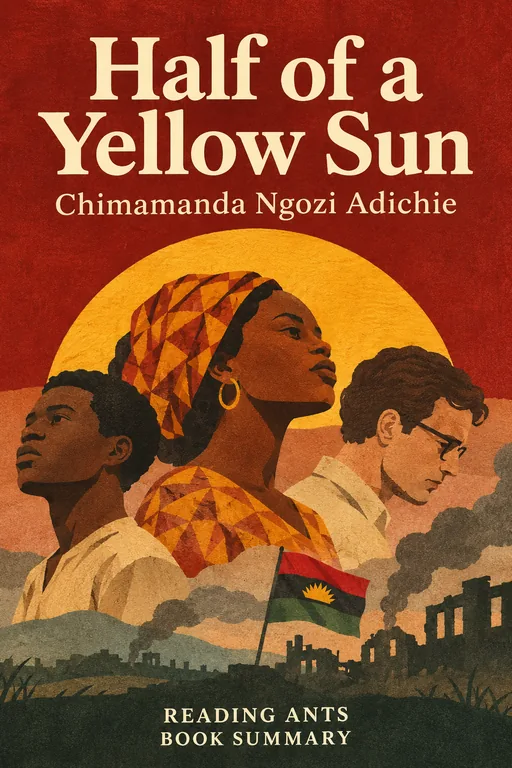
Half of a Yellow Sun
Chimamanda Ngozi Adichie
Through the intertwined lives of three people, a houseboy, a professor's lover and an English writer, the novel tells the story of Nigeria's civil war and the short-lived nation of Biafra.
✨ Modern Fiction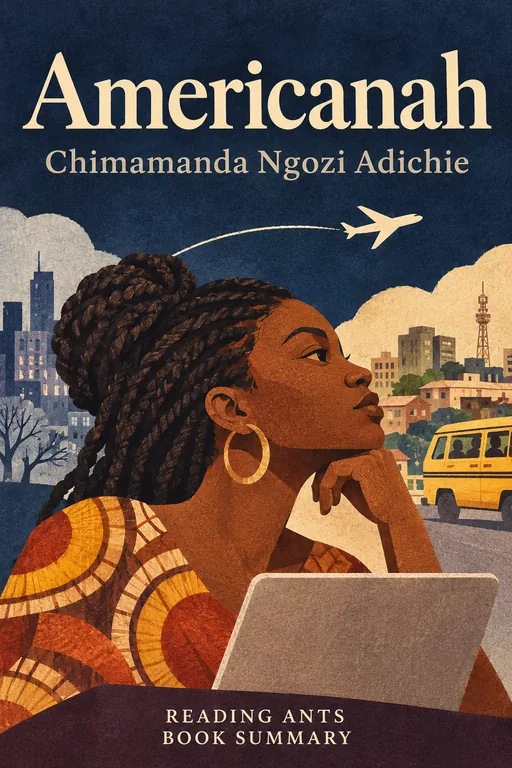
Americanah
Chimamanda Ngozi Adichie
Ifemelu and Obinze, young lovers in Lagos, are separated when she goes to study in America and he struggles in London, and the novel follows their years apart and their return to Nigeria, looking at race, identity and love.
✨ Modern Fiction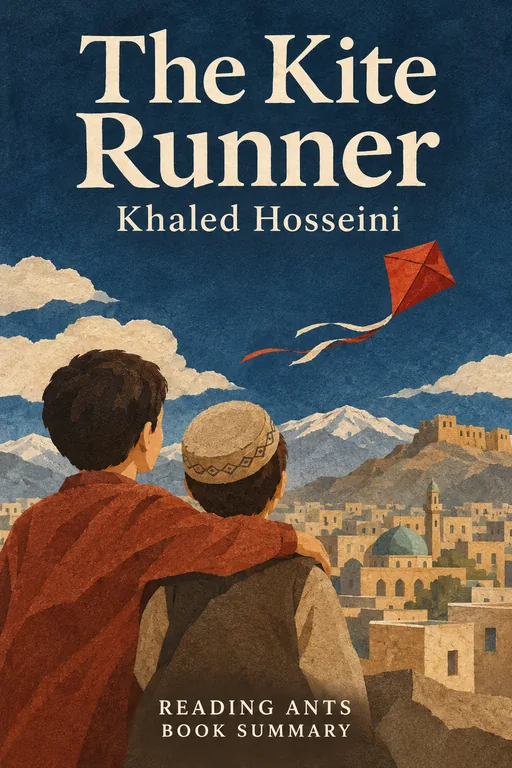
The Kite Runner
Khaled Hosseini
A wealthy boy in Kabul betrays his loyal best friend on the day of a kite tournament, and decades later, after fleeing to America, he returns to a Taliban-ruled Afghanistan to try to make things right.
✨ Modern FictionWant something different?
Pick another topic and we will show you three books to start with.