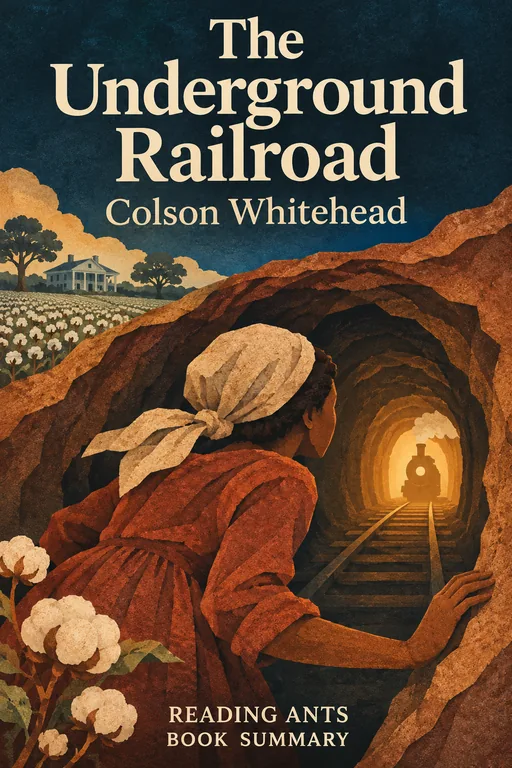
The Underground Railroad
Cora, an enslaved young woman on a Georgia cotton plantation, escapes on a literal underground railroad of tunnels and trains, and flees through a series of American states, each a different version of the nation's racism, pursued by a relentless slave catcher.
Overview
The Underground Railroad is a novel by Colson Whitehead, published in 2016, which won the Pulitzer Prize for Fiction and the National Book Award. It takes the nineteenth-century network of safe houses that helped enslaved people to escape and makes it a real railway, with tracks, tunnels and engineers. Each state that Cora passes through is a different version of the country’s racial history, with elements of the later periods of eugenics, segregation and medical abuse. Whitehead mixes the real and the fantastic to bring out the horror and the endurance of slavery. It was an Oprah’s Book Club selection, and became a TV series in 2021.
Main Characters
- Cora: a young woman born into slavery, who escapes the Randall plantation.
- Caesar: a fellow slave who invites her to join him in escaping.
- Ridgeway: a determined slave catcher who vows to capture Cora.
- Mabel: Cora’s mother, who escaped and left her behind.
- Royal: a free Black man who helps runaways.
- Martin and Ethel Wells: a white couple who hide Cora in their attic.
- Lumbly: the agent who runs the station in Georgia.
Full Summary
Randall
Cora lives on the Randall plantation in Georgia, a brutal place where the owners torture and rape. Her grandmother, Ajarry, was brought from Africa. Her mother, Mabel, disappeared when Cora was young, and she is thought to be the only person to have escaped the plantation. After the death of the elder Randall, a crueler brother takes over. Caesar, a literate slave, asks Cora to run with him, and after an act of violence she agrees.
South Carolina
Cora and Caesar discover that the Underground Railroad is real, an actual railroad with a station beneath a barn. They take the train to South Carolina, where they find a seemingly welcoming place. They are given new names, jobs and lessons. Cora works in a museum, acting as a slave in displays. But she learns of plans to sterilize Black women and to use Black men as subjects in an experiment on syphilis.
Cora is given new clothes, a bed and lessons, and the Black residents live in a dormitory with a sense of safety. She begins to hope. But the residents’ medical examinations are part of a hidden program, a reminder that kindness can hide control.
North Carolina
Cora flees again, and ends up in North Carolina, which has abolished slavery by expelling all Black people. Terror rules: Black people are hanged, and the road is lined with their bodies, in what is called the Freedom Trail. Cora is hidden by Martin and Ethel Wells in the attic for months, unable to leave, while the town holds its regular lynchings. She is eventually discovered, Ridgeway recaptures her, and the townspeople kill Martin and Ethel. Caesar, meanwhile, had been captured and killed in South Carolina.
In this chapter, the terror of the state is plain: a town holds festival lynchings on Friday nights. Cora, confined to a small attic space, can only peer through a hole at the world, and the confinement and fear are described in close detail, which makes the section one of the hardest in the book.
Tennessee
Captured by Ridgeway, Cora is taken toward Tennessee, where a fire has destroyed the land, and Royal, a free-born Black man who works with the Railroad, and two escaped people attack Ridgeway’s party and free her. Royal then travels with her to Indiana. Along the way, she thinks of Mabel, who, as Cora never learns, turned back for her but died of a snakebite in the swamp, rather than abandoning her for freedom.
Indiana
In Indiana, Cora finds refuge on the Valentine farm, a thriving community of free Black people, who live and work together. It is a place of hope, with debates, music and farming. But the farm is threatened by white neighbors, who resent its success. A debate takes place about whether to stay and fight or to flee, and the farm is raided and burned by white men from the area, and many people, including Royal, are killed. Cora, who has become part of the community, sees it destroyed.
North
Ridgeway recaptures Cora after the destruction and forces her to take him to an abandoned station nearby, where, in a final struggle, she pushes him down the stairs and leaves him behind. She travels along the tracks, alone. The novel ends with Cora heading toward an uncertain future, taking whatever freedom she can, and the final image is of her on a wagon, going west, riding with a Black wagon driver, free but marked by what she has seen.
Why It Matters
The Underground Railroad was a landmark novel, and a rare book to win both the Pulitzer Prize and the National Book Award. It was praised for its imagination and moral power, and it helped to renew interest in the history of slavery. It was adapted for television by Barry Jenkins, the director of Moonlight, and was a major cultural event.
Whitehead became the fourth writer to win the Pulitzer twice for fiction, when he won again for The Nickel Boys in 2020. The book’s central conceit, a literal railroad, has been widely discussed.
Key Takeaways
- Slavery’s legacy takes many forms. Each state reflects a different kind of oppression.
- Freedom is never simple. Cora gains it in pieces.
- Hope can survive terror. The Valentine farm shows possibilities.
- History is retold through imagination. The railroad is a metaphor.
- Resistance matters. Even small acts challenge the system.
What We Can Learn
The novel invites us to recognize that the story of slavery is not finished with emancipation, and that racism has adapted in different forms. It encourages us to look at how history is connected to the present.
It also shows the power of imagination to convey truth: by making the railroad real, Whitehead gives readers a fresh way to feel the courage of those who escaped.
Finally, it reminds us of the importance of community and hope.
It also shows us how the past lives on in the present, and the importance of facing it.
Criticism and Counterpoints
Some historians say that the novel’s mixture of periods, such as medical experiments and ghettos, is anachronistic, and might blur the specific history of slavery. Others find its violence relentless, and some readers are put off by its episodic structure, in which the characters are largely types. Some also feel that Cora is passive and reactive.
A few critics think that the book’s literal railroad takes away from the real courage of those who made the journey on foot. Still, it has been widely praised.
Who Should Read It
This book is for mature readers. It contains extreme violence, torture and sexual violence, and should be approached with care. It is a powerful, often poetic read for those ready for it.
Want the whole book?
A summary is a taste, not the meal. Here is where to find the full book.
You reached the end 🎉
Nicely done. Mark this one as read, and we will suggest what to read next.
Read this next
Beloved
Toni Morrison
A formerly enslaved woman living in Ohio after the Civil War is haunted by the ghost of the daughter she killed to save her from slavery, and by the painful memories she has tried to bury.
✨ Modern Fiction
Roots: The Saga of an American Family
Alex Haley
Beginning with Kunta Kinte, a young man seized from his village in the Gambia in 1767, this family saga follows seven generations of his descendants through slavery, the Civil War and freedom in America.
✨ Modern Fiction
Uncle Tom's Cabin
Harriet Beecher Stowe
A devout, gentle enslaved man named Tom is sold from owner to owner and finally dies at the hands of a brutal master, while other enslaved people try to escape, in a novel that shocked America into facing the cruelty of slavery.
📜 Classics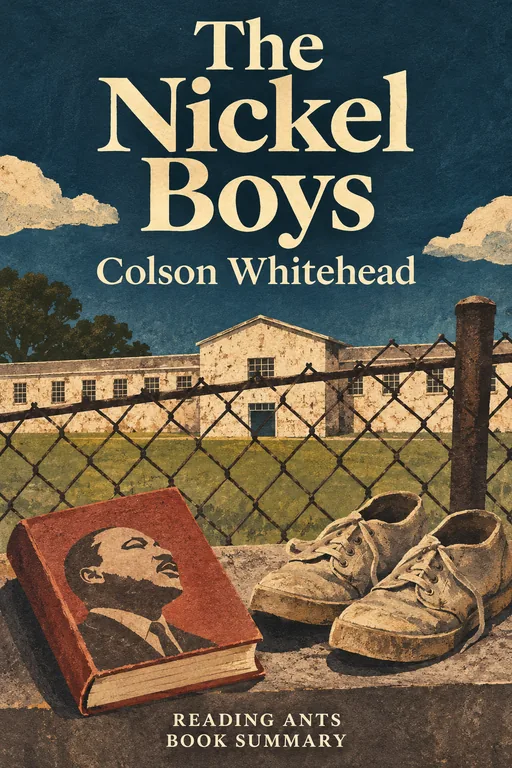
The Nickel Boys
Colson Whitehead
In 1960s Florida, a bright Black teenager, Elwood Curtis, inspired by Martin Luther King Jr., is wrongly sent to the Nickel Academy, a brutal reform school, where he tries to hold on to his ideals, while his friend Turner insists that survival requires compromise.
✨ Modern Fiction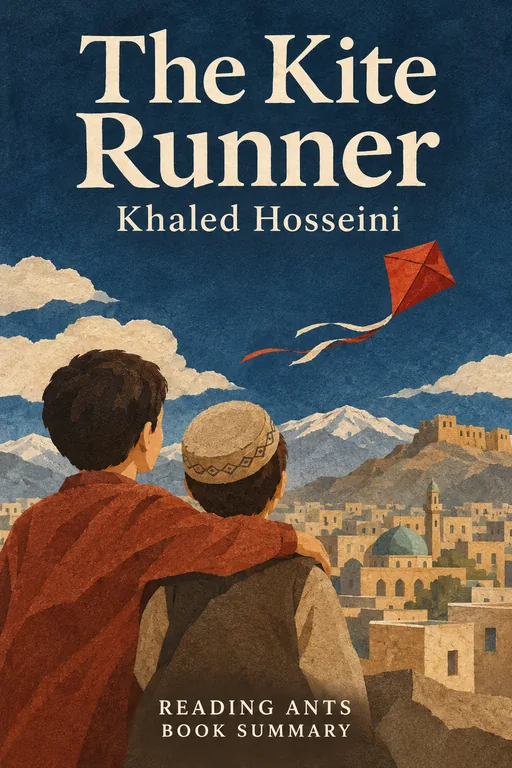
The Kite Runner
Khaled Hosseini
A wealthy boy in Kabul betrays his loyal best friend on the day of a kite tournament, and decades later, after fleeing to America, he returns to a Taliban-ruled Afghanistan to try to make things right.
✨ Modern Fiction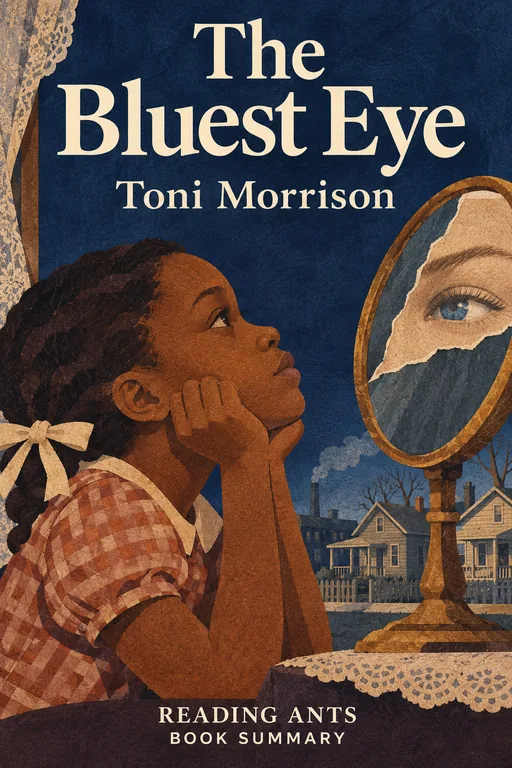
The Bluest Eye
Toni Morrison
In 1940s Ohio, a poor Black girl named Pecola Breedlove, who believes that she is ugly, prays for blue eyes, and the community's failure to protect her leads to tragedy.
✨ Modern FictionWant something different?
Pick another topic and we will show you three books to start with.