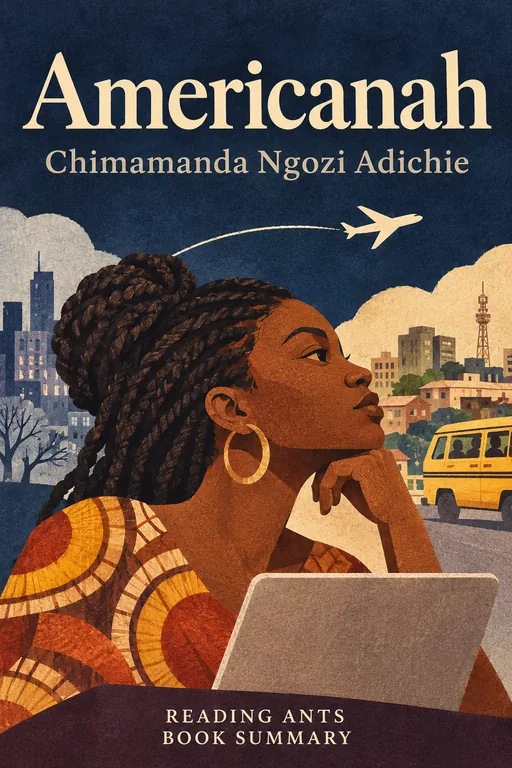
Americanah
Ifemelu and Obinze, young lovers in Lagos, are separated when she goes to study in America and he struggles in London, and the novel follows their years apart and their return to Nigeria, looking at race, identity and love.
Overview
Americanah is a novel by Chimamanda Ngozi Adichie, published in 2013, and it won the National Book Critics Circle Award. The title is a Nigerian word for someone who has been to America and come back changed. The story begins in Princeton, New Jersey, where Ifemelu lives, as she travels to nearby Trenton to get her hair braided before she returns to Lagos, and moves back through her life. It is a love story, a story of immigration and a commentary on race in America, which Ifemelu comes to understand only after she moves there. Ifemelu writes a blog about race, whose posts appear in the book, and which gives it wit and bite.
Main Characters
- Ifemelu: a bright, outspoken Nigerian woman who emigrates to the United States and becomes a blogger.
- Obinze: her teenage love, a gentle, bookish man who goes to London.
- Aunty Uju: Ifemelu’s aunt, who lives in the United States.
- Dike: Aunty Uju’s son, who grows up an American.
- Curt and Blaine: Ifemelu’s partners in the United States, a white man and a Black academic.
- Kosi: Obinze’s wife in Nigeria.
- Ginika and Emenike: friends from Lagos who go abroad.
Full Summary
The Braids
The novel begins in Princeton, where Ifemelu, who has lived in the United States for thirteen years, travels to an African salon in Trenton to get her hair braided. She has decided to return to Nigeria, after years of success as a blogger. She thinks about home, and about Obinze, the man whom she has not seen in years. The scene sets the pattern of looking back, as she remembers her life in Lagos.
The salon is in a poor part of Trenton, run by West African women who chat in a mix of languages, and the long hours that Ifemelu spends there are a bridge between her American life and her origins. She sees how hair, which is the subject of much of the novel, is tied to belonging.
Lagos
Ifemelu and Obinze meet in secondary school in Lagos, in the 1990s, when Nigeria is under a military dictatorship. They fall in love: she is witty and confident, and he is shy and well read, devoted to American literature. Their university education is interrupted by strikes, which makes people look elsewhere for opportunity. Ifemelu wins a scholarship to study in the United States, and Obinze hopes to follow.
Obinze’s mother, a university lecturer, is warm and intellectual, and her home is a place where the young lovers are welcome. Their relationship is depicted as intellectual as well as physical, with long conversations about books, politics and plans.
America
In Philadelphia, Ifemelu is dismayed by the poverty of her first months, and by the discovery that she is now “Black,” a category that she had not thought about in Nigeria. When she is desperate for money, she agrees, in an episode that haunts her, to a sexual encounter with a man in exchange for money, leaving her depressed. She breaks off contact with Obinze, unable to explain what has happened. She finds a way out, and slowly recovers.
Race and the Blog
Ifemelu begins to date Curt, a wealthy white man, and, after they break up, Blaine, a Black professor. She finds her voice in a blog whose long title promises observations about American Blacks by a non-American Black, where she writes with humor and honesty about what she observes in American race relations. The blog is a success, and becomes a business. Meanwhile, she watches her cousin Dike, a Black American teenager, deal with racism, and he later attempts to end his own life, which shakes her deeply.
Obinze in London
Obinze, denied a visa to the United States after September 11, goes to London on a temporary visa, where he works under false papers, and lives a hand-to-mouth existence as a cleaner. He is detained and deported after a marriage arrangement falls through. He then becomes a rich property developer, marries Kosi and has a daughter. But he is not satisfied, and thinks of Ifemelu.
Return
Ifemelu returns to Nigeria, takes a job at a magazine and tries to readjust. The country has changed, and she is now an outsider, an “Americanah.” She and Obinze meet again, and there is an awkward reunion that gradually turns into a love affair. He is married, and they must face the pain that this causes. The novel ends with their decision to be together, with Obinze leaving his marriage, and with a sense of hope.
Why It Matters
Americanah became one of the most admired novels of the 2010s, and put Adichie in the top rank of contemporary writers. It was chosen by the New York Times as one of the ten best books of 2013, and was widely read in book clubs. The novel’s comments on race, hair and belonging have been quoted widely.
The book is also valued for its portrayal of Nigerians as complicated, individual people, and for its willingness to treat love and politics together.
Adichie’s observations about hair, class and dating have been widely quoted and discussed in classrooms, and the novel is regularly named among the best books of the decade by critics and readers.
Key Takeaways
- Race is a social construct that is learned. Ifemelu discovers she is Black.
- Immigration brings loss and gain. Both lovers are changed.
- Honesty is a powerful tool. Ifemelu’s blog speaks plainly.
- Home is complicated. Returning is not simple.
- Love can survive separation. The lovers meet again.
What We Can Learn
The novel shows how a person’s identity can shift depending on where they are, and invites us to consider how others experience race differently. It encourages us to listen to those who have lived in two cultures.
It also demonstrates the value of speaking truthfully about uncomfortable subjects, using humor and observation, as Ifemelu does in her blog.
Finally, it reminds us that going home is never the same, and that we change as our places do.
It also reminds us that every country has its own ways of dividing people, and that seeing them from outside can be revealing.
Criticism and Counterpoints
Some critics find that the novel is too long, and that its second half, after the return to Nigeria, loses momentum. Others say that the blog posts are didactic, and that characters occasionally become mouthpieces for ideas about race. Some readers dislike the treatment of Obinze’s wife, Kosi, who is portrayed as a minor figure.
A few reviewers think that the love story is conventional. Others say that the novel’s picture of America is simplified. Still, many readers find it insightful and entertaining.
Who Should Read It
This book suits mature readers. It is long, includes sexual content and difficult themes, and is a thoughtful, witty read. It is a good choice for book groups.
It is easy to read in long sittings, despite its length.
Want the whole book?
A summary is a taste, not the meal. Here is where to find the full book.
You reached the end 🎉
Nicely done. Mark this one as read, and we will suggest what to read next.
Read this next
Purple Hibiscus
Chimamanda Ngozi Adichie
In Nigeria in the early 1990s, fifteen-year-old Kambili lives under the strict, violent religious rule of her father, until a visit to her aunt's lively home in Nsukka teaches her to laugh, to question and to speak.
✨ Modern Fiction
Half of a Yellow Sun
Chimamanda Ngozi Adichie
Through the intertwined lives of three people, a houseboy, a professor's lover and an English writer, the novel tells the story of Nigeria's civil war and the short-lived nation of Biafra.
✨ Modern Fiction
The Namesake
Jhumpa Lahiri
Gogol Ganguli, the American-born son of Bengali immigrants, struggles with his unusual name and his divided identity as he moves between his parents' traditions and the life he wants for himself.
✨ Modern Fiction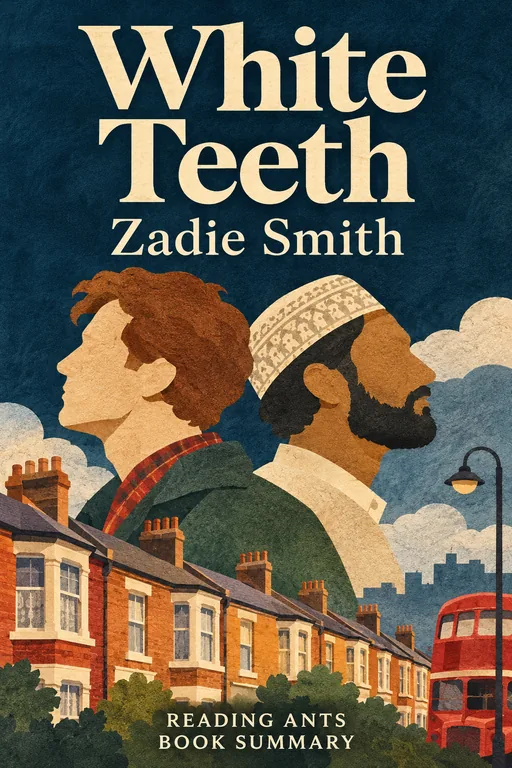
White Teeth
Zadie Smith
Two wartime friends, the Englishman Archie Jones and the Bangladeshi Samad Iqbal, and their families live and clash in multicultural North London over several decades, in a comic novel about identity, roots and chance.
✨ Modern Fiction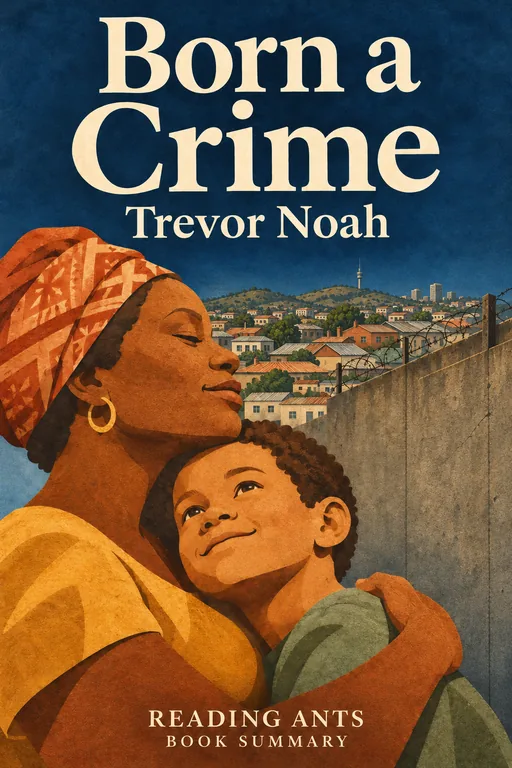
Born a Crime
Trevor Noah
Trevor Noah, the comedian, recounts growing up in South Africa as the child of a Black mother and a white father at a time when their relationship was a crime, and pays tribute to the mother who raised him.
👤 Real Lives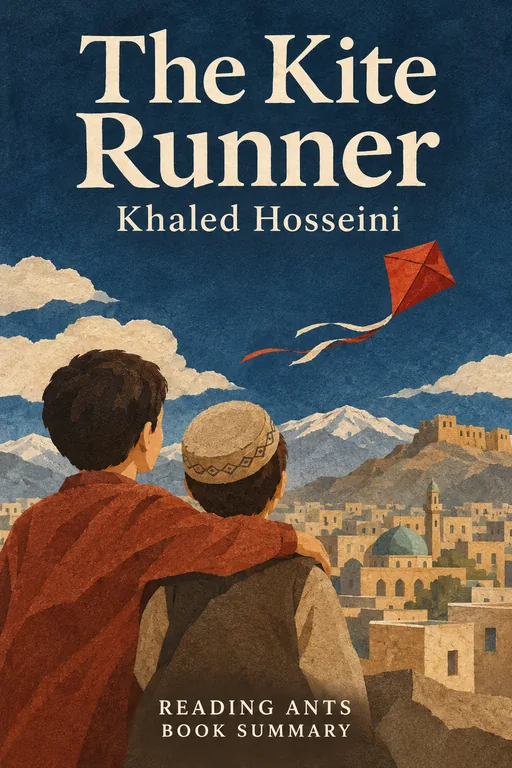
The Kite Runner
Khaled Hosseini
A wealthy boy in Kabul betrays his loyal best friend on the day of a kite tournament, and decades later, after fleeing to America, he returns to a Taliban-ruled Afghanistan to try to make things right.
✨ Modern FictionWant something different?
Pick another topic and we will show you three books to start with.