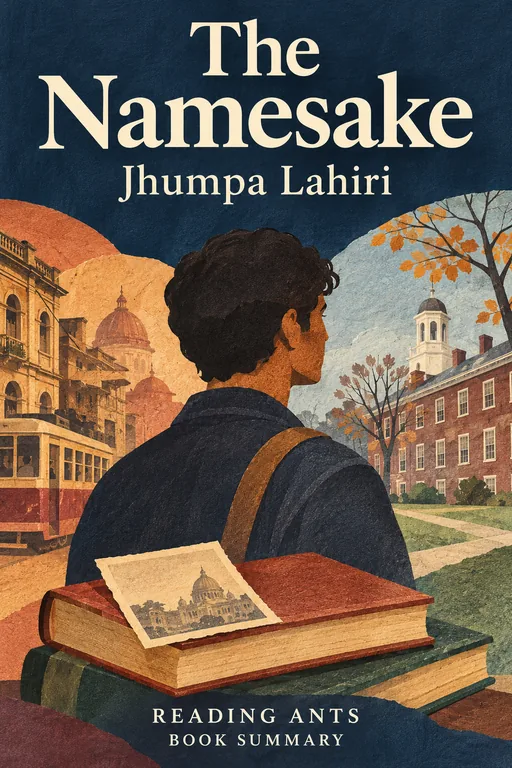
The Namesake
Gogol Ganguli, the American-born son of Bengali immigrants, struggles with his unusual name and his divided identity as he moves between his parents' traditions and the life he wants for himself.
Overview
The Namesake is a novel by Jhumpa Lahiri, published in 2003, and later adapted into a 2006 film directed by Mira Nair. Lahiri, the daughter of Bengali immigrants who was raised in Rhode Island, drew on her own experience of living between two cultures. The story begins in the late 1960s, when Ashoke and Ashima Ganguli move from Calcutta to Cambridge, Massachusetts, and follows their son Gogol from his birth to middle age. His name, taken from the Russian writer Nikolai Gogol, becomes a symbol of the awkward fit between the two worlds. The novel is quiet, precise and deeply felt, and it is considered one of the best American novels about immigration.
Main Characters
- Gogol (Nikhil) Ganguli: the protagonist, who feels ashamed of his unusual name and cut off from his heritage.
- Ashoke Ganguli: his father, an engineer and a gentle, quietly determined man.
- Ashima Ganguli: his mother, who is homesick for Calcutta but slowly builds a new life.
- Sonia: Gogol’s younger sister.
- Maxine Ratliff: a wealthy American girlfriend of Gogol’s.
- Moushumi Mazoomdar: a Bengali American woman whom Gogol marries.
Full Summary
A Strange Name
In 1968, Ashima Ganguli, who has just moved from Calcutta to Cambridge, gives birth to a son. In the Bengali tradition, a grandmother is supposed to choose the baby’s name, but a letter from India is lost, and the hospital requires a name before the family can leave. Ashoke, who has a story connected to the Russian writer Nikolai Gogol, whose book once saved his life in a train crash in India, suggests the name Gogol as a temporary name. It becomes permanent.
Growing Up
Gogol grows up in a Massachusetts suburb, in a family that holds onto Bengali food, language and festivals, but that also adopts Christmas trees and hamburgers. As a child, he is teased about his name, and he feels the weight of being different. At school, he is told that Gogol was a writer who was strange and unhappy. At fourteen, Ashoke tells him the story of the train crash, but Gogol, in his adolescence, does not fully understand.
On family trips to Calcutta, Gogol feels like a stranger, bored and uncomfortable, while his parents are at ease. These visits show the distance that opens between generations, and how an American childhood can make a family’s homeland feel foreign to the child.
Nikhil
When Gogol is eighteen, he legally changes his name to Nikhil, his “good name,” the formal name his parents had meant him to have, while Gogol was only meant as a pet name. At college at Yale, he introduces himself as Nikhil, and feels free. But his parents continue to call him Gogol, and his sense of being two people grows. He pursues an American life, dating and working as an architect in New York, and gradually grows distant from his parents.
Maxine
Gogol begins a relationship with Maxine, a rich, sophisticated young woman, and is drawn into her family’s world, with its easy cultural confidence and its elegant house. He enjoys it, but is torn. When Ashoke dies suddenly of a heart attack, while working in Ohio, Gogol, who is overwhelmed, shaves his head in the Hindu custom of mourning, and turns away from Maxine, whose relaxed life seems no longer to fit.
Moushumi
After his father’s death, Gogol returns to his mother’s world, and, at her suggestion, meets Moushumi, a Bengali American woman whom he knew as a child. They fall in love and marry, but the marriage soon suffers, as Moushumi, who has lived in Paris, is restless, and has an affair. Gogol realizes that they were trying to live up to expectations, not to their own desires. They divorce, leaving him alone.
Return
Ashima decides to sell the house and to divide her time between India and the United States. Before she leaves, there is a last family gathering. Gogol, in his old room, finds a book of Gogol’s stories that his father had given him, and begins to read it. He considers the idea that his name, which he had resented, carries a story of love and survival. The novel ends with him reading, beginning to accept it.
Ashima plans to spend six months of each year in India and six in the United States, a decision that shows how she has made a life that belongs to both places. Her quiet strength, which has been in the background of the story, now becomes clear.
Why It Matters
The Namesake is among the best known novels about the immigrant experience in the United States, and it is widely taught in schools and universities. It follows Lahiri’s Pulitzer Prize-winning story collection, Interpreter of Maladies, and established her as a leading writer. It has resonated with many readers whose parents came from elsewhere, who recognize Gogol’s feeling of living between two worlds.
The book also deals with universal questions of family, names and belonging, in a gentle style, and its film version brought it to a worldwide audience.
Critics have admired the novel’s attention to small domestic details, such as meals and festivals, which give a sense of how culture is carried in everyday life.
Key Takeaways
- Names carry history and meaning. Gogol’s name connects him to his father’s survival.
- Immigrants live between worlds. The family balances two cultures.
- Parents’ sacrifices are often unseen. Gogol only later understands his father.
- Identity grows over time. Gogol’s relationship to his name changes.
- Home is a changing idea. Ashima divides her time between two countries.
What We Can Learn
The novel helps us to understand what it is like to grow up with a feeling of not quite belonging, and to see how small things, like a name or a food, can carry large feelings. This can make us more thoughtful toward classmates and neighbors from other backgrounds.
It also shows that we often fail to appreciate our parents until it is too late, and encourages us to ask about their stories while we can.
Finally, it suggests that our identities are not fixed, and that accepting where we come from can be a source of strength, not shame.
Criticism and Counterpoints
Some readers find the pace of the novel slow, and the prose restrained to the point of being flat. Others feel that Gogol is a passive protagonist, who is mostly moved by events, and that the book’s women, such as Maxine and Moushumi, are less developed. A few critics say that the story, with its familiar patterns, is a conventional immigrant narrative.
Others note that the book focuses on a middle-class, educated family, and does not represent the experience of all immigrants. Still, many readers admire its delicacy and honesty.
Who Should Read It
This book suits teenagers and adults. It is gentle and clear, with some adult relationships and a death. It is a good choice for readers interested in family stories and cultural identity, and for book groups.
Want the whole book?
A summary is a taste, not the meal. Here is where to find the full book.
You reached the end 🎉
Nicely done. Mark this one as read, and we will suggest what to read next.
Read this next

White Teeth
Zadie Smith
Two wartime friends, the Englishman Archie Jones and the Bangladeshi Samad Iqbal, and their families live and clash in multicultural North London over several decades, in a comic novel about identity, roots and chance.
✨ Modern Fiction
The Brief Wondrous Life of Oscar Wao
Junot Diaz
Oscar de León, an overweight, science-fiction-loving Dominican American nerd who dreams of love, is caught in a family curse, the fukú, that goes back to the dictator Rafael Trujillo and the history of the Dominican Republic.
✨ Modern Fiction
Americanah
Chimamanda Ngozi Adichie
Ifemelu and Obinze, young lovers in Lagos, are separated when she goes to study in America and he struggles in London, and the novel follows their years apart and their return to Nigeria, looking at race, identity and love.
✨ Modern Fiction
The Joy Luck Club
Amy Tan
Four Chinese immigrant mothers and their American-born daughters tell interlocking stories of hardship, love and misunderstanding across the gap between two cultures, as the daughters finally begin to understand who their mothers really are.
✨ Modern Fiction
The Kite Runner
Khaled Hosseini
A wealthy boy in Kabul betrays his loyal best friend on the day of a kite tournament, and decades later, after fleeing to America, he returns to a Taliban-ruled Afghanistan to try to make things right.
✨ Modern Fiction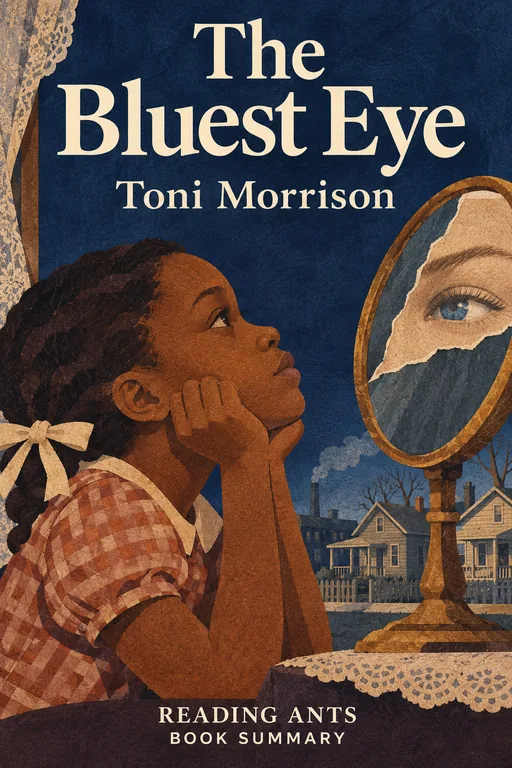
The Bluest Eye
Toni Morrison
In 1940s Ohio, a poor Black girl named Pecola Breedlove, who believes that she is ugly, prays for blue eyes, and the community's failure to protect her leads to tragedy.
✨ Modern FictionWant something different?
Pick another topic and we will show you three books to start with.