 Reading Ants
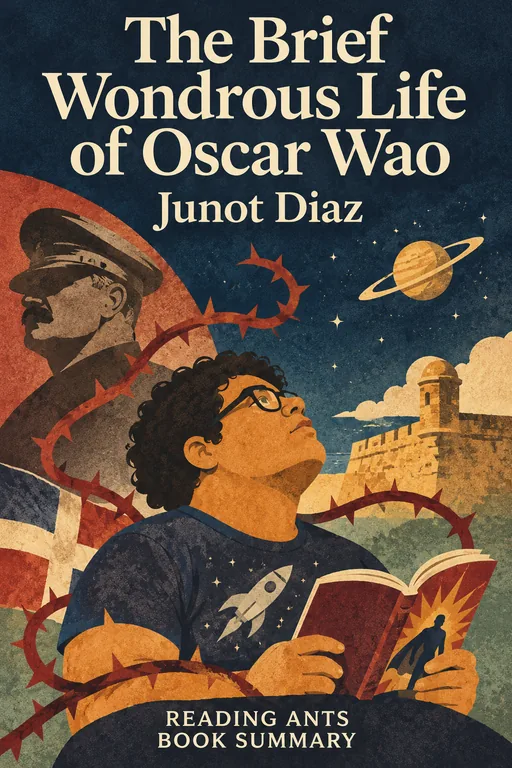
The Brief Wondrous Life of Oscar Wao
Oscar de León, an overweight, science-fiction-loving Dominican American nerd who dreams of love, is caught in a family curse, the fukú, that goes back to the dictator Rafael Trujillo and the history of the Dominican Republic.
Overview
The Brief Wondrous Life of Oscar Wao is a novel by Junot Díaz, published in 2007, which won the Pulitzer Prize for Fiction in 2008. It follows three generations of a Dominican family: Oscar, his sister Lola, their mother Beli and their grandfather Abelard. The narrator, Yunior, a friend of Lola’s and a former boyfriend, tells the story in a lively voice that mixes English slang, Spanish, comic book references and footnotes about Dominican history. At the center is the fukú, a curse said to haunt the families who crossed the dictator Trujillo, who ruled the Dominican Republic from 1930 to 1961. The book combines comedy, tragedy and history.
Main Characters
- Oscar de León: an overweight, romantic young man who loves fantasy and science fiction and has never had a girlfriend.
- Lola: his rebellious older sister.
- Beli (Hypatia Belicia Cabral): their mother, a fierce woman who survived a brutal past.
- Abelard Cabral: Beli’s father, a doctor who displeased Trujillo.
- Yunior: the narrator, a student and womanizer who becomes Oscar’s roommate.
- Ybón Pimentel: a middle-aged prostitute whom Oscar loves.
- The Capitán: Ybón’s police-officer boyfriend.
Full Summary
Fukú
The novel begins with a description of the fukú, a curse or doom that, as the narrator says, came to the New World with Columbus and which Trujillo is said to have used. The Dominican dictator is portrayed as a monster, with a cult of personality and a cruelty that reached into families. The narrator suggests that Oscar’s family, the Cabrals, were cursed because Abelard, a surgeon, incurred Trujillo’s anger, and that its effects have echoed ever since.
Oscar
Oscar grows up in Paterson, New Jersey, in a Dominican neighborhood. He is shy, overweight and obsessed with science fiction, fantasy and role-playing games, which isolate him from his peers, who admire sports and girls. He falls in love repeatedly, but is rejected each time. His mother, Beli, scolds him, and Lola tries to help. He writes epic fantasy novels, hoping to be the Dominican Tolkien. As a young man, he goes to college at Rutgers, where he meets Yunior, who is his roommate.
Lola and Beli
The story shifts to Lola, who grows up under her mother’s iron discipline, and who rebels, eventually moving away. Beli’s own story follows. She is an orphan in the Dominican Republic, raised by relatives, who becomes a beautiful and ambitious young woman. She falls in love with a man who is connected to Trujillo’s circle, and is taken to a cane field and beaten almost to death on the orders of his wife, who turns out to be Trujillo’s sister. She then leaves the country, emigrates to the United States, and starts a new life.
Abelard
The book tells of Beli’s father, Abelard Cabral, a gifted doctor, who lives in the shadow of Trujillo. Rumors say that Trujillo is interested in his daughter, and Abelard keeps her out of sight. When he fails to bring her to a party, or, in another version, writes a book that mocks the regime, he is arrested and tortured. His wife dies, and his family is scattered. The narrator says that this is where the curse began.
Return to the Island
Oscar, who has been to the Dominican Republic as a young man, returns after college, and there falls in love with Ybón, a prostitute who is the girlfriend of a violent police captain. Oscar, despite warnings, pursues her. The Capitán’s men beat him and warn him to stay away, but he returns, and the two make love. Oscar writes in a letter that he has finally found something that makes him happy.
The End
Oscar is taken by the Capitán’s men to a cane field and shot, in the same place where others have died. Before the shot, he looks at the ocean and thinks of the people he loved. In a final section, Yunior, who has been writing the book as an act of penance and love, reflects on Oscar’s brief life, and on the “zafa,” a counter-spell to the fukú. He says that Oscar’s courage in loving may be a way to break the curse, and that the story he has written is a kind of zafa.
Why It Matters
The Brief Wondrous Life of Oscar Wao has been hailed as one of the greatest novels of the twenty-first century, topping several critics’ lists. It brought Dominican American literature to a mainstream audience, and showed how a novel can combine nerd culture, history, family life and political horror. Díaz’s unique voice, with its blend of Spanish and English, has influenced many writers.
The novel also raised the profile of the Trujillo dictatorship, which was little known outside the Dominican Republic, and prompted discussion about how history shapes families.
The novel’s mix of science fiction references, Spanish phrases and historical footnotes has also changed what many readers think a serious novel can sound like, and it appears often in lists of the best books of its decade.
Key Takeaways
- History haunts families. The fukú links the past and present.
- Love is a risk worth taking. Oscar dares to love despite danger.
- Storytelling can break curses. Yunior’s narration is a counter-spell.
- Masculinity can be a trap. Oscar and Yunior contrast in how they act.
- Immigrant life has many layers. The book mixes slang, history and ambition.
What We Can Learn
The novel suggests that the stories of dictators and wars do not end with the political events, but continue in the lives of descendants. It encourages us to learn about the history behind the people we know.
It also shows the courage that it takes to be oneself, as Oscar remains devoted to his passions, and to love, even when mocked.
Finally, it invites us to think about how we can use stories to heal.
It also encourages us to look closely at the people whom others dismiss as odd or unlovable, since Oscar’s sweetness and persistence turn out to be the book’s greatest strengths.
Criticism and Counterpoints
Some critics have said that the narration’s heavy use of slang, Spanish and nerd references can be hard to follow, and that its footnotes interrupt the flow. Others note that the novel is brutal toward women, and that Yunior’s own attitudes, as a womanizer, may not be fully critiqued. In 2018, Díaz was accused of misconduct toward women, which has led some readers to reconsider his work.
Some find that the male perspective dominates, and that the ending is bleak. Still, the novel’s energy and originality are widely recognized.
Who Should Read It
This book is for mature readers. It contains strong language, violence and sexual content, and mixes comedy and tragedy. It is a rewarding read for those who enjoy a distinctive voice and a mix of genres.
Want the whole book?
A summary is a taste, not the meal. Here is where to find the full book.
You reached the end 🎉
Nicely done. Mark this one as read, and we will suggest what to read next.
Read this next
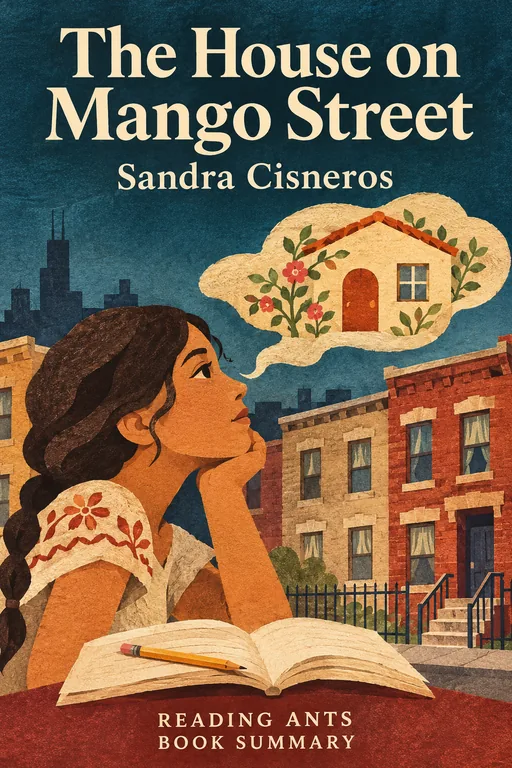
The House on Mango Street
Sandra Cisneros
In a series of short, poetic vignettes, a Mexican American girl named Esperanza grows up in a poor Chicago neighborhood, dreams of a house of her own, and finds that writing is her way out and her way back.
✨ Modern Fiction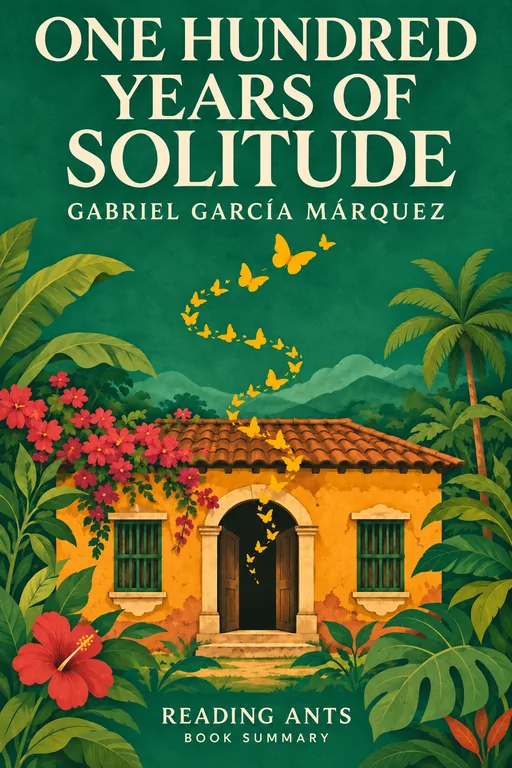
One Hundred Years of Solitude
Gabriel Garcia Marquez
Seven generations of the Buendía family live, love, fight and repeat the same mistakes in the magical Colombian town of Macondo, from its founding to its final destruction.
🌍 World Literature
Middlesex
Jeffrey Eugenides
Calliope Stephanides, a Greek American raised as a girl, discovers that she is intersex and becomes Cal, in a novel that traces the family history from a Greek village to the Detroit suburbs and a hidden gene.
✨ Modern Fiction
White Teeth
Zadie Smith
Two wartime friends, the Englishman Archie Jones and the Bangladeshi Samad Iqbal, and their families live and clash in multicultural North London over several decades, in a comic novel about identity, roots and chance.
✨ Modern Fiction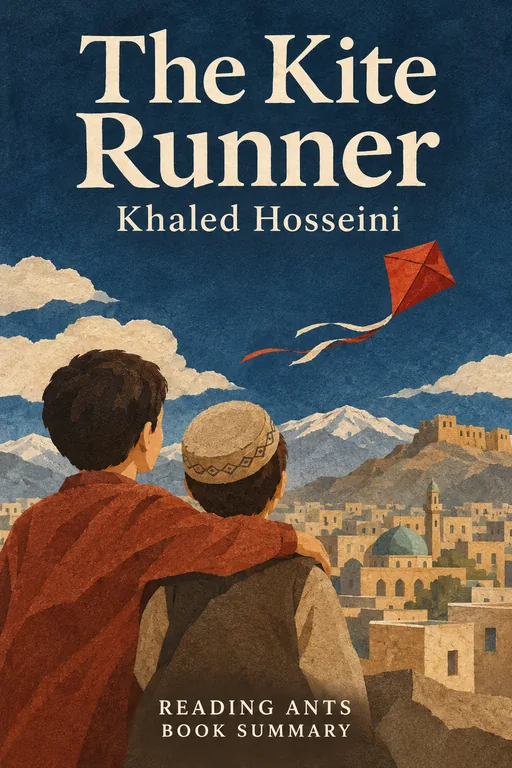
The Kite Runner
Khaled Hosseini
A wealthy boy in Kabul betrays his loyal best friend on the day of a kite tournament, and decades later, after fleeing to America, he returns to a Taliban-ruled Afghanistan to try to make things right.
✨ Modern Fiction
The Bluest Eye
Toni Morrison
In 1940s Ohio, a poor Black girl named Pecola Breedlove, who believes that she is ugly, prays for blue eyes, and the community's failure to protect her leads to tragedy.
✨ Modern FictionWant something different?
Pick another topic and we will show you three books to start with.