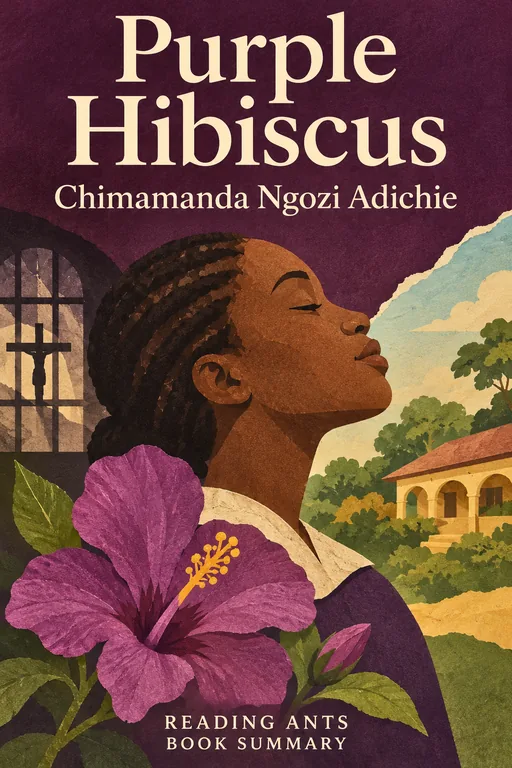
Purple Hibiscus
In Nigeria in the early 1990s, fifteen-year-old Kambili lives under the strict, violent religious rule of her father, until a visit to her aunt's lively home in Nsukka teaches her to laugh, to question and to speak.
Overview
Purple Hibiscus is the first novel by Chimamanda Ngozi Adichie, published in 2003, and it won the Commonwealth Writers’ Prize for Best First Book and was shortlisted for the Orange Prize. It is narrated by Kambili Achike, a quiet, sensitive girl who lives in the city of Enugu, in a wealthy household ruled by her father, Eugene, who is a devout Catholic, a respected businessman and a violent tyrant at home. The novel is set against the background of political unrest in Nigeria, with a military coup, and a government that cracks down on dissent. It is a story of a family, of religion and of the coming of age of a girl who learns to find her voice.
Main Characters
- Kambili Achike: the narrator, a shy, observant girl who is afraid of speaking.
- Jaja Achike: her older brother, who grows more defiant.
- Eugene Achike: her father, a rich, pious man, publicly generous and privately cruel.
- Beatrice (Mama): her mother, a gentle woman who suffers silently.
- Aunty Ifeoma: her father’s sister, a university lecturer, warm and outspoken.
- Amaka and Obiora: Aunty Ifeoma’s children.
- Father Amadi: a young, kind priest who befriends Kambili.
- Papa-Nnukwu: Kambili’s grandfather, who follows traditional beliefs.
Full Summary
Palm Sunday
The novel begins on a Palm Sunday, when Jaja refuses to go to communion, and Eugene, in a rage, throws a missal that smashes the figurines on the étagère. The family sits in tense silence. This moment, which Kambili tells as the beginning of “things falling apart,” sets the pattern of the household. Her father controls their lives by schedules, rules and punishments, and uses religion as a weapon, while also being praised in the community for his charity and for his newspaper, which challenges the government.
The Father
Eugene is a complicated figure. He gives money to the church and to the poor, and his paper, The Standard, courageously opposes the military regime. He is proud of Kambili, who is a top student. At home, however, he beats his wife and children, and punishes them for what he sees as sins, such as breaking the fast or staying under the same roof as their grandfather, who is not a Christian, with beatings and, once, scalding water. Kambili and Jaja accept this as normal, since they have never known another life, and they are cautious in speech.
His public face is that of a pillar of the community, a man of generosity who is honored by the church and who stands up to a corrupt government. This contrast is what makes his private violence so frightening, since no one outside can imagine what happens behind the door.
Nsukka
When a coup shakes the country, Eugene allows the children to visit Aunty Ifeoma, who lives in a small flat in Nsukka, a university town. There Kambili discovers a different household: noisy, poor and full of laughter, with arguments, jokes and singing. She meets her cousin Amaka, who is outspoken, and her cousin Obiora. Aunty Ifeoma lets the children speak, and fosters curiosity. Kambili, who has never been allowed to speak her mind, slowly begins to relax.
Aunty Ifeoma is generous with the little she has, serving small portions of food with good humor and treating the children as people with minds. Her household is crowded and poor, and the government is cutting her university salary, but it is full of music, argument and affection.
Papa-Nnukwu
During the visit, Kambili meets her grandfather, Papa-Nnukwu, a traditional man who prays to the old gods and whom Eugene has forbidden her to see, as a “heathen.” Aunty Ifeoma treats him with respect, and Kambili sees that he is gentle and wise. She also meets Father Amadi, a charming young priest who plays football with the boys and lets her laugh for the first time. She begins to fall in love with him, as a first crush.
Jaja and Kambili Change
When they return, Jaja, who has learned to question, begins to challenge their father in small ways. A violent incident follows, when Eugene beats Kambili so badly that she is hospitalized, after discovering a painting of Papa-Nnukwu in her room. Aunty Ifeoma, whose own life is being made difficult by the government, takes the children again. Beatrice, too, loses a pregnancy to the beatings. The home is a place of increasing fear.
The Poison
Eventually, Beatrice, who has been quietly poisoning Eugene’s tea, causes his death. The family is thrown into turmoil, and Jaja, to protect his mother, takes the blame and goes to prison. Kambili is stunned, but also free. As the novel ends, nearly three years later, with Kambili now about eighteen, Jaja is about to be released, and Kambili dreams of him and their mother, with the sense of a new beginning, symbolized by the purple hibiscus that Aunty Ifeoma’s garden produces, a rare flower of freedom.
Why It Matters
Purple Hibiscus introduced Adichie to the literary world, and it was followed by Half of a Yellow Sun and Americanah. It helped to establish a new generation of Nigerian writers, who tell stories of contemporary life. The novel is widely read in schools and book clubs, particularly in Africa and the United States.
It also offers a nuanced view of religion and authority, showing how faith can be a source of both love and abuse, and how a girl can escape.
The book tells a story about Nigeria that is not only about war or poverty, and it is often praised for showing the inner life of a young woman in a very specific setting.
Key Takeaways
- Silence can be a prison. Kambili learns to speak.
- Religion can be used for good or harm. Eugene’s piety hides cruelty.
- Freedom grows from kindness. Aunty Ifeoma’s home gives hope.
- Family love is complicated. The children love a father who abuses them.
- Politics and private life are linked. The coup mirrors the family’s tension.
What We Can Learn
The novel invites us to notice how abuse can hide behind respectability, and to listen to those who are afraid to speak. It shows how important it is to offer safe spaces to children.
It also shows that different ways of believing, such as Papa-Nnukwu’s traditional faith and Aunty Ifeoma’s open Catholicism, can coexist with respect.
Finally, it teaches that finding one’s voice is a gradual process, helped by encouragement and by people who see us.
It also reminds us to be careful about assuming that the loudest voice in a family or community is the most reliable.
Criticism and Counterpoints
Some critics find the portrayal of Eugene as a villain too simple, and the family’s tragedy melodramatic. Others say that the novel’s picture of Catholicism is harsh, or that the contrast between Enugu and Nsukka is too neat. The use of poison and the final plot twist can seem sudden.
Some readers wish that Kambili had a stronger voice earlier. Others feel that political events are in the background. Still, the novel is widely admired.
Who Should Read It
This book suits mature teenagers and adults. It contains domestic violence and cruelty that can be upsetting, but it is also hopeful. It is a good choice for readers interested in family stories and African literature.
Want the whole book?
A summary is a taste, not the meal. Here is where to find the full book.
You reached the end 🎉
Nicely done. Mark this one as read, and we will suggest what to read next.
Read this next
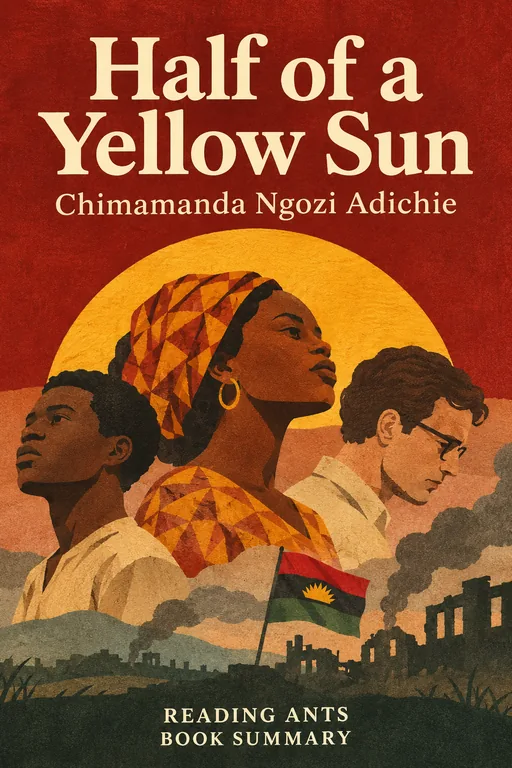
Half of a Yellow Sun
Chimamanda Ngozi Adichie
Through the intertwined lives of three people, a houseboy, a professor's lover and an English writer, the novel tells the story of Nigeria's civil war and the short-lived nation of Biafra.
✨ Modern Fiction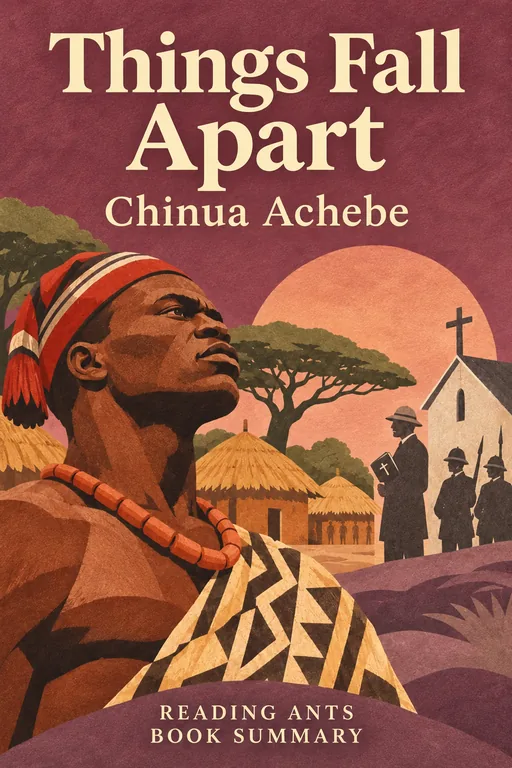
Things Fall Apart
Chinua Achebe
Okonkwo, a proud and fearsome leader in an Igbo village in Nigeria, struggles against his own fears and against the arrival of British missionaries and colonial rulers, who change his world forever.
🌍 World Literature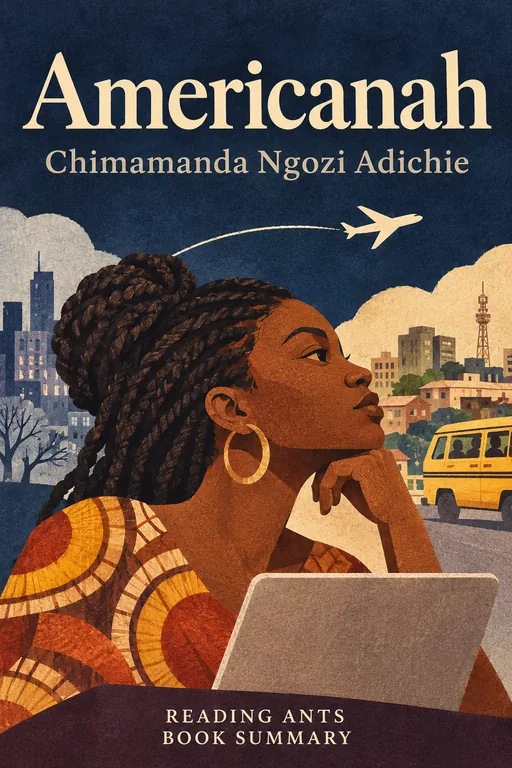
Americanah
Chimamanda Ngozi Adichie
Ifemelu and Obinze, young lovers in Lagos, are separated when she goes to study in America and he struggles in London, and the novel follows their years apart and their return to Nigeria, looking at race, identity and love.
✨ Modern Fiction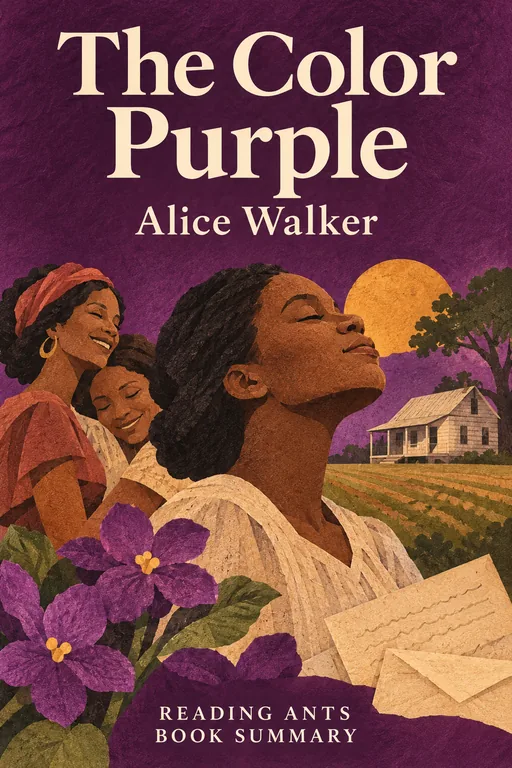
The Color Purple
Alice Walker
Told in letters, the story follows Celie, a poor Black woman in rural Georgia who survives abuse and loss, and through the love of other women finds her voice, her independence and joy.
✨ Modern Fiction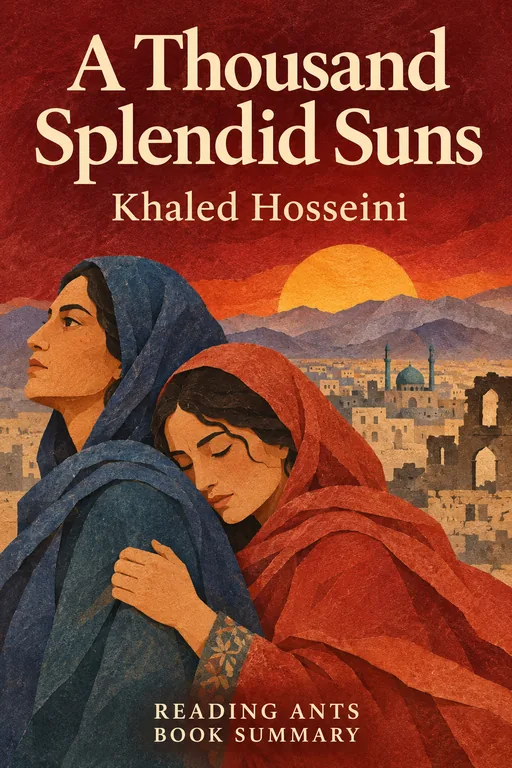
A Thousand Splendid Suns
Khaled Hosseini
Two Afghan women from different backgrounds, forced into the same abusive marriage, become unlikely allies, and find the strength to resist through friendship and love as their country is torn apart by war.
✨ Modern Fiction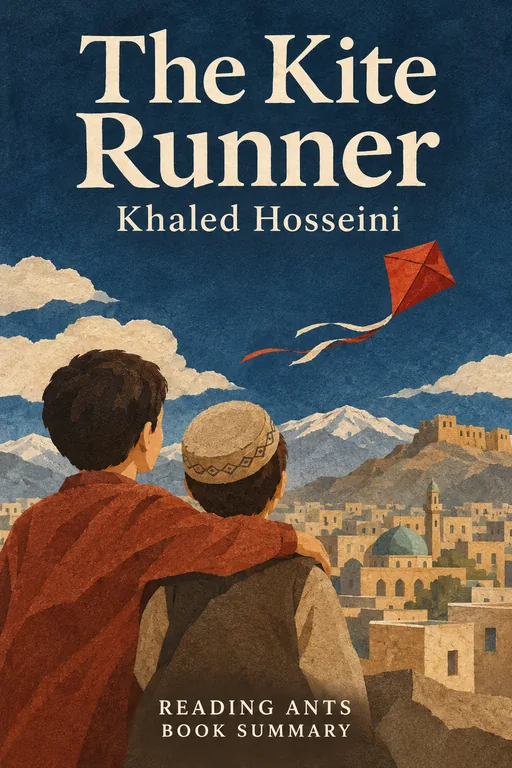
The Kite Runner
Khaled Hosseini
A wealthy boy in Kabul betrays his loyal best friend on the day of a kite tournament, and decades later, after fleeing to America, he returns to a Taliban-ruled Afghanistan to try to make things right.
✨ Modern FictionWant something different?
Pick another topic and we will show you three books to start with.