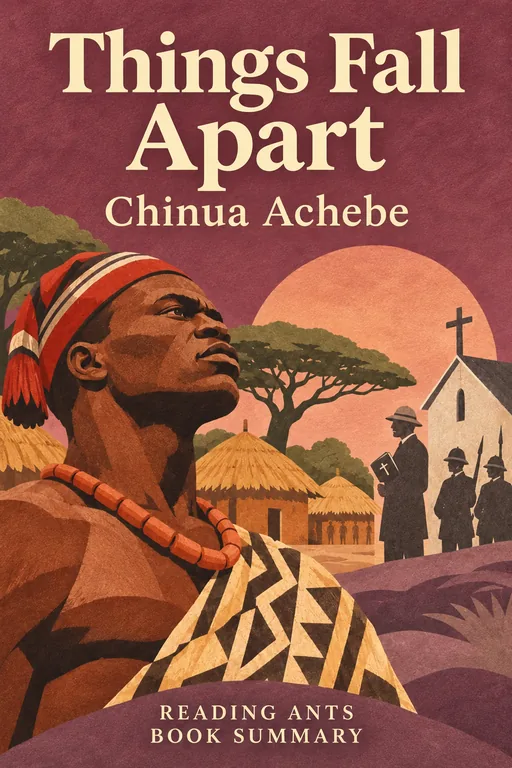
Things Fall Apart
Okonkwo, a proud and fearsome leader in an Igbo village in Nigeria, struggles against his own fears and against the arrival of British missionaries and colonial rulers, who change his world forever.
Overview
Things Fall Apart is set in Umuofia, a group of Igbo villages in what is now southeastern Nigeria, in the late 1800s, just before and during the arrival of Europeans. Its hero, Okonkwo, is a famous wrestler, a successful farmer and a respected warrior, driven by a fierce determination never to be weak like his gentle, debt-ridden father. The first half of the novel paints a rich, detailed picture of Igbo life: farming, festivals, family, religion, law and storytelling. The second half shows what happens when Christian missionaries and a colonial government arrive. Chinua Achebe wrote the book partly to answer European novels that showed Africans as people without history or culture. It became the most widely read African novel in the world.
Main Characters
- Okonkwo: a powerful, hardworking and short-tempered leader of Umuofia.
- Unoka: Okonkwo’s father, a kind, music-loving man who never paid his debts.
- Nwoye: Okonkwo’s eldest son, sensitive and gentle, often in conflict with his father.
- Ezinma: Okonkwo’s clever daughter and his favorite child.
- Ekwefi: Okonkwo’s second wife, Ezinma’s devoted mother.
- Ikemefuna: a boy from another village who comes to live with Okonkwo’s family.
- Obierika: Okonkwo’s thoughtful best friend.
- Mr. Brown and Reverend Smith: two very different Christian missionaries.
Full Summary
The Man Who Feared Weakness
Okonkwo became famous as a young man by throwing Amalinze the Cat, an undefeated wrestler. His father, Unoka, was lazy and fond of music and talk, and died owing money to many people. Okonkwo is ashamed of him. His whole life is ruled by a fear of failure and of being thought weak, and he fears showing tenderness, and anger is the emotion he allows himself. Through hard work, he has built up large yam farms, married three wives and earned titles of honor.
When a woman from Umuofia is killed in a neighboring village, that village gives Umuofia a boy named Ikemefuna and a young woman as compensation. The young woman replaces the dead wife of the widower, and the boy is placed in Okonkwo’s household. Ikemefuna becomes like an older brother to Nwoye, and Okonkwo grows fond of him, though he never shows it.
The Death of Ikemefuna
Three years later, the Oracle declares that Ikemefuna must be killed. An elder warns Okonkwo not to take part, because the boy calls him father. But when the men lead Ikemefuna into the forest and one strikes him, the boy runs to Okonkwo for help, and Okonkwo, afraid of looking weak, cuts him down himself. Okonkwo is haunted afterward. Nwoye senses what has happened, and something inside him breaks.
The novel also shows Okonkwo’s harshness at home. He beats one wife during a sacred week of peace and is punished by the priest, and in a rage he fires a gun at another.
Village Life
Achebe shows the richness of Igbo society: the wrestling matches and feasts of the New Yam Festival, the bride-price negotiations, the stories mothers tell their children, and the egwugwu, masked ancestral spirits who settle disputes in public trials. The priestess Chielo, who speaks for the Oracle Agbala, carries Ezinma away one night to the cave of Agbala, the Oracle of the Hills and Caves, and Ekwefi and Okonkwo follow anxiously in the dark, showing their deep love for their daughter.
Some traditions trouble certain characters. Twins are left to die in the forest, and Obierika quietly questions some of the clan’s harsh customs.
Exile
At the funeral of a respected elder, Okonkwo’s gun explodes by accident and kills the elder’s sixteen-year-old son. Even an accidental killing of a clansman is a crime against the earth goddess. Okonkwo must leave Umuofia for seven years. His compound is burned, and he flees with his family to his mother’s homeland, Mbanta, where his uncle Uchendu takes them in. Uchendu reminds the bitter Okonkwo that a man’s mother’s people are there to comfort him in times of sorrow.
During these years, news arrives that white men have destroyed the village of Abame after its people killed a European. Then missionaries arrive in Mbanta and build a church. They attract outcasts, the mothers of twins and others on the edges of society. To Okonkwo’s fury, Nwoye joins them and leaves his father’s house.
The Return
When Okonkwo returns to Umuofia, he finds it changed. The missionaries have built a church, and the British have set up a government with a court and foreign court messengers who enforce its laws. Many people have converted, and others welcome the new trading opportunities. Mr. Brown, the first missionary, is patient and respectful. He builds a school and a hospital and debates religion politely with the village elders. But he falls ill and is replaced by Reverend Smith, who sees Igbo traditions as the work of the devil.
An extreme convert, Enoch, tears the mask off an egwugwu in public, which is like killing an ancestral spirit. In response, the masked spirits burn down Smith’s church.
Things Fall Apart
The District Commissioner invites Okonkwo and five other leaders to a meeting, then arrests them. They are humiliated, beaten and held until the village pays a heavy fine. Afterward, the clan gathers to decide whether to fight. Court messengers arrive to stop the meeting. In fury, Okonkwo kills the head messenger with his machete. But the crowd lets the other messengers escape, and Okonkwo realizes that his people will not go to war.
When the District Commissioner comes for him, he finds that Okonkwo has hanged himself. In Igbo belief, suicide is an abomination, so his own people cannot touch his body. Obierika bitterly tells the Commissioner that he has driven one of Umuofia’s greatest men to his death. The Commissioner thinks Okonkwo’s story might make an interesting paragraph in his book about bringing order to the primitive tribes of the Lower Niger.
Why It Matters
Things Fall Apart is often called the most important African novel ever written. It has been translated into dozens of languages and is read in schools and universities around the world. Achebe, often called the father of modern African literature, wrote it in English to tell the story of colonialism from the African side, at a time when most novels about Africa were written by Europeans who showed Africans as primitive or silent.
The book proves that precolonial Igbo society had complex laws, religion, art, politics and philosophy, which makes its destruction more tragic. Its title comes from William Butler Yeats’s poem The Second Coming. Achebe later wrote a famous essay criticizing Joseph Conrad’s Heart of Darkness for its racist portrayal of Africans.
The novel inspired generations of African writers, including Chimamanda Ngozi Adichie, and helped launch the Heinemann African Writers Series, which Achebe edited.
Key Takeaways
- Fear can rule a life. Okonkwo’s terror of weakness drives his worst actions, including killing a boy who loved him.
- Every culture has depth. Igbo society is shown as rich and complex, not primitive.
- Colonialism destroys from within. It succeeds partly by dividing communities and appealing to those left out.
- Change is unavoidable, but how we respond matters. Okonkwo cannot bend, and so he breaks.
- History depends on who tells it. The final paragraph shows how outsiders erase the stories of the people they rule.
What We Can Learn
Okonkwo’s story is a warning about defining yourself only by what you fear becoming. In trying never to be like his father, he becomes rigid and cruel and loses the people closest to him. True strength includes gentleness, listening and the courage to show feelings.
The novel also teaches us to listen to the stories of people who are usually described by others. When we read about any place or culture, it helps to ask: who wrote this, and from whose point of view?
Finally, it shows why communities need both tradition and openness. Umuofia’s customs give life meaning, but some of them leave people out, and those people are the first to join the newcomers. A society that cares for everyone is stronger when change arrives.
Criticism and Counterpoints
Some critics argue that the novel’s women are mainly seen through a male lens, and that Okonkwo’s violence toward his wives is described more than questioned. Others note that the colonizers, especially Reverend Smith and the District Commissioner, are sketched rather simply compared with the detailed Igbo characters.
Achebe also faced debate over writing in English rather than Igbo. The Kenyan writer Ngũgĩ wa Thiong’o later argued that African writers should use African languages. Achebe replied that English, shaped to carry African experience, could reach readers across Africa and the world. Many readers see this choice as one reason the book became so widely read.
Who Should Read It
This novel is essential for anyone interested in Africa, colonial history or world literature, and it is a common choice for high school and university classes. It is short and clearly written, though the opening chapters, full of Igbo customs and proverbs, may feel slow at first. The violence and suicide make it best for teenagers and adults.
Want the whole book?
A summary is a taste, not the meal. Here is where to find the full book.
You reached the end 🎉
Nicely done. Mark this one as read, and we will suggest what to read next.
Read this next
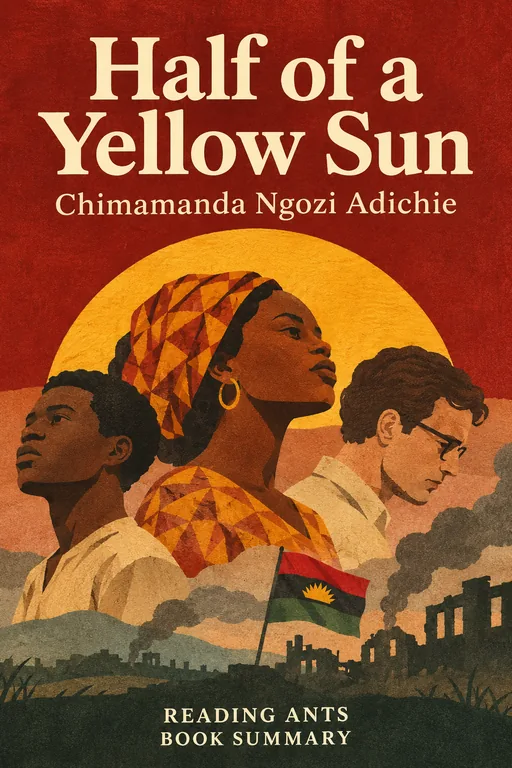
Half of a Yellow Sun
Chimamanda Ngozi Adichie
Through the intertwined lives of three people, a houseboy, a professor's lover and an English writer, the novel tells the story of Nigeria's civil war and the short-lived nation of Biafra.
✨ Modern Fiction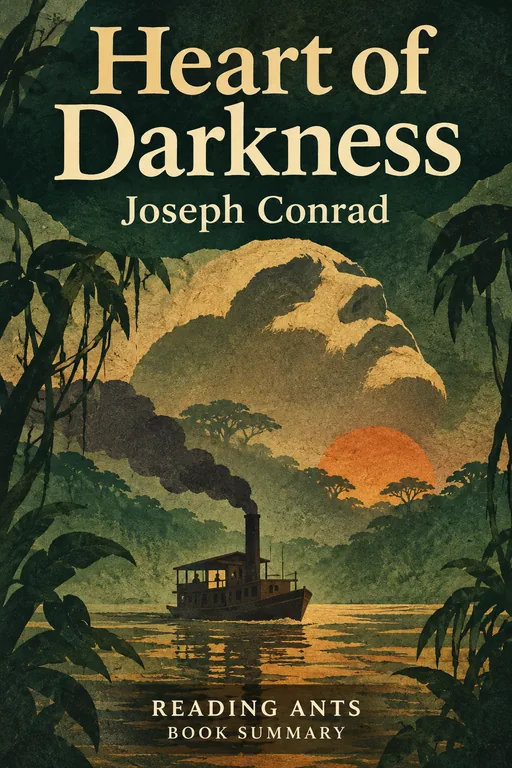
Heart of Darkness
Joseph Conrad
A sailor named Marlow tells his friends of a journey up the Congo River to find a mysterious ivory trader named Kurtz, and of the horror and moral darkness he finds at the end of it.
📜 Classics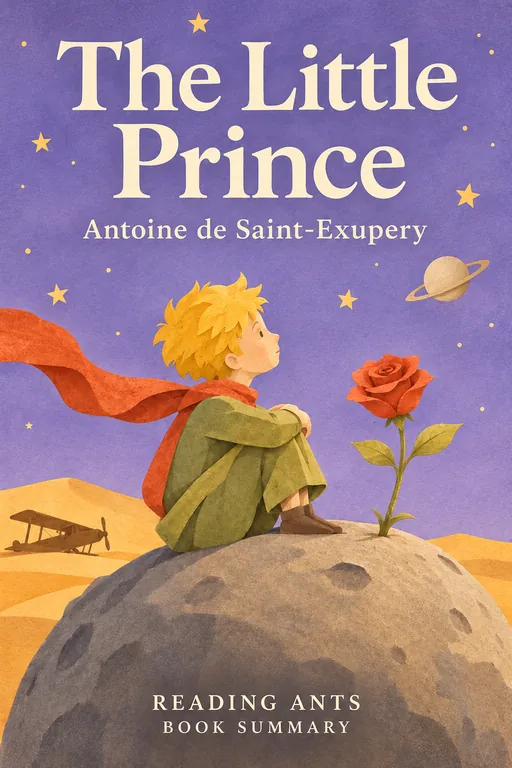
The Little Prince
Antoine de Saint-Exupery
A pilot stranded in the desert meets a small boy from a tiny planet, who teaches him that the most important things in life, like love and friendship, can only be seen with the heart.
🌍 World Literature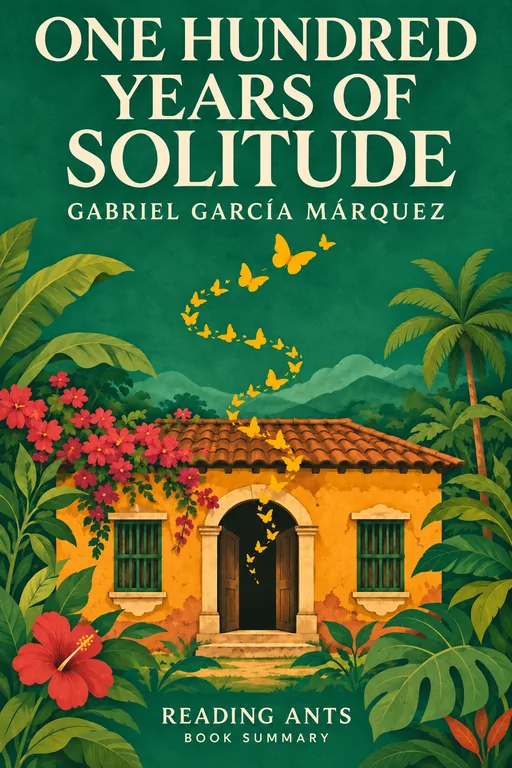
One Hundred Years of Solitude
Gabriel Garcia Marquez
Seven generations of the Buendía family live, love, fight and repeat the same mistakes in the magical Colombian town of Macondo, from its founding to its final destruction.
🌍 World Literature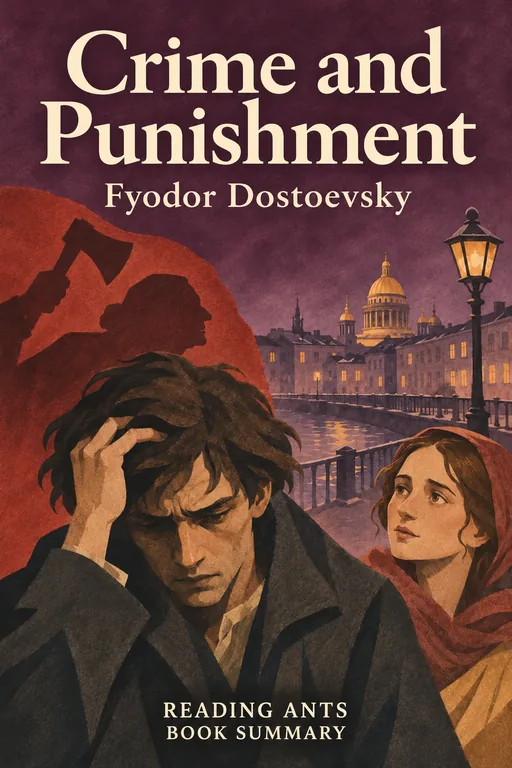
Crime and Punishment
Fyodor Dostoevsky
A poor former student in St. Petersburg murders an old pawnbroker to prove he is an extraordinary man above ordinary morality, then is tormented by guilt until love and confession offer him a path to redemption.
🌍 World Literature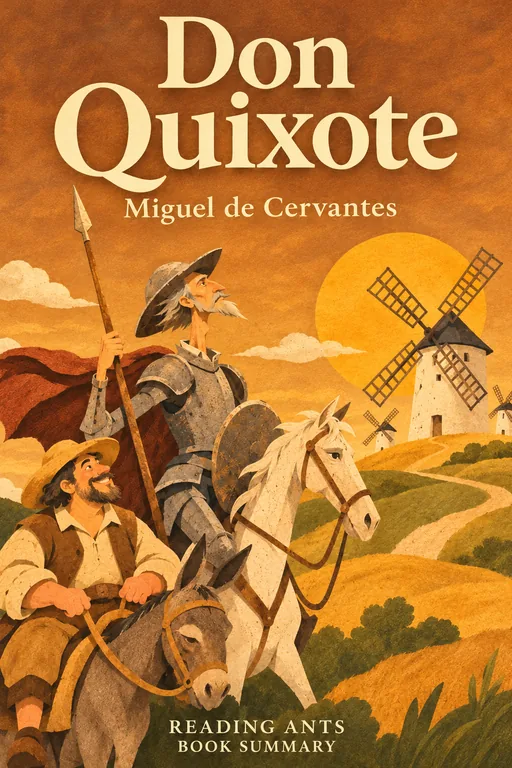
Don Quixote
Miguel de Cervantes
An aging Spanish gentleman reads so many tales of knights that he loses his mind, sets out to become a knight himself with a down-to-earth farmer as his squire, and turns every adventure into glorious, comic disaster.
🌍 World LiteratureWant something different?
Pick another topic and we will show you three books to start with.