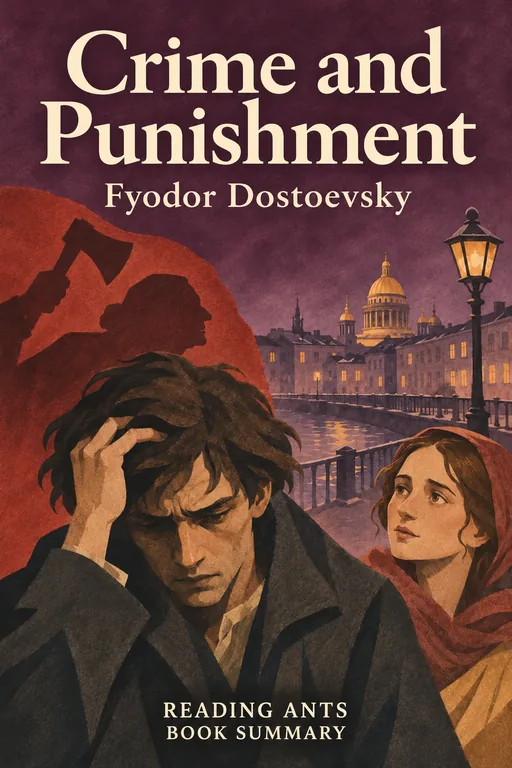
Crime and Punishment
Original title: Преступление и наказание
A poor former student in St. Petersburg murders an old pawnbroker to prove he is an extraordinary man above ordinary morality, then is tormented by guilt until love and confession offer him a path to redemption.
Overview
Crime and Punishment takes place in the crowded, stifling streets of St. Petersburg in the 1860s. Rodion Raskolnikov, a brilliant but desperately poor young man who has dropped out of university, lives in a tiny attic room and has convinced himself of a dangerous theory: that a few great people, like Napoleon, have the right to break moral laws for the sake of humanity. To test it, he kills a greedy old pawnbroker. But instead of feeling free, he falls into fever, paranoia and torment. Part crime thriller and part deep study of the human mind, Fyodor Dostoevsky’s masterpiece asks big questions about morality, suffering, faith and what it means to be human.
Main Characters
- Rodion Raskolnikov: a proud, poor, feverish former student who commits murder.
- Sonya Marmeladova: a gentle, deeply religious young woman forced into prostitution to support her family.
- Porfiry Petrovich: a clever police investigator who suspects Raskolnikov.
- Razumikhin: Raskolnikov’s loyal, good-hearted friend.
- Dunya: Raskolnikov’s strong-willed sister.
- Pulcheria Alexandrovna: Raskolnikov’s loving, anxious mother.
- Marmeladov: Sonya’s father, a drunken former clerk.
- Svidrigailov: a wealthy, mysterious and immoral man who pursues Dunya.
- Luzhin: a selfish, calculating man engaged to Dunya.
Full Summary
The Theory and the Crime
Raskolnikov has been brooding for weeks in his cramped attic. He owes rent, eats almost nothing, and has developed a theory that “extraordinary” people may overstep moral rules if it serves a higher purpose. He considers murdering Alyona Ivanovna, a mean old pawnbroker, and using her money for good deeds.
In a tavern he meets Marmeladov, a drunken former official who tells him that his daughter Sonya has become a prostitute so the family won’t starve. Then a letter from Raskolnikov’s mother announces that his sister Dunya plans to marry Luzhin, an older, selfish lawyer, mainly to help her brother. Disgusted by this sacrifice and pushed by his poverty, Raskolnikov goes ahead. He kills the pawnbroker with an axe. Her gentle sister Lizaveta walks in unexpectedly, and he kills her too. He escapes, almost by chance, with a few small items he never even uses.
Fever and Fear
Raskolnikov falls into a long fever. When he is summoned to the police station about his unpaid rent, he faints when officers mention the murder. His friend Razumikhin nurses him and tries to help, but Raskolnikov pushes everyone away. He hides the stolen items under a stone and wanders the city, half wanting to confess.
He comes upon Marmeladov, who has been trampled by a carriage, and helps carry him home, where he dies. Raskolnikov gives the family all his money, and for a moment feels alive again. He meets Sonya there for the first time.
The Investigator
The detective Porfiry Petrovich has read an article Raskolnikov once published, which argued that extraordinary people may commit crimes. In a series of tense, friendly-seeming conversations, Porfiry plays a psychological game, hinting that he knows everything without having proof. Raskolnikov veers between arrogance and panic. A painter named Mikolka unexpectedly confesses to the murders, confusing everyone, but Porfiry is not convinced.
Meanwhile, Raskolnikov’s mother and sister arrive in St. Petersburg. He insults Luzhin, who reveals his true selfish nature, and Dunya breaks off the engagement. Razumikhin falls in love with Dunya.
Sonya
Raskolnikov is drawn to Sonya, who has sacrificed herself for her family yet keeps a pure and humble faith. He asks her to read him the Bible story of Lazarus being raised from the dead. Luzhin, out of spite, tries to frame Sonya for stealing money, but a neighbor who saw him plant it exposes him.
Finally, Raskolnikov confesses the murders to Sonya. She is horrified but filled with pity rather than hatred. She tells him to go to a crossroads, bow down, kiss the earth he has defiled, and confess to the world. She promises to follow him wherever he is sent. Soon afterward, Sonya’s stepmother, Katerina Ivanovna, sick and maddened by poverty, collapses and dies, leaving young children behind.
Svidrigailov
Svidrigailov, Dunya’s former employer, who had pursued her and is rumored to have caused deaths, has also come to St. Petersburg. He overhears Raskolnikov’s confession to Sonya and uses it to lure Dunya to his room, hoping to force her to love him. Dunya fires a revolver at him, only grazing him. Realizing she will never love him, he lets her go. He gives money to Sonya and the orphaned children, and then takes his own life. He represents the path Raskolnikov might have taken: a man who believes everything is permitted, and is left only with emptiness.
Confession
Porfiry visits Raskolnikov and tells him openly that he knows he is the murderer. He urges him to confess, which will earn him a lighter sentence and a chance to start a new life. After saying goodbye to his mother and sister, Raskolnikov goes to the crossroads and kisses the ground, then walks into the police station and confesses.
Siberia
In the epilogue, Raskolnikov is sentenced to eight years of hard labor in Siberia. Sonya follows him there and visits him faithfully. At first he remains proud and cold, feeling guilty only for being weak, not for his crime. The other prisoners dislike him but love Sonya. After an illness and a strange dream about a plague that makes everyone certain they alone are right, something breaks open in him. One morning by the river, he falls at Sonya’s feet, and both realize they are bound by love. Dunya marries Razumikhin. The story ends with the beginning of Raskolnikov’s gradual renewal.
Why It Matters
Crime and Punishment is one of the greatest novels ever written and a cornerstone of world literature. Dostoevsky, who had himself been sentenced to death and then sent to a Siberian prison camp for political activity, brought a new depth to the psychological novel. He shows the inner chaos of a mind from the inside, long before modern psychology.
The book challenged fashionable ideas of its time, such as the belief that reason alone could replace religion and morality, and it explores questions about whether “the ends justify the means” that remain urgent today. It influenced writers and thinkers such as Friedrich Nietzsche, Franz Kafka, Albert Camus and the existentialists, as well as countless crime novels and films that focus on the psychology of a killer.
Key Takeaways
- No one is above morality. Raskolnikov’s theory collapses under his own conscience.
- Guilt is its own punishment. His real suffering begins long before any court.
- Pride isolates; love heals. He finds hope only when he accepts Sonya’s compassion.
- Ideas have consequences. Abstract theories can lead to real violence.
- Redemption is possible. Confession and suffering open a path to a new life.
What We Can Learn
The novel warns against using clever arguments to excuse harming others. When we catch ourselves thinking that a rule doesn’t apply to us because our goal is important, it is worth stepping back, as Raskolnikov fails to do.
It also shows how isolation feeds dark thoughts. Raskolnikov spends weeks alone, brooding. Talking with friends, family or a counselor when we feel trapped can stop a spiral before it grows.
Finally, Sonya teaches the power of compassion. She doesn’t excuse the crime, but she refuses to give up on the person. In our own lives, we can hold people responsible while still believing they can change.
Criticism and Counterpoints
Some readers find the novel long, intense and repetitive in Raskolnikov’s feverish inner monologues. Others feel the epilogue’s sudden spiritual conversion is rushed and less convincing than the dark story before it. Sonya has been criticized as an idealized, saintly figure who exists mainly to save the hero, rather than a full character with her own inner life.
Critics have also noted that Dostoevsky’s strong Christian message, and his attacks on radical political ideas of his day, can feel heavy-handed to modern readers. Nevertheless, most agree that the psychological portrait of Raskolnikov is unforgettable.
Who Should Read It
This book is for older teens and adults who enjoy psychological drama, crime stories and big moral questions. It is a good first Russian classic. Readers should expect a long, intense book with many Russian names; a list of characters helps.
Want the whole book?
A summary is a taste, not the meal. Here is where to find the full book.
You reached the end 🎉
Nicely done. Mark this one as read, and we will suggest what to read next.
Read this next
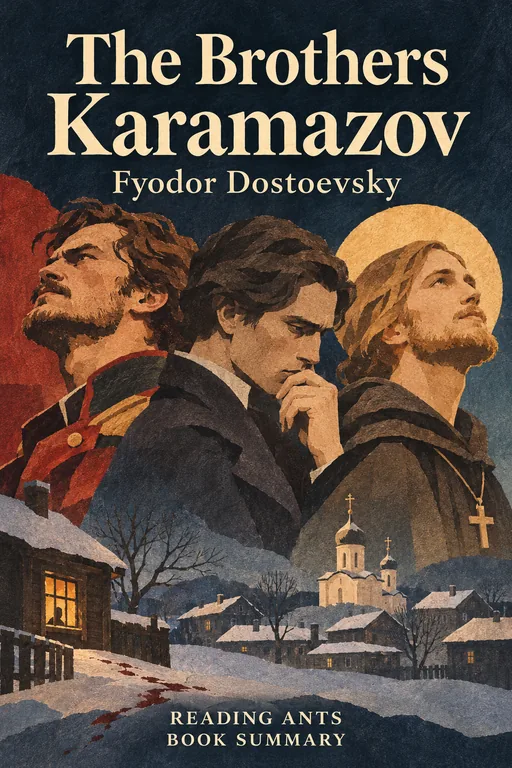
The Brothers Karamazov
Fyodor Dostoevsky
When a vulgar, greedy landowner is murdered, his three very different sons, a passionate soldier, a rational intellectual and a gentle novice monk, are drawn into a mystery that is also a debate about faith, doubt, guilt and freedom.
🌍 World Literature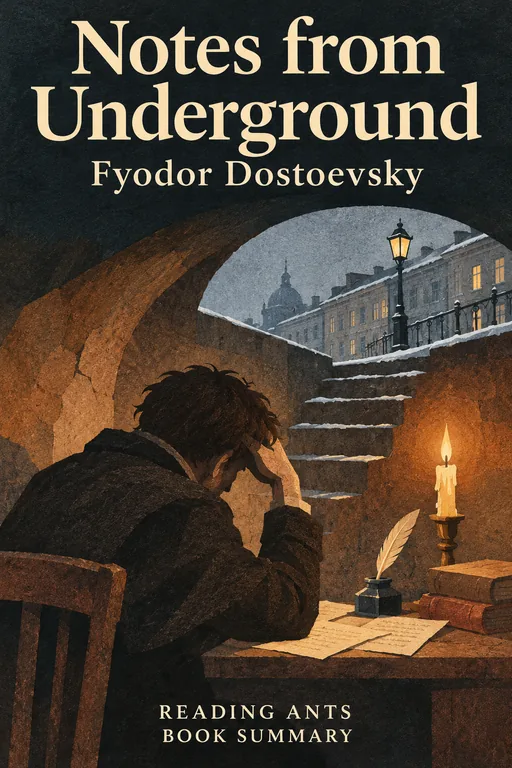
Notes from Underground
Fyodor Dostoevsky
A bitter, lonely former clerk who lives in a squalid underground existence writes an angry confession about his own spite, his contempt for the world and a humiliating episode from his past.
🌍 World Literature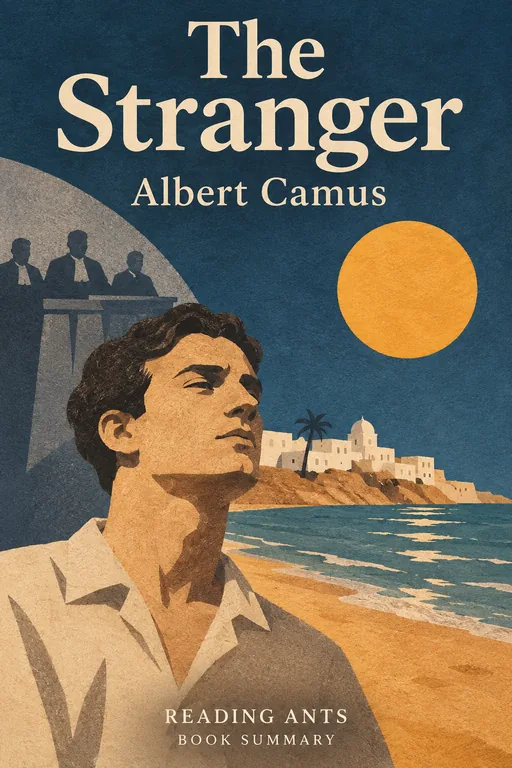
The Stranger
Albert Camus
An emotionally detached office worker kills a man on an Algerian beach and discovers that society condemns him as much for refusing its expected feelings as for the murder itself.
🌍 World Literature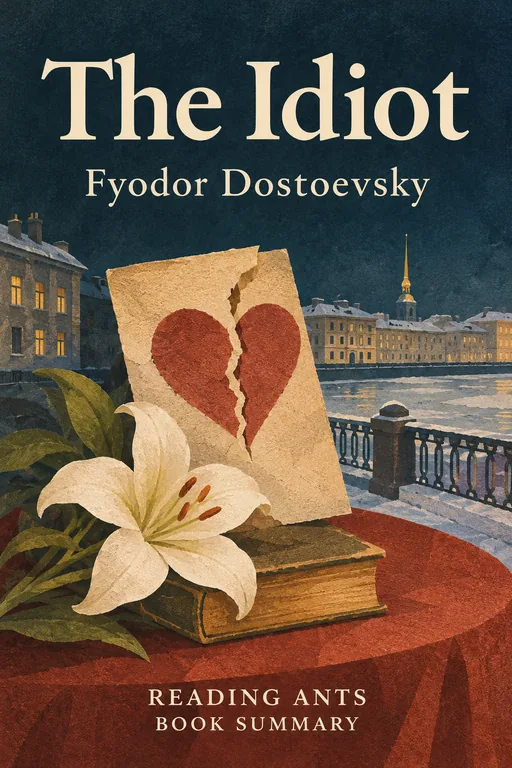
The Idiot
Fyodor Dostoevsky
A gentle, honest prince who is thought to be simple-minded arrives in Petersburg, where his goodness is caught up in a deadly love triangle and he cannot save those he cares for.
🌍 World Literature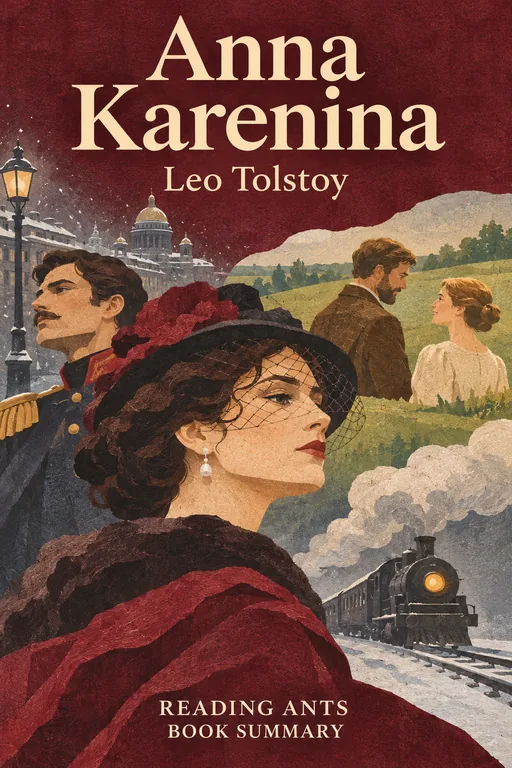
Anna Karenina
Leo Tolstoy
In imperial Russia, a married aristocrat falls passionately in love with a dashing officer and loses her place in society, while a thoughtful landowner seeks a meaningful life through love, work and faith.
🌍 World Literature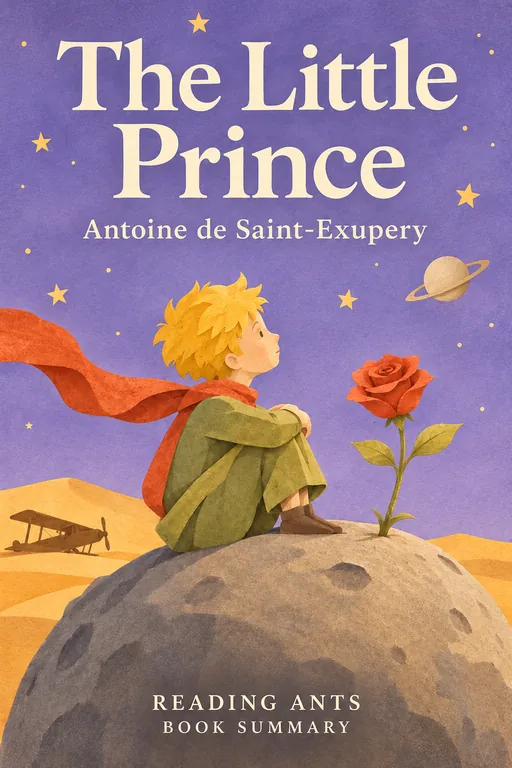
The Little Prince
Antoine de Saint-Exupery
A pilot stranded in the desert meets a small boy from a tiny planet, who teaches him that the most important things in life, like love and friendship, can only be seen with the heart.
🌍 World LiteratureWant something different?
Pick another topic and we will show you three books to start with.