 Reading Ants
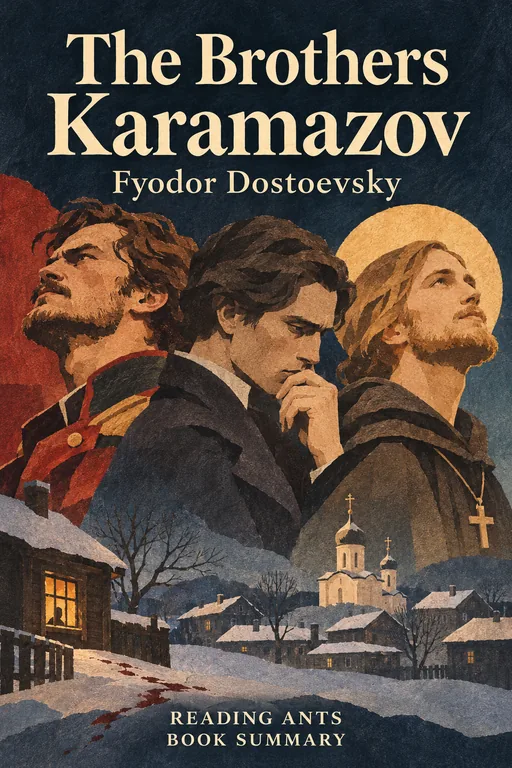
The Brothers Karamazov
Original title: Братья Карамазовы
When a vulgar, greedy landowner is murdered, his three very different sons, a passionate soldier, a rational intellectual and a gentle novice monk, are drawn into a mystery that is also a debate about faith, doubt, guilt and freedom.
Overview
The Brothers Karamazov was Fyodor Dostoevsky’s last novel, published in 1879 and 1880, and he died a few months after finishing it. It is set in a provincial Russian town and centers on the Karamazov family. The father, Fyodor Pavlovich, is a greedy, lecherous buffoon who neglected his sons. They have grown into very different men: Dmitri, a passionate, impulsive army officer; Ivan, a brilliant, tormented intellectual who doubts God; and Alyosha, a kind, spiritual novice in a monastery. A fourth man, Smerdyakov, the servant, is rumored to be Fyodor’s illegitimate son. Part crime story, part courtroom drama, it asks deep questions about God, evil, suffering and moral responsibility.
Main Characters
- Fyodor Pavlovich Karamazov: the selfish, shameless father.
- Dmitri (Mitya): the eldest, a spendthrift soldier with a wild heart.
- Ivan: the middle son, a rational, tormented thinker.
- Alyosha: the youngest, a gentle novice monk.
- Smerdyakov: the family’s cook and servant, bitter and secretive.
- Father Zosima: Alyosha’s wise spiritual teacher.
- Grushenka: a beautiful woman whom both father and son desire.
- Katerina Ivanovna: Dmitri’s proud fiancée, who loves Ivan.
Full Summary
A Family Gathering
The Karamazov family meets in a monastery, in the cell of the elder Zosima, to settle a quarrel over money between Fyodor and his eldest son, Dmitri. The meeting turns into a scandal, with Fyodor behaving shamefully. Zosima bows down before Dmitri, seeming to see the tragedy to come. Alyosha, who loves and admires Zosima, is torn between his teacher and his family.
Dmitri is torn between two women: his fiancée, Katerina, a proud woman to whom he owes money, and Grushenka, a captivating woman whom his father also wants. The father and son become rivals. Dmitri threatens to kill Fyodor.
Ivan’s Arguments
Ivan, who has returned from Moscow, meets Alyosha in a tavern and describes his thoughts. He tells a story called “The Grand Inquisitor,” a poem in which Christ returns to Spain during the Inquisition and is arrested by an old cardinal who accuses him of burdening humanity with freedom. People, the Inquisitor argues, want bread, mystery and authority, not freedom. Ivan also describes terrible stories of the suffering of children, asking how a good God can allow innocent suffering, and says he would respectfully “return his ticket” to such a world.
Alyosha does not argue back. He silently kisses his brother.
Zosima’s Death
Father Zosima dies. Many expect a miracle, but his body begins to decay quickly, which disturbs many believers and shames Alyosha, whose faith is badly shaken. A young monk tempts him to a sinful evening, but a visit to Grushenka, who shows unexpected kindness, helps him. When he returns to the monastery, he has a vision of Zosima, and he rushes out into the night, kisses the earth and resolves to live as his teacher taught him: with love for everyone.
The Murder
Dmitri, desperate to pay back the money he owes Katerina, rushes around town and spends wildly. He bursts into his father’s garden, jealous and violent, and in the dark, he strikes a servant who tries to stop him. That night, Fyodor Pavlovich is killed, struck on the head, and the money he had set aside for Grushenka is gone.
Dmitri is arrested. Everything appears to point to him: he had threatened his father, was seen at the house, and had spent a large sum of money. He insists that he is innocent of the murder, though he feels guilty for his hatred.
The Trial
Before the trial, Ivan, who has been tormented by guilt, learns that Smerdyakov actually killed Fyodor. Smerdyakov confesses to Ivan, claiming that he acted on Ivan’s own ideas, the notion that “everything is permitted” if there is no God, and then hangs himself. At the trial, Ivan, feverish and half-mad from guilt, tries to testify, but his collapse in court makes him seem unreliable. Katerina, torn, produces a letter Dmitri once wrote, which looks like a plan to kill his father, and it turns the jury against him. Dmitri is convicted and sentenced to hard labor in Siberia.
Alyosha and the Boys
Throughout the novel, Alyosha befriends a group of schoolboys, led by Kolya, who gather around Ilyusha, the dying son of a poor man, Captain Snegiryov, whom Dmitri had once publicly humiliated. At Ilyusha’s funeral, Alyosha makes a speech to the boys, urging them to remember this moment of love and goodness for the rest of their lives. The boys, moved, cheer him. The book ends with Alyosha leading them in a shout of joy for the idea of resurrection, a note of hope.
Why It Matters
The Brothers Karamazov is often considered one of the supreme achievements of world literature. Sigmund Freud called it the most magnificent novel ever written, and Albert Einstein, Franz Kafka and many others have praised it. It combines a gripping murder mystery with some of the deepest discussions of faith and doubt in fiction.
The chapter “The Grand Inquisitor” is studied on its own in philosophy and religion classes. Ivan’s question about the suffering of innocents remains one of the most powerful challenges to belief ever written. The novel influenced existentialist thinkers, and writers from Camus to Murakami have drawn on it.
Key Takeaways
- Faith and doubt coexist. The novel treats both with respect.
- Everyone is responsible. Dostoevsky suggests that we share responsibility for one another.
- Ideas have consequences. Ivan’s thoughts are carried out by Smerdyakov.
- Love is the answer to suffering. Alyosha’s compassion contrasts with Ivan’s despair.
- Guilt takes many forms. Even the innocent can feel guilty.
What We Can Learn
The novel encourages us to take big questions seriously without losing kindness. Ivan’s questions about suffering are honest, and Alyosha does not answer them with arguments but with love. Sometimes presence and compassion matter more than clever answers.
It also shows how dangerous ideas can be when they are taken to extremes. Smerdyakov takes Ivan’s casual philosophy literally. Thinking carefully about what our ideas might lead others to do is a mark of responsibility.
Finally, the closing scene with the boys shows how shared memories of goodness can sustain people for life.
Criticism and Counterpoints
Many readers find the novel long, digressive and difficult, with its many philosophical speeches, long monologues and multiple subplots. The characters often speak in a heightened, feverish way that is far from everyday speech.
Critics have also pointed out that the book’s treatment of women is limited, with Katerina and Grushenka often serving as objects of male desire and conflict, and that its resolution favors faith over doubt, although Dostoevsky himself said that Ivan’s arguments were hard to answer. Some readers also find the final chapters, with the children, too sentimental.
Who Should Read It
This novel suits mature teens and adults interested in philosophy, religion and psychology, who enjoy challenging books. A list of characters helps. Many readers start with Crime and Punishment, then come to this novel.
Want the whole book?
A summary is a taste, not the meal. Here is where to find the full book.
You reached the end 🎉
Nicely done. Mark this one as read, and we will suggest what to read next.
Read this next
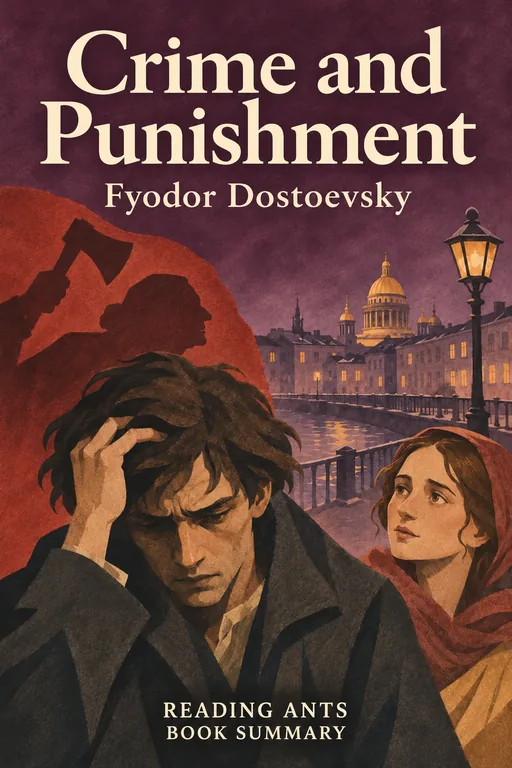
Crime and Punishment
Fyodor Dostoevsky
A poor former student in St. Petersburg murders an old pawnbroker to prove he is an extraordinary man above ordinary morality, then is tormented by guilt until love and confession offer him a path to redemption.
🌍 World Literature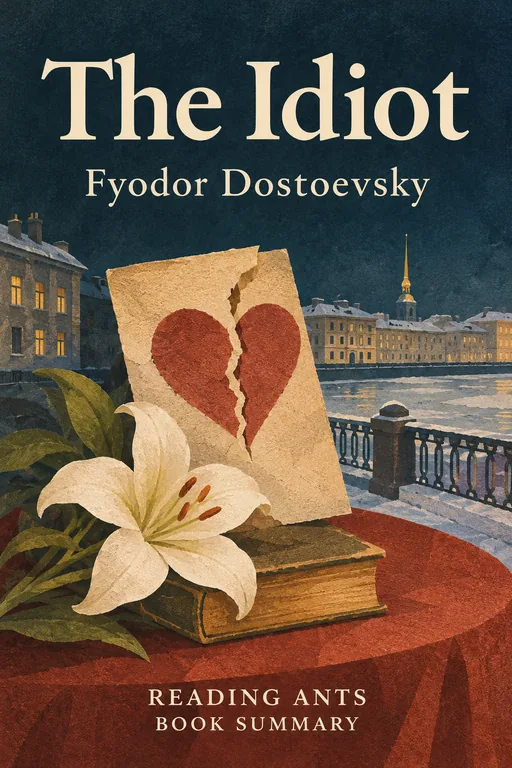
The Idiot
Fyodor Dostoevsky
A gentle, honest prince who is thought to be simple-minded arrives in Petersburg, where his goodness is caught up in a deadly love triangle and he cannot save those he cares for.
🌍 World Literature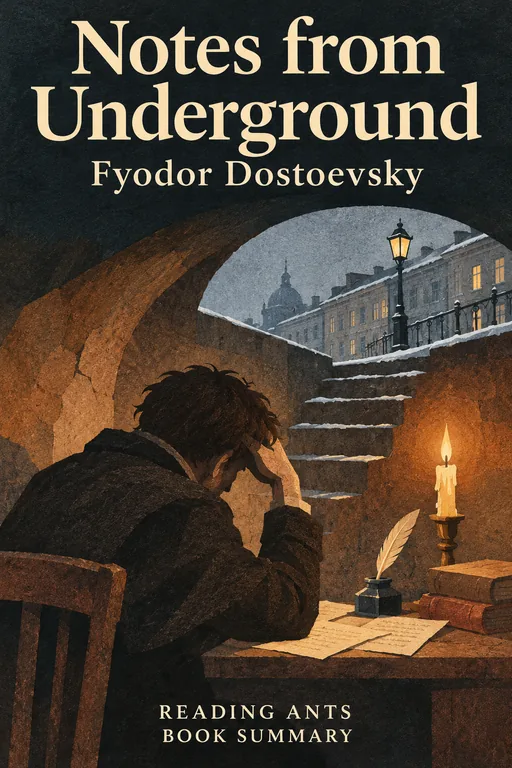
Notes from Underground
Fyodor Dostoevsky
A bitter, lonely former clerk who lives in a squalid underground existence writes an angry confession about his own spite, his contempt for the world and a humiliating episode from his past.
🌍 World Literature
War and Peace
Leo Tolstoy
Five aristocratic Russian families are swept through the Napoleonic Wars, and through love, loss and searching, three of their young members discover what makes a life meaningful.
🌍 World Literature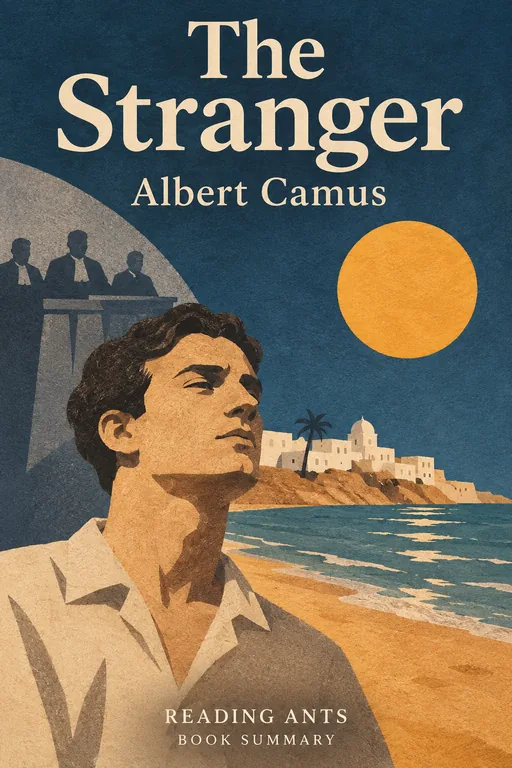
The Stranger
Albert Camus
An emotionally detached office worker kills a man on an Algerian beach and discovers that society condemns him as much for refusing its expected feelings as for the murder itself.
🌍 World Literature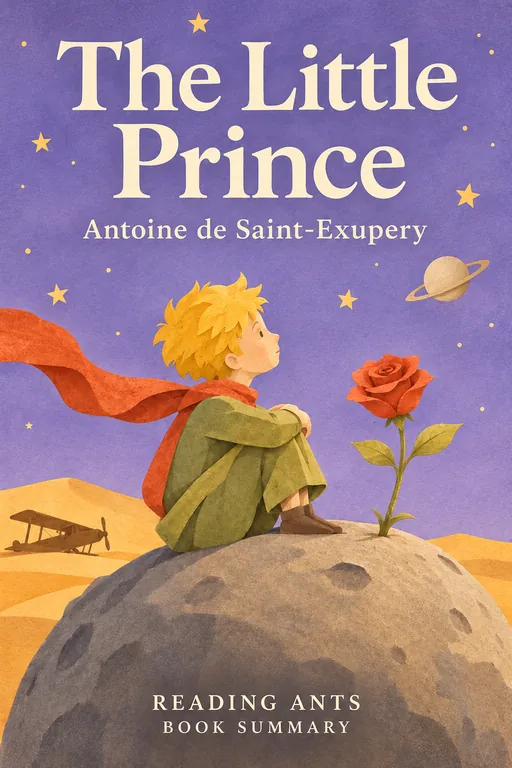
The Little Prince
Antoine de Saint-Exupery
A pilot stranded in the desert meets a small boy from a tiny planet, who teaches him that the most important things in life, like love and friendship, can only be seen with the heart.
🌍 World LiteratureWant something different?
Pick another topic and we will show you three books to start with.