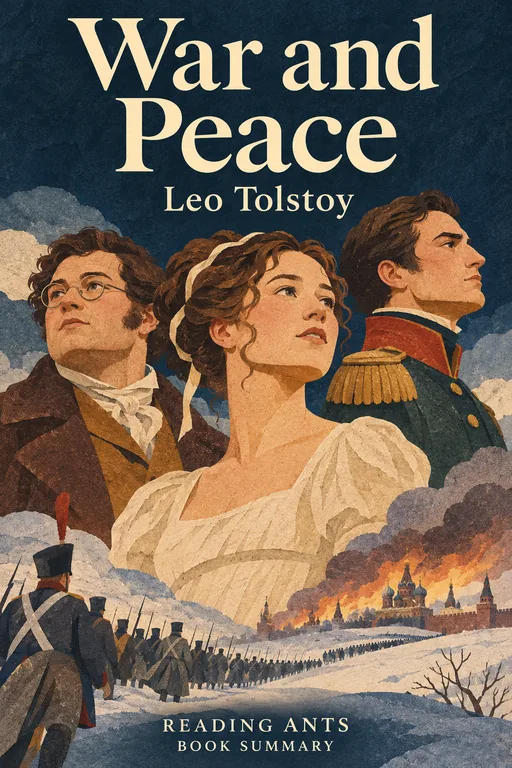
War and Peace
Original title: Война и мир
Five aristocratic Russian families are swept through the Napoleonic Wars, and through love, loss and searching, three of their young members discover what makes a life meaningful.
Overview
War and Peace, by Leo Tolstoy, was published between 1865 and 1869 and is often named the greatest novel ever written. It is also one of the longest, with hundreds of characters. The story begins in 1805 in the drawing rooms of St. Petersburg and Moscow, where nobles gossip about Napoleon, and follows the lives of the Bezukhov, Bolkonsky, Rostov, Kuragin and Drubetskoy families through the invasion of Russia in 1812. Three characters hold the story together: Pierre Bezukhov, a clumsy, kind and restless heir; Prince Andrei Bolkonsky, a proud, intelligent officer; and Natasha Rostova, a lively, warm-hearted girl. Tolstoy mixes private lives with history, and argues that great events are not shaped by great men alone, but by millions of small human actions.
Main Characters
- Pierre Bezukhov: the illegitimate son of a count, who unexpectedly inherits a huge fortune and spends years searching for meaning.
- Prince Andrei Bolkonsky: a proud, thoughtful soldier, disappointed by war and by love.
- Natasha Rostova: a spirited young woman who grows from a girl to a wise, loving mother.
- Princess Marya Bolkonskaya: Andrei’s gentle, deeply religious sister.
- Nikolai Rostov: Natasha’s brother, a brave, loyal cavalry officer.
- Hélène Kuragina: a beautiful, cold socialite who marries Pierre for his money.
- Anatole Kuragin: her charming, reckless brother.
- Napoleon and General Kutuzov: the real leaders of the French and Russian armies.
Full Summary
Salons and Battlefields
In 1805, high society in St. Petersburg talks of nothing but Napoleon’s threat. Pierre Bezukhov, newly returned from studying abroad, is awkward but good-hearted, and spends his time drinking and brawling with his friends. His friend Prince Andrei Bolkonsky, who is unhappy with his marriage to the pregnant Lise, leaves to fight as an adjutant to the Russian commander, Kutuzov. Nikolai Rostov also joins the army, and his family in Moscow, especially his young sister Natasha, adores him.
At the Battle of Austerlitz, Andrei charges forward carrying a flag, and is wounded. Lying on his back, he looks up at the endless sky and realizes how small his dreams of glory are. Napoleon, passing by, glances at him and he feels only indifference. He is believed dead, but he recovers and returns home to find Lise dying in childbirth.
Pierre’s Fortune and Marriage
Pierre’s father dies and leaves him an enormous fortune, making him one of the richest men in Russia. Suddenly flattered by everyone, he is persuaded to marry Hélène, though he does not love her. The marriage is miserable. When he learns that she is unfaithful, he fights a duel with her lover and wounds him. Lost and ashamed, Pierre falls in with the Freemasons, hoping that they will give his life direction. He tries to improve the lives of the peasants on his estates, but is cheated by his managers and gives up.
Natasha and Andrei
Andrei, grieving, retires to his estate. Visiting the Rostovs, he meets Natasha and is moved by her innocence and joy. When he dances with her at her first grand ball in St. Petersburg, they fall in love. But his father insists that they wait a year before marrying. During the wait, the handsome Anatole Kuragin, who is already secretly married, tries to seduce Natasha and persuades her to elope. The plan is discovered and prevented. Natasha is humiliated and nearly dies of shame and illness. Andrei, hurt, breaks off the engagement. Pierre, who loves Natasha as a friend, comforts her.
1812
Napoleon’s army invades Russia. Andrei, now a colonel, returns to the front. At the Battle of Borodino, one of the bloodiest in history, Pierre wanders onto the battlefield as a curious observer and ends up helping at an artillery battery. Andrei is mortally wounded. The Russians retreat, abandoning Moscow. The Rostovs leave the city, and Natasha insists that the family carts be unloaded to carry wounded soldiers. Among the wounded is Andrei, and Natasha stays with him, begging his forgiveness. He forgives her, and dies peacefully.
Pierre in Captivity
Pierre stays in Moscow, with a half-formed plan to assassinate Napoleon. Moscow burns. Pierre rescues a child from a fire and is arrested by French soldiers. In captivity in Moscow, he meets Platon Karataev, a humble peasant, and later marches with other prisoners during the French retreat. Karataev’s calm acceptance of suffering and love for all living things deeply changes him. Platon is shot when he collapses, but Pierre carries his wisdom with him. Russian partisans, among them Nikolai’s friend Denisov, free Pierre.
Peace
The French army collapses as the retreat drags on, and Russia is saved. Petya Rostov, Natasha’s youngest brother, is killed in the same partisan raid that frees Pierre. Hélène has died, leaving Pierre free to marry Natasha. In the epilogue, set in 1820, Pierre and Natasha are already married, and Natasha has become a devoted mother who has lost her youthful sparkle. Nikolai and Marya, who married earlier, live happily on their estates. Tolstoy ends with Pierre thinking about the future, and with Andrei’s young son, Nikolenka, dreaming of a great destiny, followed by a long essay on his theory of history.
Why It Matters
War and Peace is considered one of the greatest achievements in world literature. It is admired for its scale, its psychological depth and its vivid depictions of both battles and drawing rooms. The characters feel real, and their inner lives, from Andrei’s sky at Austerlitz to Natasha’s first ball, have inspired many writers.
The book also challenges the idea that history is made by great leaders. Tolstoy argues that Napoleon and Kutuzov were carried by events more than they controlled them. The novel has been adapted for film and television many times, including the epic Soviet film of 1966 to 1967 and a 2016 BBC series, and is a staple of reading lists worldwide.
Key Takeaways
- History is made by many people. Great events grow out of countless small actions.
- Glory is hollow. Andrei sees that ambition means little under the open sky.
- Simple wisdom is powerful. Platon’s calm teaches Pierre more than any philosophy.
- Love and family give life meaning. The survivors find peace in ordinary life.
- People can change. Pierre grows from an aimless heir into a thoughtful man.
What We Can Learn
War and Peace invites us to stop chasing glory and to look more closely at everyday life. Andrei’s moment under the sky at Austerlitz shows how much a single moment of stillness can change what we think matters.
It also teaches us patience with ourselves. Pierre makes many mistakes, with money, with marriage and with causes, but he keeps learning, and his suffering eventually leads him to a kind of peace. Failing and trying again is part of becoming wise.
Finally, the novel reminds us that we are connected to a much bigger story. The choices of ordinary soldiers, servants and families shape history as much as the decisions of emperors. Our small acts of kindness or courage count.
Criticism and Counterpoints
Many readers find the novel intimidating because of its length, its hundreds of characters with several names each, and its use of French in the conversations of the nobility. Tolstoy’s long essays on the philosophy of history, especially in the second epilogue, interrupt the story, and some readers skip them.
Critics have also noted that the novel’s world is that of the aristocracy, with serfs and peasants seen mostly from above, and that its women, though vivid, are often defined by marriage and motherhood. Some historians dispute Tolstoy’s view that Napoleon was powerless. Even so, most readers find that the effort pays off.
Who Should Read It
This novel suits patient teenagers and adults who enjoy big, immersive stories. A character list and a good translation, such as the one by Pevear and Volokhonsky, help a lot. Readers can focus on Pierre, Natasha and Andrei and let the rest wash over them at first.
Want the whole book?
A summary is a taste, not the meal. Here is where to find the full book.
You reached the end 🎉
Nicely done. Mark this one as read, and we will suggest what to read next.
Read this next
Anna Karenina
Leo Tolstoy
In imperial Russia, a married aristocrat falls passionately in love with a dashing officer and loses her place in society, while a thoughtful landowner seeks a meaningful life through love, work and faith.
🌍 World Literature
The Brothers Karamazov
Fyodor Dostoevsky
When a vulgar, greedy landowner is murdered, his three very different sons, a passionate soldier, a rational intellectual and a gentle novice monk, are drawn into a mystery that is also a debate about faith, doubt, guilt and freedom.
🌍 World Literature
Les Miserables
Victor Hugo
A former convict, transformed by a single act of mercy, spends his life doing good while being hunted by a relentless police inspector, in a sweeping story of love, injustice and redemption in nineteenth-century France.
🌍 World Literature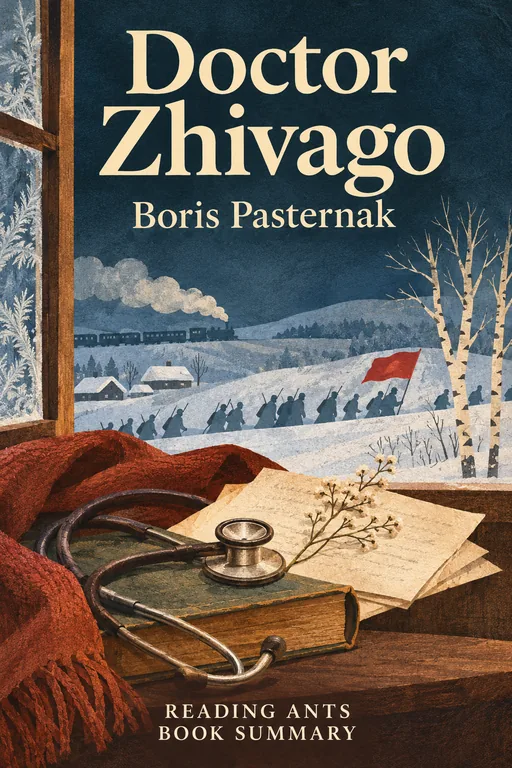
Doctor Zhivago
Boris Pasternak
A Russian doctor and poet lives through the First World War, the revolution and the civil war, torn between his family, a lasting love and a country that has no place for him.
🌍 World Literature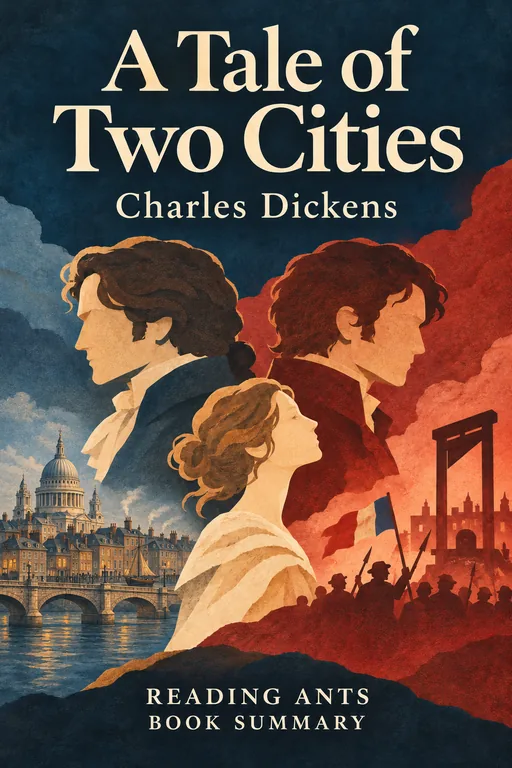
A Tale of Two Cities
Charles Dickens
During the French Revolution, the lives of a French aristocrat who rejects his family, the woman he loves and a brilliant but wasted English lawyer become entangled, until one man makes the ultimate sacrifice for love.
📜 Classics
The Little Prince
Antoine de Saint-Exupery
A pilot stranded in the desert meets a small boy from a tiny planet, who teaches him that the most important things in life, like love and friendship, can only be seen with the heart.
🌍 World LiteratureWant something different?
Pick another topic and we will show you three books to start with.