
The Little Prince
Original title: Le Petit Prince
A pilot stranded in the desert meets a small boy from a tiny planet, who teaches him that the most important things in life, like love and friendship, can only be seen with the heart.
Overview
The Little Prince begins with a pilot whose plane has broken down in the Sahara Desert, far from any help. While he struggles to fix it, a mysterious little boy with golden hair appears and asks him to draw a sheep. The boy is a prince from a tiny asteroid, and over the following days he tells the pilot about his home, his beloved rose, and the strange grown-ups he met while traveling from planet to planet. Written and illustrated by French pilot and author Antoine de Saint-Exupéry, this short book looks like a children’s story, but it is also a gentle, deep reflection on love, loss and what really matters. It is one of the most translated and best-selling books in the world.
Main Characters
- The narrator (the pilot): an adult who never lost his childhood imagination, stranded in the desert.
- The little prince: a curious, serious boy who lives alone on a tiny asteroid.
- The rose: a beautiful, proud flower whom the prince loves.
- The fox: a wise animal who teaches the prince about friendship.
- The snake: a mysterious creature who offers to send the prince home.
- The grown-ups on the asteroids: a king, a vain man, a drunkard, a businessman, a lamplighter and a geographer.
Full Summary
The Drawing of the Sheep
The narrator explains that as a boy of six he drew a picture of a boa constrictor that had swallowed an elephant. Every adult who saw it thought it was a hat. Discouraged, he gave up drawing and became a pilot, always disappointed that grown-ups never understood anything without explanations.
Years later, his plane crashes in the Sahara. He has only enough water for about a week. On the first morning, a small voice wakes him and asks him to draw a sheep. He finds a little boy standing in the sand. The pilot’s drawings of sheep are all rejected, until he draws a box and says the sheep is inside. The boy is delighted. It is exactly what he wanted.
The Prince’s Planet and the Rose
Bit by bit, the pilot learns the boy’s story. The little prince lives on an asteroid no bigger than a house, with three tiny volcanoes. Every day he must pull up the sprouts of baobab trees, because if they grow, their roots will split his little planet apart. He loves to watch sunsets, and on such a small world he can see many in a single day just by moving his chair.
One day a beautiful rose grows on his planet. She is vain and demanding, asking for a glass globe to protect her and a screen against drafts. The prince loves her, but her pride and small lies confuse and hurt him. He decides to leave. When he says goodbye, the rose admits that she loves him too. The prince realizes too late that he should have judged her by her actions, not her words.
A Journey Among Grown-ups
The prince visits six asteroids, each with one adult. A king believes he rules everything but can only give orders that would happen anyway. A vain man wants only to be admired. A drunkard drinks to forget that he is ashamed of drinking. A businessman counts the stars all day, believing he owns them. A lamplighter lights and puts out his lamp every minute, because his planet spins so fast, faithfully following orders that no longer make sense. The prince finds him the least ridiculous, because he cares about something other than himself. Finally, a geographer, who never explores anything himself, tells the prince that flowers are “ephemeral,” meaning they will not last. The prince feels sorry for leaving his rose alone, and the geographer suggests he visit Earth.
The Fox
On Earth, the prince lands in the desert and meets a snake, who says he can send anyone back to where they came from. Later, the prince finds a garden full of roses, thousands of them all looking like his own, and he is heartbroken. He had thought his rose was the only one in the universe.
Then he meets a fox, who asks to be “tamed.” Taming, the fox explains, means creating ties. To the prince, the fox is just a fox like a hundred thousand others; but if they become friends, they will be unique to each other. The prince tames the fox. When it is time to part, the fox shares his secret: the things that matter most can’t be seen with the eyes; you have to feel them with your heart. It is the time the prince gave his rose that makes her so important, and taming someone makes you responsible for them.
The Well in the Desert
By now the pilot has run out of water. The prince and the pilot walk through the night and, at dawn, find a well. The water tastes sweet, because it is the result of their walk together. The pilot begins to understand that the beauty of the desert comes from the fact that, somewhere, it hides a well.
Going Home
The prince reveals that it has been a year since he arrived on Earth, and that his star will be directly above that night. He has arranged to meet the snake, whose bite will free him from his heavy body so he can return to his rose. The pilot is heartbroken. The prince comforts him: from now on, when the pilot looks at the stars, he will know the prince is laughing on one of them, and all the stars will seem to laugh.
That night, the snake bites the prince, and he falls gently onto the sand without a sound. In the morning, his body is gone. The pilot, who had already managed to fix his plane, returns home, and is left unsure what has become of his friend. Six years later, he still wonders whether the sheep has eaten the rose. He asks readers who ever find a golden-haired boy in the desert to write to him quickly.
Why It Matters
The Little Prince is one of the best-selling and most translated books ever published, available in hundreds of languages and dialects. It was written in 1942 while Saint-Exupéry was living in exile in the United States during the Second World War, and published in 1943. A year later, he disappeared while flying a reconnaissance mission over the Mediterranean, which has added to the book’s air of mystery.
The book is beloved by children and adults alike, because it works on two levels: a simple adventure story with charming watercolor pictures, and a philosophical fable about love, responsibility and the way adults lose sight of what matters. The fox’s lessons about taming and seeing with the heart are among the most quoted ideas in world literature. The book has inspired films, plays, operas, a theme park and a museum.
Key Takeaways
- What matters most is invisible. Love, friendship and meaning can’t be measured or counted.
- Time and care make things precious. The prince’s rose is special because of the time he spent caring for her.
- We are responsible for what we love. Relationships come with duties, not only feelings.
- Grown-ups often chase the wrong things. Power, admiration, money and busy work leave the asteroid people empty.
- Childlike wonder is a kind of wisdom. Imagination sees truths that numbers miss.
What We Can Learn
The book reminds us to spend time on what we love. Friendships and family ties don’t happen by magic; they grow from the hours we give them, like the prince watering his rose. Call the friend you keep meaning to call.
It also warns against becoming like the grown-ups on the asteroids: so busy counting, ruling, or seeking praise that we forget why we started. Every so often, ask yourself what you are actually doing all this for.
Finally, the story teaches gentleness in judging others. The rose is difficult, but she loves the prince. Looking past someone’s words to their actions, and their hidden fears, can save a relationship.
Criticism and Counterpoints
Some readers find the book sentimental or too heavy with messages, as if every page is trying to teach a lesson. Others note that the rose, often read as a portrait of Saint-Exupéry’s wife Consuelo, is a rather one-sided picture of a demanding woman.
Parents sometimes worry that the ending, with the prince allowing a snake to bite him, may upset or confuse young children. Defenders reply that the ending is handled with great tenderness, and that it opens gentle conversations about loss and the idea that people we love stay with us.
Who Should Read It
Everyone. Children enjoy the adventure and pictures, teenagers find its ideas about love and growing up surprisingly deep, and adults often find that it means more each time they read it. It is short enough to read in an afternoon. Readers who dislike symbolic or philosophical stories may find it too whimsical.
Want the whole book?
A summary is a taste, not the meal. Here is where to find the full book.
You reached the end 🎉
Nicely done. Mark this one as read, and we will suggest what to read next.
Read this next
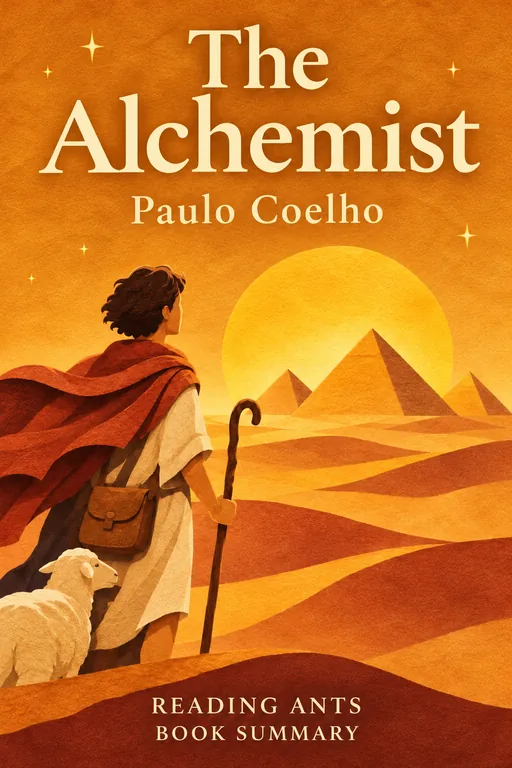
The Alchemist
Paulo Coelho
A young Spanish shepherd follows a recurring dream across the desert to the Egyptian pyramids in search of treasure, and learns that the journey toward one's dream is itself the greatest treasure.
🌍 World Literature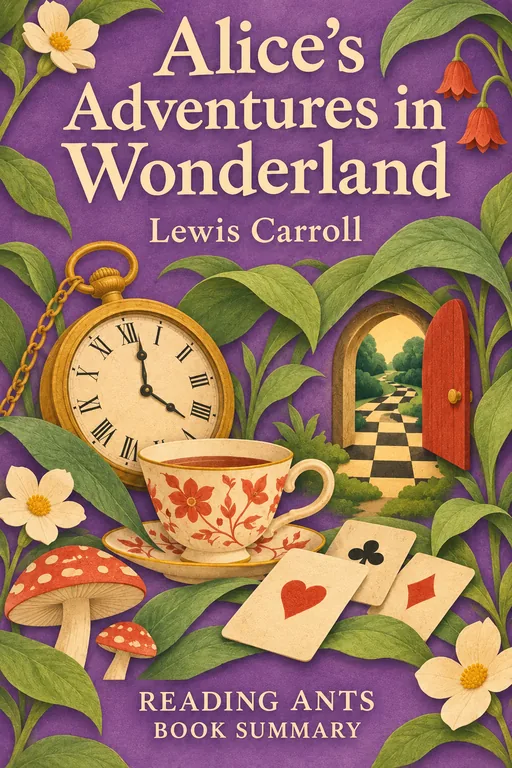
Alice's Adventures in Wonderland
Lewis Carroll
A curious girl follows a white rabbit down a hole into a crazy world where she keeps changing size, meets mad and marvelous creatures, and stands up to a furious Queen.
🧸 Children's Books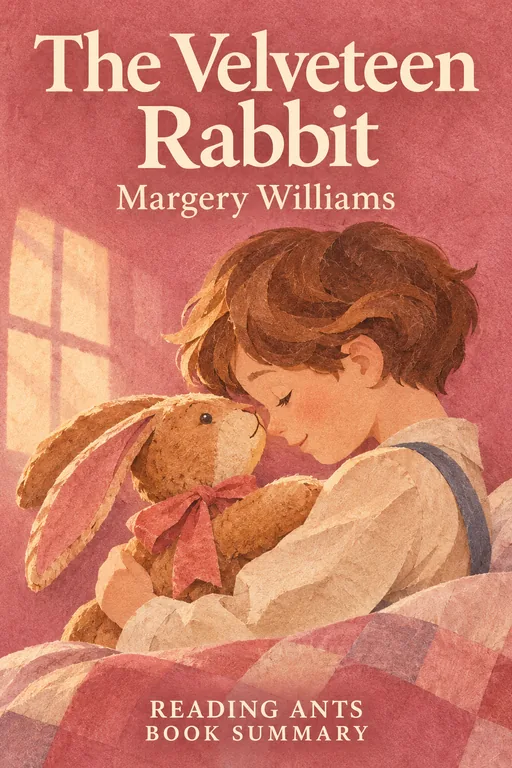
The Velveteen Rabbit
Margery Williams
A stuffed toy rabbit, loved by a small boy, learns from an old toy horse that being loved can make a toy Real, and at the end of a sad night, a fairy turns him into a living rabbit.
🧸 Children's Books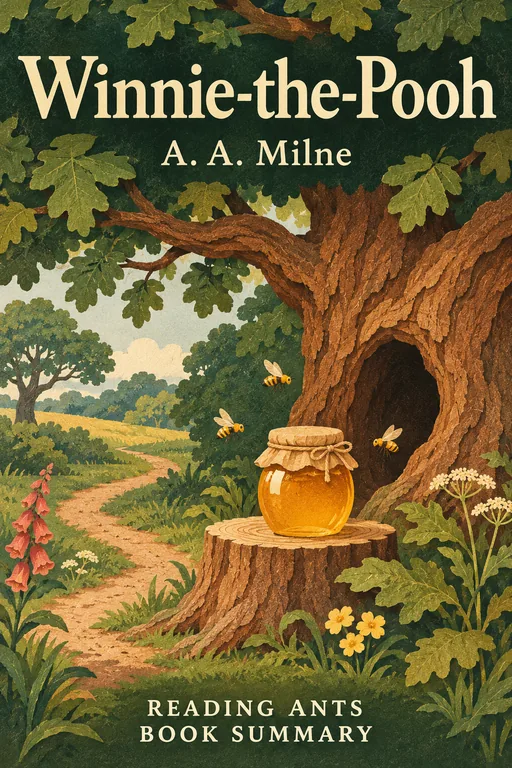
Winnie-the-Pooh
A. A. Milne
A gentle, honey-loving bear and his friends in the Hundred Acre Wood share funny, simple adventures with a boy named Christopher Robin, celebrating friendship, kindness and the joys of childhood.
🧸 Children's Books
Things Fall Apart
Chinua Achebe
Okonkwo, a proud and fearsome leader in an Igbo village in Nigeria, struggles against his own fears and against the arrival of British missionaries and colonial rulers, who change his world forever.
🌍 World Literature
One Hundred Years of Solitude
Gabriel Garcia Marquez
Seven generations of the Buendía family live, love, fight and repeat the same mistakes in the magical Colombian town of Macondo, from its founding to its final destruction.
🌍 World LiteratureWant something different?
Pick another topic and we will show you three books to start with.