 Reading Ants
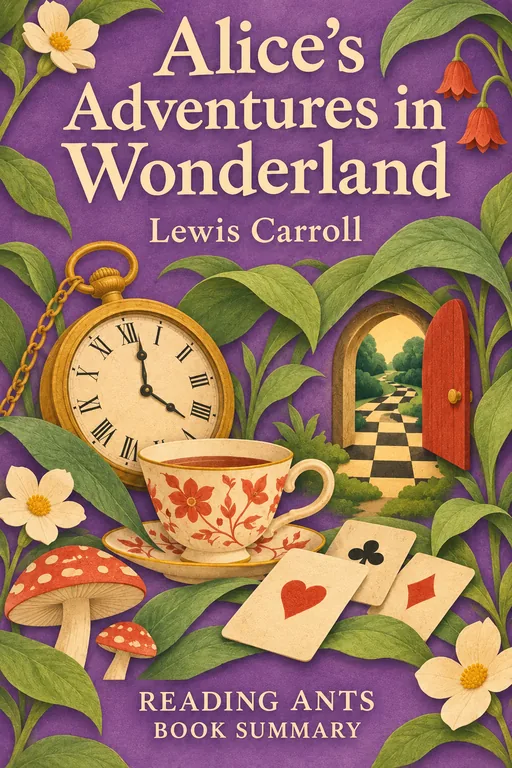
Alice's Adventures in Wonderland
A curious girl follows a white rabbit down a hole into a crazy world where she keeps changing size, meets mad and marvelous creatures, and stands up to a furious Queen.
Overview
One hot afternoon, a bored girl named Alice sees a White Rabbit hurry past, wearing a waistcoat and checking a pocket watch. She follows it down a rabbit hole and lands in Wonderland, a place where nothing makes sense: drinks make you shrink, cakes make you grow, cats grin and vanish, and a tea party never ends. Lewis Carroll first made up the story to entertain three young sisters on a boat trip near Oxford, and one of them, Alice Liddell, asked him to write it down. Full of jokes, riddles, poems and wordplay, and illustrated by John Tenniel, the book became one of the most famous children’s stories in the world.
Main Characters
- Alice: a curious, polite and sensible young girl.
- The White Rabbit: a nervous rabbit who is always late.
- The Caterpillar: a rude, sleepy creature sitting on a mushroom.
- The Cheshire Cat: a mysterious cat who grins and disappears.
- The Mad Hatter and the March Hare: hosts of an endless, crazy tea party.
- The Dormouse: a very sleepy guest at the tea party.
- The Queen of Hearts: a furious queen who wants everyone’s head cut off.
- The Gryphon and the Mock Turtle: two odd creatures who tell Alice strange stories.
Full Summary
Down the Rabbit Hole
Alice is sitting on a riverbank with her sister, bored, when a White Rabbit runs by, muttering that he will be late. Curious, Alice follows him down a rabbit hole and falls for a very long time, past cupboards and shelves, until she lands in a hall full of locked doors. Through a tiny door she sees a beautiful garden, but she is too big to fit.
She finds a bottle labeled DRINK ME, drinks it and shrinks, but then she has left the key on a table too high to reach. A cake labeled EAT ME makes her grow huge. Upset, she cries enormous tears, then shrinks again and almost drowns in her own pool of tears, which she shares with a mouse and other animals.
Strange Creatures
To dry off, the animals run a silly race organized by a Dodo, in which everyone runs in circles and everyone wins. Then Alice meets the White Rabbit again, who mistakes her for his housemaid and sends her to his house. There she drinks from another bottle and grows so big that she fills the whole house, with one arm out of the window. The animals throw pebbles at her, which turn into little cakes, and eating one shrinks her again.
In the woods, Alice meets a Caterpillar sitting on a mushroom, smoking a long pipe. He asks her who she is, and she admits she hardly knows, having changed so many times that day. He tells her that one side of the mushroom will make her grow and the other side will make her shrink. Alice nibbles carefully until she learns to control her size.
The Duchess and the Cheshire Cat
Alice visits the house of a Duchess, where the cook throws pots and pans and fills the air with so much pepper that everyone sneezes. The Duchess hands Alice a crying baby, which turns into a pig and trots away into the woods.
On a tree sits the Cheshire Cat, who grins widely and can vanish bit by bit until only his grin remains. When Alice asks which way to go, the Cat says it depends on where she wants to get to. He tells her that everyone in Wonderland is mad, including her, otherwise she wouldn’t have come.
The Mad Tea Party
Alice comes to a table where the Mad Hatter, the March Hare and a sleepy Dormouse are having tea. They shout that there is no room, though the table is huge. The Hatter asks a riddle that has no answer: why is a raven like a writing desk? Because the Hatter offended Time, it is always six o’clock, so it is always teatime, and they simply move round the table to clean cups. The conversation becomes so rude and ridiculous that Alice leaves.
The Queen’s Croquet Game
At last Alice reaches the beautiful garden. Gardeners shaped like playing cards are painting white roses red, because they planted the wrong color by mistake and fear the Queen will cut off their heads. The Queen of Hearts arrives and invites Alice to play croquet, using live flamingos as mallets and hedgehogs as balls. The game is chaos, and the Queen shouts “Off with their heads!” at anyone who annoys her, although the gentle King quietly pardons them.
The Queen sends Alice to meet the Gryphon and the Mock Turtle, who tells her a long, sad, silly story about his school under the sea, with lessons like “Reeling and Writhing,” and they show her a dance called the Lobster Quadrille.
The Trial
A trial begins: the Knave of Hearts is accused of stealing the Queen’s tarts. The jury is made of animals, and the evidence makes no sense. The Mad Hatter and the Duchess’s cook are called as witnesses. Meanwhile Alice starts growing again.
When Alice is called as a witness, she refuses to follow the silly rules. The Queen demands the sentence first and the verdict afterwards. Alice, now full-sized, says this is nonsense. The Queen orders her head cut off, but Alice cries that they are nothing but a pack of cards. The cards fly up at her, and suddenly she wakes up on the riverbank with her sister brushing leaves from her face. It was all a wonderful dream.
Why It Matters
Alice’s Adventures in Wonderland, published in 1865, changed children’s literature. Most children’s books of the time were written to teach lessons and good manners. Carroll’s book was written simply to delight, and its playful nonsense, puzzles and jokes about adults’ rules made it a revolution.
Lewis Carroll was the pen name of Charles Lutwidge Dodgson, an Oxford mathematics lecturer, and the book is full of logic puzzles and wordplay that adults also enjoy. It has never gone out of print, has been translated into nearly every major language, and has inspired films, ballets, artworks and the Disney animated film. Phrases like “down the rabbit hole,” “mad as a hatter” and the Cheshire Cat’s grin are part of everyday English.
Key Takeaways
- Curiosity leads to adventure. Alice’s willingness to follow the rabbit opens a whole new world.
- Growing up can be confusing. Alice’s constant changes in size mirror how children feel as they change.
- Adult rules can be silly. Wonderland mocks authority that makes no sense.
- Keep your common sense. Alice stays polite and logical while everyone else is mad.
- Imagination is powerful. Dreams and play can be as rich as real life.
What We Can Learn
Alice teaches us to stay curious. Asking questions, exploring new places and following our interests, even when they seem odd, can lead to wonderful discoveries.
She also shows the value of standing up for yourself. When the Queen’s trial becomes unfair, Alice speaks up, even though she is the only one who does. It’s okay to question rules that make no sense.
Finally, the book reminds us that it is normal to feel unsure about who we are. Like Alice telling the Caterpillar she isn’t sure who she is, everyone goes through changes, and that is part of growing up.
Criticism and Counterpoints
Some young readers find the book confusing because it has little plot. Scenes jump from one to another as in a dream, and many jokes depend on Victorian poems and English wordplay that today’s readers may not know. Translators have long struggled with its puns.
In recent years, biographers have discussed Carroll’s close friendships with young girls, including Alice Liddell, and his photographs of children, which modern readers can find uncomfortable. Historians caution against judging them by modern standards, and interpretations of his motives remain disputed, but the topic is often raised in discussions of the book.
Who Should Read It
This book is lovely read aloud to children from about 5 upward, and confident readers of 8 or older can enjoy it alone. Adults often appreciate its clever logic and humor even more than children do. Readers who prefer clear plots may find its dreamlike style puzzling.
Want the whole book?
A summary is a taste, not the meal. Here is where to find the full book.
You reached the end 🎉
Nicely done. Mark this one as read, and we will suggest what to read next.
Read this next
Through the Looking-Glass
Lewis Carroll
Alice climbs through a mirror into a backwards world laid out like a chessboard, and journeys across it as a pawn, meeting strange creatures along the way, until she reaches the eighth square and is crowned a queen.
🧸 Children's Books
The Wonderful Wizard of Oz
L. Frank Baum
Swept by a cyclone to the magical Land of Oz, a Kansas girl follows the yellow brick road with three unusual friends to ask a great wizard for help, and learns they already had what they were seeking.
🧸 Children's Books
Peter Pan
J. M. Barrie
A magical boy who refuses to grow up flies three London children to Neverland, where they battle pirates led by the villainous Captain Hook, until Wendy realizes they must go home and grow up.
🧸 Children's Books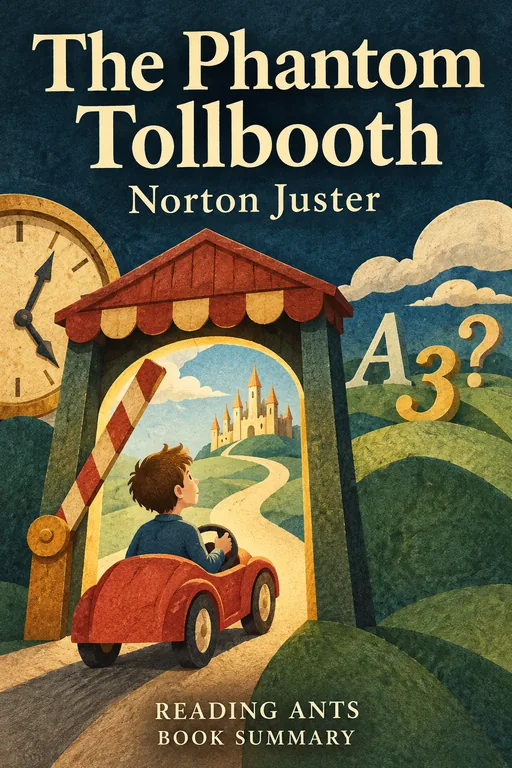
The Phantom Tollbooth
Norton Juster
A bored boy named Milo drives a toy car through a magic tollbooth into a land of puns and riddles, where he sets out to rescue the banished princesses Rhyme and Reason and discovers that learning can be exciting.
🧸 Children's Books
The Little Prince
Antoine de Saint-Exupery
A pilot stranded in the desert meets a small boy from a tiny planet, who teaches him that the most important things in life, like love and friendship, can only be seen with the heart.
🌍 World Literature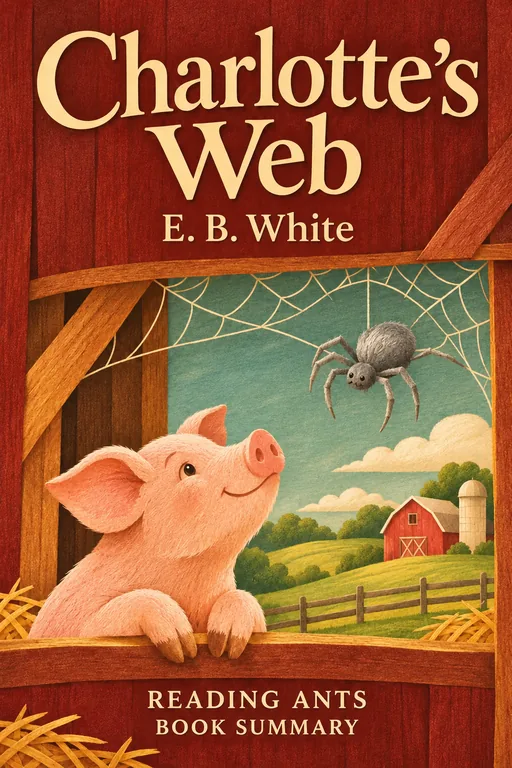
Charlotte's Web
E. B. White
A lonely pig named Wilbur learns he is going to be killed, and his clever friend Charlotte, a spider, comes up with an amazing plan to save his life.
🧸 Children's BooksWant something different?
Pick another topic and we will show you three books to start with.