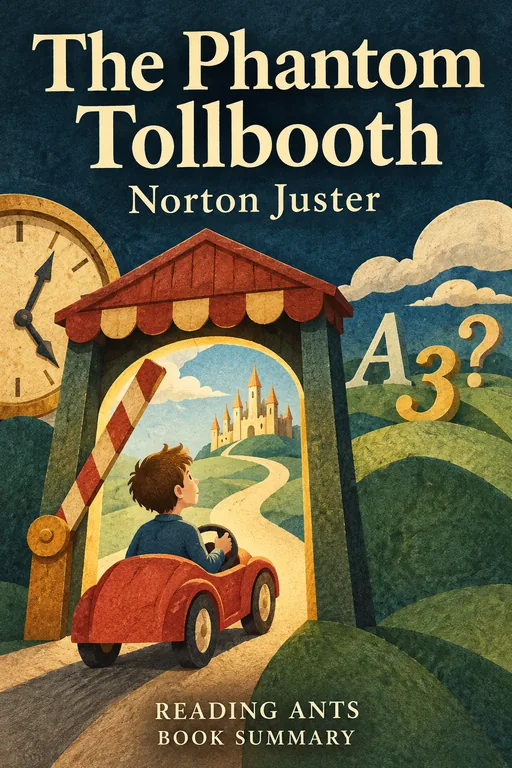
A bored boy named Milo drives a toy car through a magic tollbooth into a land of puns and riddles, where he sets out to rescue the banished princesses Rhyme and Reason and discovers that learning can be exciting.
Overview
The Phantom Tollbooth is a classic fantasy for children, written by Norton Juster and illustrated by Jules Feiffer, which was published in 1961. Milo is a boy who thinks that everything is a waste of time, including school and games. One afternoon, he finds a mysterious package in his room containing a tollbooth and a map, and he sets up the tollbooth, gets into his own little car and decides to try it. He is transported to the Lands Beyond, where words, numbers and ideas come to life, and where the world has fallen into chaos because the princesses Rhyme and Reason have been banished. The book is full of wordplay and literal-minded jokes, and is loved by readers of all ages.
Main Characters
- Milo: a restless, bored boy who learns to see the world with curiosity.
- Tock: a watchdog with a clock in his body, who helps Milo and reminds him not to waste time.
- The Humbug: a vain, boastful insect who joins them but is easily frightened.
- King Azaz the Unabridged: ruler of Dictionopolis, the kingdom of words.
- The Mathemagician: ruler of Digitopolis, the kingdom of numbers, and Azaz’s brother and rival.
- Princesses Rhyme and Reason: the adopted sisters of both rulers, who once kept peace between the two kingdoms.
- The demons of Ignorance: such as the Terrible Trivium, who wastes people’s time with petty tasks.
Full Summary
The Tollbooth
Milo comes home from school bored, with nothing to do and nowhere to go. In his room, he finds a large package that has appeared from nowhere. Inside is a tollbooth to put together, along with coins for the toll, a map of unknown lands and a book of rules. He climbs into his little electric car, drives through the tollbooth and, before long, finds himself on a road in a strange country. After he daydreams and takes a wrong turn, his car stops in the dull Doldrums, where small creatures called Lethargarians do nothing all day and thinking is against the rules. He is rescued by Tock, a watchdog with a ticking clock in his body, who tells him that he got stuck by not thinking and must think to get out.
Dictionopolis and Digitopolis
They reach Dictionopolis, a city of words, where King Azaz the Unabridged rules. Its market sells words by weight, and at the royal banquet every guest must eat the very words he has just spoken, so people there eat their words literally. After a quarrel between the Spelling Bee and the Humbug wrecks the market, Milo and Tock are sent to the dungeon, where they meet the Which, the king’s old great aunt, who tells them a story. Azaz and his brother, the Mathemagician, who rules the city of numbers, Digitopolis, were always rivals. Their adopted sisters, Princesses Rhyme and Reason, had kept the peace until they ruled that words and numbers are equally important. The angry brothers banished them to the Castle in the Air. At the banquet, Milo suggests bringing them back. Azaz says it cannot be done, yet he sends Milo to try, with the Humbug as guide and a box holding all the words he knows.
Obstacles and Odd Companions
On the quest, Milo, Tock and the Humbug meet absurd characters. Alec Bings, a boy who floats in the air, shows Milo that things look different from other points of view. On the Island of Conclusions, people are stuck because they jumped there without a good reason, and the three must swim away. Near Digitopolis, they meet the Dodecahedron, a helpful guide with twelve faces, who leads them to a mine where numbers are dug up like jewels. There the Mathemagician, who carries a staff that is really a giant pencil, shows them some number magic and a stew that makes you hungrier. Milo wins his permission to go on by showing that two brothers who always disagree with each other must in fact agree, and the Mathemagician rewards him with a small pencil version of his magic staff. Other strange travelers speak in puns and riddles, and Milo slowly learns to use his wits and his curiosity.
The Demons of Ignorance
As they climb the Mountain of Ignorance on their way to the Castle in the Air, the three face a series of monsters. The Terrible Trivium keeps people busy with pointless chores, such as moving a pile of sand with tweezers, and Milo’s magic pencil shows that the jobs would take hundreds of years. The Gelatinous Giant looks fierce but is afraid of everything, and he lets them go when Milo threatens to open the box of ideas. The Senses Taker tricks people with sights and sounds that are not there, but he cannot take the sense of humor of anyone who is laughing. Milo and his friends get past each demon by using their wits and what they have learned, instead of fighting.
The Rescue
At last, they climb the long stairway to the Castle in the Air, where Rhyme and Reason are shut away. The princesses are kind and wise, and they tell Milo that mistakes are fine as long as he learns from them, and that everything he learns has a purpose. When the demons chop away the stairway, the castle drifts loose, and Tock carries everyone down the mountain on his back, with Milo holding his tail and the Humbug hanging on to Milo’s ankles. The demons chase them, but the armies of Wisdom arrive, led by King Azaz and the Mathemagician and joined by everyone Milo has met, and they drive the demons away. Rhyme and Reason return to Wisdom, and Milo, Tock and the Humbug are named heroes of the realm. Only now do the king and the Mathemagician admit that the quest was impossible. They say they could not tell him before, because things can be done as long as no one knows that they cannot. A three-day carnival follows.
Return Home
After saying a sad goodbye to his friends, Milo drives back through the tollbooth to his own bedroom. To his surprise, he finds that he has been gone for only an hour, and it is still the same evening. The next day, when he rushes home from school to make another trip, the tollbooth has vanished and a new note is waiting. It says that the tollbooth had to be collected because many other children are waiting to use it, and that Milo will be able to reach the lands still to visit by himself. Now Milo sees his world with new eyes: he finds things to enjoy everywhere, from the sky and the trees outside his window to the books and music in his own room, and he no longer finds the world dull.
Why It Matters
The Phantom Tollbooth has become one of the most cherished children’s books, never going out of print, and is often given to young readers who enjoy language. Its mix of puns, logic puzzles and satire inspired a generation of writers, and it was adapted into an animated film in 1970 and a musical. Juster, an architect by profession, wrote it while procrastinating on another project.
The book is also admired for its message about the joy of learning. By turning words and numbers into places and characters, it persuades readers that knowledge is an adventure, and that boredom is often a lack of attention.
Key Takeaways
- Boredom is a choice of attention. Curiosity can make anything interesting.
- Words and numbers both matter. Language and mathematics complement each other.
- Don’t waste time. The Terrible Trivium shows how petty tasks steal our days.
- Reason and rhyme go together. Logic and beauty both help harmony.
- Learning is an adventure. Milo discovers excitement in knowledge.
What We Can Learn
The story teaches that the world is full of wonders if we pay attention. When we feel bored, we can try to look closer, ask questions and make connections.
It also shows that it is better to use our time for what matters. Milo learns that being busy with trivial things is not the same as living well.
Finally, it invites us to play with language. Puns, riddles and jokes show how flexible words can be, and enjoying them can make us better thinkers and writers.
Criticism and Counterpoints
Some young readers find the puns and wordplay confusing or too clever, especially if English is not their first language, and some of the jokes depend on a knowledge of idioms. Others note that the plot is episodic, with a series of adventures that sometimes feel like lessons, and that the message about learning is stated openly.
Some critics also say the book has a tone that is a little preachy or a bit old-fashioned. A few adults enjoy it more than children do. Still, it is widely praised for its imagination and humor.
Who Should Read It
This book suits children from about age eight, and also adults who love wordplay. It is good for reading aloud, and for readers who like puzzles. Younger children may need help with some of the jokes.
Want the whole book?
A summary is a taste, not the meal. Here is where to find the full book.
You reached the end 🎉
Nicely done. Mark this one as read, and we will suggest what to read next.
Read this next
Alice's Adventures in Wonderland
Lewis Carroll
A curious girl follows a white rabbit down a hole into a crazy world where she keeps changing size, meets mad and marvelous creatures, and stands up to a furious Queen.
🧸 Children's Books
The Lion, the Witch and the Wardrobe
C. S. Lewis
Four children step through a wardrobe into the magical land of Narnia, where a wicked witch has made it always winter, and with the help of the great lion Aslan they fight to set the land free.
🧸 Children's Books
The Wonderful Wizard of Oz
L. Frank Baum
Swept by a cyclone to the magical Land of Oz, a Kansas girl follows the yellow brick road with three unusual friends to ask a great wizard for help, and learns they already had what they were seeking.
🧸 Children's Books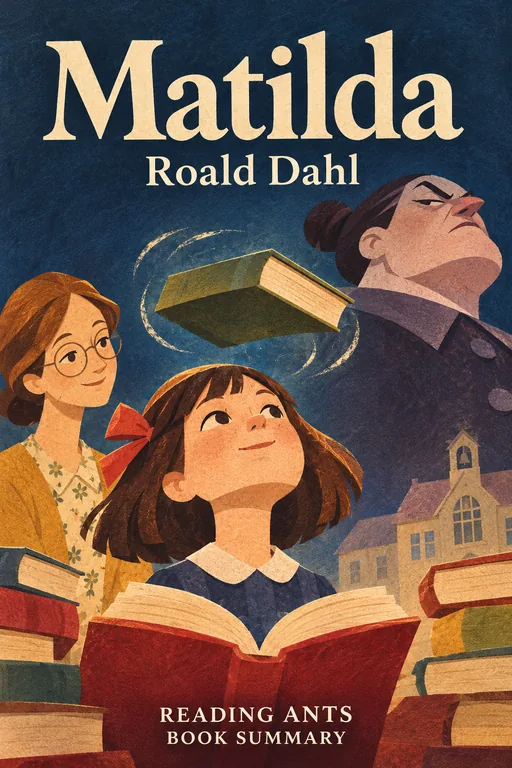
Matilda
Roald Dahl
A brilliant little girl with awful parents and a terrifying headmistress discovers she has magical powers, and uses her wits and her magic to help the one adult who truly cares for her.
🧸 Children's Books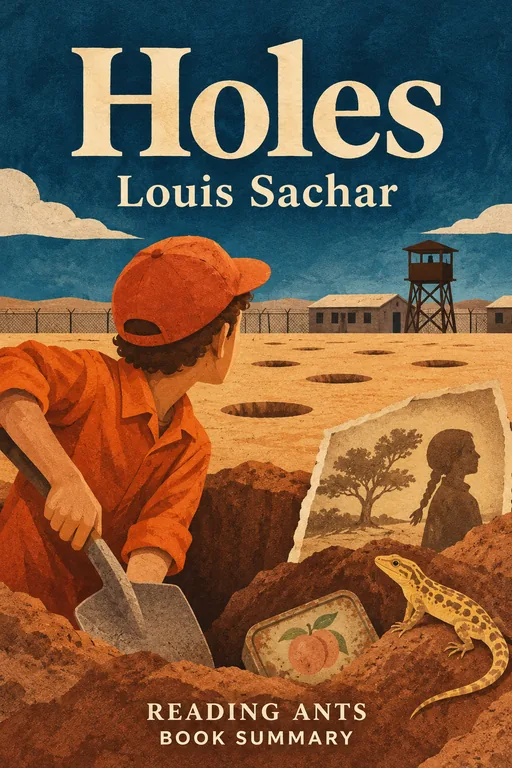
Holes
Louis Sachar
A boy with a family curse is wrongly sent to a desert detention camp where boys must dig holes all day, and he uncovers a buried secret that connects his family's past to the camp's cruel warden.
🧸 Children's Books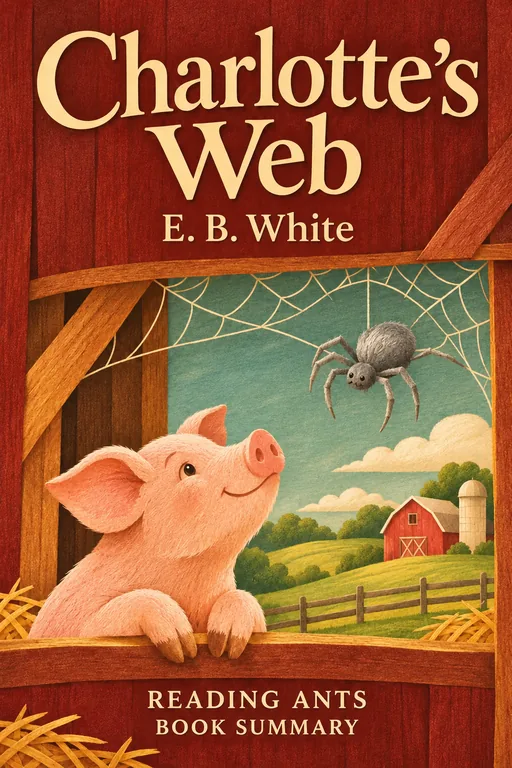
Charlotte's Web
E. B. White
A lonely pig named Wilbur learns he is going to be killed, and his clever friend Charlotte, a spider, comes up with an amazing plan to save his life.
🧸 Children's BooksWant something different?
Pick another topic and we will show you three books to start with.