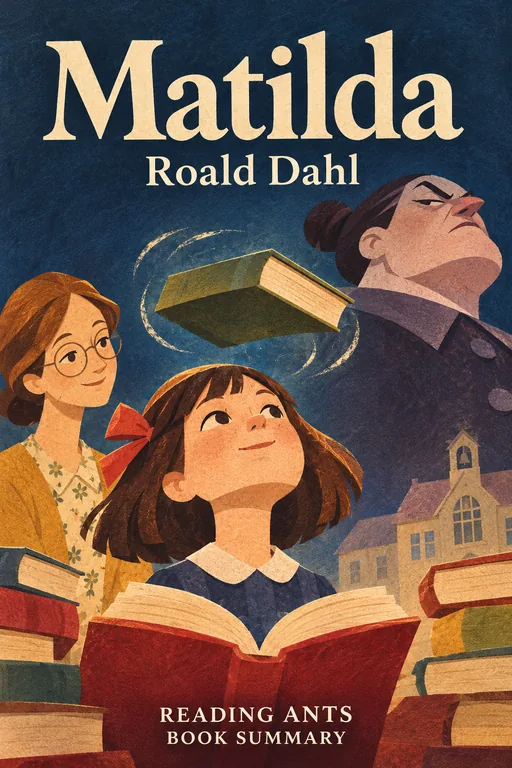
Matilda
A brilliant little girl with awful parents and a terrifying headmistress discovers she has magical powers, and uses her wits and her magic to help the one adult who truly cares for her.
Overview
Matilda Wormwood is a genius. By the age of five she has read Dickens, Hemingway and many other great authors, borrowed from the village library. But her parents are rude, greedy and only interested in television, and they think books are a waste of time. When Matilda starts school, she meets the gentle Miss Honey, who sees how special she is, and the monstrous headmistress, Miss Trunchbull, who throws children around by their hair. Then Matilda discovers that, when she is angry enough, she can move objects with her eyes. Roald Dahl’s funny, wicked and heartwarming story celebrates reading, cleverness and standing up to bullies of all sizes.
Main Characters
- Matilda Wormwood: a kind, quiet and extraordinarily clever little girl.
- Mr. Wormwood: Matilda’s loud, dishonest father, a used-car dealer.
- Mrs. Wormwood: Matilda’s mother, who cares mostly about bingo and her looks.
- Miss Honey: Matilda’s warm, gentle teacher.
- Miss Trunchbull: the huge, cruel headmistress of Crunchem Hall Primary School.
- Lavender: Matilda’s brave and mischievous best friend.
- Bruce Bogtrotter: a boy punished by Miss Trunchbull for eating her cake.
- Mrs. Phelps: the kind village librarian.
Full Summary
A Genius in the Wrong Family
Matilda can talk perfectly at eighteen months and teaches herself to read by the age of three. Her parents ignore her and call her a nuisance, so when she is four she walks to the village library on her own. The librarian, Mrs. Phelps, helps her choose books, and soon Matilda has read many of the great novels for adults. Through books, she travels the world while sitting in a small library.
Her father, Mr. Wormwood, sells second-hand cars and cheats his customers, for example by winding back the mileage counters. When Matilda points out that this is dishonest, he calls her stupid and shouts at her.
Matilda Fights Back
Matilda decides that when her parents are cruel, she will punish them with clever pranks. She puts superglue inside her father’s hat, so he has to wear it all day and night until her mother cuts it off. She borrows a friend’s talking parrot and hides it in the chimney, so her family thinks the house is haunted by a ghost. When her father tears up one of her library books, she mixes her mother’s peroxide hair dye into his hair tonic, turning his hair a strange silver color. Each time, her parents never suspect her.
Crunchem Hall
At five and a half, Matilda goes to school. Her teacher, Miss Honey, is amazed to find that Matilda can multiply huge numbers in her head and has read more books than most adults. She asks the headmistress to move Matilda to a higher class, but Miss Trunchbull refuses.
Miss Trunchbull is a former Olympic hammer thrower who hates children. She swings a girl by her pigtails and throws her over the fence, and locks children in a narrow cupboard full of spikes called the Chokey. When a boy named Bruce Bogtrotter steals a slice of her chocolate cake, she forces him to eat an enormous cake in front of the whole school. To everyone’s joy, he finishes it, and the children cheer.
The Power in Her Eyes
Lavender, Matilda’s friend, plays a prank by putting a newt in Miss Trunchbull’s water jug. When the newt appears in her glass, the furious headmistress blames Matilda. Burning with anger at being accused unfairly, Matilda stares at the glass and feels a strange power building in her eyes. The glass tips over, splashing the newt onto Miss Trunchbull.
Matilda tells Miss Honey what happened and shows her by tipping another glass. Amazed, Miss Honey invites her home. She lives in a tiny, bare farm cottage with almost no furniture.
Miss Honey’s Secret
Miss Honey explains her sad story. Her mother died when she was very young, and her father, a doctor, asked his late wife’s sister to come and look after her. That aunt was Miss Trunchbull, who treated her cruelly. When Miss Honey was five, her father died suddenly and mysteriously. Miss Trunchbull took over his fine house and all his money, claiming he had left everything to her. Even now, Miss Honey must give most of her salary to her aunt.
Matilda’s Revenge
Matilda practices her powers at home until she can control them precisely. During one of Miss Trunchbull’s lessons, Matilda makes a piece of chalk rise and write on the blackboard. The message appears to come from Magnus, Miss Honey’s dead father. It orders Agatha Trunchbull to give back his daughter’s house and wages and to leave. Miss Trunchbull faints in terror and soon disappears forever. Miss Honey’s father’s will is found, and she inherits her family home.
A New Home
Matilda is moved to the top class, where she has to work hard, and her magic powers fade because her brain is finally being used. She visits Miss Honey every day. Then Matilda’s father announces that the family is leaving for Spain immediately: the police have discovered he was selling stolen cars. Matilda begs to stay with Miss Honey, and her parents, who never wanted her, agree at once. Matilda and Miss Honey begin a happy new life together.
Why It Matters
Matilda is one of Roald Dahl’s most popular books and one of the best-loved children’s novels of the twentieth century. Published in 1988 with illustrations by Quentin Blake, it has sold millions of copies and been translated into many languages. It was made into a 1996 film and a hit stage musical, which was later filmed.
The book celebrates reading in a way few others do. Matilda’s love of libraries has inspired generations of children to pick up books. It also speaks directly to children who feel misunderstood, showing that being clever and kind is something to be proud of, and that cruel adults can be defeated.
Key Takeaways
- Books open up the world. Reading gives Matilda knowledge, comfort and escape.
- Being different is a strength. Matilda’s intelligence is what saves her and Miss Honey.
- Bullies can be beaten. Courage and cleverness defeat even the most terrifying adults.
- Family is about love, not blood. Matilda finds her true home with Miss Honey.
- Standing up for others matters. The children cheer together for Bruce, and Matilda risks herself for Miss Honey.
What We Can Learn
Matilda reminds us that libraries are treasure houses. Anyone can visit, and a librarian can help find the perfect book. Reading widely can make us wiser, kinder and more confident.
The story also shows the importance of caring adults. Miss Honey and Mrs. Phelps notice Matilda and encourage her. Parents, teachers and older siblings can make a huge difference just by noticing a child’s interests.
Finally, it teaches that being treated unfairly is not your fault. Children who feel ignored or picked on can find strength in friends, trusted adults and their own talents.
Criticism and Counterpoints
Some parents worry that the book shows children getting revenge on adults through tricks, and that it portrays parents and teachers as monsters. Others argue that this exaggerated, cartoonish style is exactly what makes Dahl’s books so fun and satisfying for children, who know it isn’t meant to be taken literally.
Critics have also noted that the story is very black and white: adults are either wonderful or horrible. Dahl’s books have recently been debated for their sometimes unkind descriptions of people’s appearance. Some editions have been revised to soften such language, which itself sparked controversy.
Who Should Read It
This book is perfect for children around 7 to 11, and it is great fun to read aloud. Kids who love books, or who feel nobody understands them, will especially enjoy Matilda. Adults often find it just as funny.
Want the whole book?
A summary is a taste, not the meal. Here is where to find the full book.
You reached the end 🎉
Nicely done. Mark this one as read, and we will suggest what to read next.
Read this next
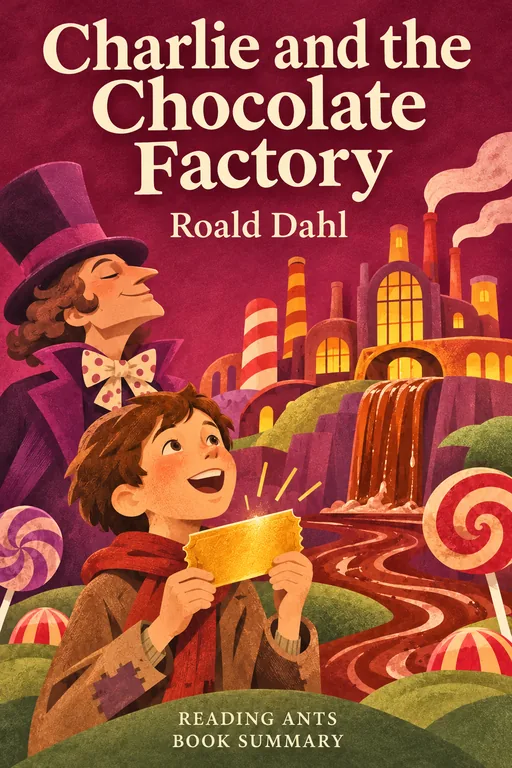
Charlie and the Chocolate Factory
Roald Dahl
A poor but kind boy wins one of five golden tickets to tour the magical factory of the eccentric chocolate maker Willy Wonka, where the four spoiled children with him meet hilarious fates and Charlie wins the greatest prize of all.
🧸 Children's Books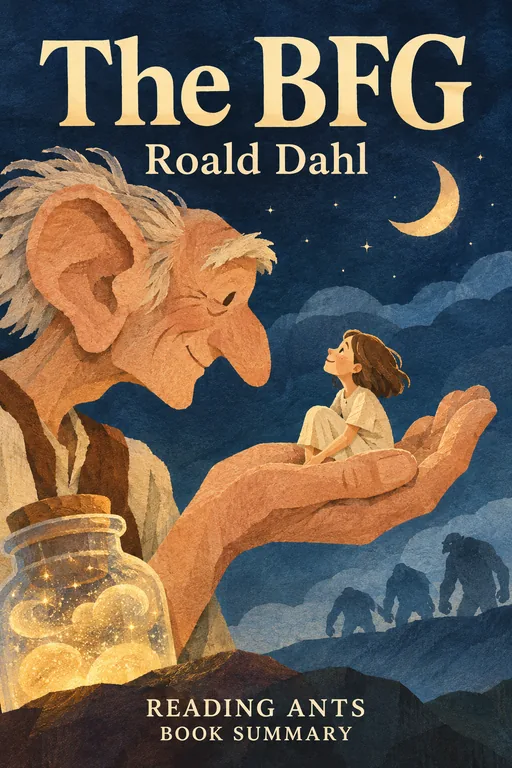
The BFG
Roald Dahl
A lonely orphan named Sophie is snatched by a giant who turns out to be gentle, and together they hatch a plan with the Queen of England to stop the bigger, man-eating giants.
🧸 Children's Books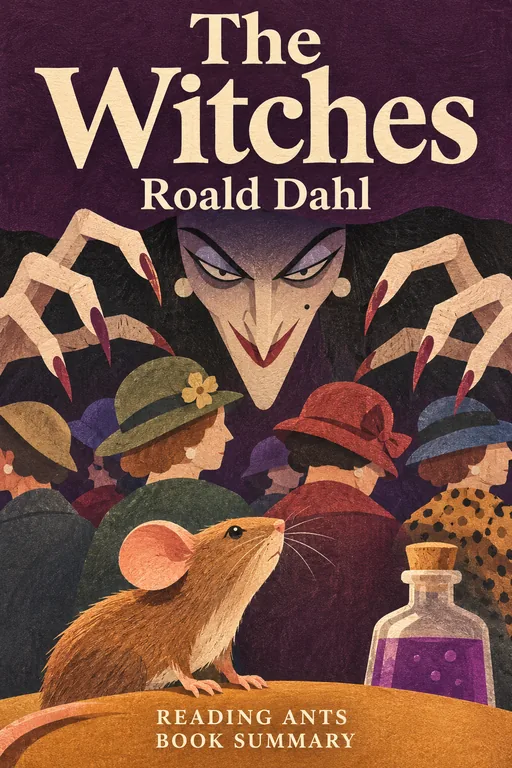
The Witches
Roald Dahl
A boy and his cigar-smoking Norwegian grandmother discover that real witches disguise themselves as ordinary women and plan to wipe out children, and they must stop the Grand High Witch even though the boy has been turned into a mouse.
🧸 Children's BooksHarry Potter and the Philosopher's Stone
J. K. Rowling
An unloved orphan boy discovers on his eleventh birthday that he is a famous wizard, and during his first year at a magical school he makes true friends and faces the dark wizard who killed his parents.
🧸 Children's Books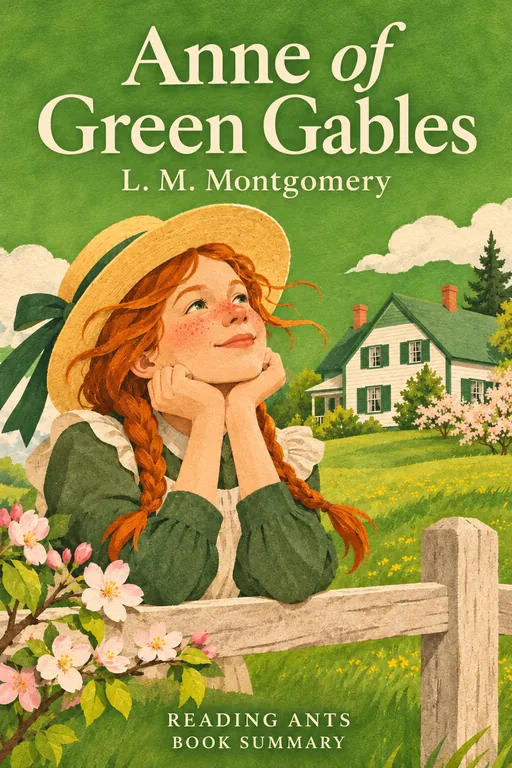
Anne of Green Gables
L. M. Montgomery
A talkative, imaginative red-haired orphan is sent by mistake to an elderly brother and sister who wanted a boy, and she wins their hearts and fills their quiet farm with life.
🧸 Children's Books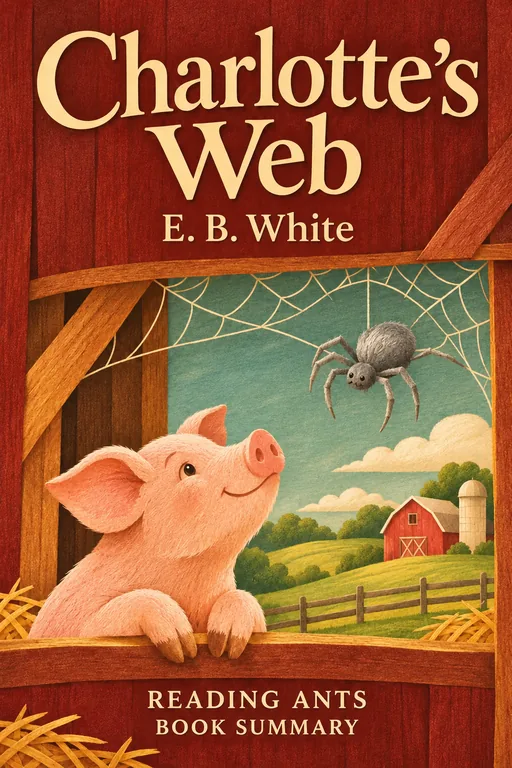
Charlotte's Web
E. B. White
A lonely pig named Wilbur learns he is going to be killed, and his clever friend Charlotte, a spider, comes up with an amazing plan to save his life.
🧸 Children's BooksWant something different?
Pick another topic and we will show you three books to start with.