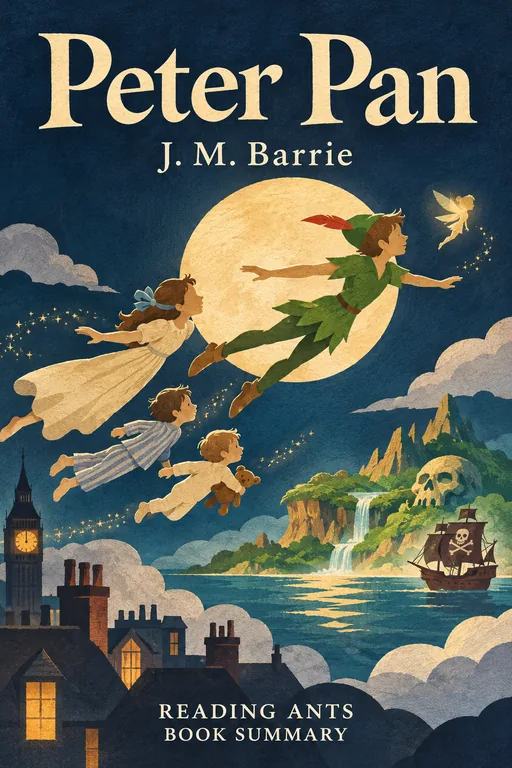
Peter Pan
A magical boy who refuses to grow up flies three London children to Neverland, where they battle pirates led by the villainous Captain Hook, until Wendy realizes they must go home and grow up.
Overview
Peter Pan, first performed as a stage play in 1904 and published as the novel Peter and Wendy in 1911, is one of the most enduring stories of childhood. Wendy, John and Michael Darling live in London with their parents and their dog-nurse, Nana. One night, Peter Pan, a boy who never grows up, flies into their nursery looking for his lost shadow. He teaches them to fly with the help of the fairy Tinker Bell and takes them to Neverland, an island of mermaids, fairies, Lost Boys and pirates. J. M. Barrie’s story is full of adventure and humor, but it also gently explores the joys and sadness of growing up.
Main Characters
- Peter Pan: a cocky, brave and forgetful boy who refuses to grow up.
- Wendy Darling: a caring girl who becomes a mother figure to the Lost Boys.
- John and Michael Darling: Wendy’s younger brothers.
- Tinker Bell: a jealous, fiery little fairy.
- Captain Hook: the vain, villainous pirate captain with an iron hook for a hand.
- The Lost Boys: children who fell out of their prams and came to Neverland.
- Tiger Lily: a brave princess of the island’s native tribe.
- The crocodile: who swallowed a clock and hunts Hook.
- Mr. and Mrs. Darling and Nana: the children’s parents and their dog-nurse.
Full Summary
The Shadow
Mrs. Darling has noticed a strange boy at the nursery window. One night, Nana the dog snaps at him as he escapes, catching his shadow, which Mrs. Darling rolls up and puts away in a drawer. A week later, while Mr. and Mrs. Darling are out to dinner and Nana has been chained in the yard, Peter returns with the fairy Tinker Bell to find his shadow. Wendy wakes and sews it back on for him.
Peter tells her that he ran away on the day he was born, because he heard his parents talking about what he would become as a man. He lives in Neverland with the Lost Boys, who have no mother to tell them stories. He invites Wendy to come and be their mother. Peter teaches Wendy, John and Michael to fly with wonderful thoughts and a sprinkle of fairy dust, and they fly out of the window toward Neverland, following directions that point to the right and then straight on until morning.
Neverland
Neverland is full of adventure: the Lost Boys, the pirates led by Captain Hook, a tribe of island people led by Tiger Lily, mermaids, wild beasts and a huge crocodile. Long ago, Peter cut off Hook’s hand and fed it to the crocodile, which liked the taste so much that it follows Hook everywhere, hoping for more. It has also swallowed a clock, so its ticking warns Hook when it is near.
Tinker Bell, jealous of Wendy, tricks one of the Lost Boys into shooting her with an arrow. Wendy is saved because the arrow strikes a button Peter gave her. The boys build a little house around her, and Wendy becomes their mother, telling stories and caring for them in their underground home.
Adventures on the Island
The children have many adventures. At Mermaids’ Lagoon, Peter rescues Tiger Lily from pirates who have tied her to a rock to drown. Peter fights Hook and is wounded, and he and Wendy are stranded on the rock as the tide rises. Wendy escapes by holding onto a kite, and Peter floats away on a bird’s nest, thinking that dying would be an awfully big adventure. After this, Tiger Lily’s people guard the children’s home.
Captured by Pirates
As time passes, Wendy worries that her brothers are forgetting their parents. She tells the Lost Boys a story about a mother who always leaves the window open for her children to return. They all decide to go home with her, but Peter refuses to come, insisting he will never grow up.
Captain Hook attacks the island people and captures Wendy and the boys as they leave the underground home. While Peter sleeps, Hook poisons his medicine. Tinker Bell drinks it to save him and nearly dies, but Peter begs children everywhere who believe in fairies to clap their hands, and she recovers.
The Battle on the Ship
Peter boards Hook’s pirate ship, the Jolly Roger, ticking like the crocodile to frighten the pirates. Hidden in the cabin, he defeats the pirates one by one, frees the boys, and the boys win a great battle. Peter and Hook duel. Hook, beaten, worries only about whether he has shown “good form,” and leaps into the sea, into the jaws of the waiting crocodile.
Home Again
The children fly home. Mr. Darling, ashamed that he chained up Nana on the night they disappeared, has been living in the dog’s kennel as punishment. Mrs. Darling has kept the nursery window open every night. The children slip back into their beds, and their mother’s joy is overwhelming. The Darlings adopt all the Lost Boys.
Peter refuses to stay and be adopted, because he does not want to grow up. He promises to return each spring to take Wendy to Neverland for spring cleaning, though he often forgets. Years pass, and Wendy grows up, marries and has a daughter, Jane. One night, Peter returns, still a boy, and is sad to see that Wendy is grown. He takes Jane to Neverland instead, and later Jane’s daughter, and so it will go on, as long as children are innocent and heartless.
Why It Matters
Peter Pan is one of the most famous stories in the world, and Peter has become a symbol of eternal youth. The play has been performed countless times since 1904, and the story has inspired many films, including Disney’s 1953 animated version, Hook and Finding Neverland, which tells the story of how Barrie came to write it.
In 1929, Barrie gave the rights to Peter Pan to Great Ormond Street Hospital for Children in London, so that the hospital would benefit from it; a special provision in British law later extended that benefit, and the gift has helped sick children for nearly a century. The phrase “Peter Pan syndrome” is now used to describe adults who refuse to grow up, and ideas like Tinker Bell, Captain Hook and, in the Disney film, the “second star to the right” are part of popular culture.
Key Takeaways
- Childhood is magical but brief. Neverland is wonderful, but children must grow up.
- Growing up brings love and responsibility. Wendy chooses home and family.
- Imagination is powerful. Belief and wonderful thoughts make flying possible.
- Mothers and home matter. The open window shows a parent’s endless love.
- Never growing up has a cost. Peter stays young but forgets the people he loves.
What We Can Learn
Peter Pan reminds us to treasure childhood and imagination. Playing, pretending and having adventures are important, and adults can keep a little of that joy and wonder too.
It also shows that growing up isn’t something to fear. Wendy’s choice to go home means gaining family, love and new experiences. Change can be sad, but it brings good things as well.
Finally, the open nursery window teaches about unconditional love. Families can forgive and welcome each other back, even after mistakes or long absences, and a home where someone is always waiting is a great gift.
Criticism and Counterpoints
Some modern readers find parts of Peter Pan troubling. The portrayal of Tiger Lily and her people relies on stereotypes of Native Americans that were common at the time but are now seen as offensive, and some modern productions have changed these scenes.
Critics also note that Wendy is mainly cast as a mother figure who cooks, cleans and tells stories, while the boys have the adventures. Peter himself can be selfish and forgetful, and the story’s ending, which calls children “heartless,” can feel bittersweet or confusing. Others see this mix of sweetness and sadness as what makes the story so memorable.
Who Should Read It
This book is lovely read aloud to children from about 6 upward, and older readers can enjoy its humor and deeper themes alone. Adults often find it surprisingly moving. Families may want to talk about its old-fashioned stereotypes together.
Want the whole book?
A summary is a taste, not the meal. Here is where to find the full book.
You reached the end 🎉
Nicely done. Mark this one as read, and we will suggest what to read next.
Read this next
The Wonderful Wizard of Oz
L. Frank Baum
Swept by a cyclone to the magical Land of Oz, a Kansas girl follows the yellow brick road with three unusual friends to ask a great wizard for help, and learns they already had what they were seeking.
🧸 Children's Books
Alice's Adventures in Wonderland
Lewis Carroll
A curious girl follows a white rabbit down a hole into a crazy world where she keeps changing size, meets mad and marvelous creatures, and stands up to a furious Queen.
🧸 Children's Books
Treasure Island
Robert Louis Stevenson
A boy who finds a pirate's treasure map sails to a distant island, only to discover that the ship's charming one-legged cook is the leader of a band of pirates who want the gold for themselves.
🧸 Children's Books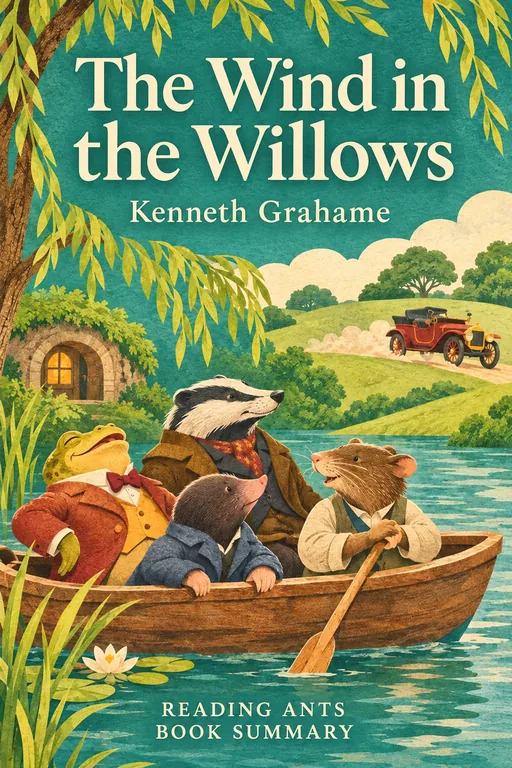
The Wind in the Willows
Kenneth Grahame
A shy Mole, a kindly Water Rat, a gruff Badger and a boastful Toad share riverside adventures in the English countryside, in a story about friendship, home and the madness of Mr. Toad's passion for motorcars.
🧸 Children's Books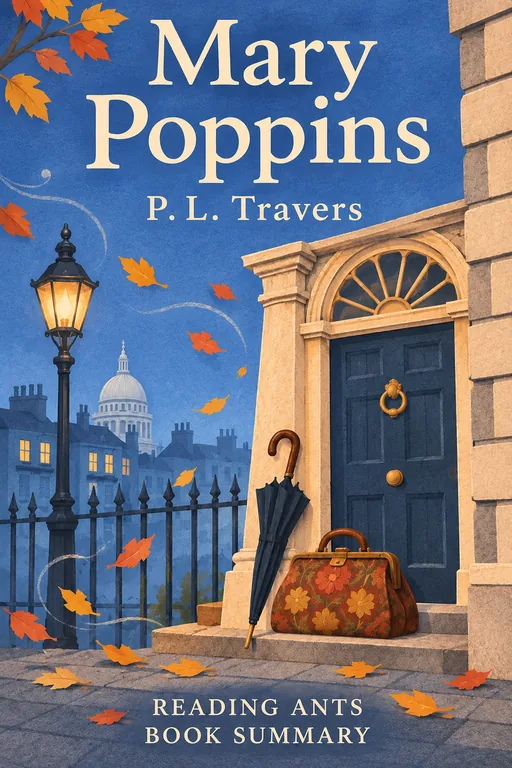
Mary Poppins
P. L. Travers
A stern, vain and magical nanny arrives on the east wind to look after the four Banks children in London, takes them on extraordinary outings, and leaves when the wind changes.
🧸 Children's Books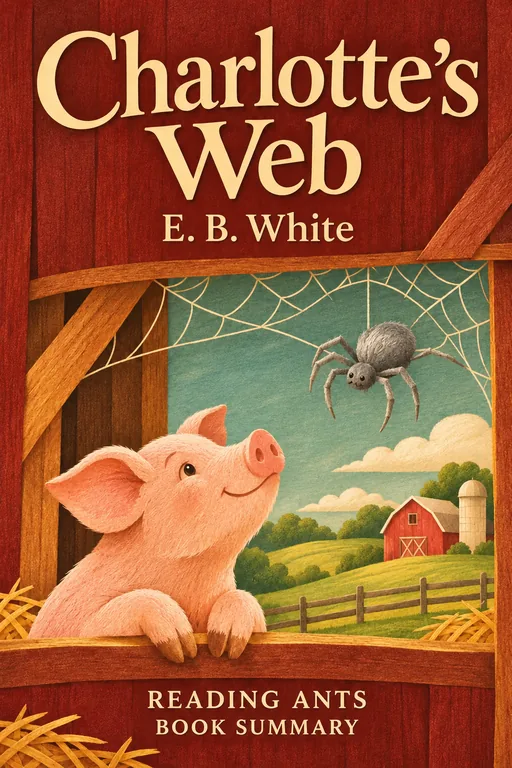
Charlotte's Web
E. B. White
A lonely pig named Wilbur learns he is going to be killed, and his clever friend Charlotte, a spider, comes up with an amazing plan to save his life.
🧸 Children's BooksWant something different?
Pick another topic and we will show you three books to start with.