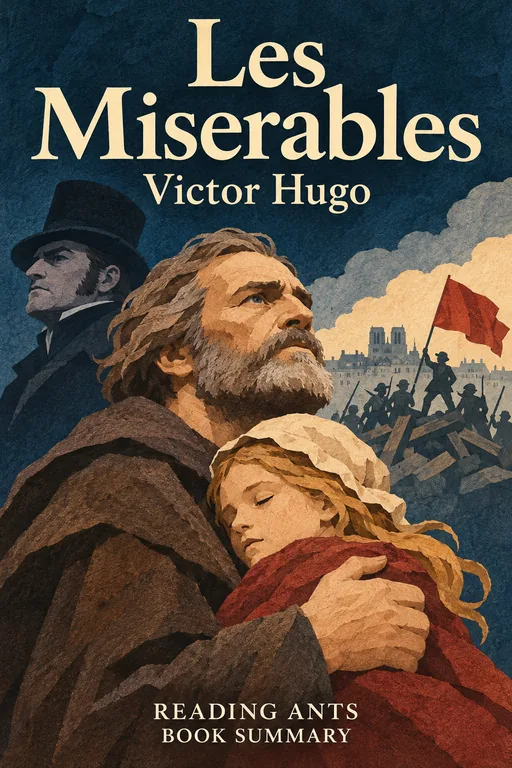
Les Miserables
Original title: Les Misérables
A former convict, transformed by a single act of mercy, spends his life doing good while being hunted by a relentless police inspector, in a sweeping story of love, injustice and redemption in nineteenth-century France.
Overview
Les Misérables (“The Miserable Ones” or “The Wretched”) is Victor Hugo’s enormous novel about the poor and the outcast in France between 1815 and 1832. Its hero, Jean Valjean, has spent nineteen years in prison for stealing a loaf of bread and trying to escape. Released, bitter and rejected everywhere, he is shown unexpected kindness by a bishop, and decides to become an honest man. But Inspector Javert, who believes no criminal can change, pursues him for decades. Around them are unforgettable characters: the struggling mother Fantine, her daughter Cosette, the greedy Thénardiers and the young revolutionaries of Paris. The novel is a passionate protest against poverty and injustice, and one of the most beloved stories in world literature.
Main Characters
- Jean Valjean: a strong, kind-hearted former convict seeking redemption.
- Inspector Javert: a strict police officer devoted to the law.
- Bishop Myriel: a humble, generous bishop who changes Valjean’s life.
- Fantine: a young working woman who falls into desperate poverty.
- Cosette: Fantine’s daughter, raised by Valjean.
- The Thénardiers: cruel, greedy innkeepers.
- Éponine: the Thénardiers’ daughter, who loves Marius.
- Marius Pontmercy: an idealistic young law student.
- Enjolras: the passionate leader of a group of student revolutionaries.
- Gavroche: a brave, cheeky street boy of Paris.
Full Summary
The Bishop’s Candlesticks
In 1815, Jean Valjean is released after nineteen years of hard labor. Because his yellow passport marks him as a former convict, every inn turns him away. Finally Bishop Myriel of Digne welcomes him, feeds him and gives him a bed. During the night, Valjean steals the bishop’s silverware and flees. When police bring him back, the bishop says he gave Valjean the silver as a gift, and hands him two silver candlesticks too. He tells Valjean that he has bought his soul for God and that he must use the silver to become an honest man.
Shaken, Valjean nonetheless steals a coin from a small boy, then is overcome with shame. He resolves to change his life.
Monsieur Madeleine and Fantine
Years later, under the name Monsieur Madeleine, Valjean has become a wealthy factory owner and the beloved mayor of a small town. In Paris, a young woman, Fantine, was abandoned by her lover with a baby, Cosette. She leaves the child with innkeepers, the Thénardiers, who promise to care for her but treat her as a servant and keep demanding money. When Fantine’s factory supervisor discovers she has a child out of wedlock, Fantine is dismissed. To pay the Thénardiers, she sells her hair and her front teeth and finally becomes a prostitute.
Valjean learns of her suffering and promises to rescue Cosette. Meanwhile Inspector Javert, who knew Valjean as a convict, suspects the mayor’s true identity.
The Trial
Javert reports that another man, accused of being Jean Valjean, is about to be sentenced to life in prison. After a sleepless night of struggle with his conscience, Valjean goes to the courtroom and reveals himself, saving the innocent man. Javert comes to arrest him at Fantine’s bedside, and Fantine, gravely ill, dies from the shock. Valjean escapes and later fakes his own death.
Cosette
On Christmas Eve, Valjean finds eight-year-old Cosette fetching water alone in a dark forest for the Thénardiers. He pays them to take her away and gives her a beautiful doll. In Paris, they live quietly, but Javert finds them, and they escape by climbing over a wall into a convent garden, where an old man Valjean once saved helps them stay. Cosette is educated there, and for the first time in her life she is happy.
Marius and the Barricade
Years later, Cosette has grown into a young woman, and Valjean lives with her in Paris. A poor young law student named Marius, who has quarreled with his wealthy grandfather over politics, sees her in a park and falls in love. The Thénardiers, now living in poverty in Paris, try to rob and trap Valjean, but Marius alerts the police and Javert arrives. The Thénardiers’ daughter Éponine, who secretly loves Marius, helps him find Cosette’s house, and the young couple meet in the garden.
In June 1832, a rebellion breaks out in Paris. Marius joins his friends, students led by Enjolras, on a barricade in the streets. Éponine follows him and dies after taking a bullet meant for him. The street boy Gavroche is killed while collecting ammunition. Valjean, who has discovered Cosette’s love for Marius, goes to the barricade to protect him. There he finds Javert, captured as a spy. Valjean is given the chance to execute him but secretly lets him go.
The Sewers
The soldiers storm the barricade, and nearly all the students are killed. Valjean carries the wounded, unconscious Marius through the sewers of Paris, wading through filth and danger. At the exit, he meets Javert, who lets him take Marius home. Javert’s whole view of the world has collapsed: a criminal has shown more mercy than the law. Unable to reconcile duty and compassion, Javert throws himself into the River Seine.
Redemption
Marius recovers and marries Cosette. Valjean confesses to Marius that he is a former convict, and Marius, troubled, gradually keeps him away from Cosette. Lonely and heartbroken, Valjean weakens. Then Marius learns from Thénardier, who is trying to blackmail him, that it was Valjean who carried him out of the sewers. Marius and Cosette rush to Valjean’s side. Surrounded by love, with the bishop’s candlesticks beside him, he dies peacefully, his life of redemption complete.
Why It Matters
Les Misérables is one of the great novels of the nineteenth century and a landmark of French literature. When it was published in 1862, while Hugo lived in political exile, it was an enormous international success. Hugo used it to expose poverty, harsh laws, child labor and the treatment of women and convicts, and to argue that society has a duty to care for the poor.
The story has been adapted many times, most famously as the stage musical that opened in the 1980s and became one of the longest-running musicals in history, and as a 2012 film. Its characters, such as the compassionate bishop, the relentless Javert and the brave Gavroche, are known around the world, and its message of mercy and justice continues to inspire.
Key Takeaways
- Mercy can transform a life. The bishop’s kindness sets Valjean on a new path.
- People can change. Valjean proves that a criminal can become a good man.
- Law without compassion is not justice. Javert’s rigid view destroys him.
- Poverty crushes the innocent. Fantine and Cosette suffer through no fault of their own.
- Love is sacrifice. Valjean gives everything for Cosette’s happiness.
What We Can Learn
Les Misérables teaches the power of giving people a second chance. A single act of kindness, like the bishop’s, can change someone’s entire life. We can choose to treat people by who they could become, not only by their past mistakes.
It also asks us to think about fairness. Many characters suffer because of poverty and harsh rules, not because they are bad. Caring about people in need, and supporting fair laws, is a way to live out the book’s message.
Finally, Valjean’s choice at the trial shows the importance of conscience. Doing the right thing, even when it costs us everything, is what gives a life meaning.
Criticism and Counterpoints
The novel is very long, often more than 1,400 pages, and Hugo includes lengthy digressions on subjects such as the Battle of Waterloo, the history of Paris’s sewers, convents and slang. Many readers find these sections slow and skip them, and abridged editions are common.
Critics have also called the story melodramatic, full of coincidences, such as characters constantly meeting by chance, and noted that Cosette is a rather passive, idealized figure. Defenders argue that the novel’s grand emotions and coincidences are part of its epic power.
Who Should Read It
This novel is for teenagers and adults who enjoy big, emotional stories about justice and redemption. Readers daunted by its length can start with a good abridged version or the musical. Those who persevere through the full book find it one of the most rewarding reading experiences of their lives.
Want the whole book?
A summary is a taste, not the meal. Here is where to find the full book.
You reached the end 🎉
Nicely done. Mark this one as read, and we will suggest what to read next.
Read this next
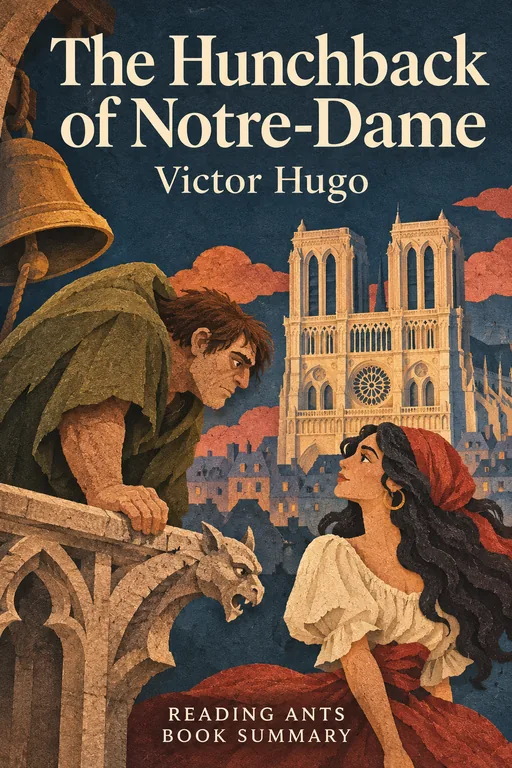
The Hunchback of Notre-Dame
Victor Hugo
In fifteenth-century Paris, the deformed bell-ringer Quasimodo, the cold archdeacon Frollo and the dashing captain Phoebus are all drawn into a deadly web of desire around the beautiful Gypsy dancer Esmeralda.
🌍 World Literature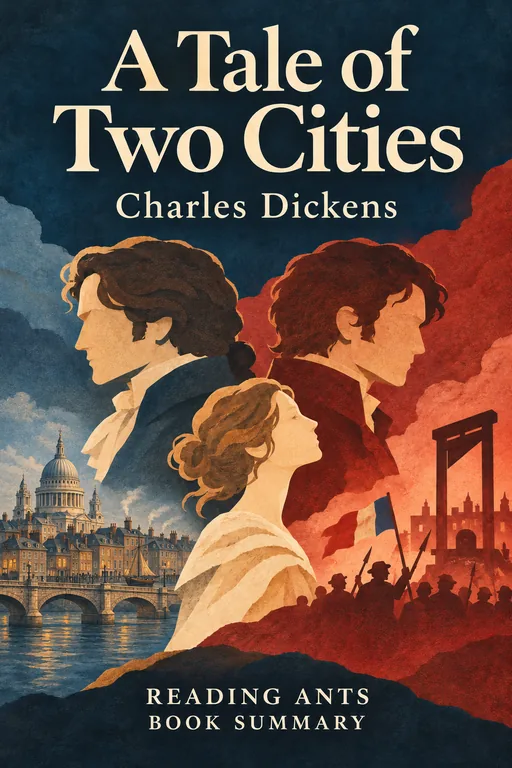
A Tale of Two Cities
Charles Dickens
During the French Revolution, the lives of a French aristocrat who rejects his family, the woman he loves and a brilliant but wasted English lawyer become entangled, until one man makes the ultimate sacrifice for love.
📜 Classics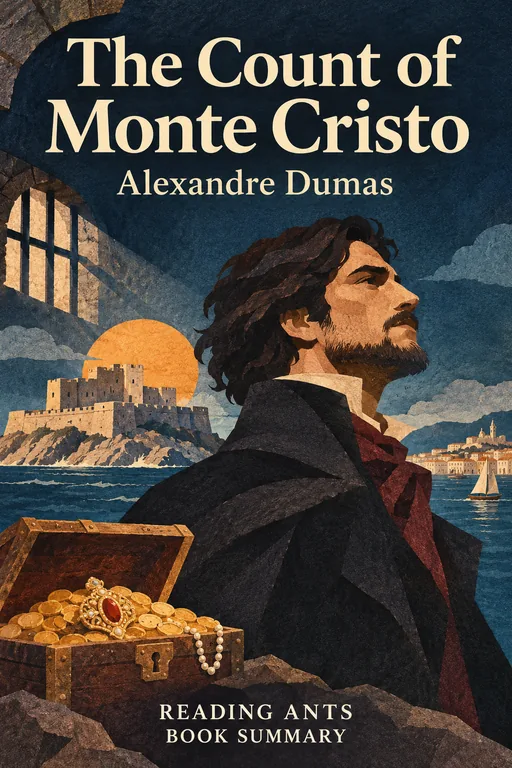
The Count of Monte Cristo
Alexandre Dumas
A young sailor, betrayed by jealous rivals and thrown into a dungeon for fourteen years, escapes with the help of a fellow prisoner, finds a vast treasure and returns as a mysterious, powerful count to take elaborate revenge on those who ruined him.
🌍 World Literature
Crime and Punishment
Fyodor Dostoevsky
A poor former student in St. Petersburg murders an old pawnbroker to prove he is an extraordinary man above ordinary morality, then is tormented by guilt until love and confession offer him a path to redemption.
🌍 World Literature
War and Peace
Leo Tolstoy
Five aristocratic Russian families are swept through the Napoleonic Wars, and through love, loss and searching, three of their young members discover what makes a life meaningful.
🌍 World Literature
The Little Prince
Antoine de Saint-Exupery
A pilot stranded in the desert meets a small boy from a tiny planet, who teaches him that the most important things in life, like love and friendship, can only be seen with the heart.
🌍 World LiteratureWant something different?
Pick another topic and we will show you three books to start with.