 Reading Ants
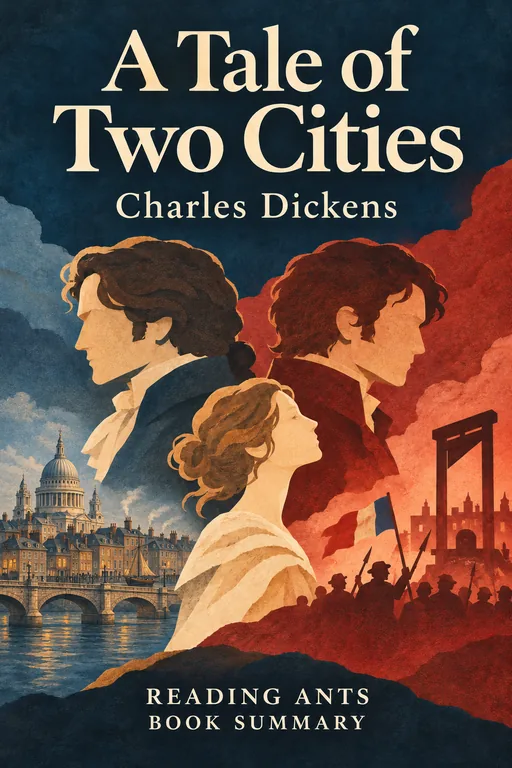
A Tale of Two Cities
During the French Revolution, the lives of a French aristocrat who rejects his family, the woman he loves and a brilliant but wasted English lawyer become entangled, until one man makes the ultimate sacrifice for love.
Overview
A Tale of Two Cities is set in London and Paris in the years before and during the French Revolution, which began in 1789. Charles Dickens contrasts the two cities: London, with its injustices, and Paris, where centuries of cruelty by aristocrats against the poor explode into a bloody revolution. The story follows Dr. Manette, freed after eighteen years in the Bastille prison; his devoted daughter Lucie; Charles Darnay, a French nobleman who has renounced his family’s wealth; and Sydney Carton, a clever, cynical English lawyer who looks almost exactly like Darnay. Its famous opening and closing lines are among the best known in English literature. It is one of the most widely read historical novels ever written.
Main Characters
- Sydney Carton: a brilliant but drunken, self-hating English lawyer.
- Charles Darnay: a kind French aristocrat who has given up his title.
- Lucie Manette: a gentle, loving young woman, the “golden thread” of the story.
- Dr. Alexandre Manette: Lucie’s father, a doctor long imprisoned in the Bastille.
- Madame Defarge: a ruthless revolutionary who knits the names of her enemies.
- Monsieur Defarge: her husband, a wine-shop owner and revolutionary.
- Jarvis Lorry: a loyal banker and friend of the Manettes.
- Miss Pross: Lucie’s fiercely loyal English companion.
- The Marquis St. Evrémonde: Darnay’s cruel uncle.
Full Summary
Recalled to Life
In 1775, Jarvis Lorry, an employee of Tellson’s Bank, travels to Paris with young Lucie Manette. Lucie has always believed her father died long ago, but he is alive: Dr. Manette has just been released after eighteen years of secret imprisonment in the Bastille. They find him in an attic above the wine shop of his former servant, Monsieur Defarge, in the poor district of Saint Antoine. He has lost his mind and spends his days making shoes, a task he learned in prison. Lucie’s love slowly brings him back, and they return to London.
The Trial and the Double
Five years later, Charles Darnay, a young Frenchman living in England, is on trial for treason, accused of spying for France. Dr. Manette and Lucie are reluctant witnesses. Darnay’s lawyer’s assistant, Sydney Carton, points out that he himself looks almost exactly like Darnay, which destroys a witness’s claim to have recognized him. Darnay is acquitted.
Carton is brilliant but lazy and drinks heavily, believing his life is wasted. Both he and Darnay fall in love with Lucie. Lucie marries Darnay, but Carton confesses his love to her and promises that he would give his life to keep anyone she loves safe.
The Marquis
Darnay is secretly the nephew of the Marquis St. Evrémonde, a cruel French aristocrat. He has given up his family name and wealth in disgust at their treatment of the poor. In one scene, the Marquis’s carriage runs over and kills a child in the streets of Paris, and the Marquis tosses a coin to the grieving father as if that settled it. Later, at the Marquis’s country estate, the child’s father murders him in his bed.
In Paris, Monsieur and Madame Defarge lead a secret network of revolutionaries. Madame Defarge knits a coded register of the names of aristocrats and their supporters who will be killed when the revolution comes.
Revolution
In 1789, the people of Paris storm the Bastille, and the Defarges lead the attack. Monsieur Defarge searches Dr. Manette’s old cell and finds something hidden there. The revolution spreads, and aristocrats are hunted and executed.
In 1792, Darnay receives a letter from a former servant of his family, imprisoned in Paris, begging for help. Out of loyalty, Darnay travels to France, where he is immediately arrested as an emigrant aristocrat. Lucie, her father and their young daughter follow him to Paris, where Mr. Lorry is already at work in Tellson’s Paris branch.
Dr. Manette’s Letter
Dr. Manette, honored as a former prisoner of the Bastille, uses his influence to win Darnay’s release. But on the same day, Darnay is arrested again, denounced by the Defarges. At his new trial, they produce a letter Dr. Manette wrote secretly in prison years ago. It reveals that he was imprisoned because he witnessed the crimes of the Evrémonde brothers, Darnay’s father and uncle, against a peasant family: they abused a young woman and killed her brother. Manette had cursed the Evrémondes and all their descendants. Madame Defarge is the sister of those victims. Darnay is sentenced to death by guillotine within twenty-four hours.
Carton’s Plan
Sydney Carton, who has come to Paris, learns that Madame Defarge plans to send Lucie and her child to the guillotine too. He makes a plan. Using his knowledge of a spy’s secrets, he gains entry to Darnay’s prison cell, drugs him, switches clothes with him and has Darnay carried out. Darnay, Lucie, her child, Dr. Manette and Mr. Lorry escape from Paris.
Meanwhile, Madame Defarge goes to find Lucie and meets Miss Pross. The two women fight, and Madame Defarge’s pistol goes off, killing her. The shock leaves Miss Pross permanently deaf.
The Sacrifice
Carton, in Darnay’s place, rides to the guillotine with a young seamstress, who is comforted by his calm courage. In the novel’s closing passage, the narrator imagines the vision that Carton might have in his last moments: a peaceful Paris, and Lucie and Darnay’s family living happily and naming a son after him. The thought is that this sacrifice is the best thing he has ever done, and that he is going to a rest better than any he has known.
Why It Matters
A Tale of Two Cities, published in weekly parts in 1859, is one of Charles Dickens’s most famous works and one of the most widely read novels in history. Its opening, which describes the era as both the best and the worst of times, and its closing lines about Carton’s sacrifice are among the most quoted passages in English literature.
The novel brought the history of the French Revolution to life for generations of readers, showing both the injustice that caused it and the terror that followed. It has been adapted for film, television, radio and stage many times. Sydney Carton’s transformation from a wasted life to a heroic sacrifice has inspired readers as one of literature’s great redemption stories.
Key Takeaways
- Sacrifice can redeem a life. Carton finds meaning by giving himself for others.
- Injustice breeds violence. Centuries of cruelty by aristocrats lead to revolution.
- Revenge becomes its own evil. Madame Defarge’s thirst for vengeance turns her into a monster.
- Love is a powerful force. Lucie’s love restores her father and inspires Carton.
- History repeats when hatred rules. The oppressed can become oppressors.
What We Can Learn
Carton’s story shows that it is never too late to change and do something meaningful. Even someone who feels their life is wasted can make a powerful difference through courage and love.
The novel also warns about injustice and revenge. When people are treated cruelly for a long time, anger can explode into violence. Fair treatment, compassion and justice help prevent such cycles.
Finally, it reminds us that loyalty matters. Miss Pross, Mr. Lorry and Lucie stay faithful to those they love in the most dangerous times. Being someone others can depend on is a quiet but powerful kind of heroism.
Criticism and Counterpoints
Some readers find the novel slow in its early chapters and its plot dependent on coincidences, such as Carton’s exact resemblance to Darnay. Lucie Manette has been criticized as a passive, idealized character, defined mostly by her love for others.
Historians and critics have also argued that Dickens’s portrayal of the Revolution focuses heavily on its violence and mob rule, showing ordinary revolutionaries as bloodthirsty, while giving less attention to their reasons and hopes. Others counter that Dickens clearly condemns the aristocracy’s cruelty as the root cause.
Who Should Read It
This book suits teenagers and adults who enjoy history, drama and stories of sacrifice. Its language is old-fashioned and the beginning slow, but the second half is gripping. Readers interested in the French Revolution will find it a powerful introduction.
Want the whole book?
A summary is a taste, not the meal. Here is where to find the full book.
You reached the end 🎉
Nicely done. Mark this one as read, and we will suggest what to read next.
Read this next
Les Miserables
Victor Hugo
A former convict, transformed by a single act of mercy, spends his life doing good while being hunted by a relentless police inspector, in a sweeping story of love, injustice and redemption in nineteenth-century France.
🌍 World Literature
Great Expectations
Charles Dickens
A poor orphan boy suddenly receives a fortune from a secret benefactor and becomes a gentleman in London, but he learns that wealth and status mean nothing without loyalty, kindness and gratitude.
📜 Classics
The Count of Monte Cristo
Alexandre Dumas
A young sailor, betrayed by jealous rivals and thrown into a dungeon for fourteen years, escapes with the help of a fellow prisoner, finds a vast treasure and returns as a mysterious, powerful count to take elaborate revenge on those who ruined him.
🌍 World Literature
Oliver Twist
Charles Dickens
An orphan boy born in a workhouse escapes to London, where he falls into a gang of child thieves, and despite cruelty and crime around him, his goodness survives until he finds a loving home and learns the secret of his birth.
📜 Classics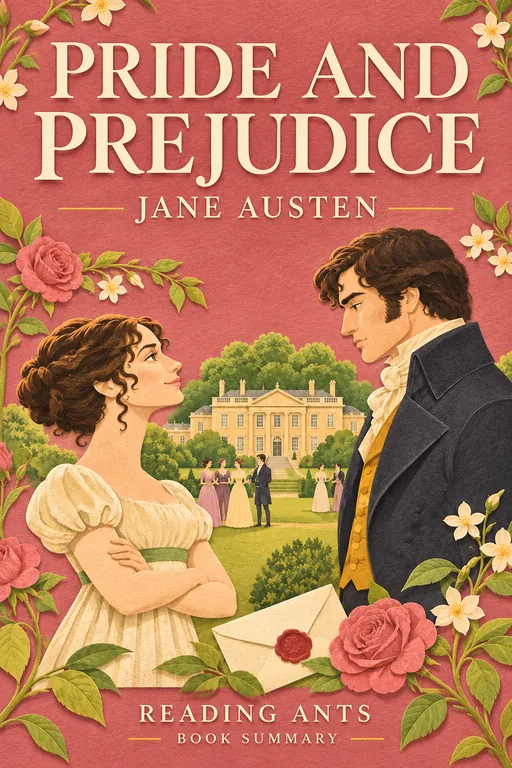
Pride and Prejudice
Jane Austen
Quick-witted Elizabeth Bennet and the proud, wealthy Mr. Darcy badly misjudge each other, and only by facing their own faults do they find their way to love.
📜 Classics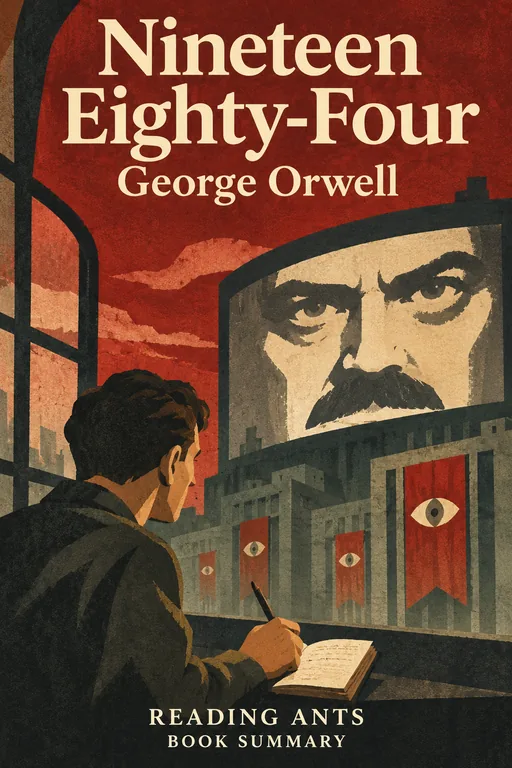
Nineteen Eighty-Four
George Orwell
In a future Britain ruled by an all-seeing Party, one man secretly rebels by keeping a diary and falling in love, and discovers just how completely a totalitarian state can crush the human mind.
📜 ClassicsWant something different?
Pick another topic and we will show you three books to start with.