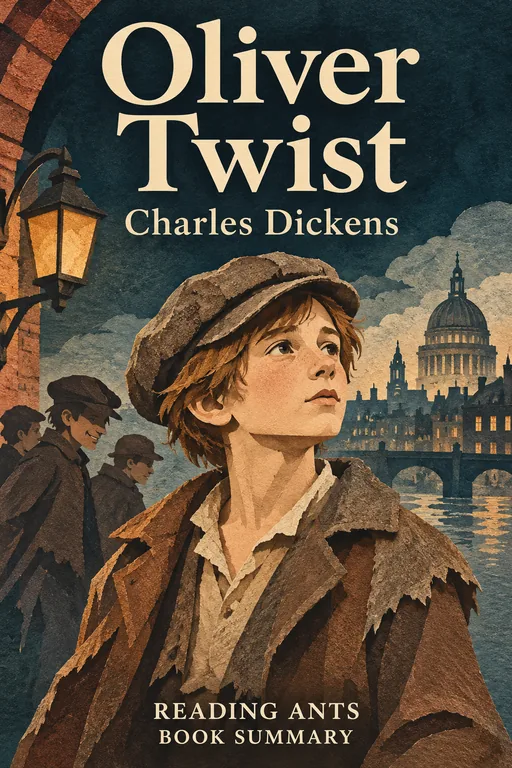
Oliver Twist
An orphan boy born in a workhouse escapes to London, where he falls into a gang of child thieves, and despite cruelty and crime around him, his goodness survives until he finds a loving home and learns the secret of his birth.
Overview
Oliver Twist, published in monthly parts from 1837 to 1839, was Charles Dickens’s second novel and one of the first English novels with a child as its hero. Oliver is born in a workhouse, a grim institution where the poor were forced to live and work, and his mother dies right after his birth. He grows up hungry and mistreated. In London, he is taken in by Fagin, the leader of a gang of young pickpockets, and the violent criminal Bill Sikes. Through Oliver’s story, Dickens attacked the cruel treatment of the poor, especially children, under the laws of his day. The book’s characters, from the Artful Dodger to Fagin, have become famous around the world.
Main Characters
- Oliver Twist: a gentle, innocent orphan.
- Mr. Bumble: the pompous, cruel parish official in charge of the workhouse.
- The Artful Dodger (Jack Dawkins): a cocky young pickpocket.
- Fagin: the cunning old leader of a gang of child thieves.
- Bill Sikes: a brutal criminal.
- Nancy: a young woman in Fagin’s gang who cares for Oliver.
- Mr. Brownlow: a kind, wealthy gentleman who helps Oliver.
- Rose Maylie: a sweet young woman who befriends Oliver.
- Monks: a mysterious man who wants to ruin Oliver.
Full Summary
Born in the Workhouse
Oliver is born in a workhouse in a small town. His mother, a young woman found exhausted in the street, dies just after giving birth, and no one knows who she is. Mr. Bumble, the self-important parish official, names him Oliver Twist. Oliver spends his first nine years in a cruel “baby farm,” where children are half-starved, before returning to the workhouse.
The boys there are fed tiny bowls of thin gruel. Driven by hunger, they draw lots, and Oliver is chosen to ask for more. When he walks up and asks politely for another helping, the officials are outraged. They offer five pounds to anyone who will take him as an apprentice.
The Undertaker and the Escape
Oliver is sent to work for Mr. Sowerberry, an undertaker, where he sleeps among the coffins and is bullied by an older apprentice, Noah Claypole. When Noah insults Oliver’s dead mother, Oliver attacks him and is beaten. That night, Oliver runs away and walks seventy miles to London.
Fagin’s Gang
Near London, the starving Oliver meets a lively boy called the Artful Dodger, who offers to take him to a gentleman who will give him a place to stay. The gentleman is Fagin, an old man who teaches boys to steal handkerchiefs and wallets. Oliver, innocent, thinks it is a game.
On his first outing, Oliver watches in horror as the Dodger and another boy steal a handkerchief from an elderly gentleman, Mr. Brownlow. The thieves escape, but Oliver is caught and taken to court. Mr. Brownlow realizes Oliver is innocent and takes the sick boy home, where Oliver is cared for kindly for the first time in his life. Brownlow notices that Oliver looks remarkably like a portrait of a young woman in his house.
Recaptured
Fagin fears Oliver will reveal the gang’s secrets. When Brownlow sends Oliver on an errand, Nancy and her violent partner, Bill Sikes, grab him and drag him back to Fagin. Brownlow believes Oliver has run off with his money.
Sikes forces Oliver to help him burgle a house in the countryside. During the break-in, Oliver is shot and wounded. Left behind in a ditch, he crawls back to the house, where the owner, Mrs. Maylie, and her adopted niece Rose take pity on him and nurse him back to health.
The Mysterious Monks
A shadowy man named Monks is working with Fagin to turn Oliver into a criminal. Back in Oliver’s hometown, Monks buys a locket from Mr. Bumble and his new wife, who got it from the dying nurse, Old Sally, who had stolen it from Oliver’s mother, and throws it into a river to destroy the evidence of Oliver’s identity.
Nancy, who feels guilty about Oliver, overhears Monks and Fagin’s plans. Bravely, she secretly meets Rose Maylie and later Mr. Brownlow on London Bridge to warn them. But Fagin has her followed, and when Sikes learns that she has spoken to them, he murders her in a rage.
Justice
The murder horrifies London. Haunted by Nancy’s eyes, Sikes flees. Cornered by an angry crowd on a rooftop, he tries to escape with a rope, slips and accidentally hangs himself. Fagin is arrested and sentenced to death.
Mr. Brownlow captures Monks and forces him to confess. Monks is Oliver’s older half-brother. Their father had left a will providing for Oliver, but Monks tried to destroy him so he could keep the inheritance. The young woman in Brownlow’s portrait was Oliver’s mother, Agnes. Rose Maylie turns out to be Agnes’s younger sister, which makes her Oliver’s aunt. Before his execution, Fagin is visited in his cell by Oliver, who has come with Mr. Brownlow.
A Happy Ending
Mr. Brownlow adopts Oliver, and they live happily near the Maylies. Oliver shares his inheritance with Monks, who wastes it and dies in prison. Mr. and Mrs. Bumble lose their positions and end up as paupers in the very workhouse they once ran. Rose marries her sweetheart, Harry Maylie. Oliver, at last, has a family and a home.
Why It Matters
Oliver Twist was one of the first novels to expose the cruelty of the Victorian treatment of the poor, especially the workhouses created by the Poor Law of 1834. It shocked many readers and contributed to public debate about poverty and child welfare. It also showed the dark side of London’s criminal underworld in a way few earlier novels had.
The story has been adapted many times, most famously in the stage and film musical Oliver!. The scene of Oliver asking for more food is one of the most famous moments in English literature, and the Artful Dodger became a byword for a clever young rogue. The novel helped establish Dickens as the great champion of the poor in fiction.
Key Takeaways
- Goodness can survive hardship. Oliver stays kind despite cruelty and crime.
- Poverty is not a crime. The novel attacks a system that punishes the poor.
- Kindness changes lives. Mr. Brownlow and the Maylies rescue Oliver.
- Courage can come from unexpected people. Nancy risks her life to help Oliver.
- Cruelty and greed lead to ruin. Sikes, Fagin and Monks meet terrible ends.
What We Can Learn
Oliver Twist asks us to care about children in need. Many children today still live in poverty or difficult homes. Supporting charities, being kind to classmates who struggle and speaking up about unfairness are ways to help.
It also teaches that people are not defined by their circumstances. Oliver grows up surrounded by crime but remains good. Judging people by where they come from, rather than who they are, is unfair.
Finally, Nancy’s story shows that it is never too late to do the right thing, even at great personal risk. Her courage saves Oliver’s future.
Criticism and Counterpoints
The novel’s portrayal of Fagin has been widely criticized as an antisemitic stereotype. In early editions, Dickens repeatedly called him “the Jew,” and linked his Jewishness to his villainy. After a Jewish reader wrote to him protesting, Dickens reduced these references in later editions and created a sympathetic Jewish character in a later novel, but the original portrayal remains troubling.
Critics also note that Oliver himself is rather passive and idealized: he speaks perfect, polite English despite growing up in a workhouse, and things mostly happen to him. The plot relies on many coincidences, such as Oliver’s random robbery victim turning out to be connected to his family. Still, the book’s energy and social criticism remain powerful.
Who Should Read It
This book suits readers from about 11 upward, especially those interested in history and social justice. It has scenes of violence, including Nancy’s murder, that may upset younger readers. The musical Oliver! is a gentler introduction to the story.
Want the whole book?
A summary is a taste, not the meal. Here is where to find the full book.
You reached the end 🎉
Nicely done. Mark this one as read, and we will suggest what to read next.
Read this next
Great Expectations
Charles Dickens
A poor orphan boy suddenly receives a fortune from a secret benefactor and becomes a gentleman in London, but he learns that wealth and status mean nothing without loyalty, kindness and gratitude.
📜 Classics
A Christmas Carol
Charles Dickens
On Christmas Eve, a cold-hearted, miserly old man is visited by the ghost of his dead partner and three spirits, who show him his past, present and future, and by morning he is transformed into a generous, joyful man.
📜 Classics
David Copperfield
Charles Dickens
From a sad childhood of cruelty and poverty to adult success as a writer, David Copperfield tells his own life story, with unforgettable friends and villains along the way.
📜 Classics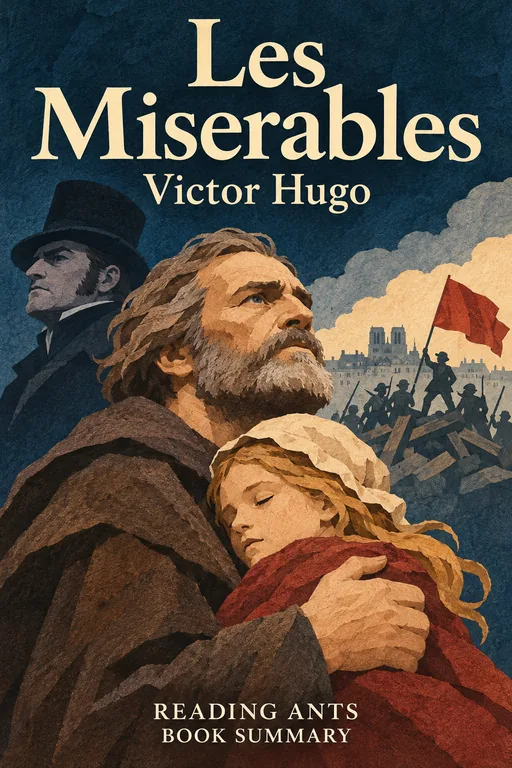
Les Miserables
Victor Hugo
A former convict, transformed by a single act of mercy, spends his life doing good while being hunted by a relentless police inspector, in a sweeping story of love, injustice and redemption in nineteenth-century France.
🌍 World Literature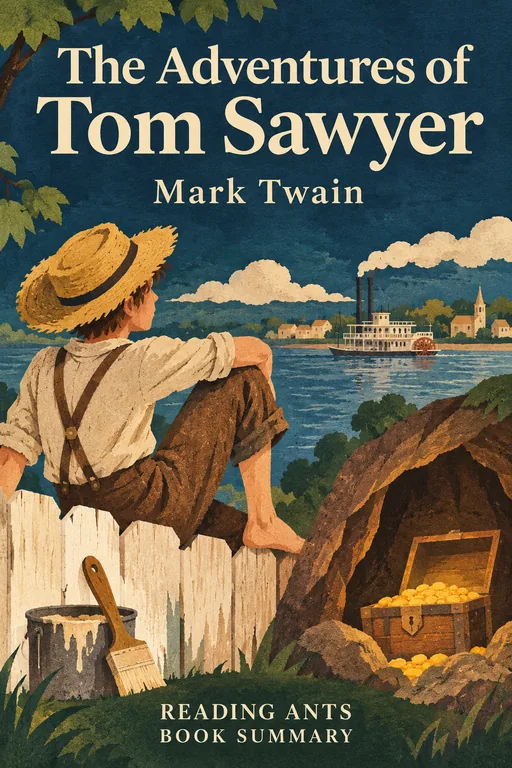
The Adventures of Tom Sawyer
Mark Twain
Tom Sawyer, a mischievous, imaginative boy in a small Mississippi River town, tricks his friends into doing his chores, witnesses a murder, runs off to be a pirate and eventually finds treasure in a cave.
📜 Classics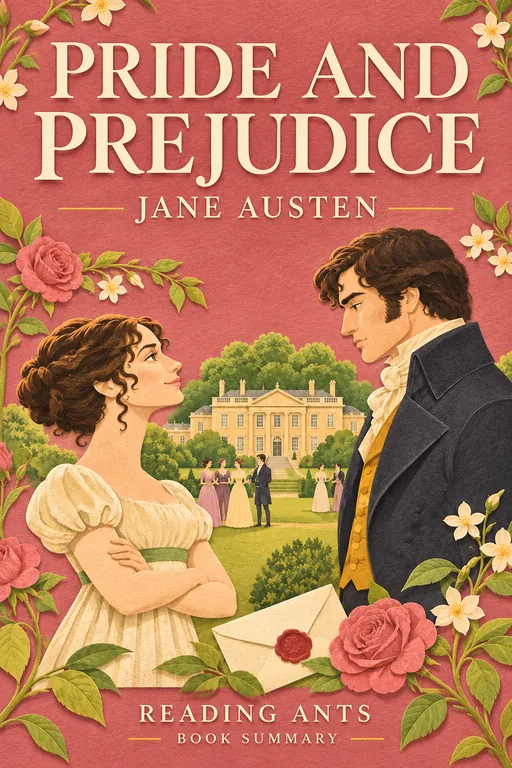
Pride and Prejudice
Jane Austen
Quick-witted Elizabeth Bennet and the proud, wealthy Mr. Darcy badly misjudge each other, and only by facing their own faults do they find their way to love.
📜 ClassicsWant something different?
Pick another topic and we will show you three books to start with.