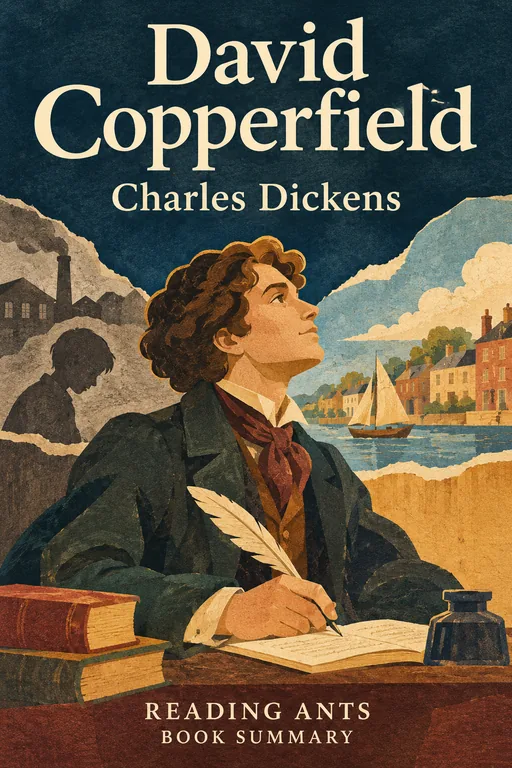
David Copperfield
From a sad childhood of cruelty and poverty to adult success as a writer, David Copperfield tells his own life story, with unforgettable friends and villains along the way.
Overview
David Copperfield is a long novel by Charles Dickens, published in installments in 1849 and 1850. It is told in the first person by David, who looks back on his life from boyhood to middle age. Dickens said that it was his “favourite child” among his books, and it borrows from his own experiences, such as working in a factory as a boy. The novel is full of colorful characters, from the kind Peggotty family to the hypocritical Uriah Heep and the hopeful Mr. Micawber. It combines comedy, sorrow and social criticism, and is one of the great English novels.
Main Characters
- David Copperfield: the narrator, an honest, sensitive boy who grows up to be a novelist.
- Clara Copperfield: David’s loving but weak mother.
- Clara Peggotty: the family’s warm-hearted servant, David’s nurse and lifelong friend.
- Mr. Murdstone and Miss Murdstone: his cruel stepfather and the stepfather’s stern sister.
- Betsey Trotwood: David’s eccentric, strong-minded great-aunt.
- Mr. Micawber: an optimistic, impractical man who is always in debt.
- James Steerforth: a charming, selfish schoolmate whom David idolizes.
- Uriah Heep: a “humble” and sly clerk who plots to take over his employer’s business.
- Agnes Wickfield and Dora Spenlow: the two women David loves.
Full Summary
A Lonely Childhood
David is born after his father’s death, and grows up in a happy home with his gentle mother and the servant Peggotty. His life changes when his mother marries Mr. Murdstone, a stern man who, with his sister, treats David harshly. When David bites Mr. Murdstone during a beating, he is sent to a cruel boarding school, Salem House, run by the brutal Mr. Creakle. There he makes friends with James Steerforth, who is popular, and Tommy Traddles. When his mother dies, he is sent to work in a bottle-washing factory in London, in conditions similar to those that Dickens himself endured.
Running Away
In London, David lodges with Mr. Micawber, who is always in debt, and eventually Mr. Micawber is imprisoned for debt. Miserable and alone, David decides to run away to find his only known relative, his great-aunt Betsey Trotwood, who lives in Dover. He walks most of the way, selling his clothes and being robbed. When he arrives, tired and filthy, Aunt Betsey, who had been disappointed that he was not a girl, takes him in and decides to look after him. He goes to a good school, and lives with Mr. Wickfield and his daughter Agnes.
Growing Up
David becomes an articled clerk in a law firm and falls in love with Dora Spenlow, a pretty but childish girl. At the same time, he sees how Uriah Heep, the sly, “humble” clerk of Mr. Wickfield, has been scheming to take control of the firm. Meanwhile, he meets Steerforth again. Steerforth visits Peggotty’s brother, the fisherman Daniel Peggotty (known as Mr. Peggotty), who lives in a boat-house in Yarmouth with his orphaned nephew Ham and niece Little Em’ly, and Steerforth seduces Little Em’ly, who is engaged to Ham. She runs away with him, and her family is broken-hearted.
Loss and Struggle
Aunt Betsey loses her fortune, and David has to work hard to support them both, taking extra jobs as a secretary and a journalist, and beginning to write. He marries Dora, but she is not practical and cannot run a household, and David tries gently to guide her. Steerforth abandons Em’ly, who is found by Mr. Peggotty and brought home.
The Triumph of Truth
Mr. Micawber, who has become Uriah Heep’s clerk, discovers that Heep has been defrauding Mr. Wickfield, and, with the help of Traddles and Aunt Betsey, exposes him in a dramatic scene. Heep’s schemes are undone, and Aunt Betsey’s lost fortune is recovered. Dora, who has been ill for some time, dies, and David is heartbroken. Soon after, a great storm destroys a ship off Yarmouth; Steerforth is among those who die, and Ham dies trying to rescue him. The Micawbers emigrate to Australia, where Mr. Micawber’s fortunes improve, and Heep is later seen in prison for another fraud. After a period of travel and grief, David returns to England.
Happiness
David realizes that his true love is Agnes, who has loved him for years but kept it secret. They marry and have a happy family, and David becomes a successful novelist. Peggotty, Aunt Betsey, Traddles and the others find peace, and the novel ends with David reflecting on his journey, and with Agnes beside him pointing upward.
Why It Matters
David Copperfield is one of the most beloved novels in English, and many consider it Dickens’s most personal and heartfelt work. It has been adapted for the screen many times, and characters such as Mr. Micawber, Uriah Heep and Betsey Trotwood have become part of the language, with “Micawber” meaning someone who hopes for something to turn up and “Uriah Heep” meaning a falsely humble schemer.
Its picture of child labor and the cruelty of schools helped to arouse public concern for children’s welfare in Victorian England. Many authors, including Tolstoy and Kafka, admired it.
Key Takeaways
- Kindness and honesty win in the end. The good characters find happiness.
- Hypocrisy is exposed. Heep’s false humility is revealed.
- Childhood experiences shape us. David carries his early suffering.
- Friends and family sustain us. Peggotty and Betsey are lifelines.
- Mature love is built on character. David’s choice of Agnes shows growth.
What We Can Learn
The novel shows how resilience is built through hardship. David, despite his misery, keeps his sense of fairness and his hope, and finds help from unexpected people.
It also cautions us against being dazzled by charm. David’s admiration for Steerforth blinds him to the man’s selfishness, and he later sees the harm that charm can hide.
Finally, it reminds us to look for goodness in ordinary people. Peggotty, Aunt Betsey and Mr. Peggotty may not be rich, but their generosity makes a difference.
Criticism and Counterpoints
Some modern readers find the novel too long, with many subplots and coincidences, and Dickens’s sentimentality, particularly in the deaths of characters such as Dora, may seem excessive. Others criticize the portrayal of women, with the “child-wife” Dora and the angelic Agnes seeming to be types instead of real people. The treatment of Em’ly, a “fallen woman” who must suffer and emigrate, reflects Victorian morals.
Dickens’s use of caricature in characters like Heep or Murdstone seems exaggerated. Still, the book’s humor and warmth have kept it a classic.
Who Should Read It
This book suits readers from about age ten who enjoy long stories, and also adults. It is very long, and the language is Victorian, so it is a good book to read slowly. Abridged editions are also available.
Want the whole book?
A summary is a taste, not the meal. Here is where to find the full book.
You reached the end 🎉
Nicely done. Mark this one as read, and we will suggest what to read next.
Read this next
Great Expectations
Charles Dickens
A poor orphan boy suddenly receives a fortune from a secret benefactor and becomes a gentleman in London, but he learns that wealth and status mean nothing without loyalty, kindness and gratitude.
📜 Classics
Oliver Twist
Charles Dickens
An orphan boy born in a workhouse escapes to London, where he falls into a gang of child thieves, and despite cruelty and crime around him, his goodness survives until he finds a loving home and learns the secret of his birth.
📜 Classics
Jane Eyre
Charlotte Bronte
A poor, plain but fiercely independent orphan becomes a governess, falls in love with her brooding employer, discovers his terrible secret, and refuses to give up her self-respect even for love.
📜 Classics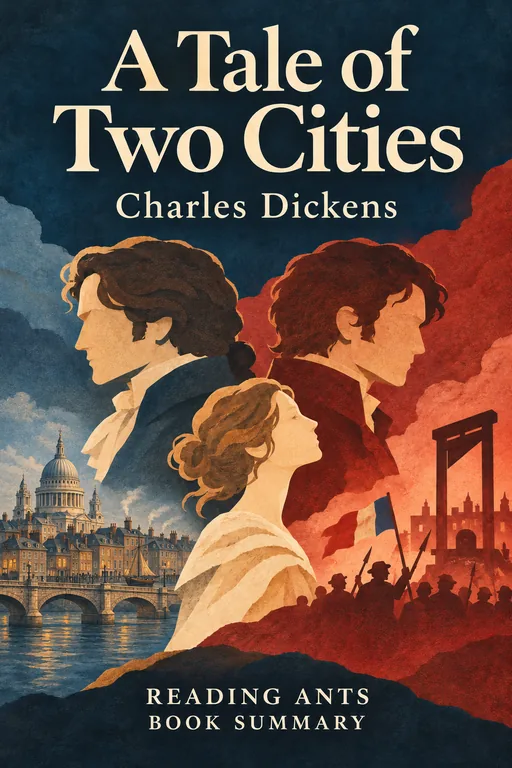
A Tale of Two Cities
Charles Dickens
During the French Revolution, the lives of a French aristocrat who rejects his family, the woman he loves and a brilliant but wasted English lawyer become entangled, until one man makes the ultimate sacrifice for love.
📜 Classics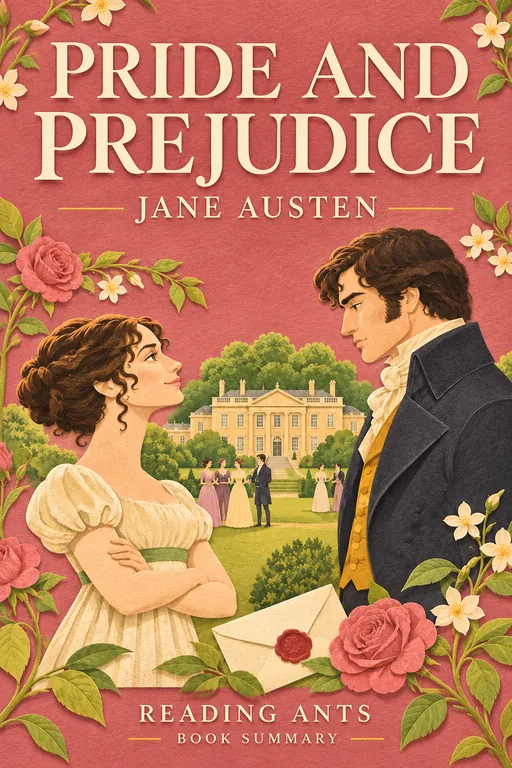
Pride and Prejudice
Jane Austen
Quick-witted Elizabeth Bennet and the proud, wealthy Mr. Darcy badly misjudge each other, and only by facing their own faults do they find their way to love.
📜 Classics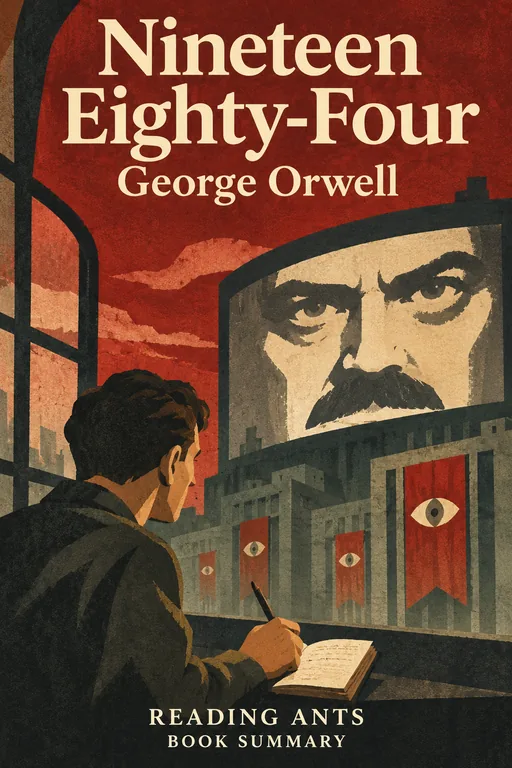
Nineteen Eighty-Four
George Orwell
In a future Britain ruled by an all-seeing Party, one man secretly rebels by keeping a diary and falling in love, and discovers just how completely a totalitarian state can crush the human mind.
📜 ClassicsWant something different?
Pick another topic and we will show you three books to start with.