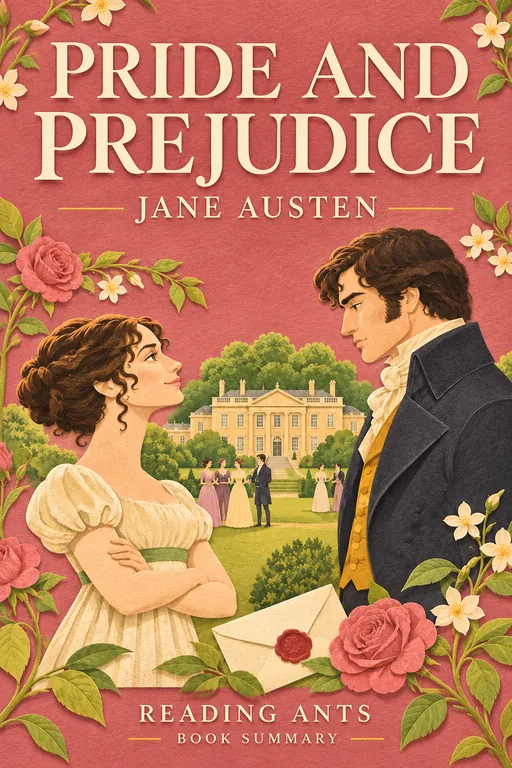
Quick-witted Elizabeth Bennet and the proud, wealthy Mr. Darcy badly misjudge each other, and only by facing their own faults do they find their way to love.
Overview
In a small English village around the year 1800, Mrs. Bennet has one mission in life: to marry off her five daughters. The family home can only pass to a male heir, so unless the girls marry well, they face a poor and uncertain future. When a rich, friendly young man named Mr. Bingley moves in nearby, he is quickly charmed by the eldest daughter, Jane. His friend Mr. Darcy, who is even richer, seems cold and arrogant, and he insults Elizabeth, the second daughter, within her hearing. What follows is a sharp and very funny story about first impressions, embarrassing families, money and class, and the courage to admit you were wrong.
Main Characters
- Elizabeth Bennet: the second daughter, clever, playful and proud of her own judgment.
- Fitzwilliam Darcy: a very wealthy gentleman who owns the great estate of Pemberley. He is reserved and proud, but deeply honorable.
- Jane Bennet: the eldest daughter, gentle and beautiful, who always thinks the best of everyone.
- Charles Bingley: Darcy’s cheerful, easygoing friend, who rents the nearby house of Netherfield.
- Mr. and Mrs. Bennet: a witty but detached father, and a loud, nervous mother obsessed with finding husbands for her daughters.
- Lydia Bennet: the youngest daughter, fifteen, flirtatious and reckless.
- George Wickham: a charming young army officer with a hidden past.
- Mr. Collins: the Bennets’ pompous cousin, a clergyman who will inherit their home.
- Lady Catherine de Bourgh: Darcy’s rich, bossy aunt.
- Charlotte Lucas: Elizabeth’s practical best friend.
Full Summary
A Bad First Impression
The Bennet family lives at Longbourn, an estate in the English county of Hertfordshire. Mr. and Mrs. Bennet have five daughters (Jane, Elizabeth, Mary, Kitty and Lydia) but no son. Because of a legal arrangement called an entail, the estate must pass to the nearest male relative, a cousin named Mr. Collins. When Mr. Bennet dies, his wife and daughters could lose their home. This is why Mrs. Bennet is so desperate to see her girls married.
Exciting news arrives: a wealthy young man, Mr. Bingley, has rented Netherfield Park nearby. At a local ball, Bingley is warm and lively and dances with Jane again and again. His friend Mr. Darcy, who is far richer, refuses to dance with anyone outside his own group. Elizabeth overhears him tell Bingley that she is not pretty enough to tempt him. She laughs about it with her friends, but the insult stays with her, and from then on she sees Darcy as rude and conceited.
Over the following weeks, though, Darcy slowly begins to admire Elizabeth’s lively mind and fine eyes. When Jane falls ill while visiting Netherfield, Elizabeth walks three miles across muddy fields to look after her. Bingley’s snobbish sisters are shocked, but Darcy is impressed. Elizabeth, sure that he dislikes her, notices none of this.
Mr. Collins and Mr. Wickham
Mr. Collins comes to visit. He is a foolish, self-important clergyman who constantly praises his patroness, the grand Lady Catherine de Bourgh. Hoping to make amends for one day inheriting Longbourn, he proposes to Elizabeth. She firmly refuses him, to her mother’s fury and her father’s quiet relief. Only days later, Collins proposes to Elizabeth’s friend Charlotte Lucas, who accepts. Charlotte is twenty-seven and practical: she wants a secure home, not romance. Elizabeth is deeply disappointed in her.
Meanwhile, a regiment of soldiers is stationed in the nearby town of Meryton, and Elizabeth meets a handsome, charming officer, George Wickham. He tells her that Darcy’s late father, who was his godfather, meant to give him a good position in the church, but that Darcy cruelly refused it out of jealousy. Elizabeth believes every word, because it confirms what she already thinks of Darcy.
Heartbreak and a Shocking Proposal
Then Bingley suddenly leaves for London, and his sister Caroline writes to Jane hinting that he will marry Darcy’s younger sister, Georgiana. Jane is heartbroken but hides it. She goes to stay in London with her kind and sensible aunt and uncle, the Gardiners, but Bingley never visits her.
In the spring, Elizabeth visits Charlotte, now Mrs. Collins, at her home beside Rosings, Lady Catherine’s grand estate. Darcy, who is Lady Catherine’s nephew, arrives with his cousin Colonel Fitzwilliam. The colonel mentions that Darcy recently saved a friend from a very unwise marriage. Elizabeth realizes he means Bingley and Jane.
That same evening, Darcy suddenly proposes to Elizabeth. He says he loves her against his own will, in spite of her low connections and her embarrassing family. Elizabeth is furious. She refuses him, accuses him of ruining her sister’s happiness and of treating Wickham cruelly, and tells him he is the last man in the world she could ever marry.
The Letter
The next morning, Darcy hands her a long letter. He admits that he separated Bingley from Jane, but explains that Jane seemed calm and uninterested, and that he found the Bennet family’s behavior improper. As for Wickham, the truth is the opposite of what Elizabeth heard. Wickham asked for money instead of the church position, wasted it, and then tried to elope with Darcy’s fifteen-year-old sister to get her large fortune. Elizabeth reads the letter again and again. She realizes that she has been vain and prejudiced: proud of her sharp judgment while being completely wrong.
Pemberley
Back home, Lydia is invited to follow the regiment to the seaside town of Brighton. Elizabeth warns her father that Lydia is too wild to go, but he lets her go anyway.
That summer, Elizabeth travels with the Gardiners to Derbyshire and tours Pemberley, Darcy’s estate, believing he is away. The housekeeper tells them that Darcy has always been kind and generous. Then Darcy arrives unexpectedly. To Elizabeth’s astonishment, he is warm and polite, treats the Gardiners (people he once would have looked down on) with great respect, and introduces her to his shy sister. Elizabeth’s feelings begin to change.
Scandal
Then disaster strikes. A letter from Jane reports that Lydia has run away with Wickham, and they are not married. In their world, this scandal could ruin the reputation of every Bennet sister. Elizabeth tells Darcy and rushes home, sure that she has lost him forever.
Soon Mr. Gardiner writes that Wickham has agreed to marry Lydia on surprisingly easy terms. After the wedding, Lydia carelessly lets slip that Darcy was there. Elizabeth’s aunt then explains what really happened: Darcy tracked the couple down in London, paid Wickham’s debts and arranged the marriage, and asked that no one be told. He did it for Elizabeth.
Second Chances
Bingley returns to Netherfield and soon proposes to Jane, who joyfully accepts. Then Lady Catherine arrives at Longbourn uninvited. She has heard a rumor that Darcy will marry Elizabeth, and she demands that Elizabeth promise never to accept him, because she intends Darcy for her own daughter. Elizabeth refuses to promise anything. When Darcy hears of this, he dares to hope again. He proposes a second time, humbly, and this time Elizabeth accepts. Each admits their faults: his pride and her prejudice.
The novel ends with two happy marriages. Elizabeth and Darcy settle at Pemberley, Jane and Bingley eventually move nearby, and the Gardiners, whose kindness helped bring the couple together, are always welcome guests.
Why It Matters
Pride and Prejudice is one of the most loved novels in the English language, and more than two hundred years after publication it is still read, taught and adapted all over the world. Austen first drafted it in the 1790s under the title First Impressions, and it was published without her name on it.
Its influence is enormous. The story of two people who dislike each other and slowly fall in love became a model for countless romantic comedies. It has been adapted many times, most famously in the 1995 BBC television series and the 2005 film, and it inspired modern retellings such as Bridget Jones’s Diary.
Austen was also a pioneer of technique. She tells the story mostly through Elizabeth’s thoughts while keeping a gently ironic distance, so readers share Elizabeth’s mistakes before they see through them. Beneath the comedy, the book is a sharp picture of a society in which an entail kept the Bennet estate from the daughters, married women’s property largely passed to their husbands, and respectable ways for women to earn a living were few, so marriage was also an economic decision. Charlotte’s practical choice and Lydia’s near-ruin show how high the stakes really were.
Key Takeaways
- First impressions can be badly wrong. Elizabeth trusts her quick judgment, and it leads her to believe a liar and reject a good man.
- Pride and prejudice feed each other. Darcy’s pride makes him look down on others; Elizabeth’s prejudice makes her see only his faults. Both must change.
- Character shows in actions, not charm. Wickham is charming but dishonest; Darcy is awkward but quietly does the right thing.
- Marriage was about money as well as love. The novel shows clearly how few choices women of the time had.
- Real growth means admitting you were wrong. The turning point is Elizabeth’s honest recognition of her own blindness.
What We Can Learn
The novel’s lessons still apply to everyday life. Before deciding what someone is like, look for evidence beyond a single bad moment or a piece of gossip. Wickham’s story feels true to Elizabeth because she wants it to be true, which is a trap we all fall into online and in person. A good habit is to ask yourself what evidence would change your mind about this person.
The book also shows the value of being able to say “I was wrong.” Elizabeth’s rereading of Darcy’s letter is one of the most famous moments of self-honesty in fiction, and it is the reason she grows. Darcy, too, listens to harsh criticism and changes his behavior instead of only defending himself.
Finally, the story is a reminder that kindness often happens quietly. Darcy’s most important act, rescuing the Bennet family from scandal, is something he never wanted credit for. Character is what you do when no one is watching.
Criticism and Counterpoints
Some readers find Austen’s world narrow. The novel focuses on a small circle of wealthy country families and says almost nothing about servants, the poor, or the wars Britain was fighting at the time. Charlotte Brontë famously complained that Austen’s work resembled a neat, carefully fenced garden, with little wild passion in it.
Others point out that the happy ending rewards Elizabeth with enormous wealth, which can make the romance feel like a fairy tale about marrying rich. Some modern readers are also uncomfortable that Lydia, only a teenager, is married off to the man who misled her, and that this is treated as a rescue. Defenders reply that Austen is describing her society honestly, not approving of it, and that her irony often criticizes the very things she shows.
Who Should Read It
Anyone who enjoys witty dialogue, romance or stories about families will love this book. It is a good first classic for teenagers, because the plot is gripping and the humor still works. Readers who prefer fast action may find the slow pace and old-fashioned language harder at first; an adaptation can be a good way in.
Want the whole book?
A summary is a taste, not the meal. Here is where to find the full book.
You reached the end 🎉
Nicely done. Mark this one as read, and we will suggest what to read next.
Read this next
Emma
Jane Austen
A clever, rich and rather spoiled young woman named Emma Woodhouse believes she is a gifted matchmaker, makes a series of embarrassing mistakes and finally learns to see herself and her own heart clearly.
📜 Classics
Jane Eyre
Charlotte Bronte
A poor, plain but fiercely independent orphan becomes a governess, falls in love with her brooding employer, discovers his terrible secret, and refuses to give up her self-respect even for love.
📜 Classics
Sense and Sensibility
Jane Austen
Two sisters, one sensible and reserved and one passionate and romantic, face heartbreak and the limits placed on women without money in Regency England, and learn from each other.
📜 Classics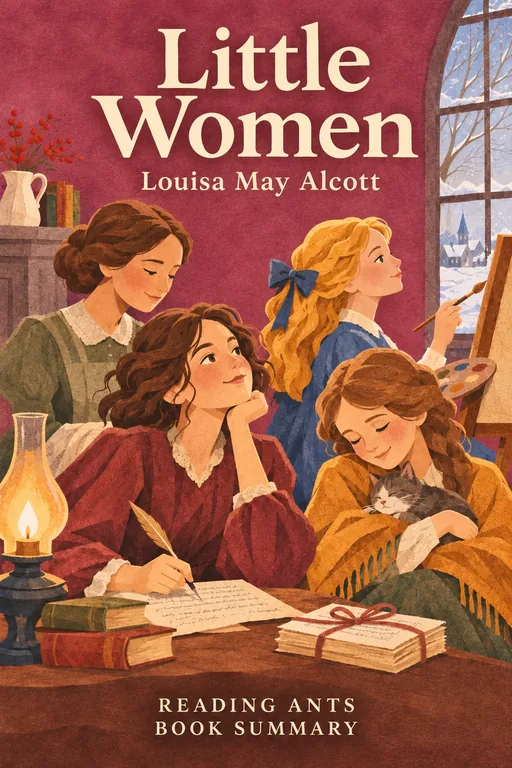
Little Women
Louisa May Alcott
Four very different sisters grow up together in a loving but poor family in New England during and after the American Civil War, learning about love, ambition, loss and finding their own paths in life.
📜 Classics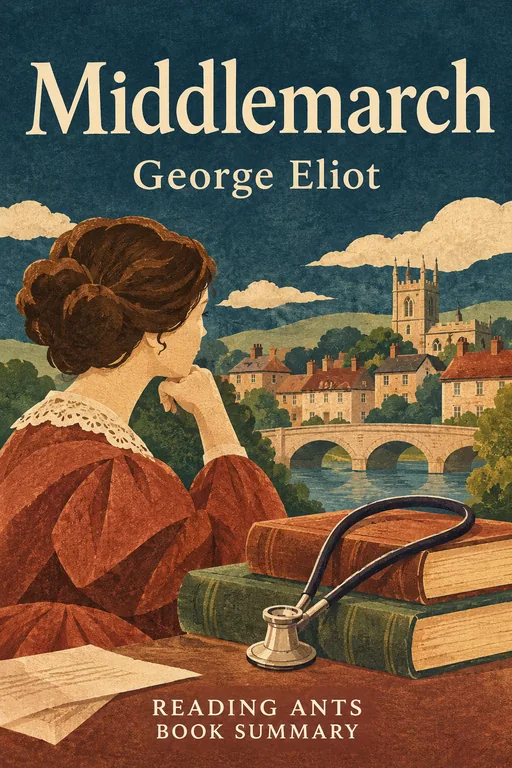
Middlemarch
George Eliot
In a provincial English town around 1830, several ambitious people, above all the idealistic Dorothea Brooke and the gifted doctor Tertius Lydgate, make marriages and choices that fall short of their dreams.
📜 Classics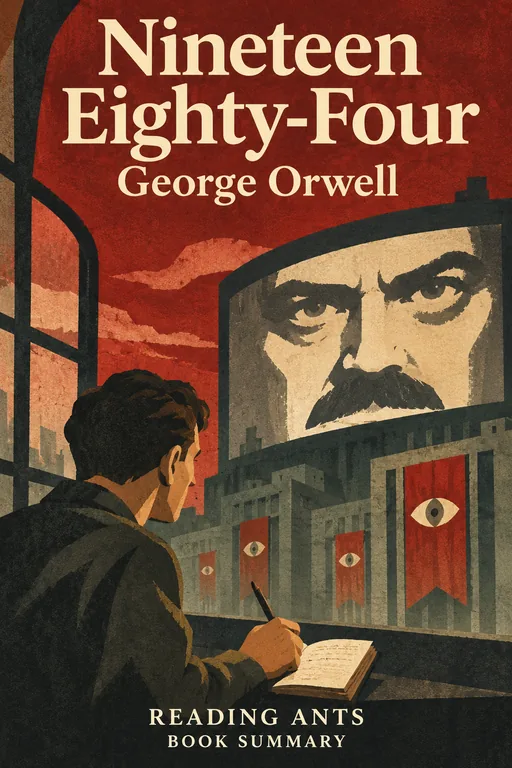
Nineteen Eighty-Four
George Orwell
In a future Britain ruled by an all-seeing Party, one man secretly rebels by keeping a diary and falling in love, and discovers just how completely a totalitarian state can crush the human mind.
📜 ClassicsWant something different?
Pick another topic and we will show you three books to start with.