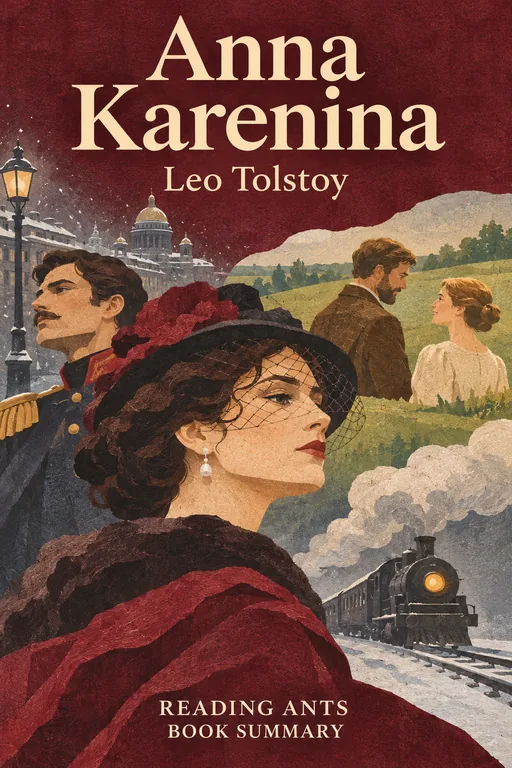
Anna Karenina
Original title: Анна Каренина
In imperial Russia, a married aristocrat falls passionately in love with a dashing officer and loses her place in society, while a thoughtful landowner seeks a meaningful life through love, work and faith.
Overview
Anna Karenina, published as a magazine serial from 1875 to 1877 and as a book in 1878, is Leo Tolstoy’s second great novel. It begins with a famous line about happy families being all alike, while every unhappy family is unhappy in its own way. The story weaves together two main plots. Anna, a charming, intelligent woman married to a cold, respectable government minister, meets Count Vronsky, a handsome cavalry officer, and begins a love affair that society cannot forgive. Meanwhile, Konstantin Levin, a shy, serious landowner modeled partly on Tolstoy himself, struggles to win the hand of Kitty and to find meaning in life. Together the plots explore love, marriage, family, duty and the cost of living by society’s rules.
Main Characters
- Anna Karenina: a beautiful, warm, intelligent woman trapped in a loveless marriage.
- Alexei Karenin: her husband, a high-ranking official concerned with appearances.
- Count Alexei Vronsky: a charming officer who falls in love with Anna.
- Konstantin Levin: an earnest landowner, awkward in society.
- Kitty Shcherbatskaya: a young noblewoman who loves Vronsky, then Levin.
- Stiva Oblonsky: Anna’s cheerful, unfaithful brother.
- Dolly: Stiva’s patient wife and Kitty’s sister.
- Seryozha: Anna’s young son.
Full Summary
A Family in Crisis
In Moscow, the cheerful Stiva Oblonsky has been caught in an affair, and his wife, Dolly, is heartbroken. His sister Anna arrives from St. Petersburg to help patch things up, and she persuades Dolly to forgive him. At the station, she meets Countess Vronskaya, whose son, Count Vronsky, has come to greet his mother. A worker is run over by a train at that moment, a dark omen.
At a ball, Vronsky, who had been courting the young Kitty, is struck by Anna. Kitty, who has just refused the proposal of Konstantin Levin, expecting Vronsky to propose, is crushed when she sees Vronsky dancing only with Anna. Anna returns to St. Petersburg, but Vronsky follows her.
The Affair
In St. Petersburg, Anna resists, then yields to Vronsky’s pursuit. She is torn between love and her duty to her husband, Karenin, and her young son, Seryozha. After a horse race in which Vronsky falls, Anna cries out in despair, and Karenin realizes the truth. He is more concerned with scandal than with her feelings, and demands that she keep up appearances. Anna becomes pregnant with Vronsky’s child.
During a difficult childbirth, Anna nearly dies. Karenin, moved, forgives her and Vronsky, but Vronsky tries to shoot himself, and fails. After recovering, Anna chooses to leave her husband and son, and goes to Italy with Vronsky and their baby girl.
Levin’s Search
Meanwhile, Levin retires to his country estate, trying to run it fairly and to live closely with the peasants. He struggles with questions about the purpose of life and the meaning of work. Kitty, who has been seriously ill after Vronsky’s rejection, recovers at a spa, and learns humility. Levin and Kitty meet again and marry. Their early marriage has quarrels and doubts, but they grow closer. When Levin’s brother Nikolai dies of tuberculosis, Levin is shaken by the nearness of death, and Kitty’s care for the dying man deepens his love for her.
Outcasts
Back in Russia, Anna and Vronsky live on his country estate, but society refuses to receive Anna. At the opera, she is publicly insulted. Karenin will not grant a divorce, and so she cannot marry Vronsky or see her son. She grows more isolated, sharing a house with a man who is free to move in society while she must stay out of it. She takes to morphine to sleep, and becomes jealous and suspicious of Vronsky.
Anna’s End
Their quarrels grow. Anna imagines that Vronsky no longer loves her, and she is tormented by loneliness and by her own sense of shame. After a fight, she sends a note to Vronsky and goes to the station, where she throws herself under a train, echoing the omen at the novel’s start. Vronsky, devastated, joins the army and goes to fight in a war in Serbia.
Levin’s Peace
Levin and Kitty have a son. One day, Levin hears a peasant remark that one should live for the soul and for God, and he realizes that he has found the answer to his questions: to live honestly, kindly, and for the good of others. A thunderstorm then breaks while Kitty and the baby are outdoors, and Levin rushes anxiously to find them, deeply moved by his fear for them. The novel ends with Levin in quiet joy, though he knows that his troubles are not over.
Why It Matters
Anna Karenina is regarded as one of the greatest novels ever written. William Faulkner, Vladimir Nabokov and many others praised it, and a 2007 poll of writers voted it the best book of all time. It is admired for its profound psychological insight and for how it makes characters, even flawed ones, deeply human.
The novel has been adapted for film and stage many times, with famous actresses such as Greta Garbo, Vivien Leigh and Keira Knightley as Anna. Its first line has become one of the most quoted openings in literature. The book’s study of double standards, in which a woman is condemned for something that a man like Vronsky or Stiva can do with little consequence, remains painfully relevant.
Key Takeaways
- Society judges harshly. Anna loses her place while Vronsky and Stiva keep theirs.
- Passion can destroy. The affair brings joy, then isolation and despair.
- Happiness takes work. Levin finds peace through honest effort and faith.
- Appearances matter too much. At first Karenin cares more about reputation than people, though he later shows real forgiveness.
- Meaning comes from living for others. Levin’s conclusion is simple but profound.
What We Can Learn
The novel invites us to look past our judgments of other people. Anna is not a villain; she is a person who makes a choice and pays a heavy price, while others who do the same escape. Compassion is a better response than quick condemnation.
It also shows how isolation can harm even strong people. Cut off from her child, friends and community, Anna’s mind darkens. Reaching out to someone who has been shunned can matter more than we realize.
Finally, Levin’s story reminds us that a good life is often found in everyday work, family and honesty, not in dramatic passion or social success.
Criticism and Counterpoints
Some readers find the Levin chapters, with their long passages on farming, politics and religion, slower than Anna’s story, and Tolstoy’s moral message, especially in the ending, can seem preachy. Others note that Tolstoy seems to punish Anna for her choice, showing a conservative view of marriage and family, although he also portrays her with deep sympathy.
Modern critics have debated whether the novel is a warning against adultery or a protest against a society that offers women no way out. The large cast and Russian names can be hard to follow, but the story’s emotional power carries most readers through.
Who Should Read It
This novel suits mature teens and adults who enjoy deep, character-driven stories. It is long, though easier to read than War and Peace. Readers who like romance, tragedy and social drama will find it unforgettable.
Want the whole book?
A summary is a taste, not the meal. Here is where to find the full book.
You reached the end 🎉
Nicely done. Mark this one as read, and we will suggest what to read next.
Read this next
War and Peace
Leo Tolstoy
Five aristocratic Russian families are swept through the Napoleonic Wars, and through love, loss and searching, three of their young members discover what makes a life meaningful.
🌍 World Literature
Madame Bovary
Gustave Flaubert
A romantic young woman, bored by her provincial marriage to a kind but dull doctor, seeks excitement in love affairs and luxury, and is crushed by debt and disillusion.
🌍 World Literature
The Scarlet Letter
Nathaniel Hawthorne
In seventeenth-century Boston, a young woman named Hester Prynne is forced to wear a scarlet letter A for adultery, and she bears her shame with dignity while the secret father of her child, a respected minister, is eaten alive by guilt.
📜 Classics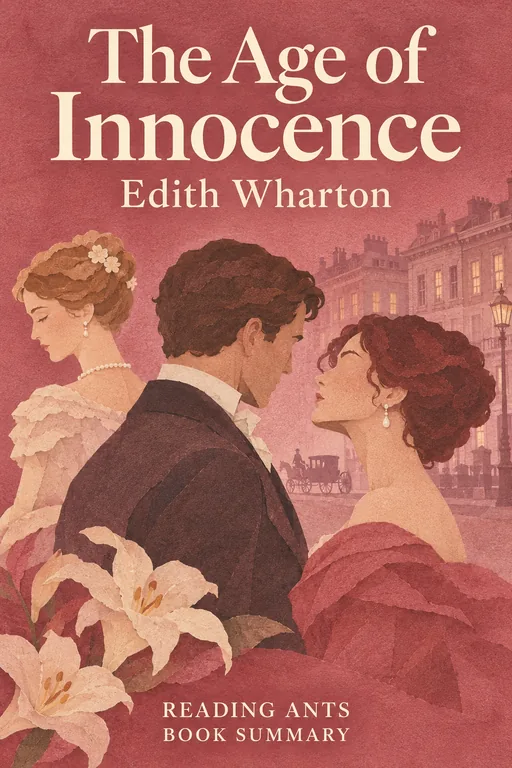
The Age of Innocence
Edith Wharton
In the rigid high society of 1870s New York, a lawyer, Newland Archer, engaged to a perfect young woman, falls in love with her exiled cousin, and must choose between passion and duty.
📜 Classics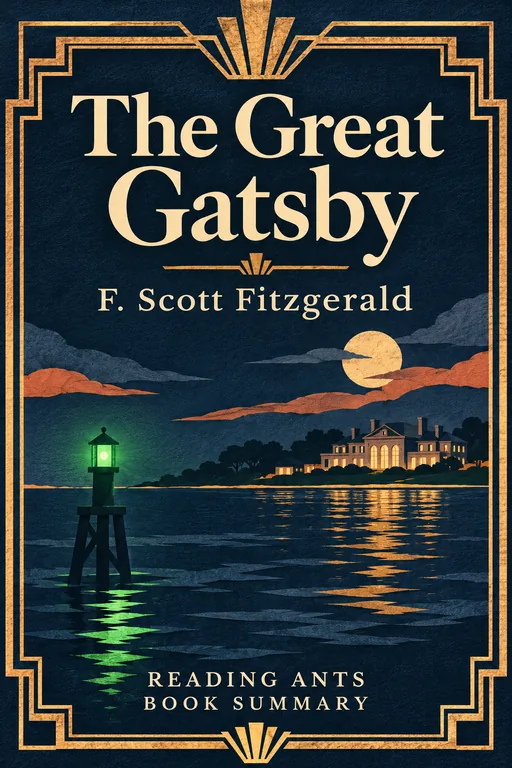
The Great Gatsby
F. Scott Fitzgerald
A mysterious millionaire throws lavish parties on Long Island in the hope of winning back the woman he loved years ago, but his dream collides with the careless cruelty of the rich.
📜 Classics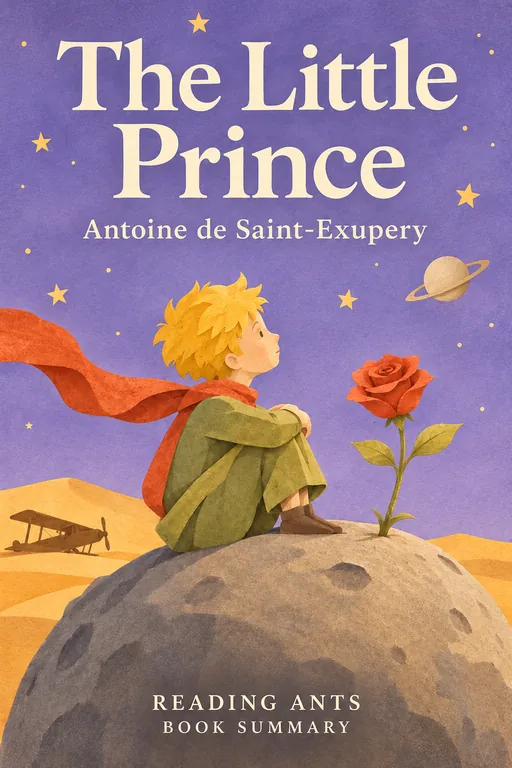
The Little Prince
Antoine de Saint-Exupery
A pilot stranded in the desert meets a small boy from a tiny planet, who teaches him that the most important things in life, like love and friendship, can only be seen with the heart.
🌍 World LiteratureWant something different?
Pick another topic and we will show you three books to start with.