 Reading Ants
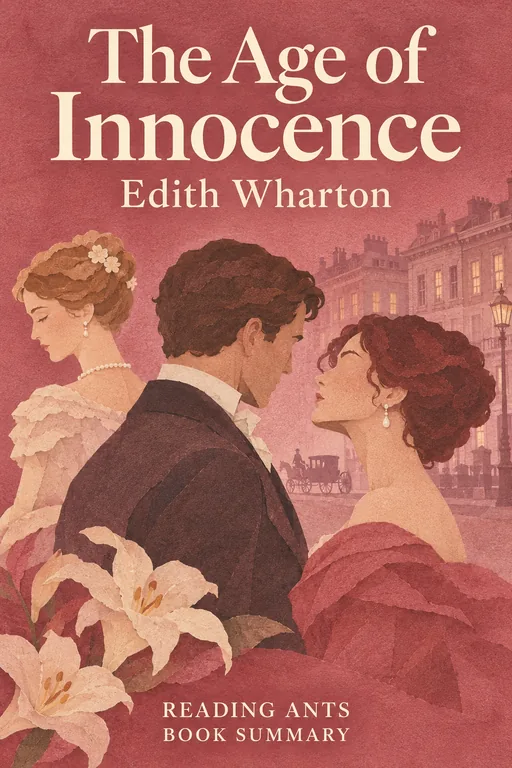
The Age of Innocence
In the rigid high society of 1870s New York, a lawyer, Newland Archer, engaged to a perfect young woman, falls in love with her exiled cousin, and must choose between passion and duty.
Overview
The Age of Innocence is a novel by Edith Wharton, published in 1920, and it won the Pulitzer Prize in 1921, making Wharton the first woman to win it for fiction. It is set in the old New York of the 1870s, a world of strict rules and carefully guarded reputations, which Wharton knew from her own upbringing. She looks back on that world with irony and affection. The book is a story of love thwarted by convention, and a portrait of a society that is polite, closed and quietly cruel.
Main Characters
- Newland Archer: a well-bred young lawyer, who is intelligent and conventional, but longs for a freer life.
- May Welland: his fiancée, then wife, who is lovely, innocent and conventional, but shrewder than she looks.
- Countess Ellen Olenska: May’s cousin, who has returned from Europe, separated from her husband.
- Mrs. Manson Mingott: the family matriarch, who is wealthy and outspoken.
- Julius Beaufort: a rich financier, with a doubtful reputation.
- Mr. Sillerton Jackson: a gossip and keeper of the social record.
- Dallas Archer: Newland and May’s son.
Full Summary
The opera and the countess
At the opera one evening in 1870s New York, Newland Archer sees his fiancée, May Welland, in her family’s box, and, with her, a woman he does not know: her cousin, Countess Ellen Olenska, who has come back from Europe, having left her unfaithful Polish husband. The family is embarrassed, as a separation is scandalous, and Newland, whose engagement to May is about to be announced, is uneasy at seeing the countess on public display beside his fiancee. He hurries to the box to show his support for the family and presses May to let him announce their engagement at that night’s ball.
Newland and Ellen
Newland, who sees himself as modern, finds that the countess is unlike the women he knows. She is direct and curious, and she does not follow the rules of the circle. He visits her, and he is attracted by her independence. When she wants a divorce, the head of his law firm, who acts for the Mingott family, asks him to talk her out of it. He advises her against it, since a public scandal would hurt her and the family, and she accepts. But he finds himself falling in love with her, while he is engaged to May, who is sweet, but whom he finds predictable. He begins to see his own world as stifling.
Marriage
Newland, torn, travels to Florida and begs May to move up the date of their wedding, hoping to escape his feelings. May hesitates, and asks whether there is another woman, saying she would not build her own happiness on a wrong to someone else, but after Mrs. Manson Mingott steps in, the families agree to an earlier date and they marry. He tries to live as a dutiful husband, but he cannot forget Ellen. Meanwhile, Ellen is the subject of gossip, and her family, who had once rallied round her, grow cool toward her when she refuses to return to her husband. She moves between Newport, Washington and New York, and she and Newland meet when they can, with growing intensity.
The declaration
Newland and Ellen at last speak openly of their love, in a carriage on the way from a ferry and later in a museum in Central Park. He urges her to go away with him, but she is reluctant to become his secret lover and to destroy the lives of the people who have been kind to her, including May. In the museum she seems to yield and promises to come to him once, but before that day arrives she has talked with May and written to her that she is returning to Europe, and Newland learns of it from May. They remain unable to be together, and Newland feels that his life is empty.
May’s secret
Ellen’s departure is settled, and May and Newland give a farewell dinner for her. Newland, who has decided to follow her to Europe, sees at the dinner that the whole family is closing ranks around his marriage, and that everyone believes he is Ellen’s lover. When he tries to tell May that he wants to go away, she interrupts to say she is expecting a child. She also reveals that she told Ellen two weeks earlier, although she was not yet sure, which suggests a shrewd way of keeping her husband. Newland understands that he is trapped, and he stays.
Paris
Twenty-six years later, May has died, and Newland, now fifty-seven, is on a trip to Paris with his grown son, Dallas. The trip is before Dallas’s marriage to Fanny Beaufort, the daughter of the disgraced financier. Dallas tells him that May, the day before she died, said that the children were safe with their father because he had once given up what he most wanted. Dallas has also arranged a visit to Ellen, who lives in Paris. Standing outside her building, Newland looks up at the window, and he sends his son up alone, while he sits on a bench. He decides not to go in, and he walks back to the hotel, content to hold the memory of his love.
Why It Matters
The Age of Innocence is regarded as one of the great American novels, and as the finest portrait of the old New York elite. It has been praised for its irony, its detailed depiction of manners and its sympathetic yet clear-eyed view of the characters. The Pulitzer Prize marked a milestone for women writers. The book explores the tension between individual desire and social obligation, and asks whether the price of belonging is too high. It was adapted into a well-known film in 1993, and is still widely read and discussed.
Key Takeaways
- Society enforces conformity. Even politeness can be a form of control.
- Duty and desire conflict. Newland must choose between them.
- Appearances hide truth. May is shrewder than she seems.
- Choices shape a life. Newland’s decision defines his future.
- Memory can be enough. The ending finds a quiet acceptance.
What We Can Learn
You can learn from Newland how easy it is to follow expected paths and to avoid taking risks, and how this may lead to regret. The novel also shows that people who seem simple may have hidden depth, as May does. It encourages you to think about the rules in your own community, which ones are worth honoring, and which are only habit. If you read it, notice Wharton’s close attention to detail, such as dinners, clothes and gestures, which reveal the unspoken rules of the society.
Criticism and Counterpoints
Some readers find the novel slow and cold, with its long descriptions of society and its restrained emotions, and feel that Newland is passive and self-pitying. Others argue that May is unfairly treated by the story, and that her point of view deserves more attention. Critics have also noted that the book’s world is very narrow, limited to a wealthy white elite, and takes servants and the working class for granted. The ending, in which Newland does not go in, frustrates some readers and moves others. However, the book’s craft is widely praised.
Who Should Read It
This book is for mature readers from about fifteen who enjoy classic novels and historical settings, and who are patient with a slow pace. It is longer and more complex than Ethan Frome. Readers who enjoy it might try The House of Mirth.
Want the whole book?
A summary is a taste, not the meal. Here is where to find the full book.
You reached the end 🎉
Nicely done. Mark this one as read, and we will suggest what to read next.
Read this next

Ethan Frome
Edith Wharton
In a cold, remote New England village, a poor farmer, trapped in a joyless marriage, falls in love with his wife's young cousin, and their desperate attempt to escape their situation leads to a lifetime of suffering.
📜 Classics
The Great Gatsby
F. Scott Fitzgerald
A mysterious millionaire throws lavish parties on Long Island in the hope of winning back the woman he loved years ago, but his dream collides with the careless cruelty of the rich.
📜 Classics
A Room with a View
E. M. Forster
A well-brought-up young Englishwoman, Lucy Honeychurch, is torn between a conventional fiancé and a free-spirited young man whom she met in Italy, and must learn to trust her own feelings against the rules of polite society.
📜 Classics
Anna Karenina
Leo Tolstoy
In imperial Russia, a married aristocrat falls passionately in love with a dashing officer and loses her place in society, while a thoughtful landowner seeks a meaningful life through love, work and faith.
🌍 World Literature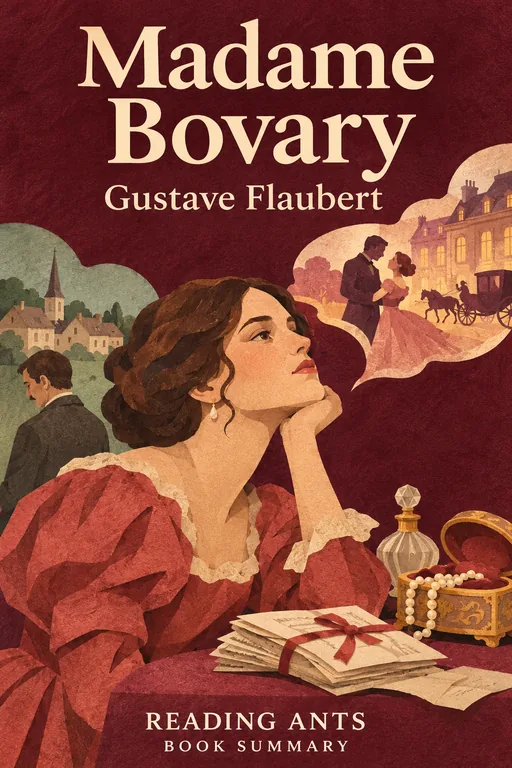
Madame Bovary
Gustave Flaubert
A romantic young woman, bored by her provincial marriage to a kind but dull doctor, seeks excitement in love affairs and luxury, and is crushed by debt and disillusion.
🌍 World Literature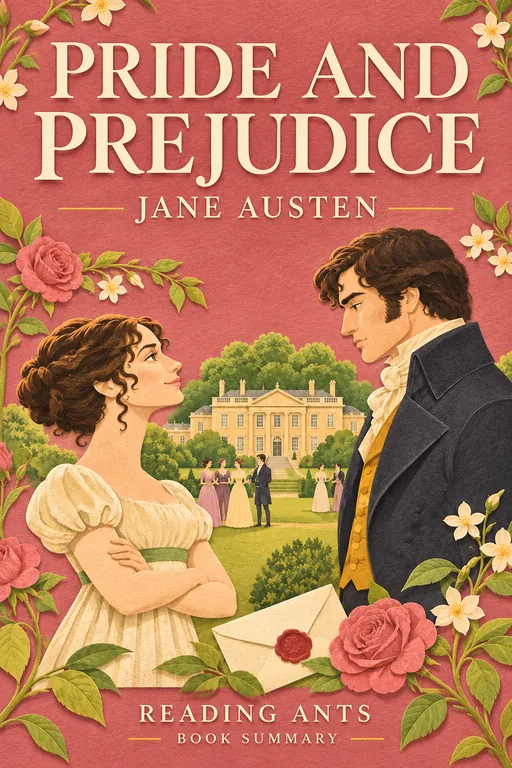
Pride and Prejudice
Jane Austen
Quick-witted Elizabeth Bennet and the proud, wealthy Mr. Darcy badly misjudge each other, and only by facing their own faults do they find their way to love.
📜 ClassicsWant something different?
Pick another topic and we will show you three books to start with.