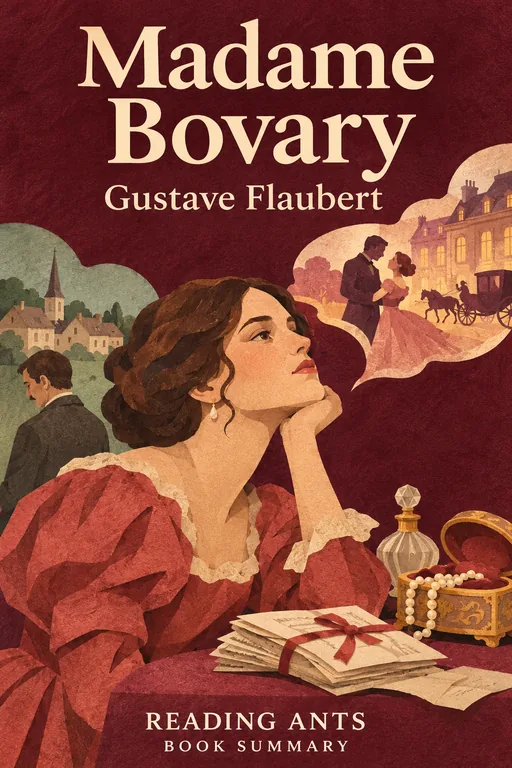
Madame Bovary
A romantic young woman, bored by her provincial marriage to a kind but dull doctor, seeks excitement in love affairs and luxury, and is crushed by debt and disillusion.
Overview
Madame Bovary was published in 1856 and 1857 by the French writer Gustave Flaubert, after years of painstaking work. It tells the story of Emma Bovary, a farmer’s daughter educated in a convent, who has filled her head with romantic novels about passion, wealth and glamorous lives. She marries Charles Bovary, a devoted but unambitious country doctor, expecting happiness, and finds only boredom in a small Norman town. Her dissatisfaction leads her into two affairs and into reckless spending. Flaubert’s cool, precise realism, and his focus on the small details of ordinary life, changed the novel. The book was put on trial for immorality in France, and Flaubert was acquitted.
Main Characters
- Emma Bovary: a beautiful, romantic woman longing for a more exciting life.
- Charles Bovary: her kind, dull, devoted husband, a country doctor.
- Rodolphe Boulanger: a wealthy, cynical landowner who seduces her.
- Léon Dupuis: a young law clerk who falls in love with Emma.
- Monsieur Homais: the town pharmacist, a pompous, self-important man.
- Monsieur Lheureux: a sly merchant who lures Emma into debt.
- Berthe: Emma and Charles’s young daughter.
Full Summary
A Boy and a Bride
The story begins with Charles Bovary as a clumsy schoolboy. He becomes a modest country doctor, marries a plain older widow chosen by his mother and is unhappy until she dies. While tending to a patient, a farmer named Rouault, he meets the farmer’s daughter, Emma. He is charmed by her beauty and her manners. After his wife’s death, he marries Emma in a lavish country wedding.
Disappointment
Emma expects love like the ones in novels, but life with Charles is dull. He loves her and never questions her, but he lacks passion, taste and ambition. When they are invited to a ball at the château of a marquis, Emma is dazzled by the elegance and luxury, which makes her ordinary life unbearable. She becomes ill with longing, and the couple moves to the larger town of Yonville, hoping that a change will cure her. There she gives birth to a daughter, Berthe, whom she hardly cares for.
Léon and Rodolphe
In Yonville, Emma meets Léon, a young law clerk who shares her love of books and romance. They fall in love, but never act, and Léon leaves for Paris. Emma, forlorn, then meets Rodolphe, a handsome, experienced landowner. At the town’s agricultural fair, he courts her with flowery language, while officials give speeches about livestock. Emma gives in to the affair, feeling at last that she lives like the heroines in her books.
The Operation
During Emma’s affair with Rodolphe, Charles, eager to improve their reputation, is pushed by the pharmacist, Homais, to try a new surgical procedure on Hippolyte, a stable-boy at the inn who has a clubfoot. Emma, hoping that her husband will at last become a famous doctor, encourages him. Charles studies the procedure from books and carries it out, but the operation goes badly: the leg becomes infected, and a surgeon has to amputate. Charles is humiliated, and Emma, disgusted by his failure, feels more contempt for him than ever.
Emma grows reckless, sending Rodolphe love letters, buying gifts and neglecting her family. She persuades him to elope, but at the last moment he abandons her with a cold letter. She falls ill with a brain fever, and the family goes into debt for her treatment.
Debts
During her recovery, Charles takes Emma to the opera in Rouen, where she meets Léon again, now a more confident man. They begin an affair, meeting in Rouen on the pretext of piano lessons. To pay for her expensive lifestyle, Emma buys goods on credit from Lheureux, a merchant who encourages her to sign more and more bills. Soon she owes a huge sum.
Ruin
Lheureux demands payment, and the bailiffs arrive to seize the Bovarys’ furniture. Emma begs Léon and then Rodolphe for money, but both refuse. In despair, she goes to the pharmacist’s storeroom, steals arsenic and swallows it. She dies an agonizing death, as Charles weeps, still not understanding what has happened.
Aftermath
Charles, devastated, discovers Emma’s love letters and learns of her affairs, but he forgives her and dies, broken, soon after. Their daughter, Berthe, is sent to work in a cotton mill. The pharmacist, Homais, who profits from everyone else’s misfortune, prospers and is awarded the Legion of Honor in the novel’s final line.
Why It Matters
Madame Bovary is considered one of the great novels in world literature and a landmark of modern literary realism. Flaubert’s insistence on finding the exact word, his objective narration and his refusal to preach influenced generations of writers, from Henry James to Vladimir Nabokov. It was prosecuted in 1857 for offending public morals, and Flaubert won the case, though the trial made the novel famous.
Emma Bovary has become an archetype of the dreamer who is destroyed by unrealistic expectations, and the term “bovarysme” refers to using fantasy to escape reality. The novel has been adapted many times for film and television, and it inspired later works about discontented wives, such as Anna Karenina and The Awakening.
Key Takeaways
- Fantasy can distort reality. Emma’s romantic novels shape her unrealistic dreams.
- Boredom is dangerous. Her dissatisfaction leads to ruin.
- Debt can destroy. Lheureux’s easy credit ensnares her.
- Small-town life can be stifling. Emma feels trapped by provincial society.
- Kindness can be overlooked. Charles’s love is never appreciated.
What We Can Learn
The novel is a warning about expecting life to match the stories we consume. Emma wants romance, luxury and constant excitement, and nothing real can satisfy her. Learning to value everyday happiness and to see ordinary people clearly protects against disappointment.
It also shows the danger of debt. Emma buys things she doesn’t need to feel alive, and the bills pile up. Being careful with money and avoiding impulsive spending can save us from crisis.
Finally, Charles teaches us to see people clearly. He loves Emma, but he never really notices her unhappiness. Listening to loved ones and noticing their needs is an act of care.
Criticism and Counterpoints
Some readers find Emma selfish and shallow, and the novel’s slow, detailed descriptions tedious. Others feel that Flaubert is too harsh on her, and on his characters generally, mocking everyone with cold irony.
Feminist critics have pointed out that Emma’s tragedy comes partly from a society that offers women no meaningful role except marriage. Flaubert is often said to have declared that Madame Bovary was himself, a remark that is probably apocryphal, and scholars debate how sympathetic he really was toward her. Some modern readers also find Charles’s passivity frustrating.
Who Should Read It
This novel suits mature readers who enjoy careful, realistic fiction and psychological insight. A good translation, such as Lydia Davis’s, brings out its style. Readers who want a fast plot may find it slow.
Want the whole book?
A summary is a taste, not the meal. Here is where to find the full book.
You reached the end 🎉
Nicely done. Mark this one as read, and we will suggest what to read next.
Read this next
Anna Karenina
Leo Tolstoy
In imperial Russia, a married aristocrat falls passionately in love with a dashing officer and loses her place in society, while a thoughtful landowner seeks a meaningful life through love, work and faith.
🌍 World Literature
The Scarlet Letter
Nathaniel Hawthorne
In seventeenth-century Boston, a young woman named Hester Prynne is forced to wear a scarlet letter A for adultery, and she bears her shame with dignity while the secret father of her child, a respected minister, is eaten alive by guilt.
📜 Classics
The Awakening
Kate Chopin
A young wife and mother in nineteenth-century New Orleans begins to awaken to her own desires and her need for independence, and finds that the society around her has no place for her.
📜 Classics
The Red and the Black
Stendhal
A clever carpenter's son in France tries to rise through love, religion and ambition, and in the end his pride and passion destroy him.
🌍 World Literature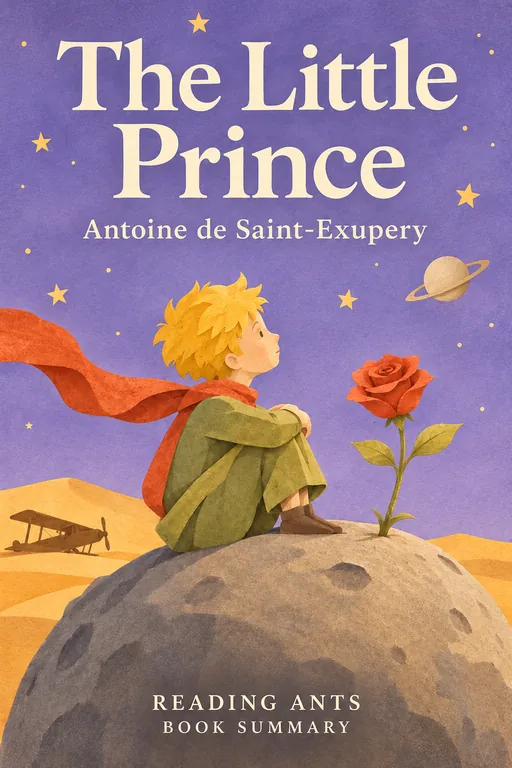
The Little Prince
Antoine de Saint-Exupery
A pilot stranded in the desert meets a small boy from a tiny planet, who teaches him that the most important things in life, like love and friendship, can only be seen with the heart.
🌍 World Literature
Things Fall Apart
Chinua Achebe
Okonkwo, a proud and fearsome leader in an Igbo village in Nigeria, struggles against his own fears and against the arrival of British missionaries and colonial rulers, who change his world forever.
🌍 World LiteratureWant something different?
Pick another topic and we will show you three books to start with.