 Reading Ants
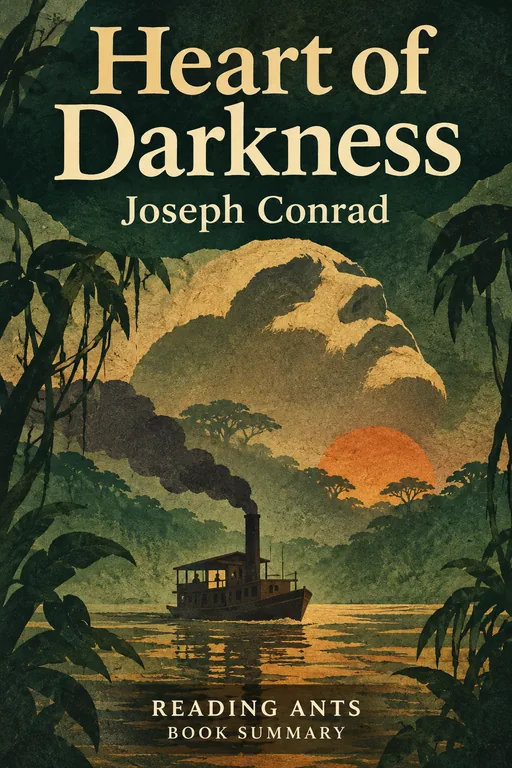
Heart of Darkness
A sailor named Marlow tells his friends of a journey up the Congo River to find a mysterious ivory trader named Kurtz, and of the horror and moral darkness he finds at the end of it.
Overview
Heart of Darkness is a short novel by Joseph Conrad, a Polish-born writer who became a British novelist, published in 1899 in a magazine and as a book in 1902. It is based on Conrad’s own experiences as a steamboat captain on the Congo River in 1890, when the territory was controlled by the Belgian King Leopold II. The story is framed as a tale told on a yacht on the Thames River in London, and is told by an unnamed narrator who repeats Marlow’s account of his journey into Africa. It is a dark, complex story about imperialism, greed and the thin line between civilization and savagery, and one of the most discussed works in English.
Main Characters
- Marlow: the narrator, a thoughtful sailor and storyteller who is curious and troubled.
- Kurtz: a brilliant, charismatic ivory agent deep in the jungle, who has become a god-like figure and has lost his moral limits.
- The Company’s manager and agents: greedy, careless men who run the trading stations.
- The Russian trader: a young, devoted follower of Kurtz.
- Kurtz’s Intended: his fiancée, who waits in Europe and who believes in his greatness.
- The helmsman and the crew: the African crew of the steamer, who are treated as less than human.
Full Summary
The Frame
On a boat anchored at the mouth of the Thames, a group of men wait for the tide. One of them, Marlow, begins to speak, saying that London was once one of the dark places of the earth, conquered by Romans. This reflection introduces his tale of how he became a captain for a trading company, and how he went to Africa to captain a steamboat. He remarks that empire is often a matter of robbing people who have darker skins or flatter noses.
Into Africa
Marlow is hired by a Belgian company in a gloomy city, and sails to the Congo. At the first station, he sees signs of cruelty and waste: a French warship shelling the bush, chained prisoners working, and workers dying in a grove of trees. At the same station, he meets the chief accountant, who is dressed in perfect white, and hears of Kurtz for the first time, as the best agent, who sends in more ivory than all the others combined. Marlow then travels overland to the Central Station, where he learns that his steamboat has been wrecked, and that he must repair it.
The Journey Up the River
After months of delay, Marlow starts upriver with the manager and a crew of “pilgrims” and cannibals. The journey takes them deeper into the jungle, and the mood grows tense. They hear that Kurtz is ill. The river, the silence and the thick forest oppress Marlow, who feels that he is traveling back in time. Out in the fog, the steamer is attacked by natives, and a spear kills his helmsman. Marlow is angry, and sees that the crew’s cannibal appetite is held in check only by restraint.
Kurtz
At last they reach the inner station, where Kurtz lives. They meet a Russian trader who worships Kurtz, and who tells how Kurtz has been adored and feared by the local people. Marlow sees the heads of rebels on stakes outside Kurtz’s house, a sign of his horrific rule. Kurtz himself is ill and gaunt, but eloquent. He has written a report for the International Society for the Suppression of Savage Customs that begins with high ideals about civilizing the natives, but ends with the scrawled line “Exterminate all the brutes.”
Death
The men carry Kurtz to the steamer, but he is dying. He escapes briefly into the jungle, and Marlow follows to bring him back. Kurtz warns him not to follow, and begs for something, but is too weak to go on. On the trip downriver, he dies. His last words are a whisper of two words: “The horror!” Marlow is left haunted by what he has seen, and by Kurtz’s final judgment on his own life.
The Lie
Back in Europe, Marlow is changed, and feels alienated from the people around him, who go about their business as though nothing has happened. He visits Kurtz’s fiancée, the Intended, who still believes in his nobility. She asks for Kurtz’s last words, and Marlow, unable to destroy her faith, lies and says that Kurtz’s last word was her name. The story ends, and the frame returns: the Thames, under a darkening sky, seems to lead into the heart of an immense darkness.
Why It Matters
Heart of Darkness is one of the most studied works of English literature. Its themes of the corruption of power, the hypocrisy of empire and the darkness within human beings have been analyzed for generations. It inspired Francis Ford Coppola’s film Apocalypse Now (1979), which moved the story to the Vietnam War, and influenced writers such as T. S. Eliot, who used a line from it as an epigraph for The Hollow Men.
The story is also important to the debate about colonialism, since it was one of the first major works to depict colonial brutality, though its portrayal of Africa and Africans has been strongly criticized.
Key Takeaways
- Power without restraint corrupts. Kurtz loses his moral limits.
- Civilization is thin. Without society’s checks, people can fall into cruelty.
- Empire hides greed behind noble words. High ideals mask exploitation.
- Truth can be painful. Marlow’s discovery changes him.
- Silence and lies protect illusions. Marlow’s lie to the Intended shows this.
What We Can Learn
The novella invites us to look at the gap between ideals and actions. Kurtz begins with noble goals, but in his isolation and with unlimited power, he becomes a tyrant, a warning about how ideals can be used to justify cruelty.
It also asks us to consider how much of what we call “civilized” depends on our surroundings, laws and the eyes of others.
Finally, it shows the difficulty of speaking about horrors. Marlow struggles to tell the truth, and the book makes us think about what we choose to tell or hide.
Criticism and Counterpoints
The Nigerian writer Chinua Achebe, in a famous 1975 lecture, called Conrad a “thoroughgoing racist” and argued that the book presents Africa as a place of savagery and Africans as faceless, voiceless people, used as a backdrop for a European’s moral crisis. Others reply that Conrad criticized imperialism, and used the narrator’s limited viewpoint to show the blindness of Europeans.
Some readers find the writing dense and the plot slow, with long descriptive passages and vague language, such as “darkness” and “horror,” that are hard to pin down. The book contains offensive language and attitudes. Debate continues about whether it should be read as an indictment of colonialism or as an example of it.
Who Should Read It
This book suits mature teenagers and adults. It is short but dense, with disturbing content and racist language, and is best read with guidance or notes. Readers may also wish to read Achebe’s essay and his novel Things Fall Apart to see another view.
Want the whole book?
A summary is a taste, not the meal. Here is where to find the full book.
You reached the end 🎉
Nicely done. Mark this one as read, and we will suggest what to read next.
Read this next
Things Fall Apart
Chinua Achebe
Okonkwo, a proud and fearsome leader in an Igbo village in Nigeria, struggles against his own fears and against the arrival of British missionaries and colonial rulers, who change his world forever.
🌍 World Literature
The Quiet American
Graham Greene
In French colonial Vietnam in the early 1950s, a jaded British journalist, Thomas Fowler, watches an idealistic young American, Alden Pyle, cause harm with his good intentions, and must decide whether to betray him.
📜 Classics
The Poisonwood Bible
Barbara Kingsolver
In 1959, an American Baptist missionary named Nathan Price drags his wife and four daughters to the Belgian Congo, where his rigid zeal and the country's turmoil change all of their lives, as told by the women of the family.
✨ Modern Fiction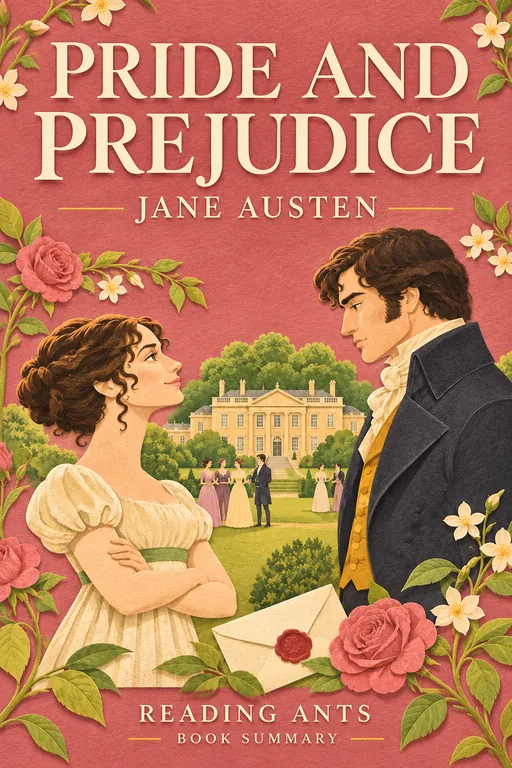
Pride and Prejudice
Jane Austen
Quick-witted Elizabeth Bennet and the proud, wealthy Mr. Darcy badly misjudge each other, and only by facing their own faults do they find their way to love.
📜 Classics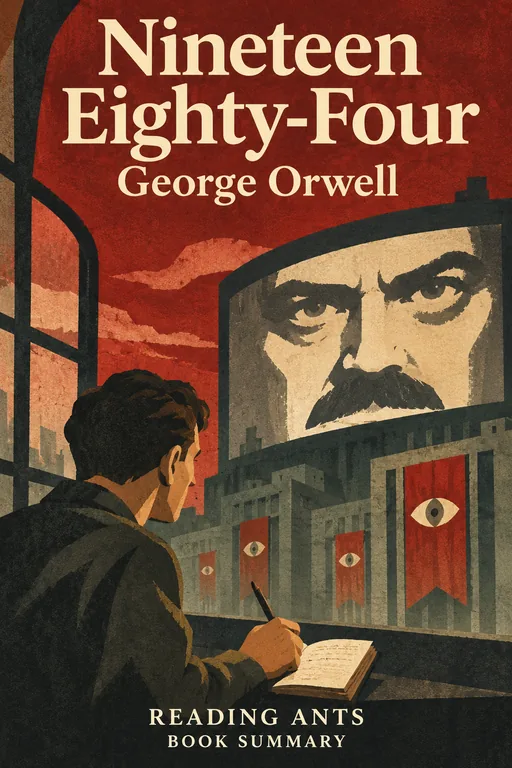
Nineteen Eighty-Four
George Orwell
In a future Britain ruled by an all-seeing Party, one man secretly rebels by keeping a diary and falling in love, and discovers just how completely a totalitarian state can crush the human mind.
📜 Classics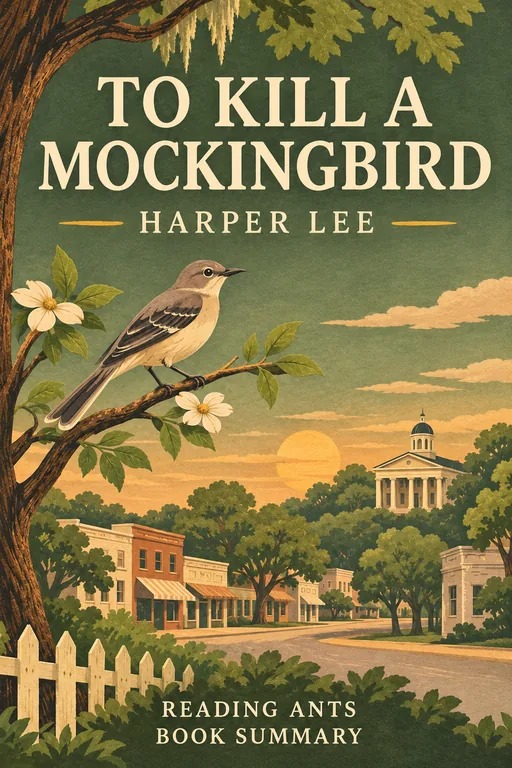
To Kill a Mockingbird
Harper Lee
In a small Alabama town in the 1930s, young Scout Finch watches her father, a lawyer, defend a Black man falsely accused of a crime, and learns hard lessons about prejudice, courage and seeing the world through other people's eyes.
📜 ClassicsWant something different?
Pick another topic and we will show you three books to start with.