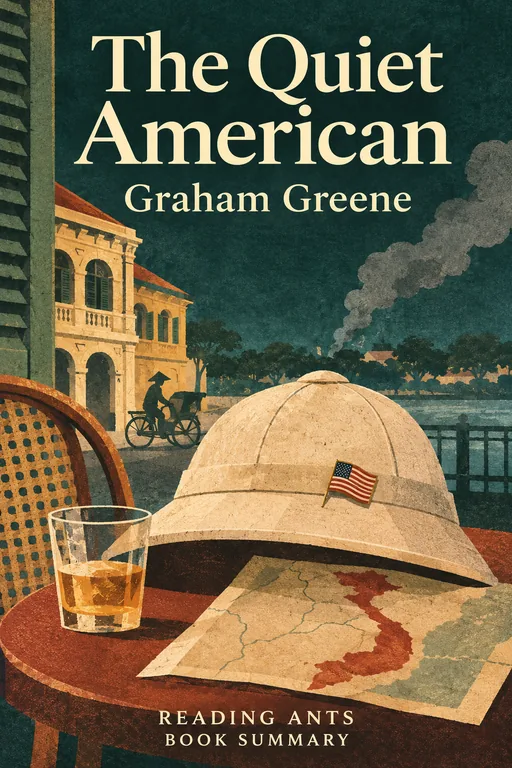
The Quiet American
In French colonial Vietnam in the early 1950s, a jaded British journalist, Thomas Fowler, watches an idealistic young American, Alden Pyle, cause harm with his good intentions, and must decide whether to betray him.
Overview
The Quiet American is a novel by Graham Greene, published in 1955. It is set in Saigon during the last years of French rule in Indochina, as the French fight a war against the Viet Minh. Greene had visited Vietnam as a journalist, and the book was written years before the American war there, but it is often seen as a warning of what was to come. The story is narrated by Fowler, an older Englishman who lives with a young Vietnamese woman named Phuong. The arrival of Pyle, an American who claims to work for an aid mission, upsets Fowler’s life and puts him in conflict over love and politics.
Main Characters
- Thomas Fowler: the narrator, a cynical British journalist in his fifties who wants to stay uninvolved.
- Alden Pyle: a young, earnest American, believing in democracy and a “Third Force,” who is naive.
- Phuong: a young Vietnamese woman, Fowler’s lover, and later Pyle’s.
- Vigot: a French police inspector who investigates Pyle’s death.
- Miss Hei: Phuong’s sister, who hopes that she will make a good match.
- General Thé: a local military leader whom Pyle supports.
- Fowler’s wife in England: who refuses to divorce him until the very end, when she agrees.
Full Summary
A Death
The novel begins at night in Saigon, with Fowler waiting for Pyle, who has not turned up. Fowler is questioned by a French police inspector, Vigot, who tells him that Pyle’s body has been found in the river. Fowler recalls how he met the young American, and the story unfolds in flashback, which makes the reader wonder how and why Pyle died, and whether Fowler was involved.
Meeting Pyle
Pyle arrives in Saigon and meets Fowler, who is living with Phuong and is a correspondent for a London newspaper. Pyle is earnest, polite and well-read, and he believes that he can bring democracy to Asia by supporting a “Third Force” between the French and the communists. He speaks about York Harding, a political writer whose books he has absorbed. Fowler finds him amusing, but also dangerous in his innocence.
Fowler tells him that he is a reporter, not a participant, and that he has no opinions, only facts. This declaration becomes ironic as the story shows that no one can stay out of a war. Pyle, in turn, speaks about democracy as if it could be shipped from America in crates.
Love Triangle
Pyle falls in love with Phuong and tells Fowler that he plans to marry her and to give her security and respectability. Fowler, who is older, cannot marry her because his wife in England is a devout Anglican who will not divorce him. Phuong, who is practical, hopes for stability and is tempted. Pyle proposes to her, and Fowler is jealous and bitter, but also admits that he is less able to offer what she needs.
The Trip North
Fowler goes to report on the fighting in the north, at Phát Diệm, and he sees the horrors of war. Pyle follows him there to say that he loves Phuong and wants to marry her. Later, on another journey, Fowler and Pyle are in a watchtower when it comes under attack, and they are forced to rely on each other. Pyle saves Fowler’s life, which makes Fowler feel indebted. Even so, Fowler eventually realizes that Pyle is not merely an aid worker, but is secretly involved with General Thé, a renegade commander, and is supplying materials.
The sight of the dead shakes him. For the first time in years he feels that he cannot simply observe, and the pictures of the dead stay with him when he returns to Saigon.
The Bombing
One day in Saigon, a bomb goes off in a public square, killing many civilians, mostly women and children. Fowler, who sees the aftermath, learns that the explosive was supplied by Pyle, who had planned for it to hurt the military but was careless about the crowd. Pyle, when confronted, is shocked but unrepentant, saying that sometimes innocent people must die for a larger good. Fowler is horrified at such naive idealism.
The Betrayal
Fowler decides that Pyle must be stopped. He arranges, indirectly, for Pyle to be lured to a meeting, where he is murdered by communist agents. Fowler has not done the killing, but he knows that he set it in motion. Afterwards, Phuong returns to him, and he is free to live with her, but he is left with guilt. Vigot, who understands, does not press him. The novel closes with Fowler thinking that he has what he wanted, and he wishes that there was someone to whom he could say that he was sorry.
Why It Matters
The Quiet American is regarded as one of Greene’s best novels. It predicted the dangers of American involvement in Vietnam and has become part of discussions about foreign policy and the risks of acting with good intentions but without understanding. It was adapted into films in 1958 and 2002, the latter starring Michael Caine, and has been read widely as an early comment on American power.
The book is also admired for its portrait of a morally ambiguous narrator, and for the questions it raises about engagement, responsibility and when to take sides.
Key Takeaways
- Innocence can be dangerous. Pyle’s good intentions cause harm.
- Neutrality has limits. Fowler cannot stay uninvolved forever.
- Ideas can blind. Pyle sees the world through books rather than experience.
- Violence harms the innocent. The bombing shows the cost of political schemes.
- Moral choices are hard. Fowler’s decision is not clear-cut.
What We Can Learn
The novel suggests that those who try to improve other countries must understand local conditions, and that good motives are not enough. Pyle’s belief in a theory leads him to accept civilian deaths as acceptable.
It also warns against cynical detachment. Fowler’s refusal to commit fails him when he sees the consequences, and he has to make a choice.
Finally, it invites us to think about personal responsibility. Fowler’s role in Pyle’s death raises the question of what we owe to people when we think they are doing harm.
Criticism and Counterpoints
Some critics have said that Greene’s portrait of Americans is a caricature, and that Pyle is too naive to be believable, and the book has been accused of anti-Americanism. Others point out that the Vietnamese characters, especially Phuong, are treated mainly as objects of desire and have little voice.
Greene’s own politics, including his sympathy for the Viet Minh, have been debated, and the film versions have changed the ending. Some readers find the plot slow or the narrator’s moralizing heavy. Still, the book is widely admired.
Who Should Read It
This book suits mature teenagers and adults. It is short and well written, though it includes scenes of war violence and a bombing. It is a good novel for readers interested in history and politics.
Want the whole book?
A summary is a taste, not the meal. Here is where to find the full book.
You reached the end 🎉
Nicely done. Mark this one as read, and we will suggest what to read next.
Read this next
Heart of Darkness
Joseph Conrad
A sailor named Marlow tells his friends of a journey up the Congo River to find a mysterious ivory trader named Kurtz, and of the horror and moral darkness he finds at the end of it.
📜 Classics
A Passage to India
E. M. Forster
In British-ruled India, a young Indian doctor is accused of assaulting an Englishwoman after an outing to the mysterious Marabar Caves, and the trial exposes how deep the gulf between the rulers and the ruled really is.
📜 Classics
Pride and Prejudice
Jane Austen
Quick-witted Elizabeth Bennet and the proud, wealthy Mr. Darcy badly misjudge each other, and only by facing their own faults do they find their way to love.
📜 Classics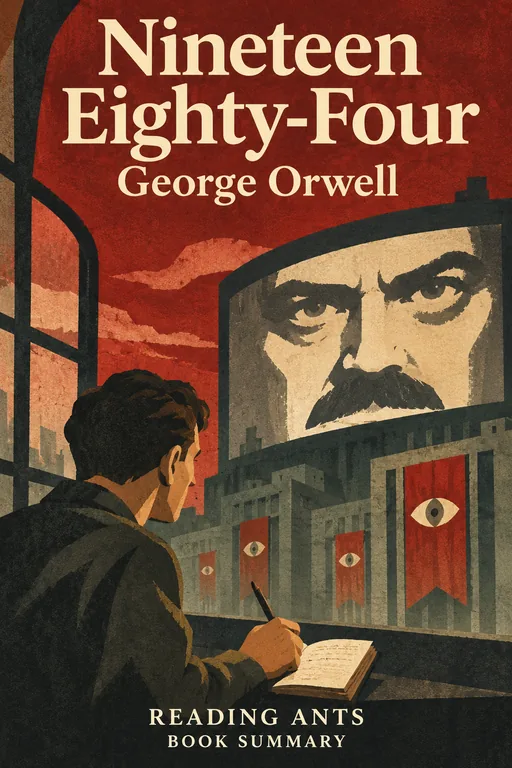
Nineteen Eighty-Four
George Orwell
In a future Britain ruled by an all-seeing Party, one man secretly rebels by keeping a diary and falling in love, and discovers just how completely a totalitarian state can crush the human mind.
📜 Classics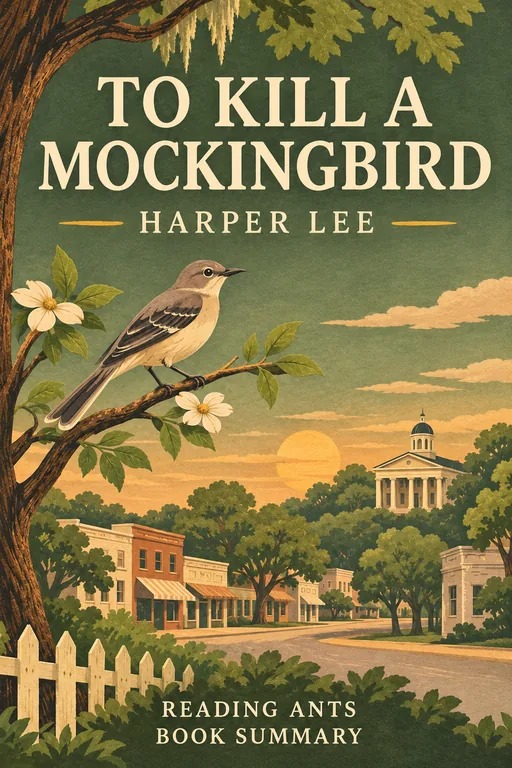
To Kill a Mockingbird
Harper Lee
In a small Alabama town in the 1930s, young Scout Finch watches her father, a lawyer, defend a Black man falsely accused of a crime, and learns hard lessons about prejudice, courage and seeing the world through other people's eyes.
📜 Classics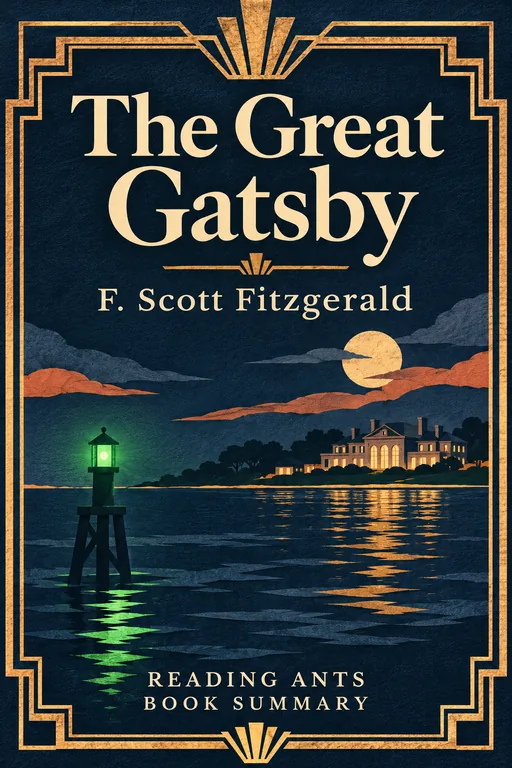
The Great Gatsby
F. Scott Fitzgerald
A mysterious millionaire throws lavish parties on Long Island in the hope of winning back the woman he loved years ago, but his dream collides with the careless cruelty of the rich.
📜 ClassicsWant something different?
Pick another topic and we will show you three books to start with.