 Reading Ants
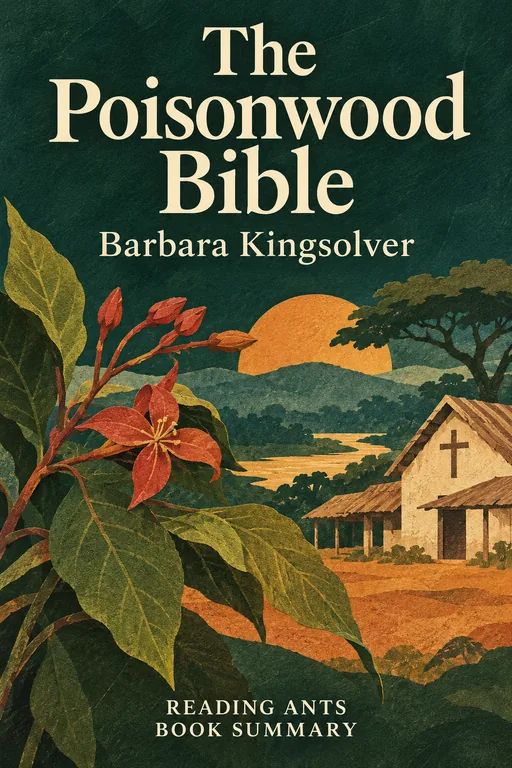
The Poisonwood Bible
In 1959, an American Baptist missionary named Nathan Price drags his wife and four daughters to the Belgian Congo, where his rigid zeal and the country's turmoil change all of their lives, as told by the women of the family.
Overview
The Poisonwood Bible is a novel by Barbara Kingsolver, published in 1998, and it was a finalist for the Pulitzer Prize and an Oprah’s Book Club pick. It is narrated by Orleanna Price, the mother, and her four daughters: Rachel, Leah, Adah and Ruth May, each with a distinct voice. The story begins with the family’s arrival in a village in the Congo, in 1959, and moves through the events of the Congolese struggle for independence from Belgium, the assassination of Patrice Lumumba and the rise of Mobutu. The title refers to a poisonous plant, and to the way that the father mistakes his own certainty for truth. The novel combines family drama with a critique of colonialism.
Main Characters
- Nathan Price: a fiery, stubborn Baptist preacher, convinced he is doing God’s work.
- Orleanna Price: his wife, who looks back with guilt and regret.
- Rachel: the oldest daughter, vain, materialistic and funny in her mangled use of words.
- Leah: a twin, athletic and devoted to her father, who grows to love the Congo.
- Adah: Leah’s twin, who has a limp, does not speak and reads and writes backward.
- Ruth May: the youngest, a spirited five-year-old.
- Anatole Ngemba: a local schoolteacher who becomes Leah’s husband.
- Tata Ndu and Brother Fowles: a village chief and a previous missionary.
Full Summary
Arrival
The novel begins with Orleanna, who is looking back, and says that she wants to tell her story. In 1959, Nathan Price takes his wife and four daughters to the village of Kilanga, where he intends to convert the people to Christianity. They bring with them a suitcase of items that they consider necessities, including cake mixes, which prove useless. The girls adjust in their own ways: Rachel is homesick, Leah is thrilled, Adah observes everything and Ruth May makes friends.
The Village
Nathan pays little attention to the local customs or language. His mistranslation of the word for “beloved” with a word that means “poisonwood,” a toxic tree, leads him to proclaim that Jesus is “bangala,” which can mean something dear or something poisonous. He insists on baptizing the children in the river, despite the danger of crocodiles, and the villagers resist him. The local chief, Tata Ndu, is uninterested in his religion, while the people are suspicious. The family is hungry, and slowly learns from villagers how to survive.
The Ants
Months go by. Nathan’s sermons fail, and he grows more extreme. A gardening attempt fails because Nathan ignores local advice to plant in raised mounds, and the American seeds fail to set fruit in the rain, in a place without the right pollinators. A column of army ants sweeps through the village, and the family must flee. Meanwhile, the country’s politics are changing, with independence in 1960, and the election of Patrice Lumumba as prime minister. Nathan ignores the signs.
Ruth May
Orleanna worries about the children, and begs to leave, but Nathan refuses. Ruth May, who has made friends with the village children, is bitten by a green mamba, and dies. The loss shatters the family. The villagers hold her funeral, and the family is left to mourn. Orleanna, in her grief, realizes that she must leave the husband who has refused to protect them. She takes the three surviving daughters and flees, but the family soon splits: Rachel leaves with the pilot Axelroot, Leah stays behind with Anatole, and Orleanna and Adah eventually return to America.
Aftermath
Nathan stays, and is later killed by a mob of villagers who blame him for a crocodile attack on a group of children. The family members go in different directions. Rachel marries and remarries and becomes a hotel owner in Africa. Adah becomes a doctor, studying parasitic diseases. Leah marries Anatole, with whom she has children, and remains in Africa, fighting for the poor, and enduring the repression of the Mobutu years. Orleanna returns to the United States, living with her guilt.
Reflections
In the final sections, each of the narrators reflects on what has happened. Orleanna acknowledges that she was complicit in her husband’s arrogance, and that she must carry the weight of Ruth May’s death, as well as the weight of American involvement in the Congo, including the part played by the CIA in Lumumba’s fall. Leah describes how Africa has become her home. The novel ends with a chapter in the voice of Ruth May, who asks her mother to forgive herself.
Why It Matters
The Poisonwood Bible is among the best-known American novels of the 1990s, and has sold millions of copies. It was a powerful popular treatment of colonialism and its legacy, which brought readers an understanding of the Congo’s history and of the effects of Western arrogance. It is widely used in classes on postcolonial literature, and in book clubs.
Kingsolver, who is also a biologist and an activist, used her knowledge to draw a rich picture of the Congolese environment and society. The novel has been admired for the distinctiveness of the five voices.
Key Takeaways
- Certainty can be dangerous. Nathan’s refusal to listen causes harm.
- Cultural humility matters. Outsiders need to learn before they teach.
- Complicity is complex. Orleanna wrestles with her share of the blame.
- Women find their own voices. The daughters grow in different ways.
- History touches ordinary lives. The Congo’s independence changes the family.
What We Can Learn
The novel invites us to look at how good intentions can do harm when they are not matched by humility and knowledge. Nathan believes that he is helping, but he refuses to listen to the people he wants to serve.
It also shows that guilt and responsibility are shared, and that facing them honestly is the first step toward change.
Finally, it reminds us that a family story is also part of a larger history, and that understanding one helps us to understand the other.
Criticism and Counterpoints
Some critics argue that the novel, although it criticizes colonialism, still centers on white Americans, and gives the Congolese characters little voice, which may reproduce the problem it exposes. Others say that Rachel’s malapropisms and the girls’ voices can be uneven, and that the political commentary is heavy-handed.
Some historians note that Kingsolver simplifies events in the Congo, and that her portrayal of the CIA’s role, though based on real research, is condensed. A few readers find the second half slower. Still, the book is widely admired.
Who Should Read It
This book suits mature teenagers and adults. It is long and rich, with a child’s death and political violence. It is a good choice for readers who like family sagas and history.
Want the whole book?
A summary is a taste, not the meal. Here is where to find the full book.
You reached the end 🎉
Nicely done. Mark this one as read, and we will suggest what to read next.
Read this next
Heart of Darkness
Joseph Conrad
A sailor named Marlow tells his friends of a journey up the Congo River to find a mysterious ivory trader named Kurtz, and of the horror and moral darkness he finds at the end of it.
📜 Classics
Things Fall Apart
Chinua Achebe
Okonkwo, a proud and fearsome leader in an Igbo village in Nigeria, struggles against his own fears and against the arrival of British missionaries and colonial rulers, who change his world forever.
🌍 World Literature
A Passage to India
E. M. Forster
In British-ruled India, a young Indian doctor is accused of assaulting an Englishwoman after an outing to the mysterious Marabar Caves, and the trial exposes how deep the gulf between the rulers and the ruled really is.
📜 Classics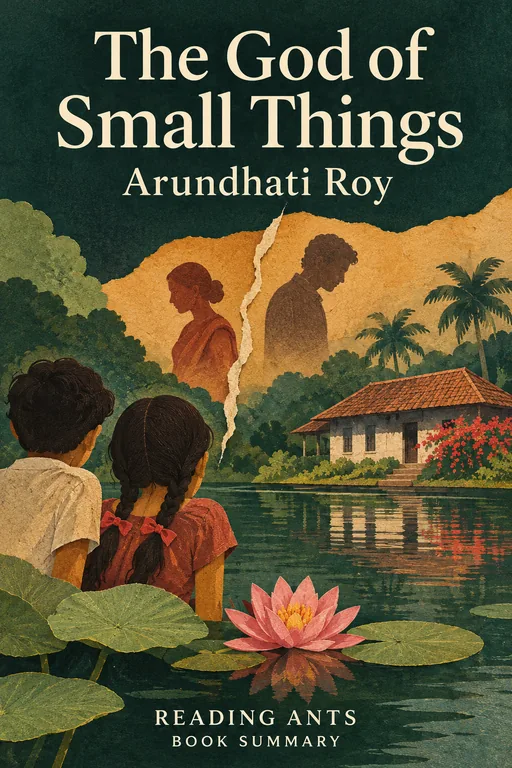
The God of Small Things
Arundhati Roy
In Kerala, India, a pair of twins grows up in a divided family where a forbidden love across caste lines leads to a tragedy that haunts them for the rest of their lives.
✨ Modern Fiction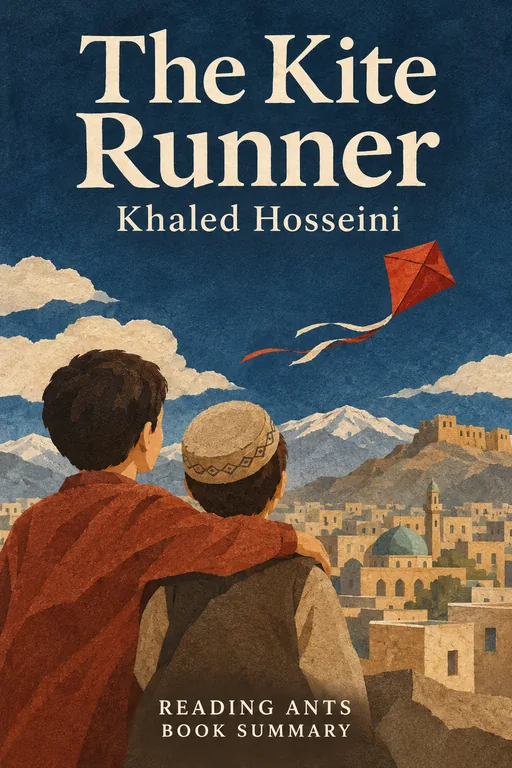
The Kite Runner
Khaled Hosseini
A wealthy boy in Kabul betrays his loyal best friend on the day of a kite tournament, and decades later, after fleeing to America, he returns to a Taliban-ruled Afghanistan to try to make things right.
✨ Modern Fiction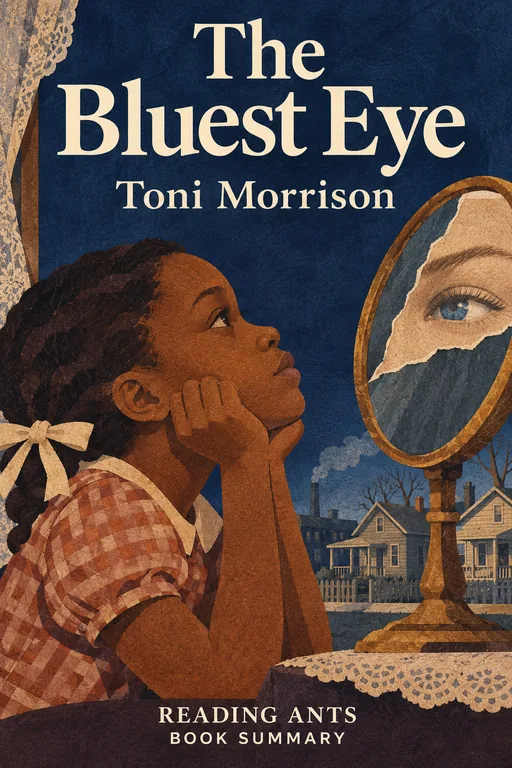
The Bluest Eye
Toni Morrison
In 1940s Ohio, a poor Black girl named Pecola Breedlove, who believes that she is ugly, prays for blue eyes, and the community's failure to protect her leads to tragedy.
✨ Modern FictionWant something different?
Pick another topic and we will show you three books to start with.