 Reading Ants
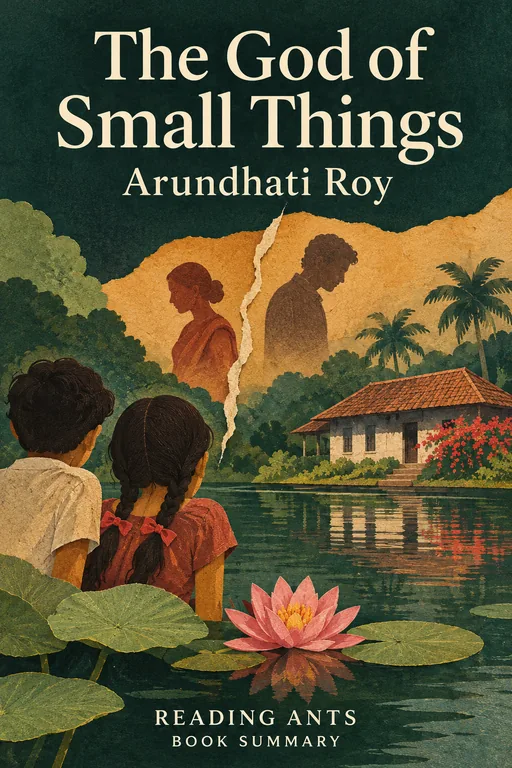
The God of Small Things
In Kerala, India, a pair of twins grows up in a divided family where a forbidden love across caste lines leads to a tragedy that haunts them for the rest of their lives.
Overview
The God of Small Things, published in 1997, was Arundhati Roy’s first novel and won the Booker Prize that year. It is set in Ayemenem, a village in the southern Indian state of Kerala, and moves back and forth between 1969 and 1993. The story centers on seven-year-old fraternal twins, Rahel and Estha, and the events of a few weeks in December 1969 that destroy their family. Roy writes in a rich, playful style, full of invented words, repetitions and vivid images. The novel explores the “Love Laws,” the unwritten rules about who should be loved, and how much, and it shows how small things shape big tragedies.
Main Characters
- Rahel: one of the fraternal twins, observant and independent.
- Estha (Esthappen): her twin brother, quiet and sensitive.
- Ammu: the twins’ mother, a divorced woman with a passionate nature.
- Velutha: a gifted carpenter from the “Untouchable” caste, who works for the family.
- Baby Kochamma: the twins’ bitter, controlling great-aunt.
- Chacko: Ammu’s brother, an educated Oxford graduate who runs the family pickle factory.
- Mammachi: the twins’ almost blind grandmother.
- Sophie Mol: Chacko’s English daughter, who visits from England.
- Margaret Kochamma: Chacko’s English former wife.
Full Summary
Return to Ayemenem
In 1993, Rahel returns to the family’s decaying house in Ayemenem to see her twin brother, Estha, whom she has not seen in years. Estha was sent away to live with their father after the events of 1969, has recently been sent back to Ayemenem, and no longer speaks. Mammachi has died and Chacko lives abroad, so only Baby Kochamma and the cook remain in the house. The reunion hints at a shared past and a catastrophe they both survived. The narrative then jumps back to the story of the family and the fateful December of 1969.
The Family
The twins live in a large house with their mother, Ammu, who had a failed marriage to a violent, drunken man and returned to her parents’ home, where she is treated as a burden. Their uncle Chacko runs the family’s pickle factory, although he is careless in business. Their grandmother, Mammachi, is almost blind. Their great-aunt Baby Kochamma, who was once in love with an Irish priest, is resentful of everyone happier than she is.
Velutha, a talented carpenter and mechanic, belongs to the Paravan caste, formerly known as “Untouchable.” He is a kind friend to the twins and a skilled worker, loved by the children and valued in the factory, though some people in the household resent his place.
Sophie Mol
When Chacko’s ex-wife, Margaret, and their daughter, Sophie Mol, are about to arrive from England for Christmas, the household is in a flurry. The day before, on the trip to Cochin to meet them, the family stops to see a film at a cinema, where Estha is sexually abused by the man selling refreshments. Estha is deeply shaken. After Sophie arrives, the twins feel that she is the loved child and they are not. They find a small boat and begin to hide supplies in an abandoned house across the river, and they talk about running away.
Ammu and Velutha
Ammu and Velutha, both lonely and neglected, begin a secret love affair on the night Sophie arrives, meeting by the river. They know their love crosses the strict boundaries of caste, and they feel the “Love Laws” bearing down on them. About two weeks later, Velutha’s father, drunk and torn between loyalty and love for his son, tells Mammachi, who is furious. Mammachi and Baby Kochamma lock Ammu in her room, and Velutha is sent for, insulted and ordered off the property. From behind her locked door, Ammu angrily tells the twins that she would be free without them, words they take deeply to heart.
The Night of the Boat
That night the twins run away with Sophie Mol, who insists on coming along, and their escape goes wrong. The boat overturns in the river, and Sophie Mol drowns. The twins, in shock, hide in the old house on the other side. By morning, Baby Kochamma, afraid of scandal, has gone to the police station and falsely accused Velutha of trying to force himself on Ammu and of being behind the children’s disappearance.
Police, who see Velutha as a troublemaker, find him asleep in the abandoned house where the twins are hiding and beat him savagely while the terrified twins watch. Later, at the police station, Baby Kochamma frightens the twins into believing that they can save their mother only by going along with the police, and Estha, taken to the cell where the badly injured Velutha lies, says yes when asked whether Velutha had kidnapped them, an act of betrayal that will haunt him all his life. Velutha dies from his injuries.
Aftermath
After Sophie Mol’s funeral, Ammu tries to tell the police the truth, but she is dismissed with contempt. Baby Kochamma persuades Chacko that Ammu and the twins are to blame for Sophie Mol’s death, and Chacko orders Ammu to leave the house. Estha is sent to live with his father, and Rahel stays behind, drifting from school to school and growing up lonely. Ammu dies alone, young, in a rented room. The pickle factory later closes down, and the family scatters.
Together Again
In 1993, Rahel and Estha, now in their thirties, find each other. They have a sexual encounter, which is incestuous, born from the closeness they once shared and the pain they carry. The novel ends not in 1993 but in the past, with a tender scene of Velutha and Ammu together, in the moment before everything fell apart. It ends with their first “tomorrow,” a hint of the simple beauty destroyed.
Why It Matters
The God of Small Things won the 1997 Booker Prize, and Roy became the first Indian woman to win it. The novel sold millions of copies and was translated into more than forty languages. It was a literary sensation and remains Roy’s only novel until The Ministry of Utmost Happiness in 2017, since she turned to political writing and activism.
The book is admired for its poetic language and for its sharp portrait of caste, class and gender oppression. It shows how large social rules shape the smallest lives, and how children see and suffer from adult cruelty. In India, it started debates about caste prejudice and about how to depict sexuality and abuse.
Key Takeaways
- Social rules can destroy lives. The “Love Laws” demand that people love only within boundaries.
- Caste prejudice is deadly. Velutha is killed because of who he is and whom he loved.
- Children see more than adults realize. The twins witness everything.
- Guilt can silence a person. Estha stops speaking.
- Small things matter. The tragedy comes from small decisions and gestures.
What We Can Learn
The novel invites us to question rules that divide people. Whether based on caste, race or class, prejudice damages both those who suffer and those who enforce it.
It also reminds us that children are affected by what they see. Adults sometimes forget how much children understand, and how deeply fear and betrayal can shape their lives.
Finally, the book shows the importance of speaking the truth. Baby Kochamma’s lie destroys an innocent man, and others’ silence lets it happen. Honesty, even when it is uncomfortable, can prevent great harm.
Criticism and Counterpoints
Some critics have found the novel’s style overwritten, with so many invented words, capital letters and wordplay that it becomes difficult to follow. Its non-chronological structure can confuse readers.
The book also drew controversy in India for its scenes of sexual abuse and for the relationship between Ammu and Velutha, and a lawsuit was filed by a lawyer in Kerala who claimed it was obscene. Others have noted that Velutha, though sympathetic, is presented as almost too perfect, and that the novel’s portrayal of many other characters is harsh. Supporters argue that the style and structure are essential to its power.
Who Should Read It
This novel suits mature readers who enjoy poetic, challenging writing and are ready for painful subject matter. It helps to read slowly. Readers interested in India, caste and family will find it rewarding.
Want the whole book?
A summary is a taste, not the meal. Here is where to find the full book.
You reached the end 🎉
Nicely done. Mark this one as read, and we will suggest what to read next.
Read this next
Midnight's Children
Salman Rushdie
Born at the exact moment India became independent, a boy named Saleem Sinai discovers that his life is mysteriously linked to the nation's history, and tells his story as a wild mix of family saga, politics and magic.
✨ Modern Fiction
A Fine Balance
Rohinton Mistry
Four people from different backgrounds share a small apartment in India during the Emergency of 1975, and their friendship is tested by poverty, politics and cruelty.
🌍 World Literature
The Namesake
Jhumpa Lahiri
Gogol Ganguli, the American-born son of Bengali immigrants, struggles with his unusual name and his divided identity as he moves between his parents' traditions and the life he wants for himself.
✨ Modern Fiction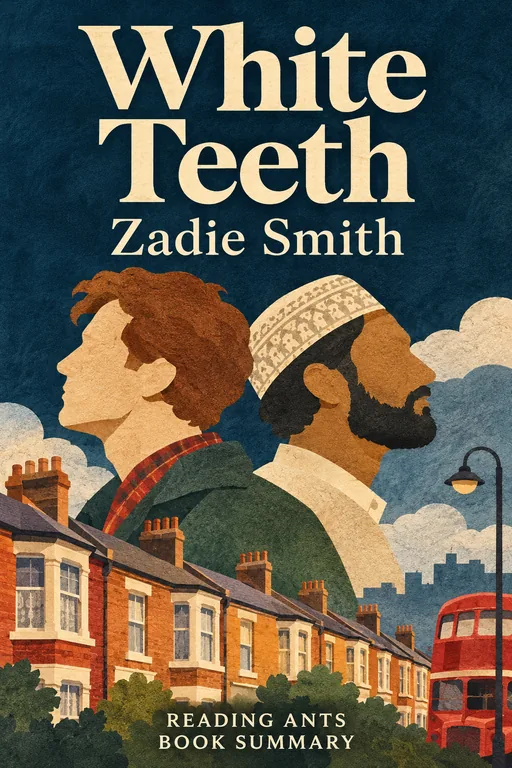
White Teeth
Zadie Smith
Two wartime friends, the Englishman Archie Jones and the Bangladeshi Samad Iqbal, and their families live and clash in multicultural North London over several decades, in a comic novel about identity, roots and chance.
✨ Modern Fiction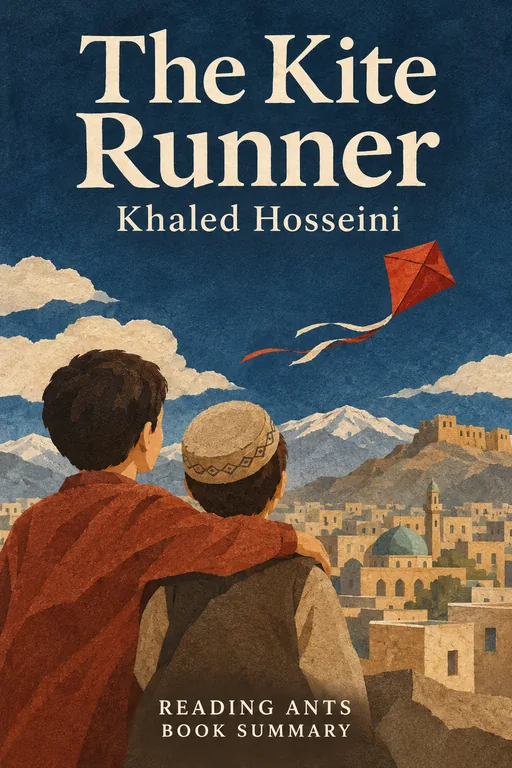
The Kite Runner
Khaled Hosseini
A wealthy boy in Kabul betrays his loyal best friend on the day of a kite tournament, and decades later, after fleeing to America, he returns to a Taliban-ruled Afghanistan to try to make things right.
✨ Modern Fiction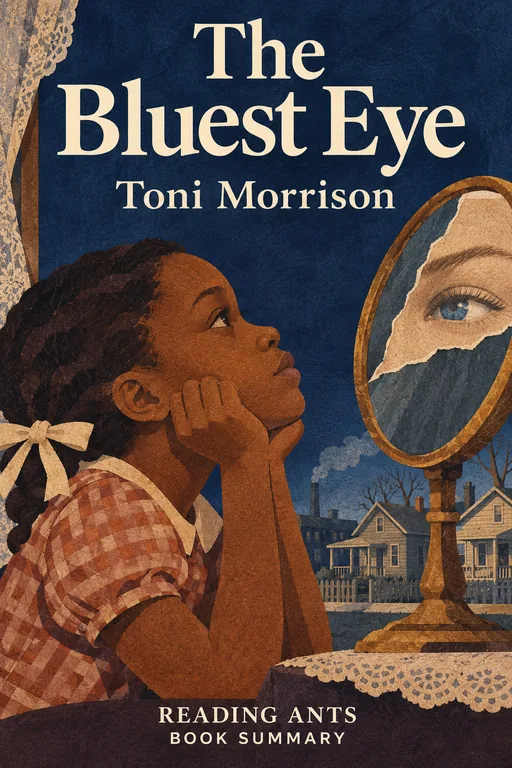
The Bluest Eye
Toni Morrison
In 1940s Ohio, a poor Black girl named Pecola Breedlove, who believes that she is ugly, prays for blue eyes, and the community's failure to protect her leads to tragedy.
✨ Modern FictionWant something different?
Pick another topic and we will show you three books to start with.