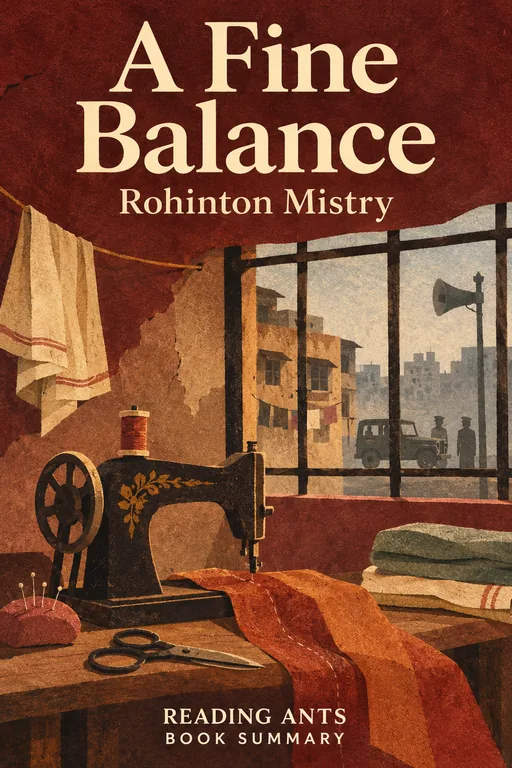
A Fine Balance
Four people from different backgrounds share a small apartment in India during the Emergency of 1975, and their friendship is tested by poverty, politics and cruelty.
Overview
A Fine Balance is a novel by the Indian-Canadian writer Rohinton Mistry, published in 1995. It is set in an unnamed Indian city, in the 1970s, in the period when Prime Minister Indira Gandhi declared a state of emergency and suspended many civil rights. The story follows four people who live together: a widow, two tailors and a student. The title refers to the fine balance between hope and despair, and the book is both a tragedy and a celebration of human endurance. It contains scenes of extreme cruelty, and is for mature readers.
Main Characters
- Dina Dalal: a proud, independent Parsi widow, who works as a seamstress.
- Ishvar Darji: a tailor from a low caste, kind and optimistic.
- Omprakash Darji: Ishvar’s nephew, a young man who is also a tailor.
- Maneck Kohlah: a student from a hill town, who rents a room in Dina’s flat.
- The beggarmaster: a powerful man who controls the beggars of the city.
- Dina’s brother, Nusswan: a conventional man who wants to control her life.
Full Summary
Dina’s Struggle
Dina Dalal is a young widow, who lost her husband after only a few years of marriage. She refuses to be controlled by her brother, Nusswan, who wants her to marry again. Instead, she tries to earn her own living by sewing, and she lives in a small flat. When her eyesight begins to fail, she needs help, and she takes in two tailors, Ishvar and Omprakash.
The Tailors’ Past
Ishvar and Om, an uncle and his nephew, come from a village family of leatherworkers, of the Chamar caste, who are considered untouchable. Ishvar’s father had sent his sons, Ishvar and Narayan, to learn tailoring, so that they could escape. Narayan was Om’s father. The family’s hope was shattered when a landowner’s men murdered most of them, because Narayan had dared to vote.
Ishvar and Om survive because they were away from the village, and Ishvar takes responsibility for training his nephew as a tailor. They travel to the city, where they hope to find work. Dina, after a bumpy start, takes them on to sew for an export company.
Sharing a Home
The first weeks are tense. Dina is proud and suspicious, and she watches the tailors closely, afraid that they will cheat her. Ishvar and Om, who have had to survive on very little, work hard and keep their heads down. Slowly, over shared tea and the long evenings of sewing, the wall between employer and workers begins to come down.
Maneck
Maneck Kohlah, a college student from a hill town, is Dina’s paying guest. He has come to the city to study refrigeration, but is homesick. He is a gentle, thoughtful young man, who feels the weight of his parents’ hopes.
At first Dina is cold to her lodgers, but gradually, the four become something like a family. They share meals, tell stories and support each other through hard times.
The Emergency
The government’s Emergency brings disaster for the poor. The city’s slums are demolished, and the people are driven out. The tailors lose their shelter and are swept up by the authorities, and at one point they are taken to a labor camp. They are also caught in a government campaign of forced sterilization, which is meant to control the population.
Ishvar is forced to undergo the sterilization operation, which is botched, and his legs later become infected and have to be amputated. Om is castrated, at the instigation of the same landowner, Thakur Dharamsi, whose cruelty has followed them to the city. The two end up as street beggars.
Loss
Dina, who has been evicted from her flat by her landlord, is forced to go back to her brother’s house, where she lives as a servant. Maneck, who has left the city for Dubai, becomes lonely and depressed. When he returns years later, after his father’s death, he learns what has happened to his friends and finds that the world has changed.
Overwhelmed by despair, Maneck takes his own life, in a scene of great sadness.
The Fine Balance
In the closing pages, Dina meets Ishvar and Om again at her brother’s flat, where she lives, and they are still poor and struggling. Though they are broken, they keep their humor and their friendship. The idea of the title, that one must hold hope and despair together, in a fine balance, in order to survive, runs through the ending.
The book ends with this note of tentative endurance, and the sense that ordinary people can bear terrible things.
Why It Matters
A Fine Balance was a major literary success. It was shortlisted for the Booker Prize, and it won the Giller Prize in Canada and the Commonwealth Writers’ Prize. In 2001 it was chosen as a book club pick by a US television host, which gave it a wide audience. It is widely read as an unflinching picture of life in modern India, especially of the poor, and of caste and political abuse. It has been compared to the novels of Dickens in its mix of comedy and tragedy, and its sympathy for the weak.
Key Takeaways
- The poor bear the cost of politics. The Emergency hurts those least able to protect themselves.
- Friendship is strength. The four characters help each other survive.
- Caste is a deep wound. Prejudice shapes the tailors’ lives.
- Hope and despair coexist. The fine balance is part of life.
- Dignity persists. Even in misery, the characters keep their humanity.
What We Can Learn
The book makes us aware of how political decisions can affect the most vulnerable people, and of how important it is to protect basic rights. It also shows the value of friendship and solidarity, especially in hard times.
It invites us to look at those who are poor or homeless with understanding, and to recognize their stories. Finally, it teaches that, even in the face of great suffering, humor and kindness can help people to go on. It is also a reminder to look at our own country’s history, and to ask which groups have been left out, and how we can make sure that their rights are respected in the future.
Criticism and Counterpoints
Some readers find the book too bleak, and say that the series of disasters feels unrealistic and manipulative. The portrayal of the poor can seem sentimental, and some characters are drawn with broad strokes. Others say that the humor sits uncomfortably with the cruelty. The book is also long, and its pace can be slow. Still, many see it as a masterpiece, and defenders say that the long chain of misfortunes is true to what many poor families really experienced, and that the humor is exactly what makes the suffering bearable on the page.
Who Should Read It
This book is for mature readers who like long, immersive novels about history and society. It is not for those who are sensitive to violence, abuse and suicide. Readers who enjoyed Dickens or The God of Small Things may find it deeply moving.
Want the whole book?
A summary is a taste, not the meal. Here is where to find the full book.
You reached the end 🎉
Nicely done. Mark this one as read, and we will suggest what to read next.
Read this next
The God of Small Things
Arundhati Roy
In Kerala, India, a pair of twins grows up in a divided family where a forbidden love across caste lines leads to a tragedy that haunts them for the rest of their lives.
✨ Modern Fiction
The White Tiger
Aravind Adiga
Balram Halwai, the son of a poor rickshaw puller, escapes his fate as a servant by murdering his master and becoming a successful entrepreneur, and tells his story in one long letter, written over seven nights, to the Chinese premier.
✨ Modern Fiction
Midnight's Children
Salman Rushdie
Born at the exact moment India became independent, a boy named Saleem Sinai discovers that his life is mysteriously linked to the nation's history, and tells his story as a wild mix of family saga, politics and magic.
✨ Modern Fiction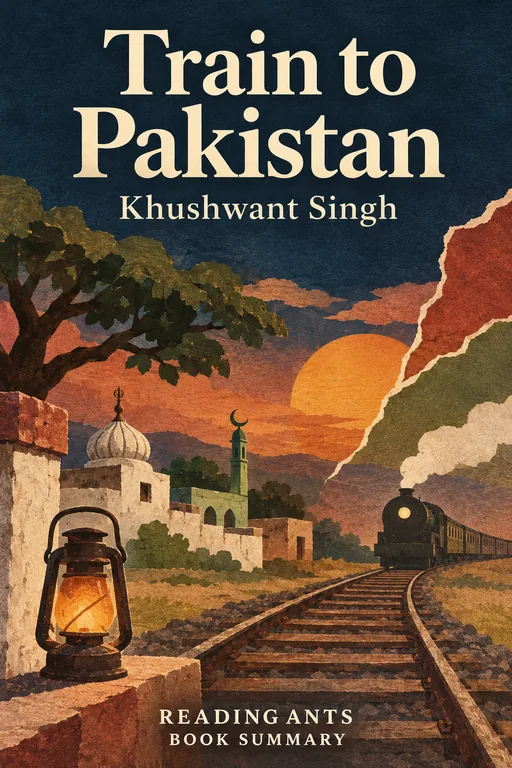
Train to Pakistan
Khushwant Singh
In a small border village in the summer of 1947, as India is divided, neighbors who have lived in peace for generations are pushed toward violence, and one man makes a choice that decides the fate of a train.
🌍 World Literature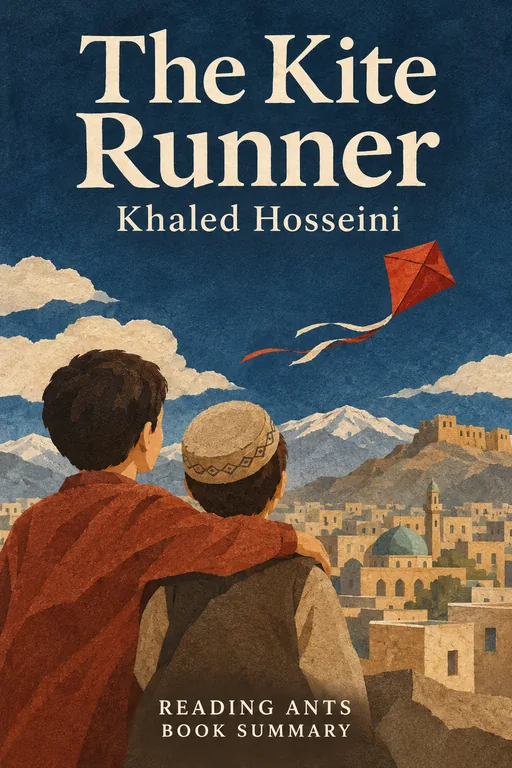
The Kite Runner
Khaled Hosseini
A wealthy boy in Kabul betrays his loyal best friend on the day of a kite tournament, and decades later, after fleeing to America, he returns to a Taliban-ruled Afghanistan to try to make things right.
✨ Modern Fiction
The Little Prince
Antoine de Saint-Exupery
A pilot stranded in the desert meets a small boy from a tiny planet, who teaches him that the most important things in life, like love and friendship, can only be seen with the heart.
🌍 World LiteratureWant something different?
Pick another topic and we will show you three books to start with.