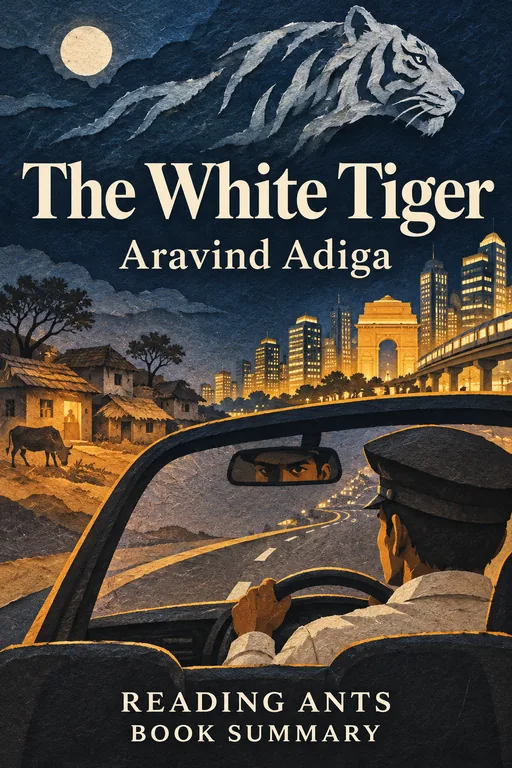
The White Tiger
Balram Halwai, the son of a poor rickshaw puller, escapes his fate as a servant by murdering his master and becoming a successful entrepreneur, and tells his story in one long letter, written over seven nights, to the Chinese premier.
Overview
The White Tiger is a debut novel by Aravind Adiga, published in 2008, which won the Man Booker Prize. It is written as a long letter, composed over seven nights, by Balram, who is now a businessman in Bangalore, to Wen Jiabao, the premier of China, who is expected to visit India. Balram, who sees himself as a “white tiger,” a rare creature that appears once in a generation, explains his rise from a poor village to the world of Indian business. The novel is a dark comedy that exposes corruption, caste and class in modern India, and shows the harsh divide between the “Light” of India’s cities and the “Darkness” of its villages.
Main Characters
- Balram Halwai: the narrator, an intelligent, ambitious, ruthless young man.
- Ashok: his master, a Western-educated son of a landlord.
- Pinky Madam: Ashok’s American-raised wife, who is unhappy in India.
- The Stork and the Mongoose: the Stork is Ashok’s father, the landlord who rules the village, and the Mongoose is Ashok’s brother Mukesh; both are corrupt men.
- Kishan: Balram’s brother.
- Kusum (Granny): his tough grandmother, who controls the family.
- The other drivers: fellow chauffeurs among whom Balram works.
Full Summary
The Letter
Balram begins his story, addressing the Chinese premier with irony, saying that China and India are the countries of the future, and that he, an entrepreneur, will tell the truth about his country. He speaks from Bangalore, where he runs a taxi company. He says that India is divided into two nations, the Light and the Darkness, and that he comes from the Darkness. His voice is humorous, bitter and unrepentant.
The Darkness
Balram grows up in a small village in Bihar, in a poor family, and is nicknamed the “white tiger” by a school inspector because of his intelligence. But he is pulled out of school to work in a tea shop, because the family needs money. He watches as the village landlords, whom he calls the Buffalo, the Raven, the Stork and the Wild Boar, exploit the people. He learns that the poor are kept in a “rooster coop,” unable to escape, because they fear for their families.
Balram’s father dies of tuberculosis in a charity hospital where doctors are absent, a death that Balram says is the result of the system, and which marks him. His grandmother, Kusum, arranges his work, and he sends his wages home, but he dreams of something greater.
The Driver
Balram learns to drive and gets a job as a chauffeur for the Stork’s son, Ashok, who has returned from America with his wife, Pinky Madam. They move to Delhi, where Balram sees the city’s wealth and corruption, and learns that his master pays bribes to politicians. He is treated as a servant, and is expected to take blame for others. He is tormented by the contrast between his employer’s soft heart and his unjust system.
Balram also learns how to be a good servant: massaging his master’s feet, laughing at his jokes and keeping silent. He observes that servants live in a trap that is also moral, since they cooperate in their own humiliation, and he begins to hate and plot even as he smiles.
The Accident
One night, Pinky Madam, who is drunk, takes the wheel and hits something on the road, and it is implied that she has killed a child. The family pressures Balram to sign a confession to take the blame, as a servant would. He is saved when the family decides that it is not necessary, but he sees that his master and his wife would sacrifice him without a thought. He becomes increasingly resentful and begins to think of how to break out.
The Murder
Balram decides that the only way to escape the coop is to kill his master and take his money. He studies how to do it, and one night, he murders Ashok with a broken bottle and takes a bag of cash that is meant as a bribe. He knows that his family in the village is likely to be punished for it, but he accepts that. He flees to Bangalore.
The Entrepreneur
In Bangalore, Balram uses the money to buy his own taxi business, and bribes the police to protect it. He becomes a wealthy man and takes on a new name, Ashok Sharma. He justifies his act by saying that a man must break the rules to become free, and that his success is the result of his courage. He says that he is haunted, but also proud, and that he will tell the premier the truth about the new India, a country of corruption and opportunity.
Why It Matters
The White Tiger is one of the best-known novels about modern India, and its Booker Prize drew great attention. A 2021 film adaptation by Netflix brought it to a global audience. It is a bitter satire of the idea that India’s economic boom benefits everyone, and it draws attention to the inequalities that are hidden by success.
The novel is often read alongside works such as Ralph Ellison’s Invisible Man, as a story of a person who is invisible to the powerful. Its unreliable narrator makes readers question what they are told.
Key Takeaways
- Inequality can trap people. The “coop” keeps the poor in place.
- Corruption is part of the system. Bribes govern daily life.
- Ambition can corrupt. Balram’s rise requires a crime.
- Servitude can warp loyalty. Servants are expected to take the blame.
- Success has a price. Balram is haunted by what he did.
What We Can Learn
The novel invites us to see the unfairness of systems that give some people everything and others nothing, and to consider how hard it is for the poor to escape. It encourages us to look at who benefits from “progress.”
It also shows how a lack of opportunities can lead to desperate choices, without excusing them, and how a society that treats people as disposable breeds resentment.
Finally, it asks us to be cautious about stories of success, and to consider who paid the price.
Criticism and Counterpoints
Some critics find the novel too cynical, and its portrait of India as relentlessly corrupt exaggerated, and have accused it of catering to Western views. Others say that Balram’s voice is not always consistent for a man of his education, and that the plot depends on a murder that the book never fully condemns.
A few readers also object to the way that women are portrayed as minor characters. Others note that the narration mixes satire and sentiment unevenly. Still, many readers find it gripping.
Who Should Read It
This book is for mature readers. It contains violence and a murder, strong language and a bleak view of society. It is a short, fast read, suited to those who like dark comedy.
Want the whole book?
A summary is a taste, not the meal. Here is where to find the full book.
You reached the end 🎉
Nicely done. Mark this one as read, and we will suggest what to read next.
Read this next
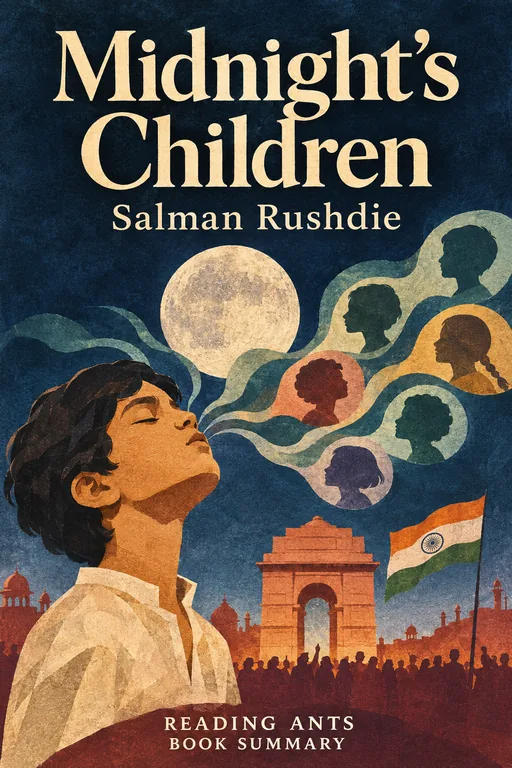
Midnight's Children
Salman Rushdie
Born at the exact moment India became independent, a boy named Saleem Sinai discovers that his life is mysteriously linked to the nation's history, and tells his story as a wild mix of family saga, politics and magic.
✨ Modern Fiction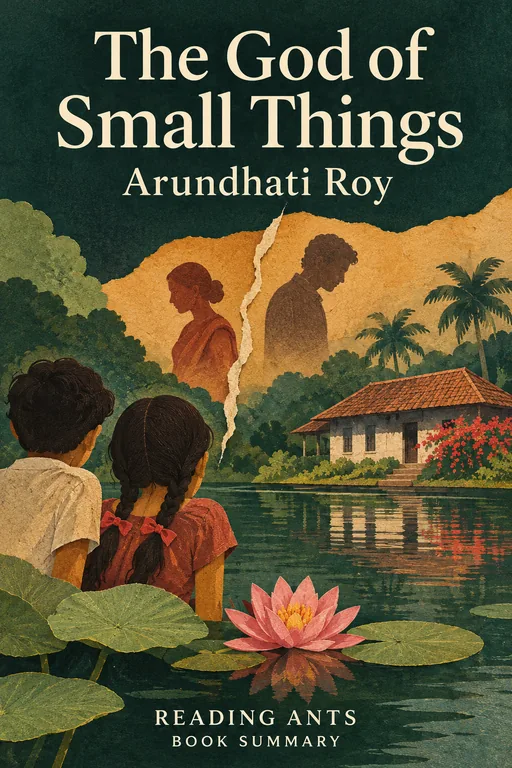
The God of Small Things
Arundhati Roy
In Kerala, India, a pair of twins grows up in a divided family where a forbidden love across caste lines leads to a tragedy that haunts them for the rest of their lives.
✨ Modern Fiction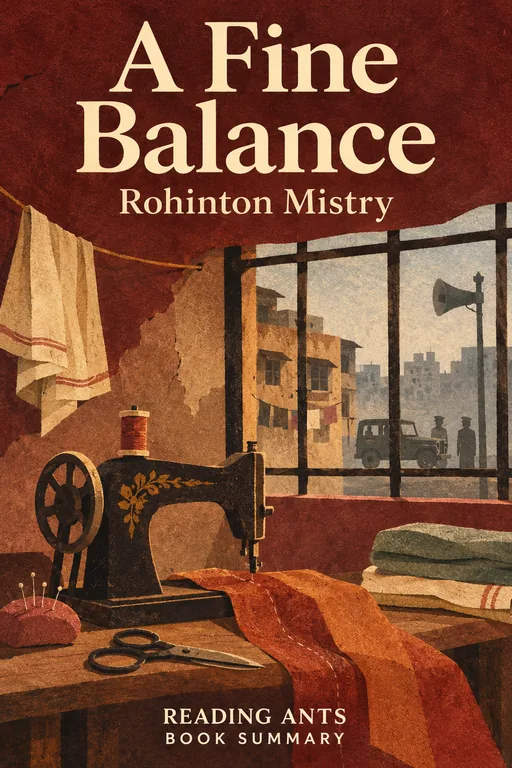
A Fine Balance
Rohinton Mistry
Four people from different backgrounds share a small apartment in India during the Emergency of 1975, and their friendship is tested by poverty, politics and cruelty.
🌍 World Literature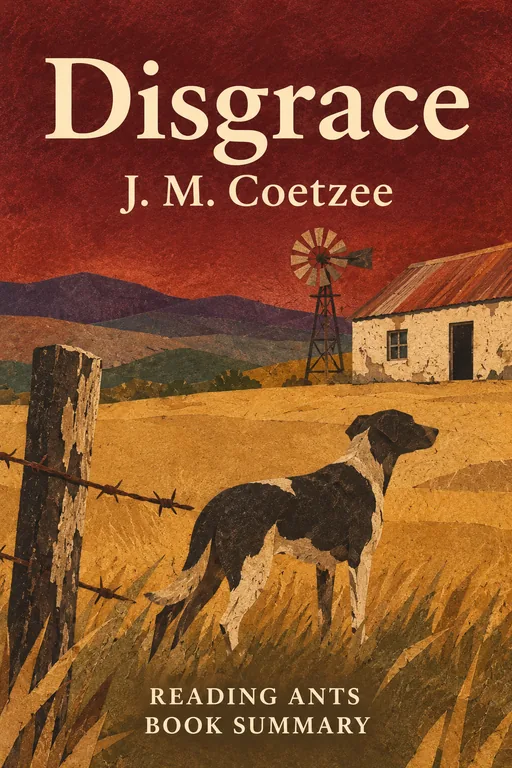
Disgrace
J. M. Coetzee
A South African professor loses his job after an affair with a student, retreats to his daughter's farm in the Eastern Cape, and is forced to confront humiliation, violence and a changed country.
✨ Modern Fiction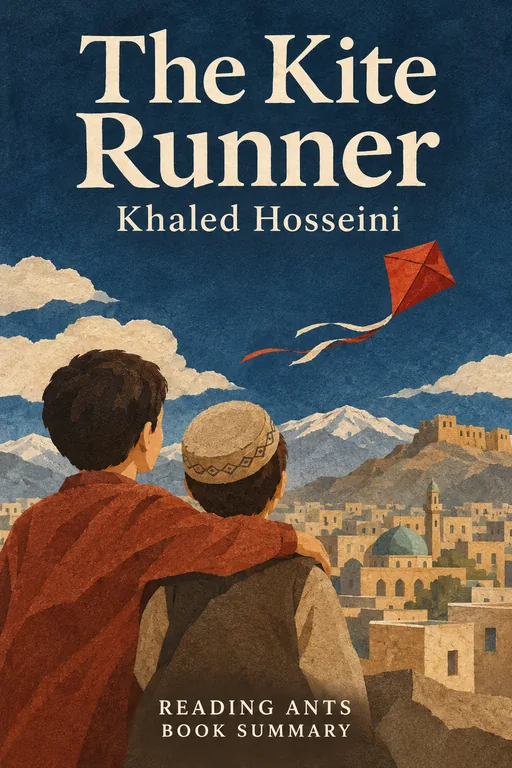
The Kite Runner
Khaled Hosseini
A wealthy boy in Kabul betrays his loyal best friend on the day of a kite tournament, and decades later, after fleeing to America, he returns to a Taliban-ruled Afghanistan to try to make things right.
✨ Modern Fiction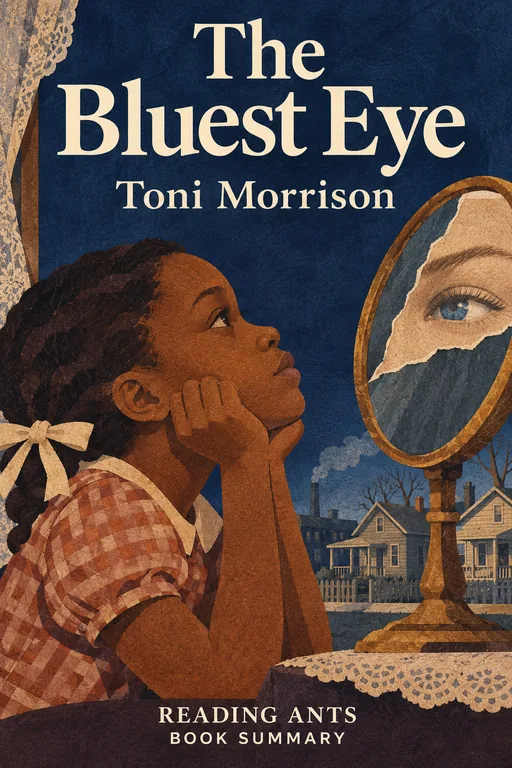
The Bluest Eye
Toni Morrison
In 1940s Ohio, a poor Black girl named Pecola Breedlove, who believes that she is ugly, prays for blue eyes, and the community's failure to protect her leads to tragedy.
✨ Modern FictionWant something different?
Pick another topic and we will show you three books to start with.