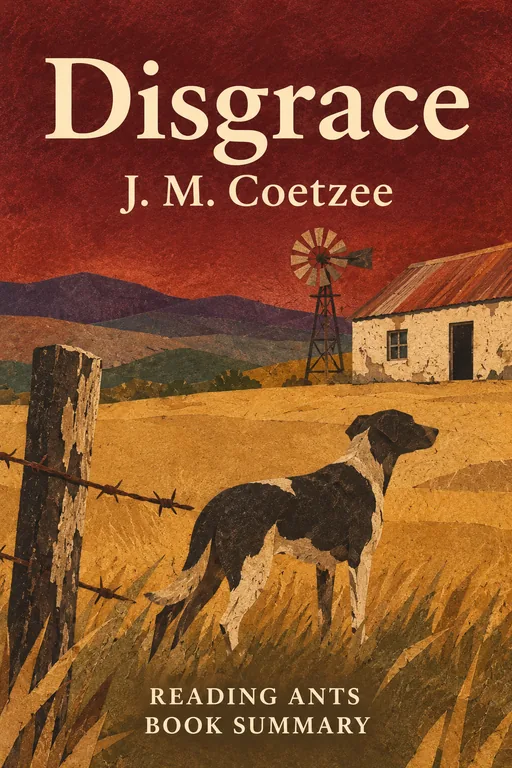
Disgrace
A South African professor loses his job after an affair with a student, retreats to his daughter's farm in the Eastern Cape, and is forced to confront humiliation, violence and a changed country.
Overview
Disgrace is a novel by the South African writer J. M. Coetzee, published in 1999, and it won the Booker Prize, making him the first author to win it twice. Coetzee received the Nobel Prize in Literature in 2003. The story is set in South Africa a few years after the end of apartheid, and follows David Lurie, a fifty-two-year-old professor of communications at a university in Cape Town. It is written in the present tense, in a spare, controlled style. The novel examines power, shame, desire and justice in a society where old hierarchies have been overturned, and it offers few easy answers.
Main Characters
- David Lurie: a twice-divorced professor who is proud, self-absorbed and cut off from his feelings.
- Lucy Lurie: his daughter, who lives alone on a small farm in the Eastern Cape.
- Melanie Isaacs: a young student with whom David has an affair.
- Petrus: Lucy’s neighbor and helper, a Black man who is gaining land and influence.
- Bev Shaw: an animal welfare worker who runs a clinic.
- Soraya: a prostitute with whom David has a regular arrangement at the beginning.
Full Summary
The Affair
David Lurie, a professor of Romantic poetry, has seen his career decline as the university restructures its programs. He satisfies his desires with a prostitute, Soraya, until, after he sees her in public and intrudes on her private life, she ends the arrangement. He then pursues Melanie Isaacs, one of his students, and takes advantage of his position. The relationship is coercive and unequal, and Melanie, who is confused and unwilling, withdraws. When she files a complaint, David is brought before a committee.
The Hearing
At the hearing, David pleads guilty, but refuses to apologize or to show repentance, since he believes that his desire was natural and that the inquiry is a show. The committee asks him to make a public apology, which he rejects, preferring to lose his post rather than repent. He insists on being punished, but not on the terms offered. His pride and his belief in his right to desire are his downfall.
Those around him urge him to say something, but he declines to use the language of regret that the committee wants. He tells the committee that he pleads guilty, but that he will not discuss his inner state. The scene shows his stubborn belief that he is being asked to perform a ritual, not to understand.
The Farm
David goes to Lucy’s farm in the Eastern Cape, where she grows flowers and vegetables and sells them at a market, and runs a kennel. She lives alone, apart from a neighbor, Petrus, who is expanding his own land. David, who feels out of place, helps at Bev Shaw’s animal clinic, where he helps to put down unwanted dogs. At first, he is repelled by the work, but he comes to feel a kind of tenderness for the animals.
The Attack
One afternoon, three men appear on the farm. They lock David in the bathroom, set him on fire with spirit and rape Lucy, and then steal from the house and shoot the dogs. David survives with burns, and Lucy is pregnant as a result of the rape. David wants her to go to the police and to leave, but she refuses, saying that what happened to her is a private matter, and that she will stay. He cannot understand her.
Lucy’s Choice
Lucy decides to keep the child, and to remain on the farm. David discovers that one of the attackers, a youth, is a relative of Petrus and is living under his protection. Lucy also considers accepting Petrus’s offer of protection, which would mean giving up her land and becoming a dependent in his household. David is appalled, and thinks that she is giving in. Lucy, however, sees it as a price of living in a new South Africa, where the old relationships of power have shifted, and where she must be humble. David realizes that he sees the situation through his own limited viewpoint.
The Dogs
David is torn by the contrast between his daughter’s resignation and his own refusal to accept humiliation. He returns to Cape Town, finds his house broken into, and visits Melanie’s family, apologizing in an awkward way. He goes back to Bev Shaw’s clinic, where he learns to help put down the dogs with respect. In the final scene, he carries a dog that he has become fond of to be euthanized, and he gives it up. It is a quiet act of acceptance.
Why It Matters
Disgrace is considered one of the finest novels about post-apartheid South Africa, and it caused a great deal of discussion, with some South African leaders criticizing its picture of the new country. It has been widely taught in universities, and was adapted into a 2008 film. It is a prime example of Coetzee’s austere, morally searching style.
The novel’s themes of power, sexual ethics, race and the way that the past returns have remained relevant, particularly in discussions of consent and abuse of authority.
The book is also widely used in discussions of ethics and consent, because it refuses to give its protagonist the sympathy that he asks for, while still making the reader think about what true repentance would be.
Key Takeaways
- Abuse of power has consequences. David’s affair costs him his career.
- Pride can blind us. He refuses to admit wrongdoing.
- Shame can lead to growth. His humiliation changes him.
- History reverses roles. The new South Africa shifts power.
- Care for the vulnerable matters. The dogs show compassion.
What We Can Learn
The novel asks us to look honestly at our own conduct and to take responsibility. David’s refusal to apologize shows how self-justification can keep us from learning.
It also shows how people with less power may have to make hard choices, and invites us to listen to their reasoning, as Lucy’s decision challenges David’s assumptions.
Finally, the story of the dogs suggests that small acts of care, even in a bleak setting, can restore dignity.
It also encourages us to think about what real apology means, and to see that confessing guilt in words is different from changing in practice.
Criticism and Counterpoints
Some critics, including officials in South Africa, found the novel’s depiction of Black men as rapists and its bleak portrayal of the new South Africa offensive. Others argue that its treatment of rape, particularly Lucy’s reaction, is troubling, and that it gives the victim little voice. The central character, David, is often seen as unsympathetic, and some readers cannot bear to stay with him.
Others find that the novel is overly cold, and its style distant. Still, many critics consider it a masterpiece.
Who Should Read It
This book is for mature readers. It contains sexual coercion and a violent rape. It is short but demanding, and is best read with thought and discussion.
It is often taught in university courses on world literature, where it raises strong discussion.
Want the whole book?
A summary is a taste, not the meal. Here is where to find the full book.
You reached the end 🎉
Nicely done. Mark this one as read, and we will suggest what to read next.
Read this next
Cry, the Beloved Country
Alan Paton
A rural Zulu priest travels to Johannesburg to find his lost son and sister, and discovers that his son has murdered a white man, a tragedy that draws two grieving fathers from opposite sides of South Africa's racial divide into an uneasy bond.
📜 Classics
Heart of Darkness
Joseph Conrad
A sailor named Marlow tells his friends of a journey up the Congo River to find a mysterious ivory trader named Kurtz, and of the horror and moral darkness he finds at the end of it.
📜 Classics
The Bluest Eye
Toni Morrison
In 1940s Ohio, a poor Black girl named Pecola Breedlove, who believes that she is ugly, prays for blue eyes, and the community's failure to protect her leads to tragedy.
✨ Modern Fiction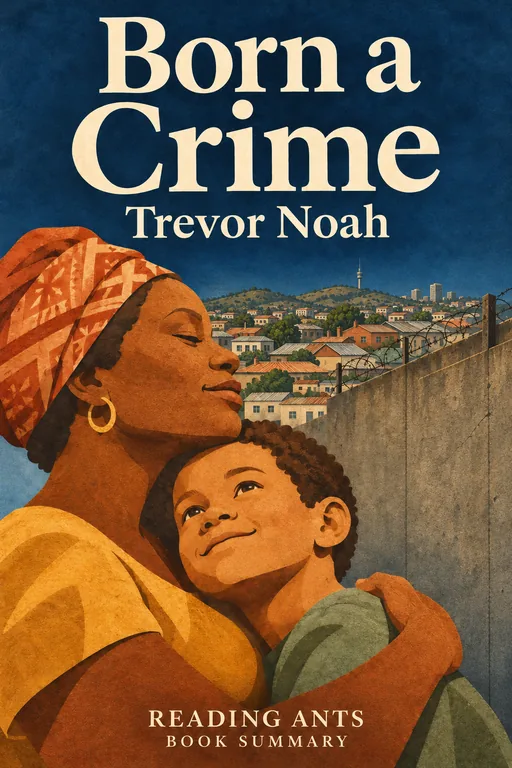
Born a Crime
Trevor Noah
Trevor Noah, the comedian, recounts growing up in South Africa as the child of a Black mother and a white father at a time when their relationship was a crime, and pays tribute to the mother who raised him.
👤 Real Lives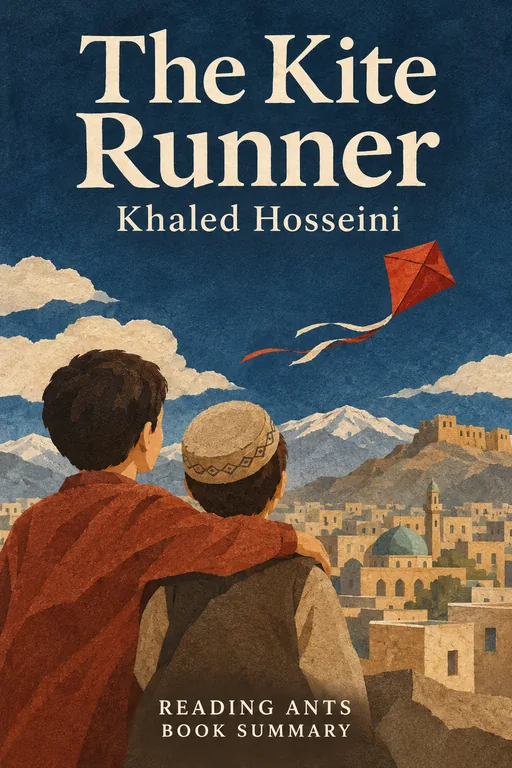
The Kite Runner
Khaled Hosseini
A wealthy boy in Kabul betrays his loyal best friend on the day of a kite tournament, and decades later, after fleeing to America, he returns to a Taliban-ruled Afghanistan to try to make things right.
✨ Modern Fiction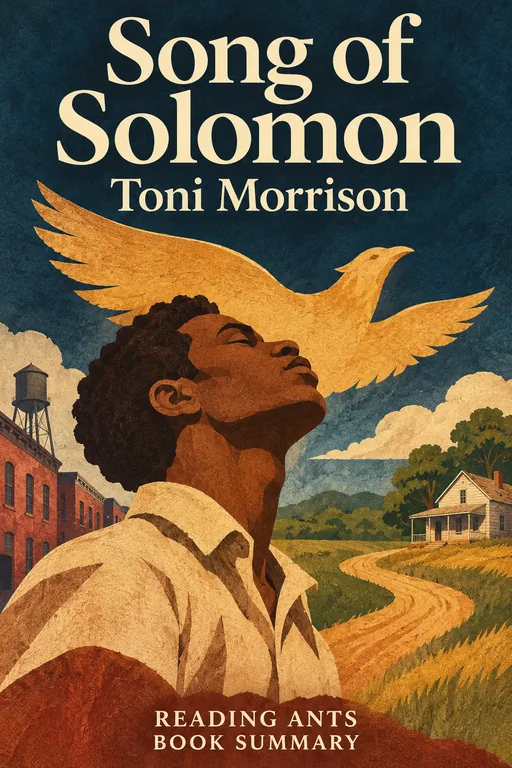
Song of Solomon
Toni Morrison
Macon "Milkman" Dead, a self-absorbed young man from Michigan, goes south in search of a family treasure and finds instead his family's history, and learns to take responsibility and to fly.
✨ Modern FictionWant something different?
Pick another topic and we will show you three books to start with.