 Reading Ants
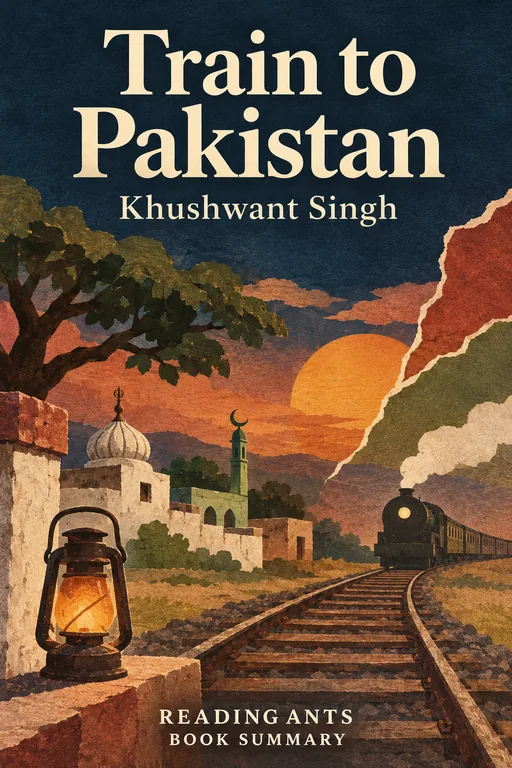
Train to Pakistan
In a small border village in the summer of 1947, as India is divided, neighbors who have lived in peace for generations are pushed toward violence, and one man makes a choice that decides the fate of a train.
Overview
Train to Pakistan is a novel by the Indian writer Khushwant Singh, published in 1956. It is set in the fictional village of Mano Majra, on the border between India and the new state of Pakistan, in the summer of 1947, when British India was partitioned. Hundreds of thousands, by some estimates around a million, died in the violence, and millions were forced to flee. The book looks at these events through the eyes of one small village, whose Sikh and Muslim residents had always lived peacefully. It is a short and powerful book, with scenes of terrible violence, and is meant for mature readers.
Main Characters
- Juggut Singh (Jugga): a big, rough Sikh villager with a police record as a “bad character”, who loves a Muslim girl.
- Nooran: a Muslim girl, the daughter of the village imam, and Jugga’s lover.
- Hukum Chand: the district magistrate, a cynical, worldly official.
- Iqbal: an educated young man from the city, who comes to the village for political work.
- Meet Singh: the village’s Sikh priest.
- Imam Baksh: the Muslim leader, Nooran’s father.
- Lala Ram Lal: the village moneylender.
Full Summary
A Quiet Village
Mano Majra is a small village by a river and a railway bridge. Its Sikh and Muslim residents live in harmony. The trains that pass through give the day its shape, and the villagers set their clocks by them. The war that is dividing the country seems far away.
One night, a robbery and murder take place in the village, when a gang of dacoits kills the moneylender, Lala Ram Lal. The killers are not from the village, but suspicion falls on Juggut Singh, who was out of the house that night (he was secretly meeting Nooran), and on a stranger who has just arrived.
The Outsider
The stranger is Iqbal, a young man from the city, who says that he is a social worker, sent by his political party to try to stop the bloodshed. The police, who are looking for a culprit, arrest him, along with Jugga. The magistrate, Hukum Chand, who has a taste for pleasure, knows that they are probably innocent, but he lets them stay in jail, in case he has a use for them. He also has the real robbers, a Sikh gang led by a man named Malli, quietly let go.
Meanwhile, a train arrives from Pakistan, full of dead bodies, and soldiers make the villagers bring wood and kerosene so that the corpses can be burned. The village, which has been peaceful, is shocked. The Muslims, who have lived there for centuries, are told that they will have to leave, and they are sent to a refugee camp.
The Camp
The Muslims of Mano Majra do not want to leave. They have lived beside their Sikh neighbors for generations, and they have nowhere to go. The night before, Sikh and Muslim villagers weep together, and the Sikhs promise to look after the Muslims’ houses, though they refuse to touch their belongings. In the morning, soldiers arrive in trucks and give the Muslim families only a few minutes to climb in with whatever they can carry. They are taken away, first to a refugee camp, where they are to wait for transport to Pakistan, and there is hardly time for a goodbye. Then the Sikh officer in charge puts Malli and his gang in charge of the abandoned property, and they loot it. A feeling of fear and loss spreads through the whole village, and each family is left to wonder what the future will bring.
Fear and Rumor
The people of Mano Majra are frightened and confused. The flooded river carries the bodies of massacred people past the village, and a second train of the dead is buried by a bulldozer near the station. Then, one night, a group of armed outsiders in uniform comes to the village, led by a boy in his teens, urging the Sikhs to take revenge for the killing of Sikhs in Pakistan. They tell the villagers that a train full of Muslim refugees is due to pass over the bridge the next night, and that they plan to attack it. Malli’s gang volunteers, along with many refugees and some villagers, though Meet Singh protests.
Hukum Chand learns of the plan. At first he is willing to let it happen, but when he realizes that a young Muslim girl, Haseena, whom he has grown attached to, will be on the train, he quietly arranges for Jugga and Iqbal to be released, hoping that one of them will act.
Jugga and Nooran
Jugga is released from jail, and finds that his lover Nooran and her father are gone, taken away with the Muslim refugees, who are to leave for Pakistan by train that night. He is desperate about her fate. Nooran, who has told only his mother, is carrying his child. Late that night, Jugga goes to the temple and asks Bhai Meet Singh to read him a verse from the scripture, and then he leaves without saying what he plans to do.
Iqbal, who has been released too, hears about the plot. He tells himself that standing up to an armed mob would only get him killed for nothing, drinks whisky, and falls asleep. He is a man of ideas, but he does not know what to do in this moment of action.
The Bridge
On the night of the planned ambush, a thick rope is tied high across the first span of the railway bridge to sweep passengers off the roof of the train, and the armed men wait along the track with rifles and spears. A big man, clearly Jugga, climbs onto the bridge and hacks at the rope with a small kirpan so that the train can go through. The leader shoots him, and others fire too, but he keeps slashing until the rope snaps and he falls. The train, crowded with the Muslims of Chundunnugger and Mano Majra, goes through.
The book ends with the train passing over him and moving on to Pakistan.
Why It Matters
Train to Pakistan is one of the first and most important novels about the Partition of India, and it remains a classic. It has been translated into many languages, and it was made into a film in 1998. Khushwant Singh was a well-known journalist, editor and writer, and he published the book only nine years after the events it describes. It is valued for its honest and unsentimental picture of the violence, and for the way it shows how ordinary people were drawn into it. By staying in one village, where Sikhs, Muslims and a single Hindu family had lived side by side, it makes a huge historical tragedy feel close and personal.
Key Takeaways
- Violence spreads like a disease. Fear and rumor turn neighbors into enemies.
- Politics reaches the smallest places. Even a remote village cannot escape.
- Ideas are not enough. Iqbal, the educated man, cannot act, while Jugga, the rough man, does.
- Love can cross lines. Jugga and Nooran’s relationship defies religious borders.
- Individual action matters. One person’s choice can save many lives.
What We Can Learn
The book teaches us how quickly hatred can spread when fear and rumors are allowed to grow. It encourages us to question what we hear, to check the facts and to resist being drawn into hate.
It also shows that courage is not found only in the educated or powerful, and that an ordinary person can make a great sacrifice. Finally, it reminds us of the human cost of political decisions, and of the importance of living together in peace.
Criticism and Counterpoints
Some readers find the book’s characters to be types, and the plot is melodramatic. Others criticize the portrayal of women, who are mostly shown as victims or objects. Some critics say that the book shows the Partition as a failure of ordinary people, rather than an outcome of colonial and political decisions. The violence, and the heavy symbolism of the ending, can be hard to read. Some historians also say that the book focuses on Punjab, and gives a limited view of a Partition that affected Bengal and other regions in different ways.
Who Should Read It
This book is for mature readers who are interested in history and who can handle disturbing scenes. It is short, and it is a good introduction to Partition literature. Those who are sensitive to violence should be careful.
Want the whole book?
A summary is a taste, not the meal. Here is where to find the full book.
You reached the end 🎉
Nicely done. Mark this one as read, and we will suggest what to read next.
Read this next
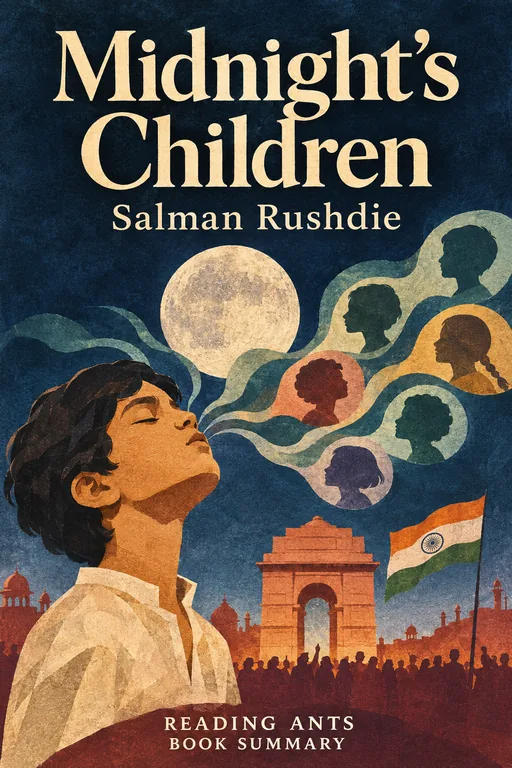
Midnight's Children
Salman Rushdie
Born at the exact moment India became independent, a boy named Saleem Sinai discovers that his life is mysteriously linked to the nation's history, and tells his story as a wild mix of family saga, politics and magic.
✨ Modern Fiction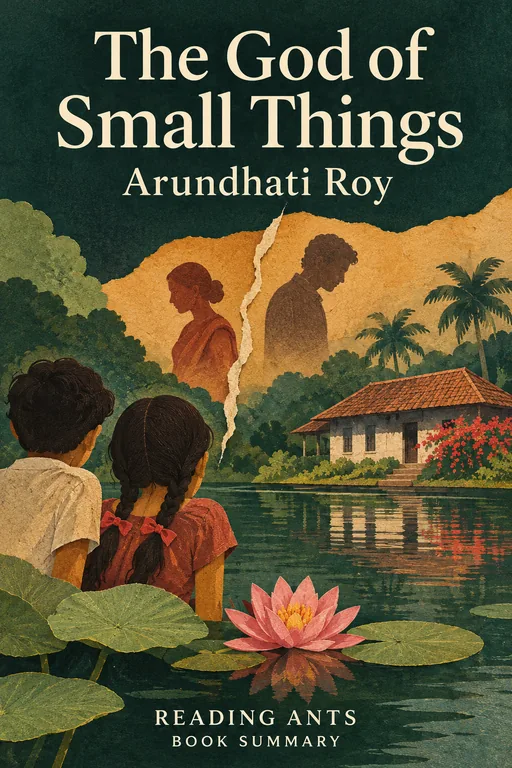
The God of Small Things
Arundhati Roy
In Kerala, India, a pair of twins grows up in a divided family where a forbidden love across caste lines leads to a tragedy that haunts them for the rest of their lives.
✨ Modern Fiction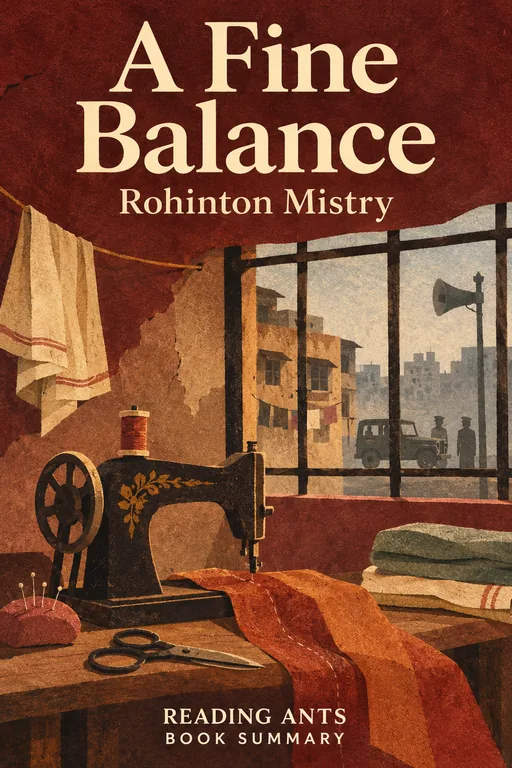
A Fine Balance
Rohinton Mistry
Four people from different backgrounds share a small apartment in India during the Emergency of 1975, and their friendship is tested by poverty, politics and cruelty.
🌍 World Literature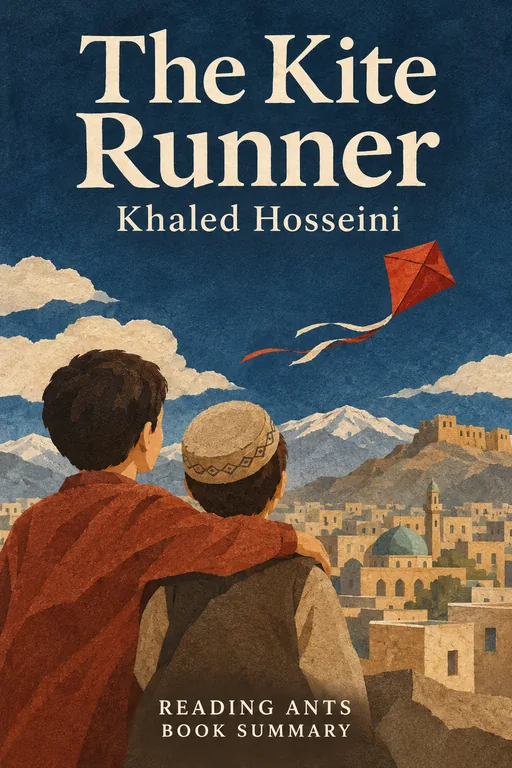
The Kite Runner
Khaled Hosseini
A wealthy boy in Kabul betrays his loyal best friend on the day of a kite tournament, and decades later, after fleeing to America, he returns to a Taliban-ruled Afghanistan to try to make things right.
✨ Modern Fiction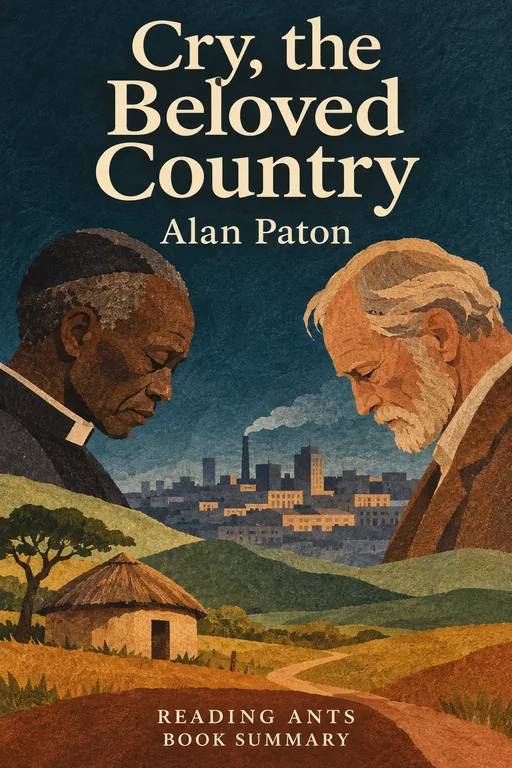
Cry, the Beloved Country
Alan Paton
A rural Zulu priest travels to Johannesburg to find his lost son and sister, and discovers that his son has murdered a white man, a tragedy that draws two grieving fathers from opposite sides of South Africa's racial divide into an uneasy bond.
📜 Classics
The Little Prince
Antoine de Saint-Exupery
A pilot stranded in the desert meets a small boy from a tiny planet, who teaches him that the most important things in life, like love and friendship, can only be seen with the heart.
🌍 World LiteratureWant something different?
Pick another topic and we will show you three books to start with.