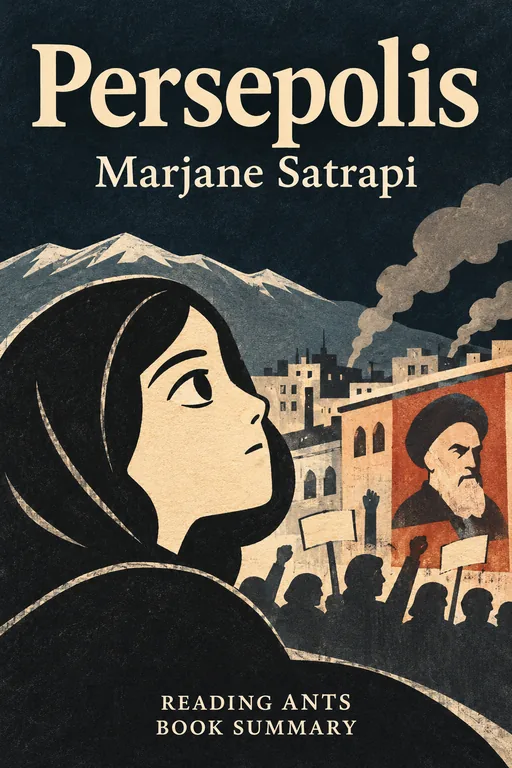
Persepolis
In black-and-white comics, Marjane Satrapi tells of growing up in Iran during the Islamic Revolution and the Iran-Iraq war, then living alone in Europe and returning home, searching for where she belongs.
Overview
Persepolis is an autobiographical graphic novel by Marjane Satrapi, who was born in 1969 in Iran and now lives in France. It was first published in French in four volumes, starting in 2000, and later in English as two books, in 2003 and 2004. The story begins when she is ten years old, just as the Iranian Revolution of 1979 overthrows the Shah and brings a religious government. Told in simple, strong drawings and with humor, it shows how big political events affect a girl and her family. It was made into an animated film in 2007, which she co-directed.
Full Summary
1. A girl in a changing country
The idea: The story opens with ten-year-old Marji and her classmates being forced to wear the veil after the revolution. She grows up in a modern, educated and politically engaged family in Tehran, who had hoped the revolution would bring freedom. Instead, the new regime brings strict rules. Marji is lively and talks about wanting to be a prophet, and her imagination, with imagined talks with God, becomes a way of coping. Her parents and grandmother, who are strong and funny, shape her sense of right and wrong.
In real life: Children often understand more about politics than adults think, and they respond to changes in their own ways.
2. Memory and loss
The idea: Marji learns the story of her family, including her father’s brother, her beloved Uncle Anoush, who had been jailed for political activity under the Shah and who is later arrested again and executed by the new government. Her family’s grief and the ways they remember their dead are shown with a quiet seriousness. She hears about torture and the loss of friends, and she begins to question the government’s claims. Her grandmother’s stories help her understand her family’s courage.
In real life: Stories passed down in families can keep alive the memory of those who were silenced.
3. War and daily life
The idea: When Iraq attacks Iran in 1980, a long and brutal war begins. Marji describes air raids, bomb shelters, shortages and the death of young soldiers, some of them boys lured by promises of martyrdom. Her neighborhood is hit by a missile, and she sees friends and neighbors killed. At the same time, she finds small ways to enjoy life, such as buying forbidden music on the black market and dressing in punk jackets. The book often blends sorrow with humor.
In real life: Even in war, ordinary people find ways to keep a sense of normal life and to rebel in small ways.
4. Vienna
The idea: Worried about their daughter’s safety and her growing outspokenness, Marji’s parents send her at age fourteen to study in Vienna, Austria. She lives in a series of boarding houses and apartments, feels lonely and struggles to find where she belongs. She tries to fit in with friends, experiments with drugs and alcohol, and faces prejudice as an Iranian. After a falling-out and a period of hardship, she lives for a time on the street, then becomes seriously ill and is hospitalized, and returns to Tehran.
In real life: Being far from home as a teenager can be a time of both freedom and deep loneliness.
5. Return and disillusion
The idea: Back in Iran, Marji suffers from depression and a sense of failure, and at one point attempts to take her own life, before slowly recovering. She tries to adjust to a society with strict rules and enforced behavior, especially for women. She goes to art school, where she finds that she must follow rules about what may be painted. She and her friends meet in secret to enjoy music and parties, and face the risk of arrest. She also marries, but the marriage ends in divorce a few years later, and she begins to feel that she can no longer live in her homeland.
In real life: A country that restricts people’s freedom of expression can drive its most creative citizens to leave.
6. Leaving again
The idea: In the end, Marji decides to leave Iran for good. Her family supports her choice, and her grandmother gives her a final piece of advice about being true to herself. The farewell at the airport is sad, and Marji ends with the knowledge that she must make a new life elsewhere, while carrying her country in her heart. The book closes with a sense of loss and of freedom.
In real life: Leaving a homeland can be heartbreaking, even when it is the best choice.
Why It Matters
Persepolis brought the story of modern Iran to a worldwide audience in a way that was personal, funny and moving. It showed that comics can tell serious stories of history and politics, and it became a leading example of the graphic memoir, along with Maus. It has been widely taught in schools and universities.
The book has also been controversial. It has been banned or challenged in some places for its depiction of religion, politics and violence, which has prompted discussion about censorship. Satrapi’s frank, human portrait helped many readers see Iranians as individuals and not as headlines.
Key Takeaways
- Politics enters daily life. A revolution changed a child’s world.
- Humor can survive hardship. Marji’s wit helps her cope.
- Memory preserves truth. Family stories keep the past alive.
- Freedom is precious. Restrictions on expression have costs.
- Identity is complex. She belongs to two worlds and fully to neither one.
What We Can Learn
The book helps us see how large events affect one person’s life. Reading about a girl’s feelings during a revolution and a war makes history feel real and personal.
It also shows the importance of speaking up and being yourself, even when it is dangerous. Marji’s family encouraged her to think for herself, and her grandmother’s advice to stay true to herself is a lesson for anyone.
Finally, it reminds us not to judge people by their government. Iranians, like people everywhere, have varied opinions and hopes, and individual stories help us see that.
Criticism and Counterpoints
Some critics, particularly in Iran, have said that the book gives a one-sided or Western-oriented view of the country and focuses on the experiences of an urban, educated, secular family, which does not represent all Iranians. Others note that the story simplifies complex events and that it may reinforce stereotypes in the minds of some Western readers.
The book has been challenged in schools in some countries for its depiction of violence and for some drawings and themes. Many teachers argue that it is an appropriate and educational read for older students. Its simple, stylized drawings are praised by many, though a few readers find them stark.
Who Should Read It
This book suits teenagers and adults. It contains scenes of torture, war and a few mature themes, but is told in a thoughtful way. It is a good introduction to modern Iran and to the graphic memoir form.
Want the whole book?
A summary is a taste, not the meal. Here is where to find the full book.
You reached the end 🎉
Nicely done. Mark this one as read, and we will suggest what to read next.
Read this next
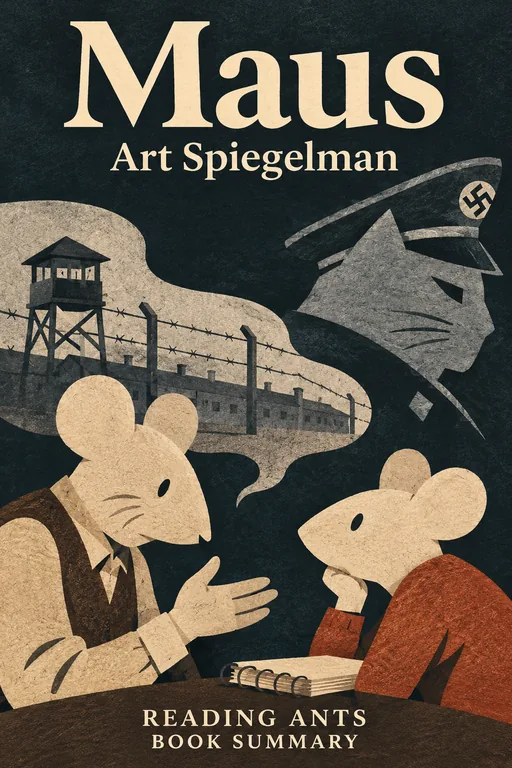
Maus
Art Spiegelman
Art Spiegelman draws his father's story of surviving Auschwitz, with Jews as mice and Nazis as cats, and also shows the difficult relationship between a son and a father marked by the past.
👤 Real Lives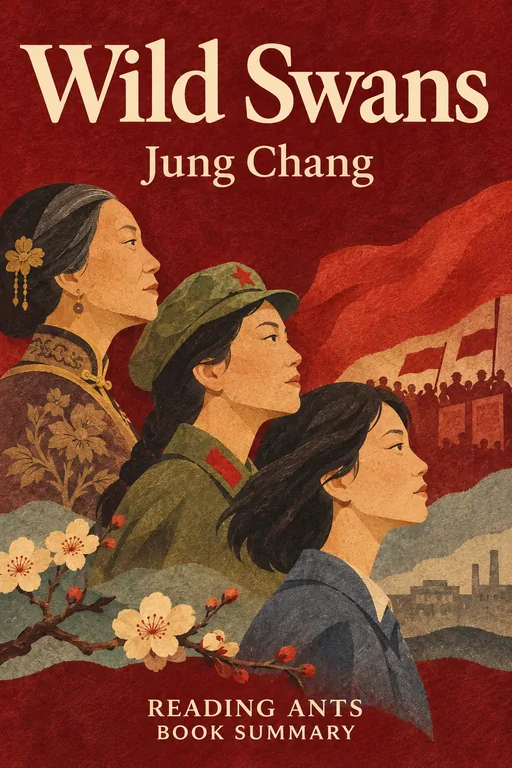
Wild Swans
Jung Chang
Through the lives of her grandmother, her mother and herself, Jung Chang tells the story of China across the twentieth century, from warlords and foot binding to the Communist revolution and the Cultural Revolution.
🏛️ History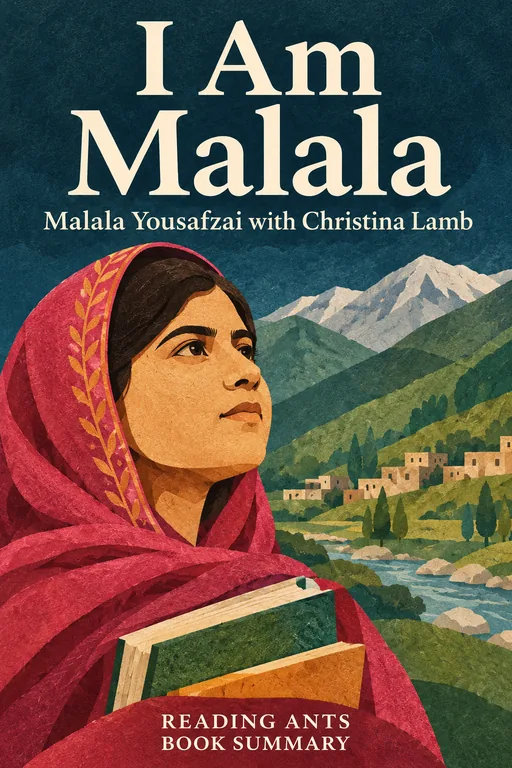
I Am Malala
Malala Yousafzai with Christina Lamb
Malala Yousafzai tells how a girl who loved school stood up for girls' education in Pakistan's Swat Valley, was shot by the Taliban at age fifteen, survived, and became a global voice for children's right to learn.
👤 Real Lives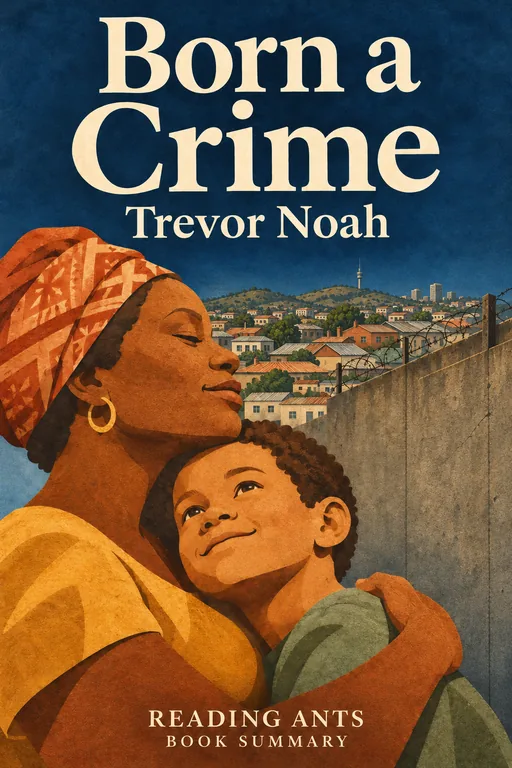
Born a Crime
Trevor Noah
Trevor Noah, the comedian, recounts growing up in South Africa as the child of a Black mother and a white father at a time when their relationship was a crime, and pays tribute to the mother who raised him.
👤 Real Lives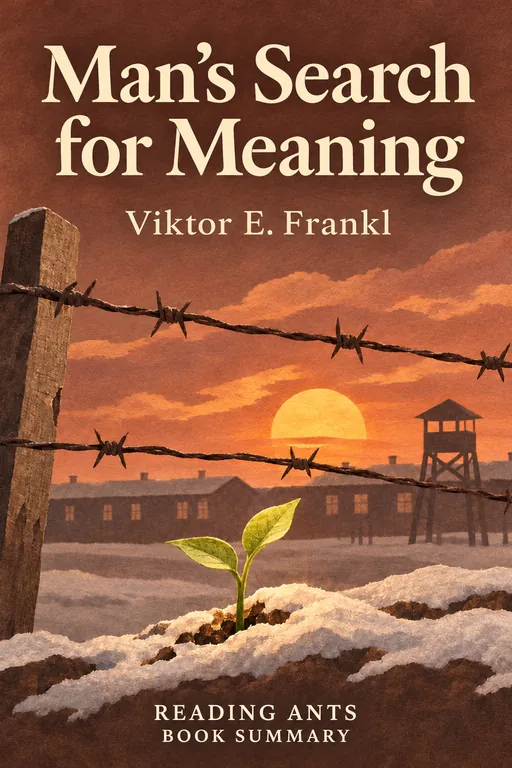
Man's Search for Meaning
Viktor E. Frankl
A psychiatrist who survived the Nazi concentration camps explains that even in the worst suffering, people can choose their attitude, and that finding a reason to live is what gives us the strength to endure.
👤 Real Lives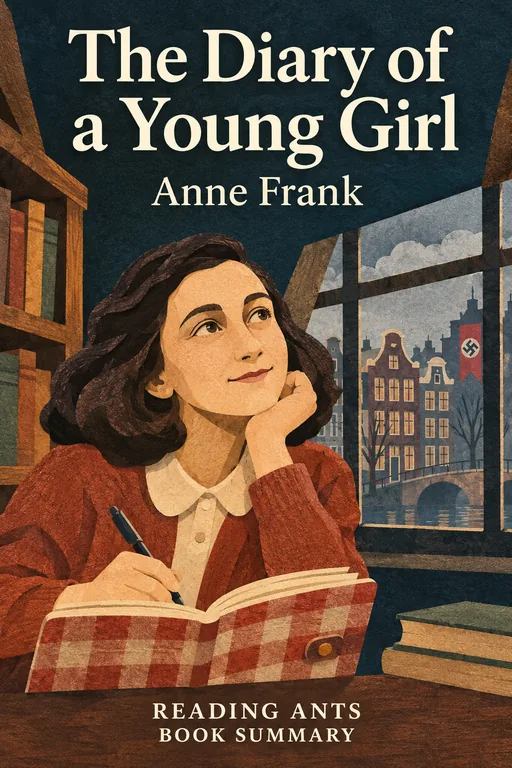
The Diary of a Young Girl
Anne Frank
A Jewish teenage girl hiding from the Nazis in a secret apartment in Amsterdam records two years of fear, family quarrels, first love and big dreams in a diary that became one of the most famous books in the world.
👤 Real LivesWant something different?
Pick another topic and we will show you three books to start with.