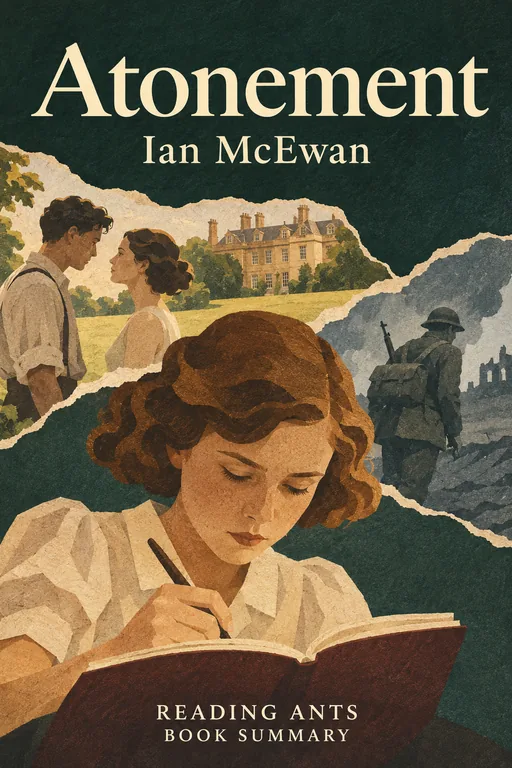
Atonement
A thirteen-year-old girl with a vivid imagination makes a false accusation that destroys a young couple's lives, and spends the rest of her own life trying to make up for it.
Overview
Atonement, by Ian McEwan, was published in 2001 and was shortlisted for the Booker Prize. The novel begins in 1935 on a hot summer day at the Tallis family’s country house in England. Briony Tallis, a thirteen-year-old aspiring writer, witnesses two moments between her older sister, Cecilia, and Robbie Turner, the cleaning woman’s son, that she misunderstands. That evening, a terrible crime takes place, and Briony, convinced she knows who did it, tells a lie that changes everything. The book moves through the Second World War and into the present day, exploring the power of imagination, guilt and storytelling.
Main Characters
- Briony Tallis: a clever, imaginative girl who becomes a writer.
- Cecilia Tallis: Briony’s older sister, a Cambridge graduate.
- Robbie Turner: a bright young man, the son of the family’s cleaning woman, who loves Cecilia.
- Leon Tallis: the siblings’ older brother.
- Paul Marshall: Leon’s wealthy friend, a chocolate manufacturer.
- Lola Quincey: Briony’s fifteen-year-old cousin.
- Jackson and Pierrot Quincey: Lola’s nine-year-old twin brothers.
- Emily Tallis: the girls’ mother, who suffers migraines.
Full Summary
A Summer Afternoon
On the hottest day of the summer in 1935, Briony has written a play to welcome her brother Leon, who is returning home with his friend Paul Marshall. Her cousins, Lola and the twins, are staying with the family while their parents are divorcing, and Briony’s cast refuses to cooperate.
From a window, Briony sees a scene: Cecilia, standing by the fountain, undressing and climbing in to retrieve a piece of a broken vase, while Robbie watches. Briony doesn’t understand what she sees and imagines Robbie behaving in a menacing way. Later, Robbie writes a letter of apology to Cecilia, and by mistake sends the wrong draft, which includes a crude and explicit word for what he wants. He asks Briony to deliver it, and she reads it. She decides that Robbie is a dangerous maniac.
The Library
That evening, Briony stumbles into the library and finds Cecilia and Robbie together in a passionate moment, which she misreads as an attack on her sister. At dinner, the twins run away, leaving a note. During the search through the dark grounds, Briony finds Lola being assaulted by a man, whose face she cannot clearly see. Lola, in shock, doesn’t name him. Briony says she saw Robbie.
The police arrive, and Briony repeats her story to them. Cecilia believes in Robbie’s innocence, but the family doubts him because of the letter. Robbie is arrested and sent to prison. Briony later realizes the truth, but for many years fails to put it right.
Dunkirk
In 1940, Robbie, released from prison on condition that he joins the army, is a soldier in France, retreating with the British army toward the coast at Dunkirk. Wounded and exhausted, he thinks of Cecilia, who has broken with her family and trained as a nurse, and the promise they made to meet when the war is over. The chaos of the retreat, with dead bodies and a bombed school, is vividly described. Robbie arrives at the beach, waiting for evacuation.
The Hospital
Meanwhile, Briony, eighteen, has decided against going to Cambridge and has become a trainee nurse at a London hospital. She tends to wounded soldiers returning from Dunkirk, experiencing the horrors of war, and she tries to make amends. She has written to her family, wanting to retract her story, and she has begun writing a novel based on the events of that summer.
Briony visits Cecilia, who has refused to speak to her family since the trial. Robbie is there on leave. Cecilia and Robbie coldly demand that she write a full statement of the truth, to be sent to the police and her family, and to tell her parents of her mistake.
Coda
In the final section, set in 1999, Briony, now seventy-seven, a famous novelist suffering from a form of dementia, has just finished her last novel, titled Atonement. She reveals the truth about the story we have read. Robbie died of septicemia on the beach at Dunkirk, and Cecilia was killed during the bombing of a London Underground station in 1940. The couple never had the happy reunion that Briony describes in her novel, and she never had the chance to apologize to them in person.
Briony explains that she wrote a happy ending to give her sister and Robbie the life they deserved. She admits that the attacker was Paul Marshall, who later married Lola, his victim, and became a wealthy, respected man. She could not publish the true story while they were alive for fear of lawsuits. She wonders whether a novelist can ever atone for her sins, since she is both God and author, and no one can forgive her.
Why It Matters
Atonement was a major critical and popular success, selling millions of copies and winning the Los Angeles Times Prize for Fiction. It was adapted into a 2007 film directed by Joe Wright, starring Keira Knightley and James McAvoy, which was nominated for seven Academy Awards. A tracking shot of the Dunkirk beach in the film is often cited as one of the great sequences in modern cinema.
The novel is admired for its elegant, intelligent prose and its structure, which combines a country-house story, a war story and a reflection on fiction itself. Its themes of guilt, class prejudice, and the power of a lie are universal, and it raises questions about writing, truth and forgiveness.
Key Takeaways
- Misunderstandings can ruin lives. A child’s misinterpretation leads to years of suffering.
- Class prejudice shapes judgment. Robbie is easily believed to be guilty because of his background.
- Guilt can drive a lifetime. Briony’s remorse shapes her entire life.
- Fiction can offer comfort, but not forgiveness. Briony cannot undo what she did.
- Storytelling has moral power. Writers shape how others see the world.
What We Can Learn
Atonement reminds us to be careful before accusing someone. Imagination and first impressions can mislead us, and the consequences of a false accusation can be devastating.
It also shows how important it is to admit mistakes quickly. Briony waits too long to tell the truth, and by the time she does, it can no longer repair the harm. Apologizing sooner can prevent far worse damage.
Finally, the novel asks us to consider how we tell stories about our own lives, and whether we can be honest about our faults.
Criticism and Counterpoints
Some readers find the opening section slow, with long descriptions of the day at the house. Others dislike the twist at the end, which reveals that the happy ending was invented, and feel it undermines the emotional journey. Defenders argue that the twist is the central point.
The book was also at the center of a controversy when the writer Lucilla Andrews’s memoir was found to have been used by McEwan for details about nursing in wartime. He acknowledged the sources, and many authors defended him. Critics have also noted that Robbie and Cecilia are less developed than Briony, since the story is Briony’s.
Who Should Read It
This novel suits mature teens and adults who enjoy literary fiction, war stories and psychological depth. It deals with sexual assault and war violence. Readers who enjoy a twist that makes them rethink the story will find it unforgettable.
Want the whole book?
A summary is a taste, not the meal. Here is where to find the full book.
You reached the end 🎉
Nicely done. Mark this one as read, and we will suggest what to read next.
Read this next
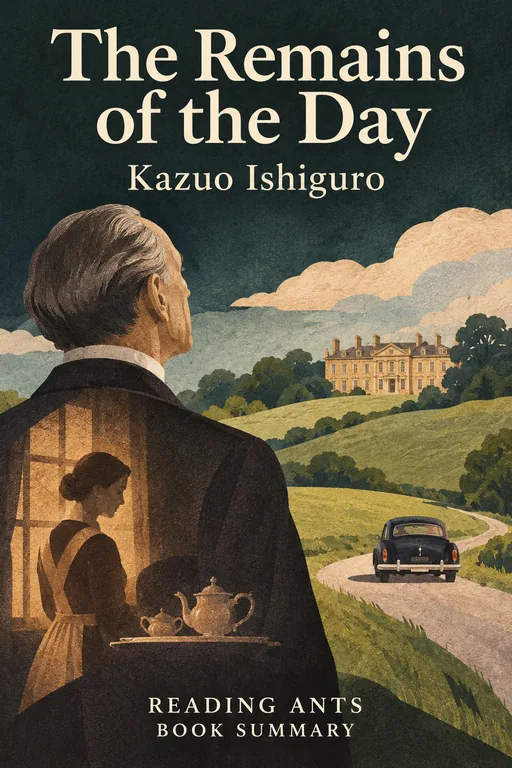
The Remains of the Day
Kazuo Ishiguro
An elderly English butler on a road trip across the countryside looks back on his life of strict duty and gradually realizes how much he gave up, including love, in service of a master who may not have deserved his loyalty.
✨ Modern Fiction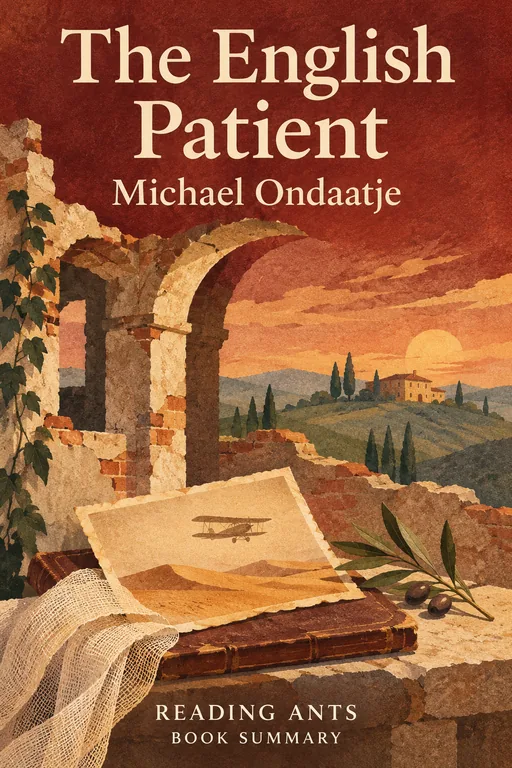
The English Patient
Michael Ondaatje
In a ruined Italian villa at the end of World War II, four wounded people, a burned man who cannot be identified, a young nurse, a thief and a Sikh bomb disposal expert, tell their stories and find a fragile kind of healing.
✨ Modern Fiction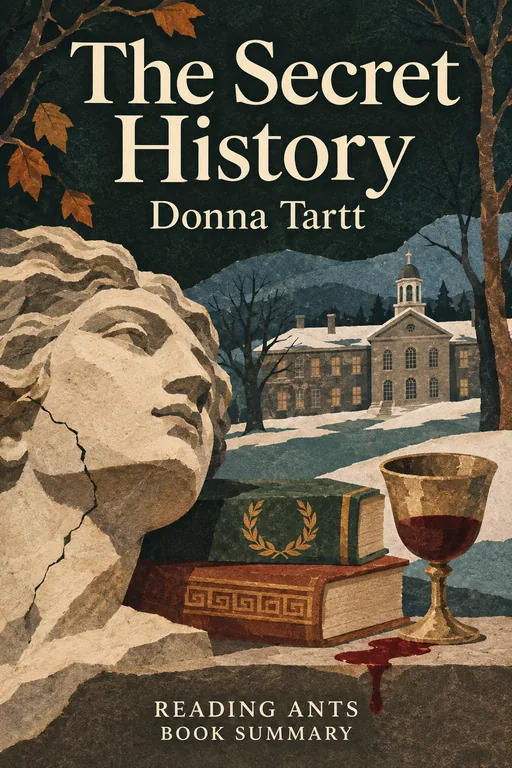
The Secret History
Donna Tartt
A California boy named Richard Papen, who transfers to a Vermont college and joins a small circle of classics students, is drawn into a murder, and the book follows how a group of brilliant friends destroy each other.
✨ Modern Fiction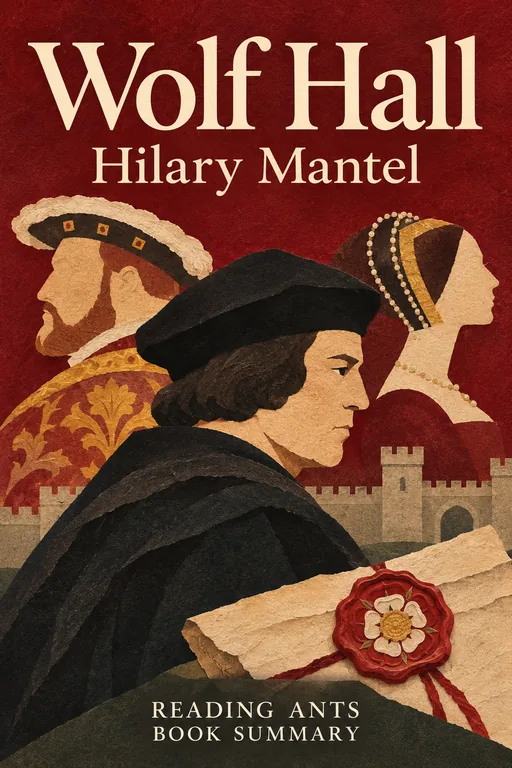
Wolf Hall
Hilary Mantel
Thomas Cromwell, the blacksmith's son who rises through intelligence and nerve to become Henry VIII's chief minister, steers through the court politics of the king's wish for a divorce and a new wife, Anne Boleyn.
✨ Modern Fiction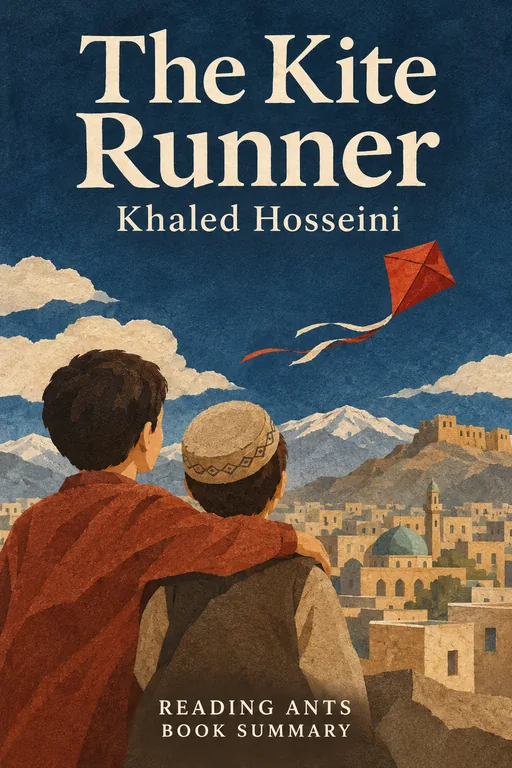
The Kite Runner
Khaled Hosseini
A wealthy boy in Kabul betrays his loyal best friend on the day of a kite tournament, and decades later, after fleeing to America, he returns to a Taliban-ruled Afghanistan to try to make things right.
✨ Modern Fiction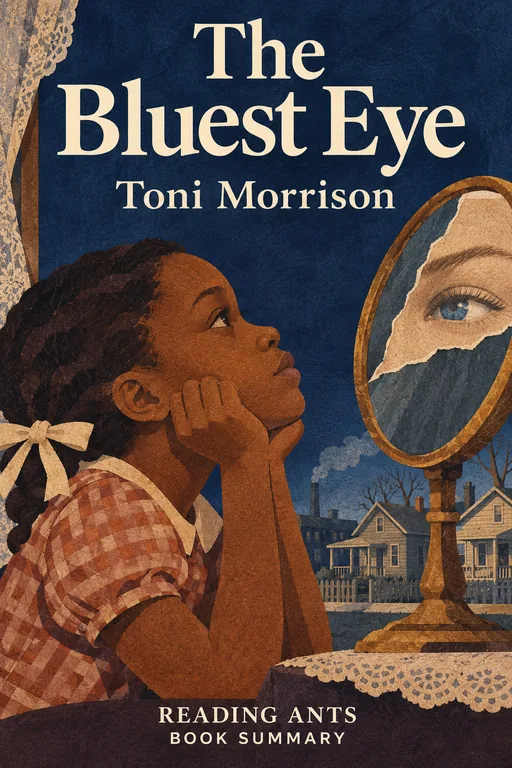
The Bluest Eye
Toni Morrison
In 1940s Ohio, a poor Black girl named Pecola Breedlove, who believes that she is ugly, prays for blue eyes, and the community's failure to protect her leads to tragedy.
✨ Modern FictionWant something different?
Pick another topic and we will show you three books to start with.