 Reading Ants
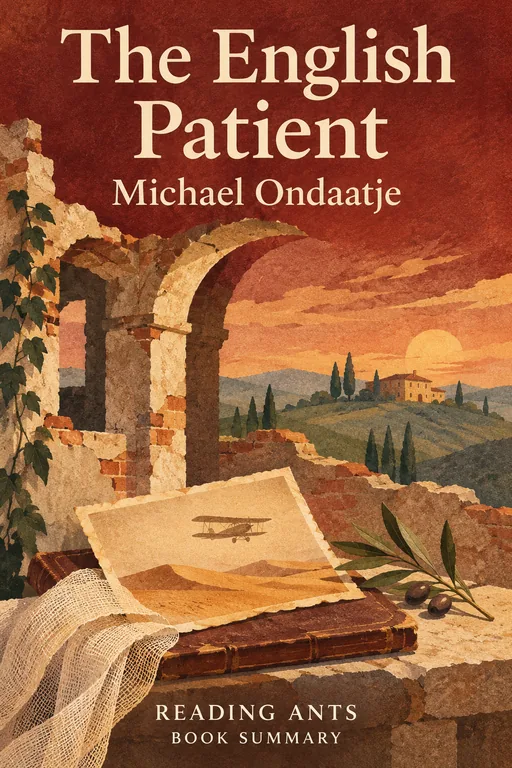
The English Patient
In a ruined Italian villa at the end of World War II, four wounded people, a burned man who cannot be identified, a young nurse, a thief and a Sikh bomb disposal expert, tell their stories and find a fragile kind of healing.
Overview
The English Patient is a novel by the Canadian writer Michael Ondaatje, published in 1992. It won the Booker Prize, and was adapted into a 1996 film that won nine Academy Awards. The book is set in 1945 in a bombed Tuscan villa, Villa San Girolamo, which was a convent and then a hospital. The title character is a badly burned man who is believed to be English but whose identity is unclear. As the other characters care for him, they uncover his past in the desert before the war. The novel moves between times and places, in poetic, fragmentary prose, and is a meditation on love, memory, nations and loss.
Main Characters
- The English patient (Almásy): a man burned beyond recognition, with a remarkable memory for the desert and for a love affair.
- Hana: a young Canadian nurse, exhausted by war, who stays behind to care for him.
- David Caravaggio: a thief and spy, a friend of Hana’s father, who has lost his thumbs under torture.
- Kip (Kirpal Singh): a Sikh sapper in the British army, who defuses bombs.
- Katharine Clifton: a married Englishwoman with whom the patient had an affair.
- Geoffrey Clifton: her husband, a member of a desert expedition.
Full Summary
The Villa
Hana, a Canadian nurse, is exhausted by the war, which has taken the lives of many she cared for, and she refuses to leave when her unit moves on. She stays in an abandoned villa with a burned patient, whom she cares for and reads to. The man, who is badly burned and cannot leave his bed, remembers the desert, and tells stories to Hana. She is drawn into his tales, which she hopes will bring him some peace.
The villa itself is a character: its library has been half destroyed by fire, its rooms are filled with rubble, and Hana plants a garden in its ruined grounds. She plays the piano that is left in a wrecked room, and takes baths by candlelight, finding small pleasures among the damage.
The Thief
Caravaggio, an old friend of Hana’s father who has been tortured and lost his thumbs, arrives at the villa. He suspects that the patient is not who he says he is, and has his own reasons to find out. He is a damaged man, who uses morphine, and he wants to protect Hana. As the novel goes on, he tries to coax the patient to reveal the truth.
The Sapper
Kip, a Sikh engineer, arrives to clear mines from the villa’s gardens. He is quiet and skilled, and he and Hana begin a tender, careful relationship. Kip works under deadly stress, his life depending on the care with which he defuses bombs. He has learned his skill from an English mentor, Lord Suffolk, and he respects the English, but he is aware of his place as a colonial subject in the British army.
Kip and Hana read, sleep in the chapel and share quiet meals. He climbs on scaffolds to show her the frescoes by lantern light, lifting her on a rope so that she can see them. These scenes are the tenderest in the book, and show how fragile happiness is in wartime.
The Desert
The patient’s memories take the reader to the Libyan desert in the 1930s, where a team of explorers and mapmakers, including a Hungarian, Almásy, searches for the lost oasis of Zerzura and maps the sands. Almásy meets Geoffrey Clifton and his wife, Katharine, and he falls in love with her. They begin a passionate, secret affair, which unfolds in the shadow of war. He is jealous and tortured.
The Cave of Swimmers
As war approaches, the expedition breaks apart. Geoffrey, in a plan to kill himself and Almásy and Katharine, crashes his plane, killing himself and injuring Katharine. Almásy takes her to the Cave of Swimmers, a site with ancient paintings, and leaves her to find help; to return, he trades his knowledge of the desert to German forces for a plane, a compromised choice. When he is delayed by the war, she dies alone in the cave. He tries to carry her body out, and his plane catches fire, leaving him burned in the desert, where Bedouin rescue him.
The End of the War
When news arrives of the atomic bombs dropped on Japan, Kip, who sees this as a betrayal by the West, leaves the villa in anger, going back to India. Hana and the patient say goodbye. The patient, close to death, asks for morphine to ease his pain, and the novel treats his end quietly, without a dramatic act. The novel closes with Kip, years later, in India, a doctor with a family, thinking of Hana, and Hana, in Canada, knocking a glass in a kitchen as Kip, far away, catches a falling fork, in an image that links them across the distance.
Why It Matters
The English Patient made Ondaatje an internationally known writer, and the film version brought the story to a huge audience. In 2018, it was named the best of the Booker Prize winners in the “Golden Booker” vote for the prize’s fiftieth anniversary. The novel’s lyrical style, its concern with how nations divide people and its portrait of damaged people finding care have been widely praised.
It has also been important in discussions of how war affects people from many countries, including colonial subjects, and how maps and borders shape lives.
Key Takeaways
- War wounds the body and the soul. Each character is damaged.
- Care can heal. Hana’s attention is a form of love.
- Identity can be erased or reshaped. The patient is unidentifiable.
- Nations divide, but love crosses borders. The characters come from many places.
- Memory is a refuge and a burden. The patient lives in the past.
What We Can Learn
The novel invites us to consider the human cost of war, including its effect on the survivors, and to appreciate the quiet work of caregivers. Hana’s patience shows that care is a form of courage.
It also asks us to look beyond labels of nationality. The characters are Canadian, Hungarian, Indian and English, and what they share as people is more important than their passports.
Finally, it suggests that telling one’s story, even in pieces, can be a way to bear pain and be understood.
Criticism and Counterpoints
Some readers find the novel slow, fragmentary and difficult to follow, with abrupt shifts between times and viewpoints. Others find the love story between Almásy and Katharine melodramatic, or find the characters distant. The film, though acclaimed, changed many details, and some readers prefer the book.
Critics have also noted that the real historical László Almásy, on whom the character is based, was more complicated, and may have had links to German forces, a fact that the novel and film downplay. Still, the novel is admired for its beauty.
Who Should Read It
This book suits mature readers. It is lyrical and demanding, and includes war injuries, a death and an affair. Readers who enjoy poetic prose and slow, atmospheric stories will find it rewarding.
Want the whole book?
A summary is a taste, not the meal. Here is where to find the full book.
You reached the end 🎉
Nicely done. Mark this one as read, and we will suggest what to read next.
Read this next
A Farewell to Arms
Ernest Hemingway
An American ambulance driver in the Italian army during World War I falls in love with a British nurse, deserts the war and escapes with her to Switzerland, only to lose her in childbirth.
📜 Classics
Atonement
Ian McEwan
A thirteen-year-old girl with a vivid imagination makes a false accusation that destroys a young couple's lives, and spends the rest of her own life trying to make up for it.
✨ Modern Fiction
The God of Small Things
Arundhati Roy
In Kerala, India, a pair of twins grows up in a divided family where a forbidden love across caste lines leads to a tragedy that haunts them for the rest of their lives.
✨ Modern Fiction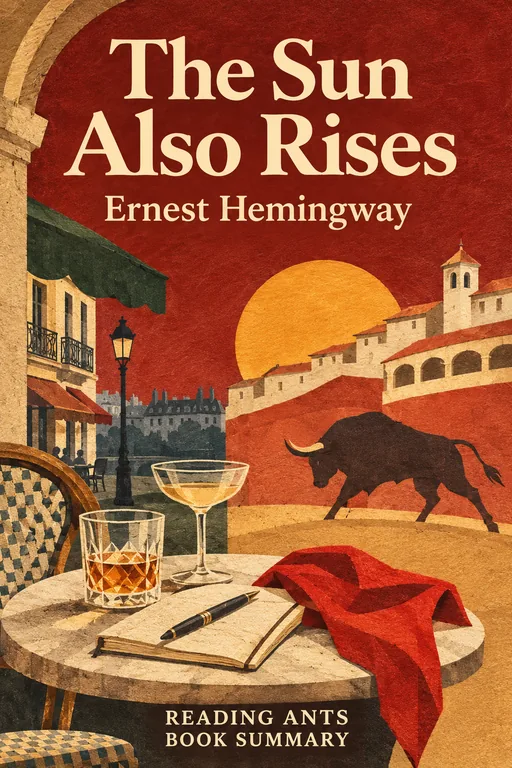
The Sun Also Rises
Ernest Hemingway
A group of American and British expatriates drift through Paris and Spain in the 1920s, drinking and searching for meaning, as a wounded narrator named Jake loves a woman he cannot have.
📜 Classics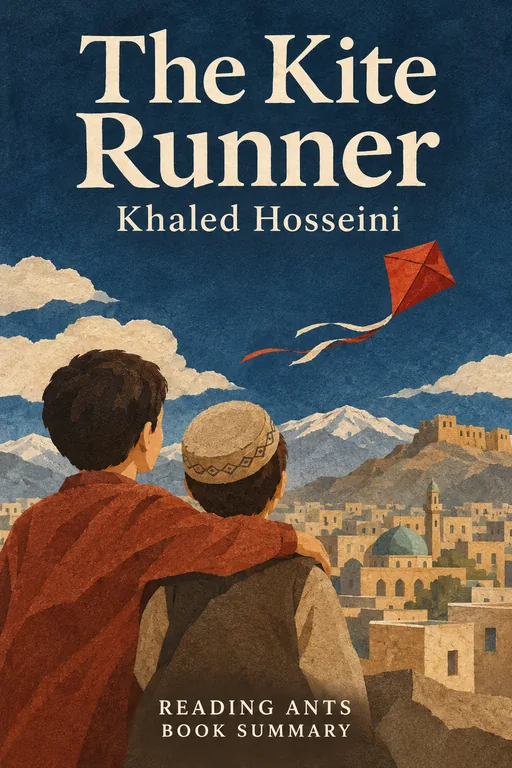
The Kite Runner
Khaled Hosseini
A wealthy boy in Kabul betrays his loyal best friend on the day of a kite tournament, and decades later, after fleeing to America, he returns to a Taliban-ruled Afghanistan to try to make things right.
✨ Modern Fiction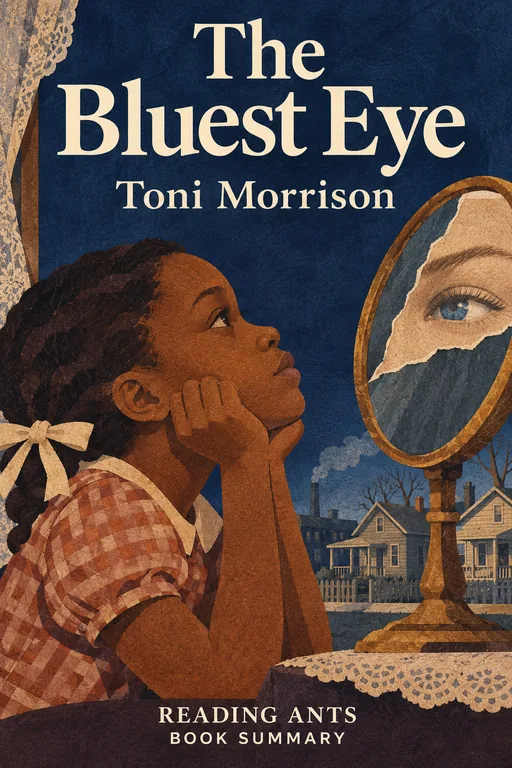
The Bluest Eye
Toni Morrison
In 1940s Ohio, a poor Black girl named Pecola Breedlove, who believes that she is ugly, prays for blue eyes, and the community's failure to protect her leads to tragedy.
✨ Modern FictionWant something different?
Pick another topic and we will show you three books to start with.