 Reading Ants
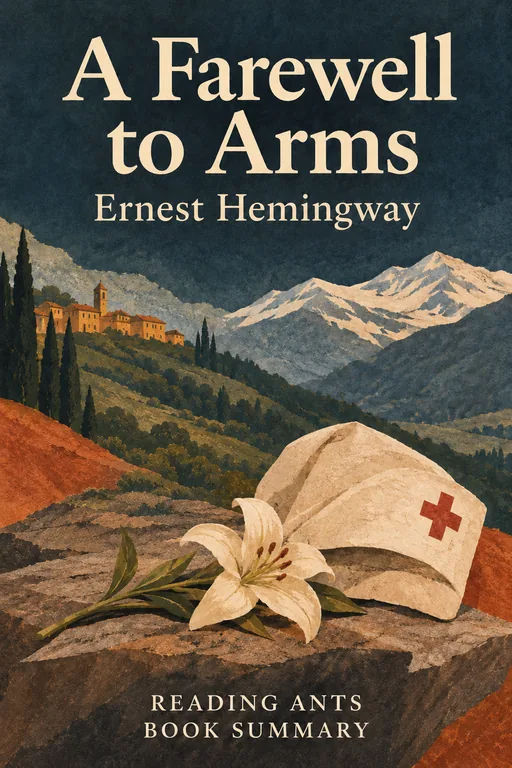
A Farewell to Arms
An American ambulance driver in the Italian army during World War I falls in love with a British nurse, deserts the war and escapes with her to Switzerland, only to lose her in childbirth.
Overview
A Farewell to Arms is a novel by Ernest Hemingway, published in 1929. It is based on his own experience as an ambulance driver in Italy in 1918, when he was wounded and fell in love with a nurse. The story is told in the first person by Frederic Henry, a young American serving as a lieutenant in the Italian ambulance corps. The book is known for its simple, restrained style, which hides strong emotions beneath plain sentences. It combines a love story with a stark view of war and fate, and it is considered one of the great American war novels.
Main Characters
- Frederic Henry: the narrator, an American lieutenant in the ambulance corps, who is cynical and drifting at first.
- Catherine Barkley: a British nurse who is warm, emotional and devoted.
- Rinaldi: an Italian surgeon and Henry’s cheerful friend.
- The priest: a gentle, religious man who serves in Henry’s unit.
- Count Greffi: an elderly Italian aristocrat who plays billiards with Henry.
- Dr. Valentini: the surgeon who operates on Henry’s leg.
Full Summary
War and Meeting Catherine
In the early years of the war, Frederic Henry is serving on the Italian front, where the war is a grinding stalemate. He spends his free time drinking and visiting brothels with his friend Rinaldi, though the priest in his unit offers a different example. Rinaldi introduces him to Catherine Barkley, a British nurse whose fiancé was killed in the war. Henry begins a flirtation with her, at first as a game, but he soon finds that he cares.
Wounded
During an artillery attack, Henry is badly wounded in the leg by a mortar shell. He is taken to a hospital in Milan, where, by coincidence, Catherine has been assigned. During the weeks of recovery, they fall deeply in love. Henry has an operation, and for a time their life is happy, with trips to the races and nights together. Catherine becomes pregnant, and they decide not to marry for the time being. Henry is declared fit to return to duty, and they say a sad goodbye.
The Retreat
Back at the front, Henry arrives in time for the Italian disaster at Caporetto, when the Austrians break through and the army collapses into retreat. In the confusion, he and his men are caught in the chaos on the roads. He sees Italian military police shooting officers who are separated from their units, accusing them of desertion. The rain is heavy, the roads are jammed with retreating soldiers and carts, and the mood is one of fear and exhaustion. When two engineer sergeants refuse his order to help with a stuck ambulance and try to run, Henry shoots one of the sergeants, and his driver Bonello finishes him off. Henry’s own small group is broken up, and another of his drivers, Aymo, is shot by mistake by Italian soldiers. Henry is arrested and about to be executed, but he escapes by jumping into the river. He realizes that he is done with the war and with the army.
Desertion and Reunion
Henry makes his way to Milan, where he learns that Catherine has gone to Stresa on Lake Maggiore, and he travels there to find her. They are reunited, and plan to flee. The police are looking for deserters, and a friendly bartender warns Henry that he is about to be arrested. That night, the couple escapes by rowing across the lake to Switzerland, a long, exhausting trip in the rain. They arrive safely, and are allowed to stay.
Switzerland
In Switzerland, Henry and Catherine live in a small chalet in the mountains above Montreux. They have a peaceful time, spending the winter reading, walking and waiting for their baby. Henry grows a beard and lets time pass slowly, and they talk about the world they have left behind, and about what kind of life they might have after the war. The mountains, the snow and the simple meals give them a sense of safety. They are happy and plan their future. As the pregnancy approaches term, they move to Lausanne to be near a hospital. Henry feels that, having left the war, they have found a separate peace.
The Birth
Catherine goes into labor, and the delivery is difficult. The doctor performs a Caesarean section, and the baby is stillborn. Catherine begins to hemorrhage, and dies a few hours later. Henry is overwhelmed by grief, and stays with her. In the end, he leaves the hospital and walks back to the hotel in the rain, alone and lost. The novel ends abruptly, suggesting that the world breaks the good and the brave, and that no escape is possible.
Why It Matters
A Farewell to Arms was a major success for Hemingway, and cemented his reputation as one of the leading American writers. The novel has been called the best American novel to come out of World War I. Its style, with short, simple sentences and understatement, influenced generations of writers.
It has been adapted for film several times, including a 1932 version starring Gary Cooper and a 1957 version. The famous ending is considered one of the most powerful in modern fiction, and it was reportedly rewritten dozens of times by Hemingway. The book has also influenced how later writers describe war, avoiding grand phrases and focusing on the senses and on small details.
Key Takeaways
- War is chaotic and senseless. The retreat shows how arbitrary it can be.
- Love can be a refuge. Henry and Catherine find comfort in each other.
- Fate is cruel. Despite their escape, tragedy still arrives.
- Words can be hollow. Henry distrusts grand talk about honor and glory.
- Grief has no easy answer. The ending offers no consolation.
What We Can Learn
The novel shows how war strips away illusions. Henry begins as a detached observer, but experience teaches him that abstract words like glory are meaningless compared with the real suffering of people.
It also shows how deeply human connection matters. The love of Henry and Catherine, though doomed, gives meaning to their short time.
Finally, it demonstrates the power of understatement in writing. Hemingway shows grief by what he leaves unsaid, and readers feel it more strongly. Learning to say less, and to trust the reader, is a lesson for anyone who writes.
Criticism and Counterpoints
Some critics say that Hemingway’s portrait of Catherine, who seems to exist only to serve Henry and who says she has no life apart from him, is unrealistic and sexist. Others find the style too clipped and repetitive, and the dialogue stilted. The ending has been criticized as bleak and manipulative.
Some readers also feel that the book’s treatment of the war is shallow, since it mostly follows Henry’s personal story. Others point out that the novel’s rejection of patriotism is the point. Still, the novel is widely respected.
Who Should Read It
This book suits mature teenagers and adults. It is fairly short and easy to read, but it includes war violence, drinking and a sad ending. It is a good introduction to Hemingway’s style.
Want the whole book?
A summary is a taste, not the meal. Here is where to find the full book.
You reached the end 🎉
Nicely done. Mark this one as read, and we will suggest what to read next.
Read this next
The Sun Also Rises
Ernest Hemingway
A group of American and British expatriates drift through Paris and Spain in the 1920s, drinking and searching for meaning, as a wounded narrator named Jake loves a woman he cannot have.
📜 Classics
All Quiet on the Western Front
Erich Maria Remarque
A young German soldier discovers that modern war destroys not only bodies but also the beliefs, relationships and futures of those forced to fight it.
🌍 World Literature
For Whom the Bell Tolls
Ernest Hemingway
During the Spanish Civil War, an American volunteer named Robert Jordan is sent to blow up a bridge behind enemy lines, and in three days with a band of guerrillas he finds love and faces his own death.
📜 Classics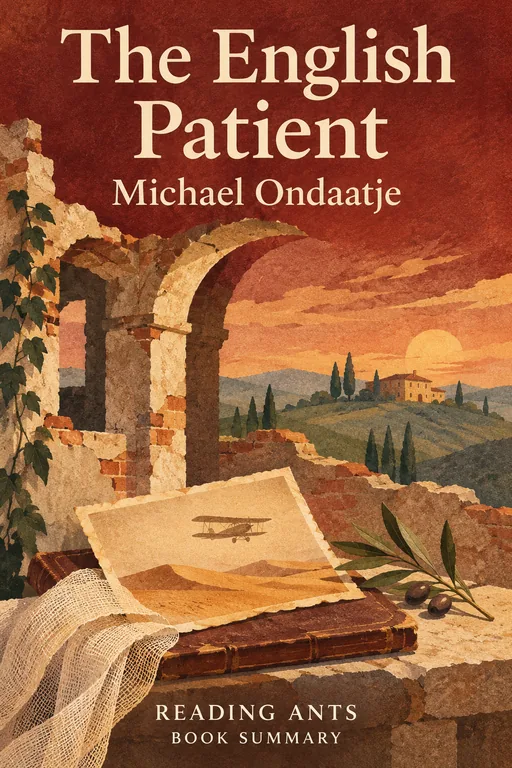
The English Patient
Michael Ondaatje
In a ruined Italian villa at the end of World War II, four wounded people, a burned man who cannot be identified, a young nurse, a thief and a Sikh bomb disposal expert, tell their stories and find a fragile kind of healing.
✨ Modern Fiction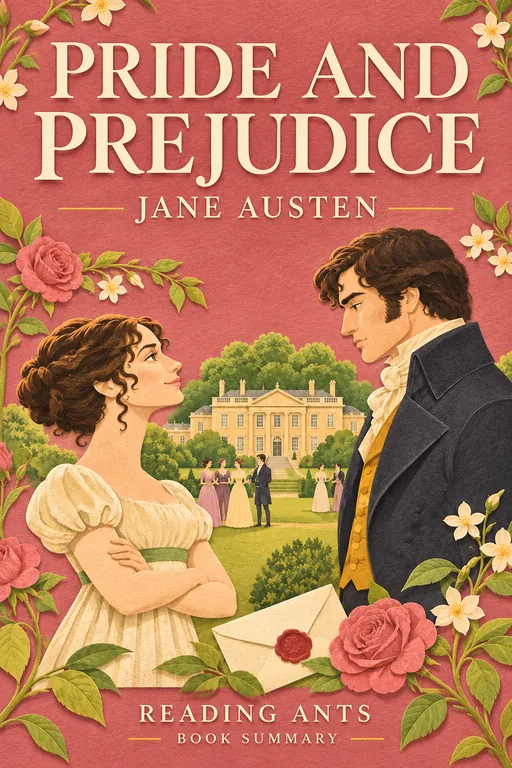
Pride and Prejudice
Jane Austen
Quick-witted Elizabeth Bennet and the proud, wealthy Mr. Darcy badly misjudge each other, and only by facing their own faults do they find their way to love.
📜 Classics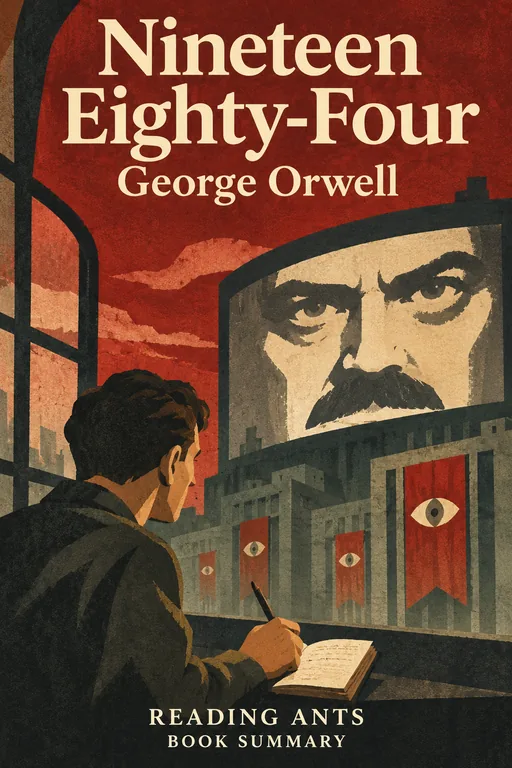
Nineteen Eighty-Four
George Orwell
In a future Britain ruled by an all-seeing Party, one man secretly rebels by keeping a diary and falling in love, and discovers just how completely a totalitarian state can crush the human mind.
📜 ClassicsWant something different?
Pick another topic and we will show you three books to start with.