 Reading Ants
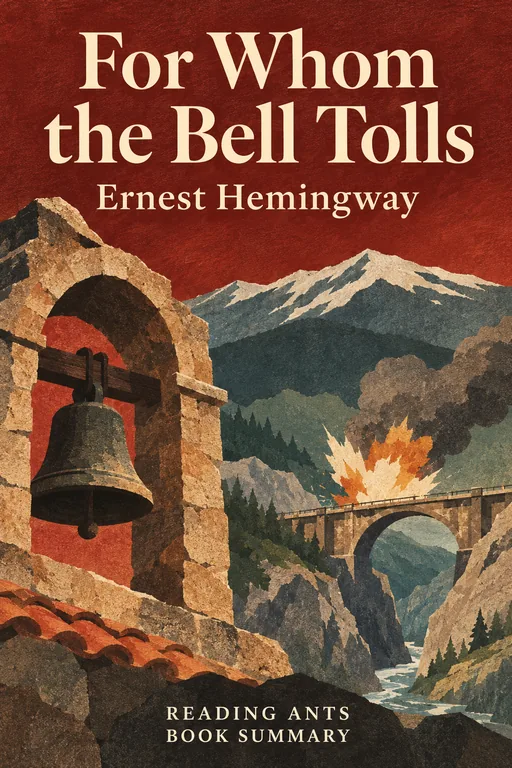
For Whom the Bell Tolls
During the Spanish Civil War, an American volunteer named Robert Jordan is sent to blow up a bridge behind enemy lines, and in three days with a band of guerrillas he finds love and faces his own death.
Overview
For Whom the Bell Tolls is a novel by Ernest Hemingway, published in 1940. It is set in the mountains of Spain in 1937 during the Spanish Civil War, when the Republican government and its supporters fought against the Nationalist forces led by General Franco. Hemingway had reported on the war and supported the Republic. The title comes from a meditation by John Donne, which says that no person is an island, and that the bell that tolls for any man’s death tolls for everyone. The story takes place over about seventy hours, and mixes action, memory and a love story.
Main Characters
- Robert Jordan: an American teacher and explosives expert fighting for the Republic.
- Maria: a young woman who was rescued by the guerrillas after she was brutalized by Nationalists.
- Pablo: the guerrilla leader, who has lost his nerve and become bitter.
- Pilar: Pablo’s strong, tough, wise wife, who is the real leader of the group.
- Anselmo: an old man who is loyal and gentle, and who guides Jordan.
- El Sordo: the leader of another guerrilla band.
- Karkov and Golz: a Russian journalist and a Soviet-linked general.
Full Summary
The Mission
Robert Jordan, a dynamiter, is ordered by General Golz to blow up a key bridge at a precise time, to support a Republican offensive. He goes behind enemy lines with the help of the old guide Anselmo, and meets a band of guerrillas hiding in the mountains. Their leader, Pablo, is surly and reluctant, since he fears that the attack will bring reprisals. His wife, Pilar, urges him to cooperate and dominates the group.
Jordan has been given only three days. He is also told that he must be willing to die, and he accepts the idea without drama, though he keeps thinking about it. He notes the pine needles, the smell of the earth and the snow on the mountains, as if he were memorizing the world.
Maria
In the guerrilla camp, Jordan meets Maria, a young woman with cropped hair, whose parents were killed and who was assaulted by Nationalist soldiers. She and Jordan fall in love quickly, knowing that they have little time. Their love is described with simple, intense language, and Maria says that she feels the earth move. Jordan, who has been an observer in a war that he believes in, feels that he has found something to live for.
Pilar, who sees the love, encourages it, and she tells Jordan she can read the future in his hand and that she saw something in it that she will not say. Maria’s shorn hair is a mark of the humiliation she suffered, and Jordan treats her gently, which helps her to heal.
Pablo and the Plan
Jordan prepares the plan to destroy the bridge. Pablo, who has a stock of horses and is afraid of losing them, resists the plan, and Pilar, backed by the other guerrillas, takes over leadership of the group from him and pledges it to Jordan’s mission. Jordan also learns that the offensive has been betrayed, since word of it has leaked and the Nationalists may be waiting. He sends a messenger to General Golz to ask that the attack be called off, but the message arrives too late.
Pilar’s Story and the Massacre
During the days, Pilar tells of an event in Pablo’s earlier violence, when, early in the war, he led a group of villagers in the killing of Nationalist sympathizers in a town, forcing them to run a gauntlet between two lines of men. The account is brutal and shows how cruelty is possible on both sides. Jordan thinks about the war, and about his grandfather, who fought in the American Civil War, and his father, who killed himself.
El Sordo’s Last Stand
Meanwhile, El Sordo and his band are hunted by Nationalist forces and attacked on a hilltop by airplanes and troops. They hold out as long as they can, until all are killed, though they shoot a few of their enemies. Jordan and the others hear the bombing and realize that the Nationalists are in force and close. Their situation grows more desperate. After El Sordo’s band is destroyed, Pablo, hoping to prevent the demolition and avoid reprisals, steals Jordan’s detonators and exploder, throws them into a gorge and leaves the camp. He soon regrets abandoning his comrades and returns to help, and Jordan improvises a way to set off the dynamite, using hand grenades with wires attached so that their pins can be pulled from a distance.
The Bridge
At dawn, Jordan and the guerrillas attack. Anselmo is killed by a piece of the explosion, and Jordan manages to blow the bridge. As the group escapes, Jordan’s horse is hit by fire from a tank, and it falls on him, breaking his leg. Knowing that he will slow the others, he tells Maria to go with Pablo and Pilar, and insists that she leave, though she wants to stay. He stays behind with a machine gun, to delay the Nationalist troops, and waits for an officer to come within range. The novel ends with Jordan lying behind a tree, waiting, his heart beating against the pine needles.
Why It Matters
For Whom the Bell Tolls was Hemingway’s best-selling novel and was nominated for a Pulitzer Prize, though the Pulitzer board overruled the jury’s recommendation and no novel was awarded the prize that year. It cemented his reputation as a writer of war and heroism, and was adapted into a 1943 film starring Gary Cooper and Ingrid Bergman. It remains a major work of fiction about the Spanish Civil War.
The book’s central theme, expressed in the title, is that we are all connected, and that the death of one person diminishes everyone, which has made it a lasting statement against isolation.
Key Takeaways
- No one is an island. Our fates are linked.
- Courage means doing duty despite fear. Jordan accepts his death.
- War brings cruelty on all sides. Pilar’s story shows atrocities.
- Love can flourish in a short time. Jordan and Maria find intensity.
- Sacrifice gives meaning. Jordan chooses to stay behind for the others.
What We Can Learn
The novel invites us to think about what we are willing to give for a cause. Jordan believes in the Republic, but he is also aware of the cost, and the book does not hide its ugliness.
It also shows that in a dangerous situation, people reveal their true character. Pablo’s fear and Pilar’s courage differ, and the group is shaped by these traits.
Finally, it teaches that even a short life, or a short time of love, can be full, and that this can help us to value the time we have.
Criticism and Counterpoints
Some critics find Hemingway’s portrayal of Maria unrealistic, with her total devotion to Jordan and her passive role, and some find the love story sentimental. Others criticize the stylized dialogue, which uses English words to suggest Spanish, such as “thee” and “thou,” and find it awkward.
The book is also criticized for its political stance: some on the left felt that its portrayal of the Republican side was too critical, and others on the right objected to its sympathy for the Republic. It is also long, and its middle sections are slow. Still, many readers admire it.
Who Should Read It
This book suits mature teenagers and adults. It contains war violence and an account of atrocities. It is a good choice for readers interested in the Spanish Civil War and in Hemingway’s style.
Want the whole book?
A summary is a taste, not the meal. Here is where to find the full book.
You reached the end 🎉
Nicely done. Mark this one as read, and we will suggest what to read next.
Read this next
A Farewell to Arms
Ernest Hemingway
An American ambulance driver in the Italian army during World War I falls in love with a British nurse, deserts the war and escapes with her to Switzerland, only to lose her in childbirth.
📜 Classics
The Sun Also Rises
Ernest Hemingway
A group of American and British expatriates drift through Paris and Spain in the 1920s, drinking and searching for meaning, as a wounded narrator named Jake loves a woman he cannot have.
📜 Classics
All Quiet on the Western Front
Erich Maria Remarque
A young German soldier discovers that modern war destroys not only bodies but also the beliefs, relationships and futures of those forced to fight it.
🌍 World Literature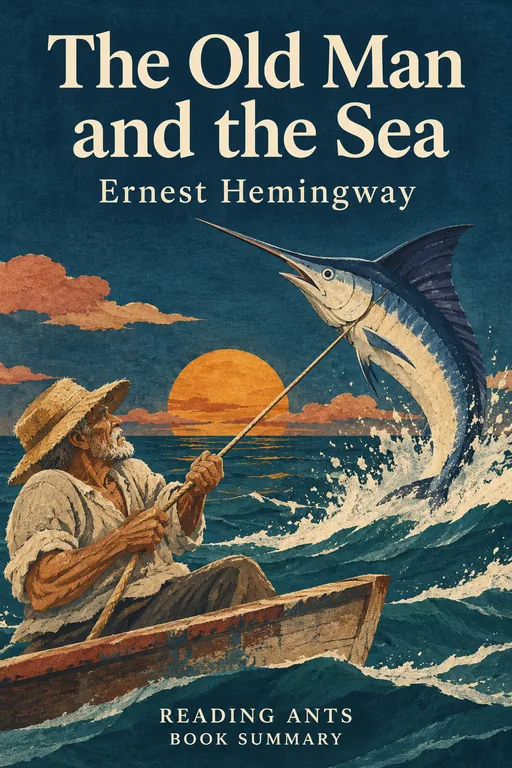
The Old Man and the Sea
Ernest Hemingway
An old Cuban fisherman who has gone eighty-four days without a catch hooks a giant marlin far out at sea and fights it for three days, only to lose it to sharks, yet he returns home undefeated in spirit.
📜 Classics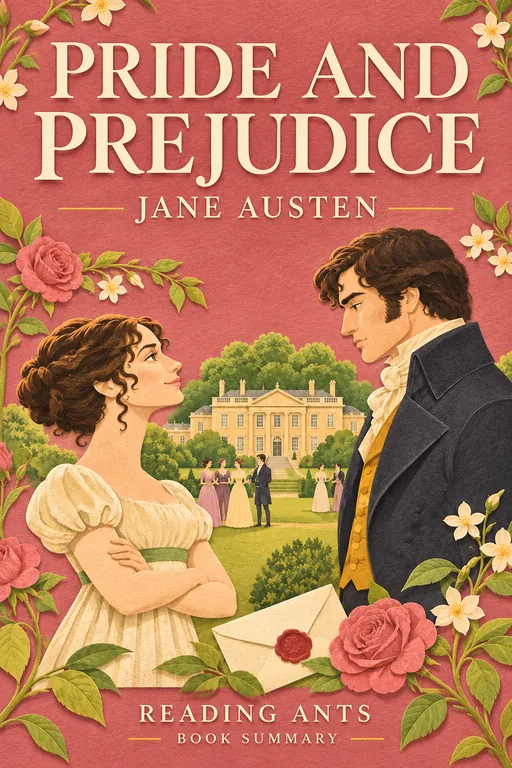
Pride and Prejudice
Jane Austen
Quick-witted Elizabeth Bennet and the proud, wealthy Mr. Darcy badly misjudge each other, and only by facing their own faults do they find their way to love.
📜 Classics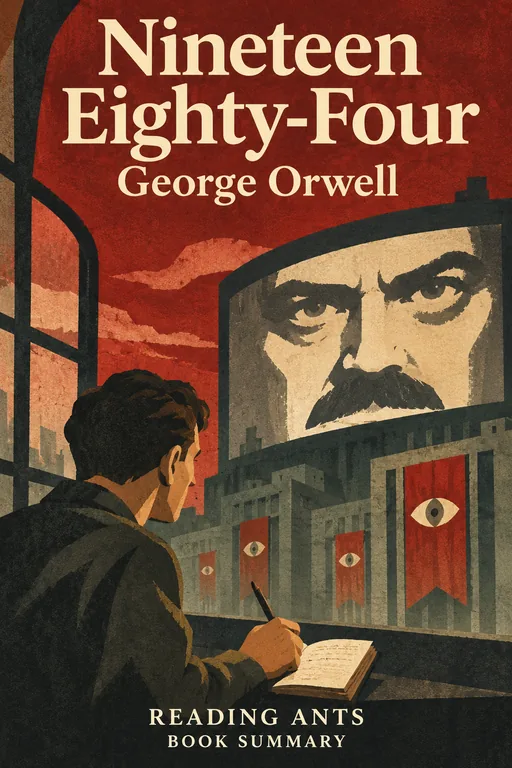
Nineteen Eighty-Four
George Orwell
In a future Britain ruled by an all-seeing Party, one man secretly rebels by keeping a diary and falling in love, and discovers just how completely a totalitarian state can crush the human mind.
📜 ClassicsWant something different?
Pick another topic and we will show you three books to start with.