
Wolf Hall
Thomas Cromwell, the blacksmith's son who rises through intelligence and nerve to become Henry VIII's chief minister, steers through the court politics of the king's wish for a divorce and a new wife, Anne Boleyn.
Overview
Wolf Hall is a historical novel by Hilary Mantel, published in 2009, which won the Booker Prize and the National Book Critics Circle Award. It is the first book in a trilogy that continues with Bring Up the Bodies and The Mirror and the Light. It tells the story of Thomas Cromwell, a historical figure who is traditionally seen as a villain, from his violent boyhood around 1500 to the execution of Sir Thomas More in 1535. Mantel writes in the present tense and in close third person, so that the reader seems to be inside Cromwell’s mind. She aimed to give a new view of a man whom history has often painted as a cold schemer.
Main Characters
- Thomas Cromwell: a clever, patient, self-made lawyer and fixer, with a past as a soldier and merchant.
- Henry VIII: the king, who wants a male heir and a new wife.
- Cardinal Wolsey: Cromwell’s mentor and the king’s powerful chancellor.
- Anne Boleyn: the ambitious woman whom Henry wants to marry.
- Thomas More: the learned Lord Chancellor, a devout Catholic and an opponent of reform.
- Katherine of Aragon: the king’s first wife.
- Thomas Cranmer and the Duke of Norfolk: a reforming churchman and a nobleman hostile to Cromwell.
Full Summary
A Blacksmith’s Son
The novel begins with a boy lying on the ground, beaten by his father Walter, a blacksmith in Putney, who is a violent drunk. This boy, Thomas, runs away, and spends years as a soldier in Italy, a banker’s clerk and a trader in Flanders. He learns languages, law and the art of business. He returns to England, and, by luck and talent, enters the service of Cardinal Wolsey, who values his abilities.
Cromwell learns to survive by being observant and adaptable. In Italy, he picks up knowledge of banking and of languages, and he is skilled in memory, a talent that serves him later. He is an outsider who learns to read the rooms of the powerful.
The King’s Great Matter
Henry VIII wants to end his marriage to Katherine of Aragon, who has not given him a surviving son, and to marry Anne Boleyn. The Pope will not grant an annulment, and Wolsey, who is charged with arranging it, fails. Cromwell, who is loyal to his master, tries to help, but Wolsey falls from favor and is sent away. He dies soon after, on his way to face charges, and Cromwell grieves for him.
Rising
Cromwell, who has a gift for work and a quick mind, offers his services to the king. He becomes a member of the council, and proposes a bold solution: if the Pope will not grant the annulment, England should break with Rome, and the king should become the head of the Church. He drafts laws to make this happen, and uses his skills in finance and law to reform the government. He also works to protect his family and household, having earlier lost his wife and daughters to illness.
He is also a devoted family man, who takes in orphans and young men whom he trains, and he treats his household with unusual kindness. These scenes show a different side from the political schemer, and are central to Mantel’s attempt to change the reader’s view.
Anne and Thomas More
As Anne Boleyn rises, Cromwell becomes her ally. At the same time, Thomas More, the Lord Chancellor, who is a man of strict faith, refuses to accept the king’s divorce. Cromwell sees More as a persecutor of heretics, and regards him with a mixture of respect and distaste. More resigns, but refuses to take an oath that accepts the king’s supremacy over the Church, and is arrested.
The Execution
More is tried for treason, and, after his refusal to accept the king’s role, is condemned and beheaded in 1535. Cromwell, who has tried to persuade him to yield, is sad but resolute. With More gone, the old Church has been swept aside, and Cromwell is at the peak of his powers, but is aware of the danger that he faces, since the king’s favor is uncertain.
Wolf Hall
Mantel also describes the Seymour family’s home, Wolf Hall, where the king is to visit in 1535, and where the quiet Jane Seymour is to catch his eye. The book ends as Cromwell plans the royal progress, which hints at the shift of Henry’s attention from Anne to another woman. Cromwell notes it, as he does all things, and begins to think about how to arrange the future. The title refers to this place, and the novel closes on this note of change.
Why It Matters
Wolf Hall was a major literary event. It was both a critical and a commercial success, and brought a revival of interest in the Tudor period. Mantel won the Booker Prize again for the sequel, Bring Up the Bodies, becoming the first woman to win the prize twice. The books have been adapted for television by the BBC, with Mark Rylance as Cromwell, and for the stage.
The novel changed the popular view of Cromwell, and showed how historical fiction can offer fresh insights into familiar events. Its intimate, present-tense style has been much imitated.
Key Takeaways
- Power is a delicate game. Favor can change in a moment.
- Talent can rise from humble origins. Cromwell uses skill, not birth.
- History is a matter of perspective. More looks different through Cromwell’s eyes.
- Loyalty and ambition interact. Cromwell serves Wolsey, then the king.
- Religion and politics are intertwined. The break with Rome reshapes England.
What We Can Learn
The novel invites us to look at figures of the past with fresh eyes, and to question the heroes and villains that we have been taught. It shows that those on the winning side often write the history.
It also reminds us how much depends on the practical skills of administration, finance and persuasion, which are often unseen.
Finally, it suggests that success may require both talent and a willingness to adapt to those in power.
It also shows how much a viewpoint can shape a story, and invites us to ask who is telling it and why.
Criticism and Counterpoints
Some historians and readers object to Mantel’s favorable view of Cromwell and her harsh treatment of Thomas More, whom she portrays as a cruel persecutor, and say that it is unfair. Others find the present-tense style and the use of “he” for Cromwell, even when it is unclear whom the pronoun refers to, hard to follow.
The book is long and dense with names, and some find the pace slow. The depiction of Anne Boleyn and the women at court has also been debated. Still, it is widely praised.
Who Should Read It
This book is for mature readers. It is long and rich, with violence and sexual content. Readers who enjoy history and a strong narrative voice will find it rewarding.
The sequels continue the story.
Want the whole book?
A summary is a taste, not the meal. Here is where to find the full book.
You reached the end 🎉
Nicely done. Mark this one as read, and we will suggest what to read next.
Read this next
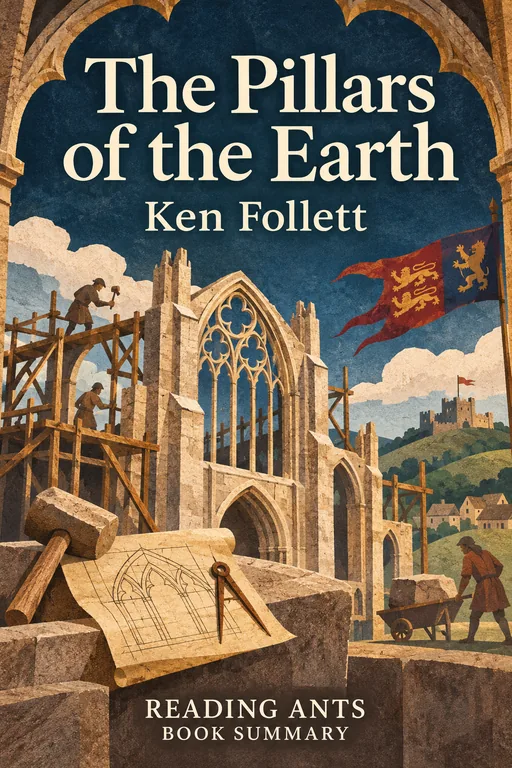
The Pillars of the Earth
Ken Follett
Across half a century in twelfth-century England, a master builder named Tom, a determined prior named Philip, and a family of power-hungry nobles struggle over the building of a great cathedral in the fictional town of Kingsbridge.
✨ Modern Fiction
The Kite Runner
Khaled Hosseini
A wealthy boy in Kabul betrays his loyal best friend on the day of a kite tournament, and decades later, after fleeing to America, he returns to a Taliban-ruled Afghanistan to try to make things right.
✨ Modern Fiction
The Bluest Eye
Toni Morrison
In 1940s Ohio, a poor Black girl named Pecola Breedlove, who believes that she is ugly, prays for blue eyes, and the community's failure to protect her leads to tragedy.
✨ Modern Fiction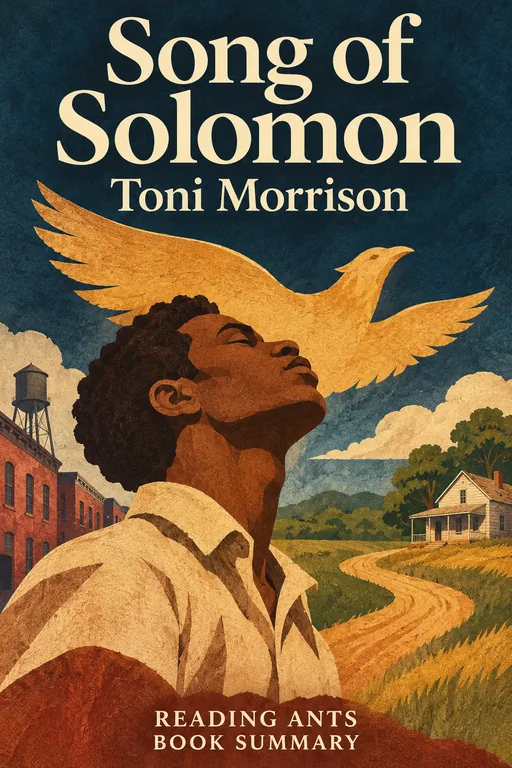
Song of Solomon
Toni Morrison
Macon "Milkman" Dead, a self-absorbed young man from Michigan, goes south in search of a family treasure and finds instead his family's history, and learns to take responsibility and to fly.
✨ Modern Fiction
Beloved
Toni Morrison
A formerly enslaved woman living in Ohio after the Civil War is haunted by the ghost of the daughter she killed to save her from slavery, and by the painful memories she has tried to bury.
✨ Modern Fiction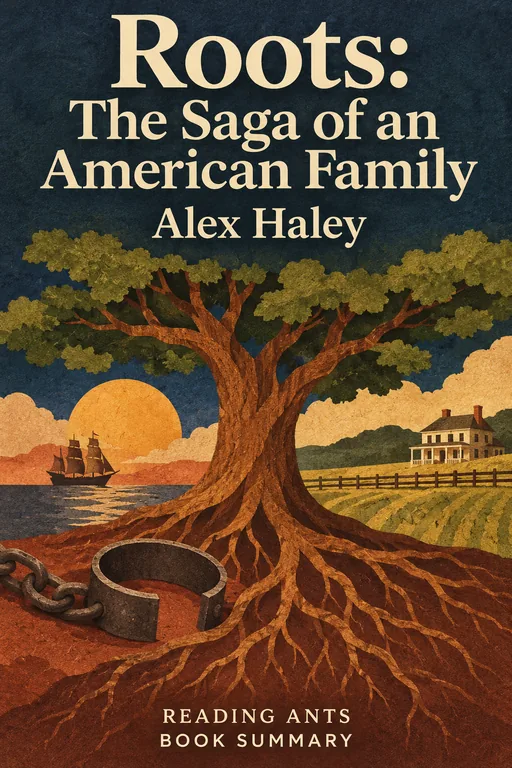
Roots: The Saga of an American Family
Alex Haley
Beginning with Kunta Kinte, a young man seized from his village in the Gambia in 1767, this family saga follows seven generations of his descendants through slavery, the Civil War and freedom in America.
✨ Modern FictionWant something different?
Pick another topic and we will show you three books to start with.