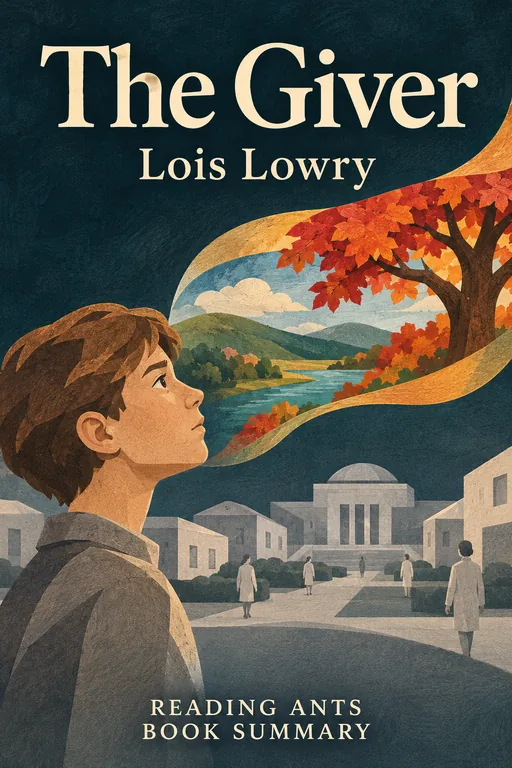
The Giver
In a perfectly controlled community with no pain, choice or color, a boy about to turn twelve is chosen to hold the memories of the past, and discovers the terrible price his people pay for their safety.
Overview
Jonas lives in a peaceful, orderly community where everything is planned: jobs are assigned, families are formed by officials, and everyone follows strict rules of politeness. There is no war, hunger or crime, but also no color, music, deep love or real choice. At the Ceremony of Twelve, when children receive their life assignments, Jonas is selected for the rare and honored role of Receiver of Memory. An old man, the Giver, begins passing on to him the memories of the world as it used to be, both its joys and its pain. Lois Lowry’s thought-provoking novel won the Newbery Medal and is widely read in schools.
Main Characters
- Jonas: a thoughtful, sensitive eleven-year-old who becomes the Receiver of Memory.
- The Giver: the old, weary man who holds the community’s memories.
- Gabriel (Gabe): a baby who stays with Jonas’s family at night.
- Jonas’s father: a gentle Nurturer who cares for newborns.
- Jonas’s mother: an official in the Department of Justice.
- Lily: Jonas’s chatty younger sister.
- Asher and Fiona: Jonas’s friends.
- Rosemary: a former Receiver-in-training whose story haunts the Giver.
Full Summary
A Perfect Community
Jonas lives in a community where life is carefully controlled. Each family unit has a mother, a father and two children, one boy and one girl, who are given to them rather than born to them. Everyone uses precise language and apologizes for small mistakes. Each evening, families share their feelings, and each morning, they share their dreams. When people grow old, or if a baby fails to thrive, they are “released,” which everyone believes means going to a pleasant place Elsewhere.
Jonas’s father is a Nurturer who looks after newborns. One of them, Gabriel, isn’t growing well, so his father brings him home at night, hoping to help him.
The Ceremony of Twelve
At the annual Ceremony, each child who turns twelve is given an Assignment, the job they will do for life. Jonas’s friend Asher becomes Assistant Director of Recreation, and Fiona will care for the Old. But Jonas is skipped, and the crowd grows uneasy. Finally the Chief Elder announces that he has been selected as the next Receiver of Memory, the most honored role of all. He will need courage, wisdom and the “capacity to see beyond.” His new rules allow him to lie and forbid him to discuss his training.
The First Memories
Jonas begins training with the Giver, an old man who lives alone surrounded by books. The Giver places his hands on Jonas’s back and transmits memories from long ago. The first is the thrill of riding a sled down a snowy hill, something Jonas has never seen, because the community controls the climate. Jonas learns that long ago, people chose “Sameness,” giving up weather, color and difference in exchange for safety and order.
Jonas has already begun to glimpse the color red, in an apple and in Fiona’s hair, and as his training continues, the world gains more color. He receives memories of sunshine, but also sunburn. The Giver explains that his job is to hold the community’s memories so that others don’t have to feel their pain, and to advise the Elders with his wisdom.
Pain and Love
The memories grow harder. Jonas experiences hunger, broken bones and a terrible battlefield where a wounded boy begs for water. He also receives the Giver’s favorite memory: a family gathered around a tree with grandparents and candles, filled with love. Jonas realizes that his own family doesn’t truly love, because no one in the community even knows what the word means. When he stops taking the pills given to everyone to suppress strong feelings, he begins to feel more deeply.
Jonas secretly shares calming memories with Gabriel at night to help the baby sleep. He learns that years ago, the Giver had trained a girl named Rosemary, his own daughter, as the next Receiver. After receiving painful memories, she asked to be released, and her memories flowed out to the whole community, causing great distress.
The Truth About Release
Jonas asks to see a recording of a release. He watches his own father, smiling and gentle, end the life of the smaller of a pair of newborn twins. Release means death. Jonas is horrified. The Giver confesses that Rosemary chose to release herself the same way.
The Giver and Jonas make a plan. If Jonas leaves the community, all the memories he holds will return to the people, who will be forced to feel and understand. The Giver will stay behind to help them through it.
Escape
Before the plan can happen, Jonas learns that Gabriel will be released the next morning. Jonas cannot let it happen. That night, he takes Gabriel and rides away on his father’s bicycle. Search planes fly overhead, and Jonas hides by transmitting memories of cold to both of them, so the planes’ heat-seeking equipment cannot find them.
They travel for days, growing weak with hunger, and the land beyond the community changes. They see birds, wildflowers and rain. Then snow begins to fall. Freezing and exhausted, Jonas climbs a hill and finds a sled waiting at the top, just like in his first memory. He and Gabriel ride down toward a village with colored lights glowing in the windows, and he hears music. The ending leaves readers to decide whether they have found a new home or are only dreaming as they die.
Why It Matters
The Giver won the Newbery Medal in 1994 and became one of the most widely read novels in American middle schools. It helped make dystopian fiction popular with young readers, paving the way for later series such as The Hunger Games and Divergent. It is the first of four connected books, and it was adapted into a 2014 film.
The novel raises deep questions about freedom, choice and what makes life meaningful. It shows how a society that tries to remove all pain also removes joy, love and individuality. It has also been one of the most frequently challenged books in American schools because of its themes of euthanasia and suicide, which has made it a frequent topic in discussions of censorship.
Key Takeaways
- Pain and joy come together. A life without suffering is also a life without deep happiness.
- Freedom requires choice. Safety and order are not worth losing the right to choose.
- Memory gives us wisdom. Remembering the past, even its pain, helps people make good decisions.
- Comfortable words can hide terrible truths. “Release” disguises killing.
- One person can make a difference. Jonas’s courage may change his whole community.
What We Can Learn
The Giver encourages us to value our feelings, even difficult ones. Sadness, anger and fear are part of being human, and they help us understand others and appreciate joy.
It also teaches us to question things that everyone accepts. Jonas’s community never asks what “release” really means. In our own lives, asking questions about rules and customs, and listening carefully to the words people use, helps us find the truth.
Finally, the book reminds us of the importance of memory and history. Learning about the past, including wars and injustices, may be painful, but it helps us avoid repeating mistakes and teaches us to care for one another.
Criticism and Counterpoints
Some parents and educators have objected to the book’s depictions of euthanasia and the death of a baby, considering them too disturbing for young readers. Supporters argue that the book handles these themes thoughtfully and opens important conversations.
Other readers find the ending frustratingly vague, since Jonas’s fate is unclear. The later companion books provide more answers. Some critics also note that the community’s rules are not fully explained, for instance how Sameness was achieved, and that the world-building is simpler than in later dystopian novels for teenagers.
Who Should Read It
This book suits readers from about 11 or 12 upward, and it is excellent for classroom or family discussion. Adults also find it thought-provoking. Very sensitive younger readers may need support with the scene revealing the truth about release.
Want the whole book?
A summary is a taste, not the meal. Here is where to find the full book.
You reached the end 🎉
Nicely done. Mark this one as read, and we will suggest what to read next.
Read this next
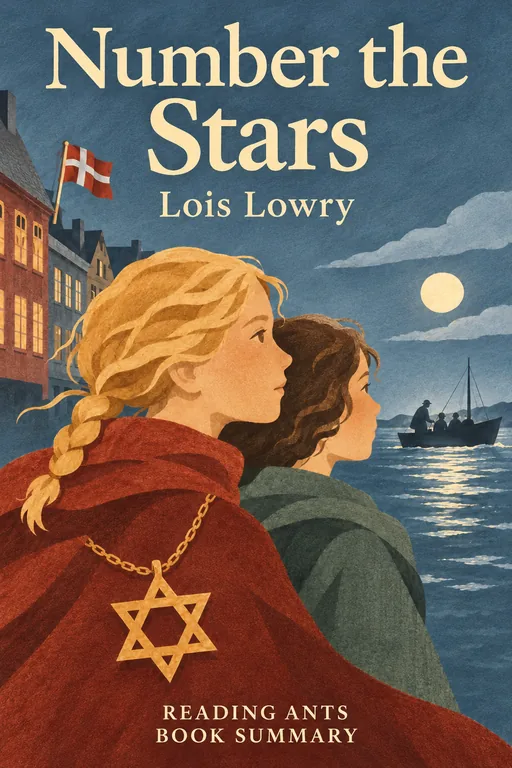
Number the Stars
Lois Lowry
In 1943, a ten-year-old Danish girl named Annemarie helps her Jewish best friend Ellen escape from Nazi-occupied Copenhagen by pretending that Ellen is her sister and by helping with a daring rescue.
🧸 Children's Books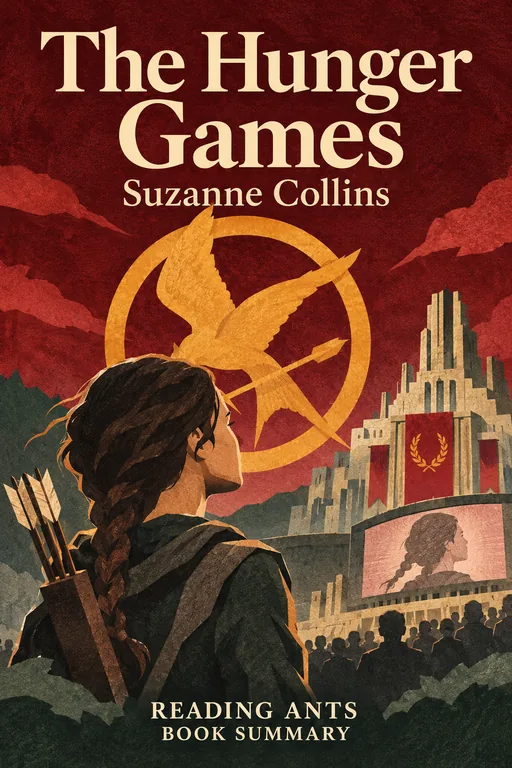
The Hunger Games
Suzanne Collins
A teenager volunteers for a televised fight to the death and learns to turn the regime's own spectacle into a fragile means of survival and defiance.
🎒 Young Adult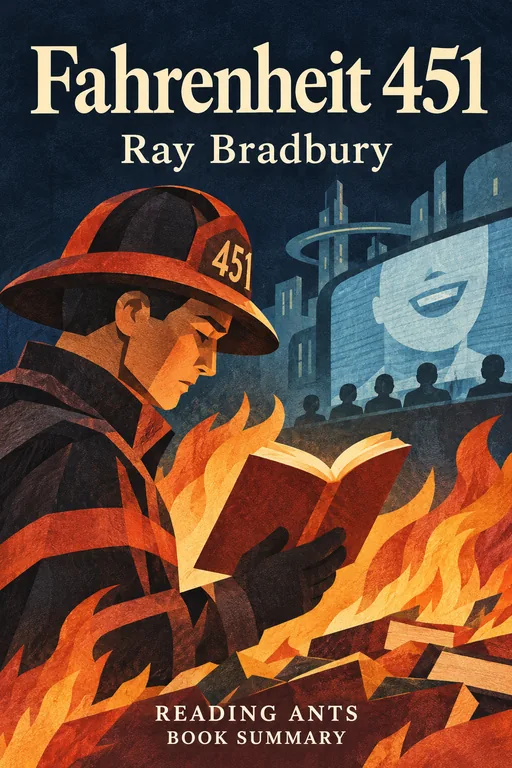
Fahrenheit 451
Ray Bradbury
In a future America where books are illegal and firemen start fires instead of putting them out, one fireman begins to read the books he is supposed to burn, and discovers what his society has lost.
🚀 Sci-Fi & Fantasy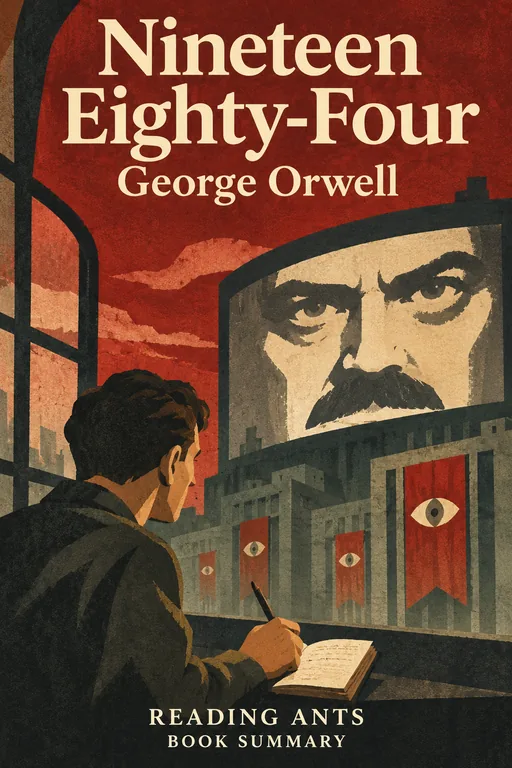
Nineteen Eighty-Four
George Orwell
In a future Britain ruled by an all-seeing Party, one man secretly rebels by keeping a diary and falling in love, and discovers just how completely a totalitarian state can crush the human mind.
📜 Classics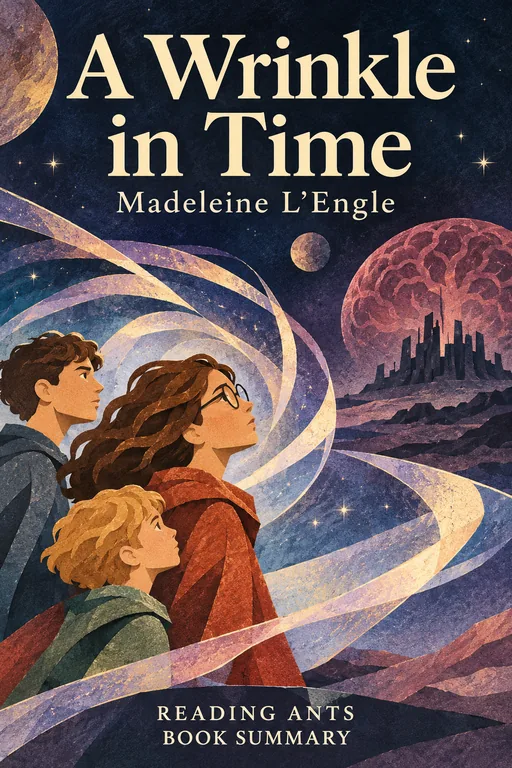
A Wrinkle in Time
Madeleine L'Engle
An awkward girl travels across the universe with her genius little brother and a new friend to rescue her scientist father from a dark planet ruled by a giant evil brain, and discovers that love is her greatest power.
🧸 Children's Books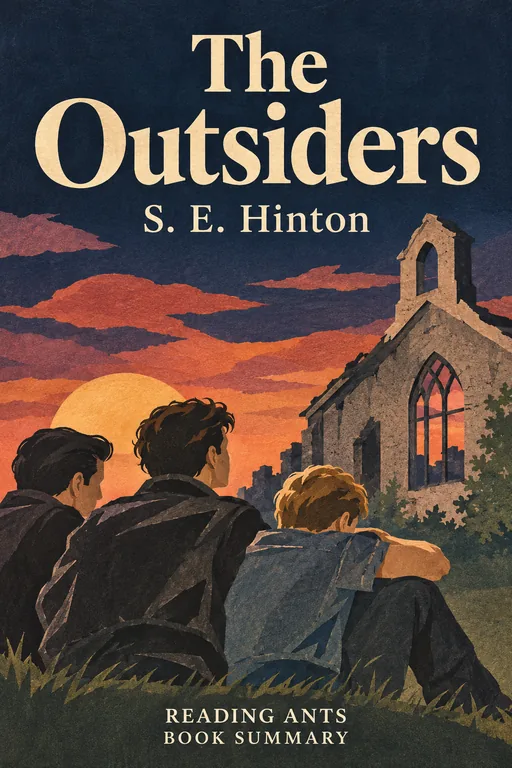
The Outsiders
S. E. Hinton
After a deadly clash between rival social groups, teenager Ponyboy Curtis learns that loyalty can sustain people without making violence noble or erasing their shared humanity.
🎒 Young AdultWant something different?
Pick another topic and we will show you three books to start with.