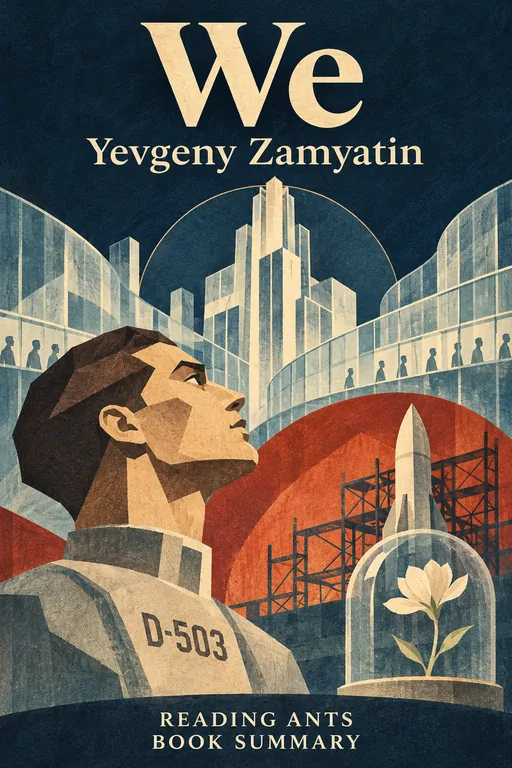
We
Original title: Мы
In a glass city where everyone lives by a strict timetable and has a number instead of a name, a loyal engineer begins to feel love and doubt, and discovers what it costs to be free.
Overview
We is a science fiction novel by the Russian writer Yevgeny Zamyatin, written in the early 1920s. It is set many centuries in the future, in the One State, a country ruled by a leader called the Benefactor. Everything is planned by mathematics: meals, work, even sex. The story is told as the diary of an engineer who is building a spaceship, and it is one of the earliest and most influential dystopian novels. The question it raises is whether people would give up freedom for perfect order and happiness.
Main Characters
- D-503: the narrator, a mathematician and the chief builder of the spaceship, the Integral.
- I-330: a bold, mysterious woman who leads a secret rebellion.
- O-90: a gentle woman, D-503’s official partner, who longs for a child.
- R-13: a poet and friend of D-503.
- The Benefactor: the all-powerful ruler of the One State.
- S-4711: a Guardian, one of the state’s police, who follows D-503.
Full Summary
The Glass City
D-503 begins to keep a diary, in order to write for the people of other planets who will one day read about the One State. He describes a perfect world. The people live in glass houses, so they can be watched at all times, and they follow a written Table of Hours that tells them when to eat, work and sleep. Each person has a number, and a single sexual schedule decides who may be together.
D-503 is proud of this order. He is building the Integral, a spacecraft that is meant to carry the state’s ideas to other worlds. He believes that reason is the highest good, and that the happiness of the many is worth more than the freedom of one. He enjoys watching the columns of numbers, all dressed alike and keeping step, and he thinks of himself as one small part of a great machine.
I-330
D-503 meets I-330, a woman who smokes, drinks and mocks the rules, and he is both shocked and drawn to her. She invites him to the Ancient House, a museum of the old world, which is full of disorder and color. For the first time he feels something that his mathematics cannot explain.
He begins to have dreams, which the state treats as a disease, and he writes in his diary that he has developed a “soul.” He feels torn between his loyalty to the state and his desire for I-330.
The Conspiracy
D-503 slowly learns that I-330 belongs to a group of rebels who want to overthrow the Benefactor and take over the Integral. There are people living beyond the Green Wall, which surrounds the city, in a wild, natural world, and the rebels have secret ties to them. I-330 hopes to use the Integral to break free of the One State’s rule. Some of the rebels are people from within the city and others come from outside.
D-503 is divided. He wants to inform on them, as a loyal citizen should, but he cannot bring himself to harm I-330. Meanwhile, O-90, who loves him, is pregnant by him. This is forbidden, and she begs for his help.
The Great Operation
The state announces an operation that will remove the part of the brain that creates imagination and so end the disease of dreaming. All the citizens are to be made to undergo it. The rebels hurry to act. They try to seize the Integral, and there are riots in the streets, and a breach in the Green Wall, and the Guardians struggle to restore order.
D-503 is caught and is made to undergo the operation. Afterward, he feels calm. He no longer feels love, doubt or pain, and he looks at the woman he once loved as if she were a stranger.
The Final Entry
In the last entry in the diary, D-503 is calm and obedient. He tells the Benefactor everything he knows about the conspirators, and he watches without feeling as I-330 is tortured. He believes that the revolt is nearly over, and that reason will win again.
Yet the book hints that the rebellion is not completely crushed, and that some people have escaped and others are still fighting. The ending is bleak, but it does not say that hope is lost.
Why It Matters
We was banned in the Soviet Union, and it was published first in English translation and only much later in Russia. It is generally seen as the ancestor of the great dystopian novels of the twentieth century, and George Orwell read it and wrote about it before Nineteen Eighty-Four. It is also credited as an influence on Aldous Huxley’s Brave New World, though Huxley said otherwise. Its ideas, such as the state’s control of thought, the use of numbers instead of names, and the loss of privacy, have become part of how we think about modern states and technology.
Key Takeaways
- Freedom and happiness can conflict. The One State offers comfort and safety in exchange for choice.
- Surveillance changes people. Living in glass houses leaves nowhere to hide, and no inner life.
- Reason alone is not enough. D-503’s mathematics cannot explain his feelings.
- Imagination is dangerous to tyrants. The state tries to remove it by force.
- Revolutions never fully end. The story suggests that there is always something beyond the wall.
What We Can Learn
The book invites us to think about the trade-offs we make between convenience and freedom. Many modern tools make life easier but also record what we do, and it is useful to ask who is watching and why. It also reminds us to protect time and space for our own thoughts, creativity and private feelings.
We also shows how language can be used to control people, by calling cruel things “good” or “necessary.” Learning to notice this kind of language is a good habit for a citizen of any country. Finally, the story shows how easily people can give up their rights when they are told it is for their own happiness.
Criticism and Counterpoints
Some readers find the style hard, since the diary is written in short, jumpy, mathematical images, and the characters can feel thin. The ending is bleak, and the female characters are often seen mainly through the narrator’s eyes. Others note that later novels, such as Orwell’s, are clearer and more tightly plotted, though We came first. The book’s view of science and reason as enemies of the soul is also debated.
Who Should Read It
This book is for older teens and adults who enjoy dystopian fiction and want to see where the genre began. It is short, but the style is unusual and rewards slow reading. Readers who prefer straightforward plots may find it strange, and those who have read Orwell or Huxley will enjoy seeing how much they share.
Want the whole book?
A summary is a taste, not the meal. Here is where to find the full book.
You reached the end 🎉
Nicely done. Mark this one as read, and we will suggest what to read next.
Read this next
Nineteen Eighty-Four
George Orwell
In a future Britain ruled by an all-seeing Party, one man secretly rebels by keeping a diary and falling in love, and discovers just how completely a totalitarian state can crush the human mind.
📜 Classics
Brave New World
Aldous Huxley
In a future world where people are made in factories, programmed for their roles and kept happy with drugs and entertainment, a man raised outside the system discovers that this perfect comfort comes at the cost of everything that makes us human.
📜 Classics
Fahrenheit 451
Ray Bradbury
In a future America where books are illegal and firemen start fires instead of putting them out, one fireman begins to read the books he is supposed to burn, and discovers what his society has lost.
🚀 Sci-Fi & Fantasy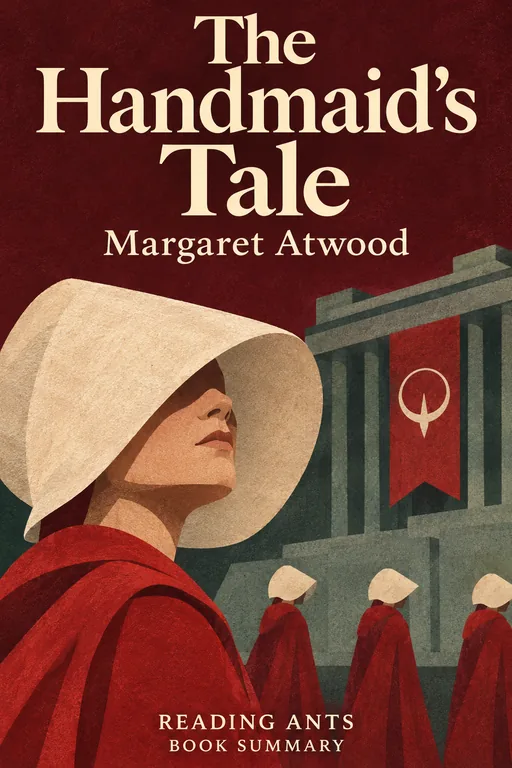
The Handmaid's Tale
Margaret Atwood
In a near-future United States taken over by a religious dictatorship that strips women of their rights, a woman forced to bear children for a powerful couple secretly remembers her old life and searches for a way to survive.
✨ Modern Fiction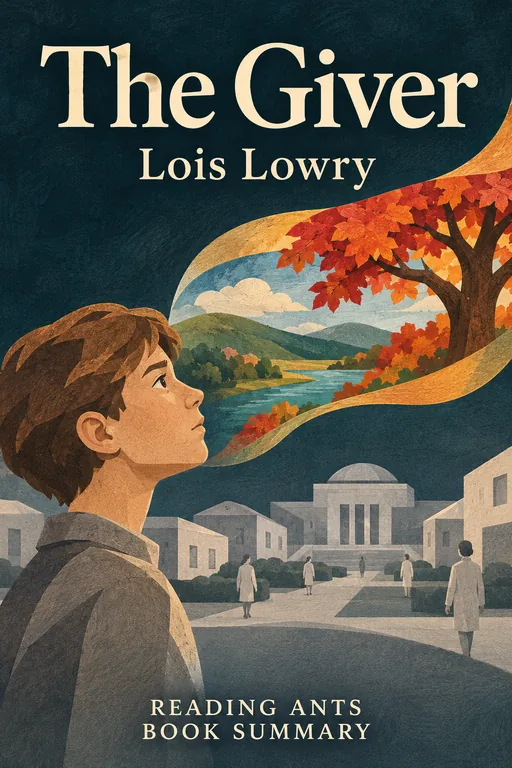
The Giver
Lois Lowry
In a perfectly controlled community with no pain, choice or color, a boy about to turn twelve is chosen to hold the memories of the past, and discovers the terrible price his people pay for their safety.
🎒 Young Adult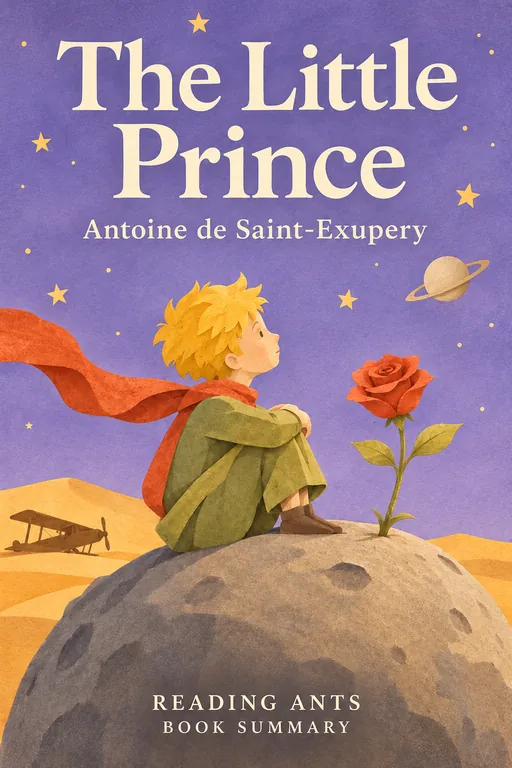
The Little Prince
Antoine de Saint-Exupery
A pilot stranded in the desert meets a small boy from a tiny planet, who teaches him that the most important things in life, like love and friendship, can only be seen with the heart.
🌍 World LiteratureWant something different?
Pick another topic and we will show you three books to start with.