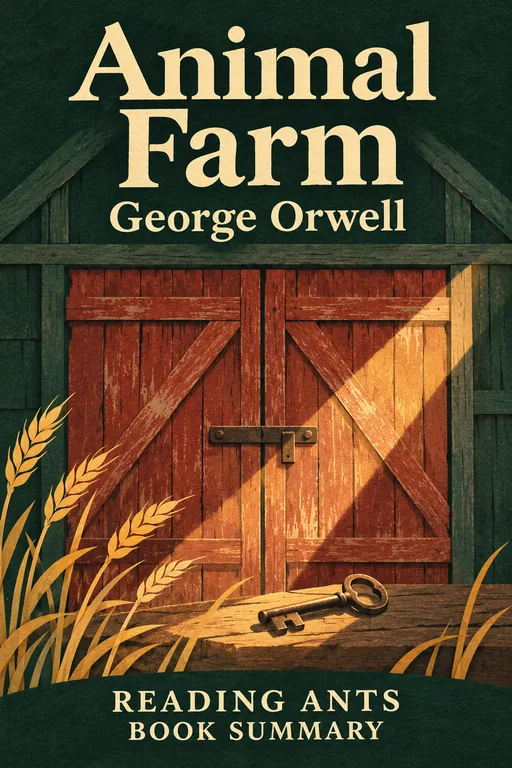
Animal Farm
The animals of an English farm overthrow their cruel human owner to create a fair society, but the clever pigs who lead them slowly become just as tyrannical as the humans they replaced.
Overview
Animal Farm is a short novel written as a fable, a story with animal characters that teaches a lesson. On Manor Farm, the animals rebel against their drunken farmer, Mr. Jones, and drive him away, dreaming of a world where all animals are equal and free. At first the farm thrives. But the pigs, who are the cleverest animals, take control, and one pig, Napoleon, gradually seizes total power through lies, fear and violence. George Orwell wrote the book as a satire of the Russian Revolution and the dictatorship of Joseph Stalin, but its warning about how revolutions can be betrayed applies to any time and place.
Main Characters
- Old Major: a wise old boar whose dream inspires the rebellion.
- Napoleon: a fierce, scheming boar who becomes the farm’s dictator.
- Snowball: a clever, energetic pig with big plans for the farm.
- Squealer: a smooth-talking pig who spreads Napoleon’s propaganda.
- Boxer: a strong, loyal and hardworking cart-horse.
- Clover: a kind, motherly mare.
- Benjamin: an old, cynical donkey.
- Mollie: a vain horse who loves ribbons and sugar.
- Moses: a raven who tells stories of a paradise called Sugarcandy Mountain.
- Mr. Jones: the neglectful farmer.
Full Summary
The Dream
One night, Old Major, a respected old pig, gathers the animals of Manor Farm and tells them about his dream. Their lives are short, hungry and full of work, he says, and all because humans take the fruits of their labor. He urges them to rebel one day and teaches them a stirring song, Beasts of England. A few days later, Old Major dies.
The Rebellion
The pigs, led by Napoleon and Snowball, organize the other animals. One evening, when Mr. Jones gets drunk and forgets to feed them, the starving animals break into the store-shed. When Jones and his men try to whip them, the animals fight back and chase the humans off the farm. They rename it Animal Farm.
The pigs write the Seven Commandments on the barn wall: whatever goes on two legs is an enemy; whatever goes on four legs or has wings is a friend; no animal shall wear clothes, sleep in a bed, drink alcohol or kill another animal; and all animals are equal. For animals who cannot learn them, Snowball reduces them to a simple slogan: four legs good, two legs bad.
Early Success
The first harvest is the best the farm has ever had, and the animals work happily. Boxer, the strongest horse, adopts the motto “I will work harder.” But the pigs quietly begin taking the milk and apples for themselves, and Squealer explains that pigs need them for brainwork.
When Mr. Jones and other farmers try to retake the farm, Snowball leads a brilliant defense, later celebrated as the Battle of the Cowshed. Snowball and Napoleon argue constantly, especially about Snowball’s plan to build a windmill to provide electricity.
Napoleon Takes Power
At a meeting about the windmill, Napoleon whistles, and nine huge dogs, puppies he secretly raised, burst in and chase Snowball off the farm. Napoleon abolishes the animals’ meetings and announces that the pigs will make all decisions. Then he declares that the windmill will be built after all, claiming it was his idea.
The animals work harder than ever, often on less food. When a storm destroys the half-built windmill, Napoleon blames Snowball, who becomes the scapegoat for every problem. The pigs move into the farmhouse and sleep in beds, and the commandments on the wall are mysteriously changed: no animal shall sleep in a bed with sheets.
Terror
Napoleon holds a frightening meeting at which several animals, forced to confess to plotting with Snowball, are killed on the spot by the dogs. The commandment against killing now reads: no animal shall kill another animal without cause. Beasts of England is banned. Squealer constantly produces statistics claiming that life is better than ever, and the animals, unable to remember the past clearly, believe him.
Neighboring farmers attack and blow up the rebuilt windmill, and many animals are killed or injured. Boxer is wounded but keeps working.
Boxer’s Fate
Old and weakened, Boxer collapses while working. The pigs announce that he will be sent to a hospital. But when the van arrives, Benjamin, who can read, sees that it belongs to a horse slaughterer. The animals cry out, but it is too late. Squealer later claims that Boxer died peacefully in the hospital, and that the van had simply been bought from the slaughterer. Soon after, the pigs obtain money and buy a case of whisky.
Four Legs Good, Two Legs Better
Years pass. Most animals who remember the rebellion have died. The farm has grown richer, but only the pigs and dogs benefit. One day, the animals see the pigs walking on their hind legs, carrying whips, while the sheep bleat a new slogan: four legs good, two legs better. All the commandments have been replaced by a single one: all animals are equal, but some animals are more equal than others.
Napoleon invites the neighboring human farmers to dinner, and he renames the farm Manor Farm. Looking through the window, the animals watch the pigs and men playing cards and arguing. Looking from pig to man and man to pig, they can no longer tell which is which.
Why It Matters
Animal Farm is one of the most famous political satires ever written. Orwell finished it in 1944, but several publishers rejected it because Britain was then allied with the Soviet Union in the Second World War. When it was finally published in 1945, it became an instant success, and it is now read in schools around the world.
The story mirrors real events: Old Major resembles Karl Marx and Lenin, Napoleon resembles Stalin, Snowball resembles Leon Trotsky, and the windmill and executions echo Soviet five-year plans and show trials. Its slogans, especially that some animals are more equal than others, have become famous ways of describing hypocrisy in power. The book showed how a fable could deliver a powerful warning about propaganda and dictatorship.
Key Takeaways
- Power corrupts. The pigs become the very tyrants they rebelled against.
- Propaganda rewrites reality. Squealer and the changing commandments show how truth can be twisted.
- An uninformed public is easy to control. Animals who can’t read or remember are easily fooled.
- Loyalty can be exploited. Boxer’s trust and hard work are rewarded with betrayal.
- Ideals need protection. Without checks on power, revolutions can be betrayed.
What We Can Learn
Animal Farm teaches us to pay attention when rules are quietly changed. In any group, whether a school, a club or a country, it is worth asking who benefits from a new rule and whether it fits the group’s original values.
It also shows the importance of education and memory. The pigs can lie because most animals can’t read or don’t remember. Reading carefully, keeping records and asking questions are ways to protect fairness.
Finally, Boxer’s story reminds us that blind loyalty can be dangerous. Hard work and trust are good qualities, but they should be combined with thinking for yourself and speaking up when something seems wrong.
Criticism and Counterpoints
Some critics argue that the book’s close link to Soviet history makes it feel like a political pamphlet rather than a novel, and that its characters are simple symbols without depth. Others have debated its message: some readers on the left felt it attacked socialism itself, while Orwell, who was a democratic socialist, said it was aimed at Stalin’s dictatorship, not at the idea of equality.
Readers also note that the ordinary animals are portrayed as rather foolish and passive, which can seem to suggest that common people are easily led. Yet the book’s simplicity is also its strength, making complex political ideas understandable to readers of all ages.
Who Should Read It
This short book is suitable for readers from about 10 upward, and it is a common choice in middle and high schools. It is a good first step before reading Orwell’s darker Nineteen Eighty-Four. Readers who know some history of the Soviet Union will spot many parallels, but anyone can enjoy the story.
Want the whole book?
A summary is a taste, not the meal. Here is where to find the full book.
You reached the end 🎉
Nicely done. Mark this one as read, and we will suggest what to read next.
Read this next
Nineteen Eighty-Four
George Orwell
In a future Britain ruled by an all-seeing Party, one man secretly rebels by keeping a diary and falling in love, and discovers just how completely a totalitarian state can crush the human mind.
📜 Classics
Brave New World
Aldous Huxley
In a future world where people are made in factories, programmed for their roles and kept happy with drugs and entertainment, a man raised outside the system discovers that this perfect comfort comes at the cost of everything that makes us human.
📜 Classics
Lord of the Flies
William Golding
A group of British schoolboys stranded on a deserted island try to govern themselves, but fear and the desire for power slowly turn them into savages, revealing the darkness inside human nature.
📜 Classics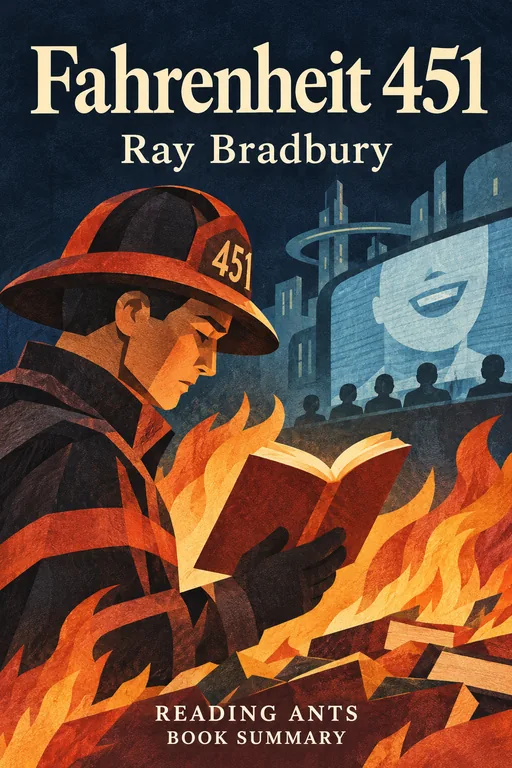
Fahrenheit 451
Ray Bradbury
In a future America where books are illegal and firemen start fires instead of putting them out, one fireman begins to read the books he is supposed to burn, and discovers what his society has lost.
🚀 Sci-Fi & Fantasy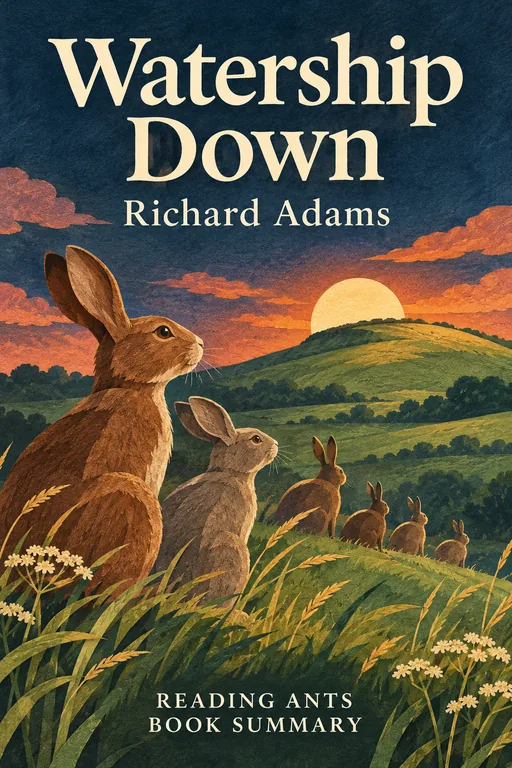
Watership Down
Richard Adams
A group of rabbits flees their doomed warren after a prophecy of disaster and travels across dangerous country to found a new home on a hill called Watership Down, where they must fight to survive and to protect their freedom.
🚀 Sci-Fi & Fantasy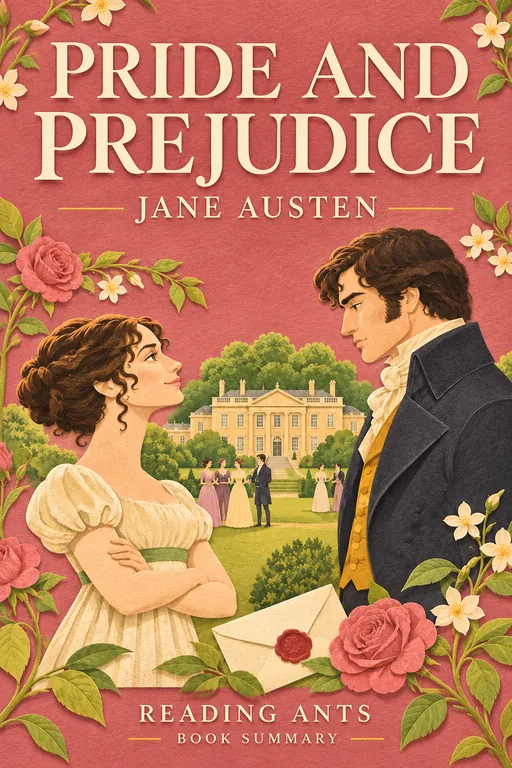
Pride and Prejudice
Jane Austen
Quick-witted Elizabeth Bennet and the proud, wealthy Mr. Darcy badly misjudge each other, and only by facing their own faults do they find their way to love.
📜 ClassicsWant something different?
Pick another topic and we will show you three books to start with.