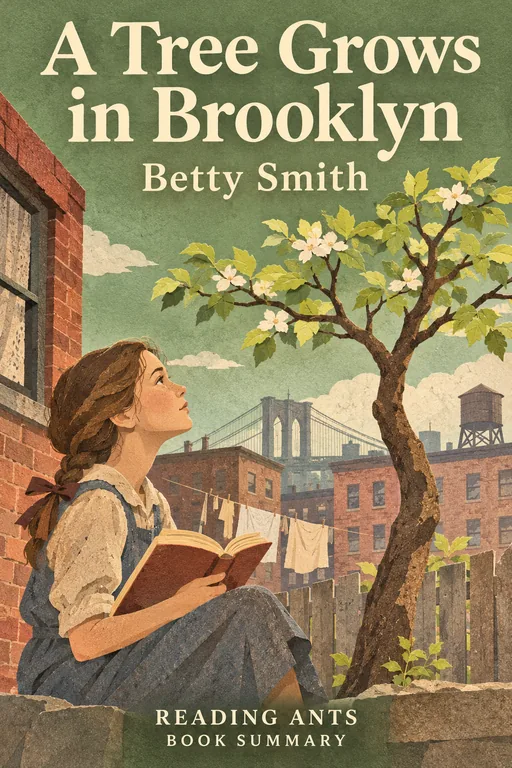
A Tree Grows in Brooklyn
A poor, bookish girl named Francie Nolan grows up in the tenements of Williamsburg, Brooklyn, in the early twentieth century, and learns to find hope and strength in a family that has little but love and determination.
Overview
A Tree Grows in Brooklyn is a novel by Betty Smith, published in 1943, and it was a bestseller that has remained popular for decades. It is based in part on Smith’s own childhood in the Williamsburg neighborhood of Brooklyn. The story follows Francie from about the age of eleven to young adulthood, and portrays the daily life of an immigrant working-class family, the joys and humiliations of poverty, and the girl’s passion for reading and writing. The title refers to a tree that grows in the tenement yard, against the odds.
Main Characters
- Francie Nolan: the heroine, a thoughtful, imaginative and observant girl who loves books.
- Katie Nolan: her mother, a tough, practical woman, who works hard to support the family.
- Johnny Nolan: her father, a charming, singing waiter, who drinks.
- Neeley: Francie’s younger brother, who is lively and well-liked.
- Aunt Sissy: Katie’s sister, who is warm-hearted and has many husbands and many troubles.
- Mary Rommely: Francie’s grandmother, who has wisdom and faith.
- Mr. McShane: a police sergeant who admires Katie, and who later becomes a wealthy businessman and her husband.
Full Summary
Francie’s childhood
Francie lives in a poor tenement in Brooklyn with her parents and her brother Neeley. Her mother, Katie, scrubs floors, and her father, Johnny, is a singer and waiter who earns little and spends much of it on drink. Francie spends her Saturdays collecting junk to sell for pennies, and she loves going to the library, where she decides to read a book each day, in alphabetical order. She enjoys the sights and smells of her neighborhood, and the tree of heaven that grows in the yard, tough and green in the dirt.
Her parents
Johnny is a gentle man, who loves his children, but who cannot hold a job, and Katie loves him, though she is angry at his weakness. She is strict with the children and insists that they learn to read and work hard. Francie adores her father, and she feels that he understands her, while Neeley is her mother’s favorite. Francie sees the different kinds of love in her parents, and begins to understand how complicated people are, and how each person is both good and flawed.
Loss
Not long before her father’s death, Francie is attacked on the stairs of her building by a man who has been preying on girls in the neighborhood. Her mother shoots him, and he is caught. Francie is not seriously hurt, but she is badly shaken. When Francie is fourteen, Johnny, weakened by drink and illness, dies of pneumonia, months before the birth of their second daughter, Laurie. Francie is grief-stricken, and the family is left without income. Katie, who is pregnant, keeps working as a cleaner and building janitor, and the children work after school. After finishing grade school, Francie goes to work, first in an artificial flower factory and then in a press-clipping office, and she grows up quickly. Katie sends Neeley, but not Francie, to high school, and Francie keeps studying on her own in the hope of going to college.
Growing up
Francie goes through the difficult passage from girlhood to womanhood, with its embarrassments and dangers. She is determined to get an education, and when the United States enters the First World War and the clipping office closes, she takes a job as a teletype operator. She decides to skip high school and take college-level summer courses, where a friendly, determined student named Ben Blake helps her. She also meets Lee Rhynor, a soldier about to ship out to France, and is hurt when she learns that he has not been honest with her. Earlier, her English teacher had scolded her for writing about unpleasant things such as poverty and drink and had turned down her play, but Francie goes on writing.
Katie’s choice
Katie, who is still young, accepts the proposal of Mr. McShane, a retired police sergeant who has long admired her and has since become a well-off businessman and politician. He can support the family, and the Nolans prepare to move from their Brooklyn apartment to his home. Francie, who has passed her college entrance exams with Ben’s help, is about to start at the University of Michigan. Ben offers her a promise ring and hopes to marry her one day, but she is not sure of her feelings. Katie’s marriage means that the family’s money worries are over.
Leaving the tenement
At the end, Francie is about to leave Brooklyn for college. She visits some of her favorite childhood places and thinks about the people who have come and gone in her life. Before leaving the apartment, she notices that the tree in the yard, though it was cut down, has sprouted again from its stump. She sees in it a symbol of her family’s and her own resilience, and of the strength that can come from hardship. Watching a neighborhood girl on a fire escape with a book, she sees her younger self, and she says goodbye as she closes the window.
Why It Matters
A Tree Grows in Brooklyn is regarded as a classic of American coming-of-age fiction, and it has been loved by generations of readers. It was frank for its time about poverty, alcoholism and sexuality, while keeping an optimistic spirit. The novel gives a detailed, affectionate picture of immigrant life in New York at the turn of the century, with its foods, customs and schools. Its image of the resilient tree has become a symbol of hope in difficult conditions, and the book is still widely read and loved.
Key Takeaways
- Resilience grows in hard soil. Like the tree, Francie thrives despite poverty.
- Education opens doors. Reading and learning are Francie’s way out.
- Parents are complex. Both Katie and Johnny are loved and flawed.
- Family bonds endure. The Nolans survive through loyalty.
- Writing transforms experience. Francie finds stories in her own life.
What We Can Learn
You can learn from Francie that it is possible to find beauty and meaning in hard circumstances, and that reading and education can make a difference. The book also shows the importance of seeing your parents as whole people, with strengths and weaknesses, and of recognizing the sacrifices that they make. If you read it, you might think about the stories in your own neighborhood, and about the people whom you know whose lives are not easy. Consider what has helped you to keep going in tough times.
Criticism and Counterpoints
Some readers find the book too sentimental, and the sufferings of the family overdone. Others feel that the episodic plot lacks focus and that some passages, such as the many details of daily life, are slow. A few critics point out that the portrayal of ethnic groups reflects the prejudices of the period, and that its picture of poverty does not question the larger system. The scenes of danger to a young girl may be disturbing. However, many consider it a heartwarming and truthful book.
Who Should Read It
This book is for readers from about thirteen who enjoy coming-of-age stories, historical settings and strong female characters. It is long, but easy to read. Those who like it may continue with Little Women or Anne of Green Gables.
Want the whole book?
A summary is a taste, not the meal. Here is where to find the full book.
You reached the end 🎉
Nicely done. Mark this one as read, and we will suggest what to read next.
Read this next
Little Women
Louisa May Alcott
Four very different sisters grow up together in a loving but poor family in New England during and after the American Civil War, learning about love, ambition, loss and finding their own paths in life.
📜 Classics
Anne of Green Gables
L. M. Montgomery
A talkative, imaginative red-haired orphan is sent by mistake to an elderly brother and sister who wanted a boy, and she wins their hearts and fills their quiet farm with life.
🧸 Children's BooksThe Catcher in the Rye
J. D. Salinger
After being expelled from his boarding school, a lonely, sarcastic sixteen-year-old wanders New York City for three days, struggling with grief, phoniness and the frightening idea of growing up.
📜 Classics
My Antonia
Willa Cather
A man looks back on his Nebraska childhood and on the Bohemian immigrant girl, Ántonia Shimerda, whom he knew there, and traces her life from a hard start on the prairie to her strength as a mother and farmer.
📜 Classics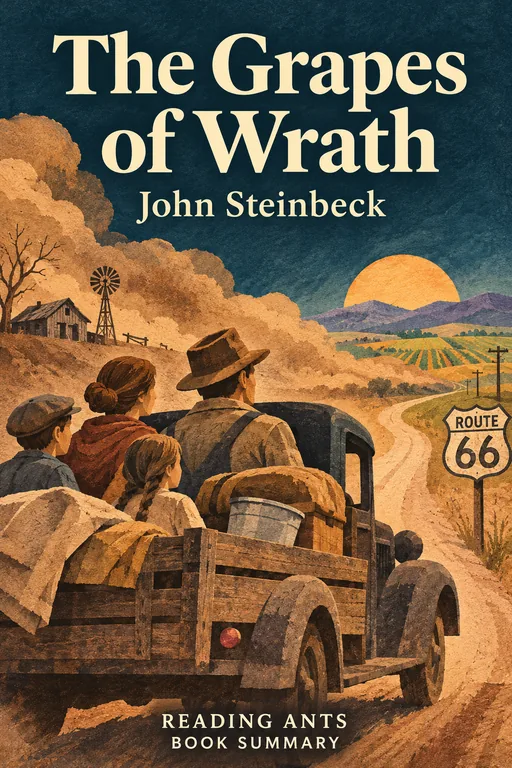
The Grapes of Wrath
John Steinbeck
Driven off their Oklahoma farm by drought and the banks during the Great Depression, a poor family travels west to California in search of work, only to find exploitation and hunger, yet they hold on to their dignity and compassion.
📜 Classics
Pride and Prejudice
Jane Austen
Quick-witted Elizabeth Bennet and the proud, wealthy Mr. Darcy badly misjudge each other, and only by facing their own faults do they find their way to love.
📜 ClassicsWant something different?
Pick another topic and we will show you three books to start with.